Home Blog Page 329

Trial Begins For Man Accused Of Plotting To Assassinate Trump


Jury selection has commenced in Florida for the trial of Ryan Routh, a 59-year-old man accused of attempting to assassinate former U.S President Donald Trump during the 2024 election campaign.

Routh, a resident of Hawaii, is representing himself in court despite having no formal legal training.

The trial is taking place in Fort Pierce, Florida, and is expected to last between two to four weeks.

He faces multiple federal charges, including attempted assassination, assaulting a federal officer, and firearms violations  offenses that could result in a life sentence if he is convicted.

According to court documents, Routh made several unusual and eccentric requests while in custody, including access to strippers and a golf putting green.

He also asked that potential jurors be vetted based on their opinions about Gaza and Trump’s past proposal to purchase Greenland—requests that were denied by the court.

Routh was apprehended on September 15, 2024, after a Secret Service agent spotted what appeared to be the barrel of a rifle emerging from a bush near the perimeter of Trump’s West Palm Beach golf course, where the former president was playing at the time.

The agent opened fire, and Routh fled the scene but was captured shortly afterward.

The incident occurred in the aftermath of a separate assassination attempt on Trump two months earlier.

On July 13, 2024, a 20-year-old man named Matthew Crooks opened fire during a Trump campaign rally, injuring Trump slightly and killing one attendee.

That event marked a turning point in Trump’s political comeback.

Presiding over Routh’s trial is Judge Aileen Cannon, a Trump-appointed judge who previously drew national attention after dismissing charges related to Trump’s handling of classified documents.

Routh’s self-representation has added a layer of complexity to the case. Public defenders initially assigned to him were dismissed after Routh refused to cooperate. In a court filing, the lawyers stated:

“It is clear that Mr. Routh wishes to represent himself, and he is within his Constitutional rights to do so.”

Judge Cannon agreed to allow Routh to serve as his own attorney but ordered that a standby counsel be available in court.

Authorities have yet to determine a clear motive.

Routh previously voted for Trump in 2016 but has since expressed disdain for him, referring to the former president as a “baboon” and “idiot” in court filings.

Reports also indicate that Routh developed an obsession with the Russia-Ukraine conflict, even traveling to Kyiv to join foreign volunteer forces.

However, he was rejected due to his age and lack of combat experience.

As proceedings get underway, legal experts say the case will likely draw national attention, not only due to its high-profile target, but also because of the defendant’s erratic behavior and choice to represent himself.

Google search engine

APC Chairman’s Wife, Daughter Kidnapped


Gunmen suspected to be kidnappers have abducted the wife and daughter of Alhaji Muhammad Swasun, the All Progressives Congress (APC) Chairman for Patigi Local Government Area of Kwara State.

The attack occurred late Sunday night at the Sakpefu area of Patigi, when a five-man armed gang stormed the chairman’s residence.

The assailants reportedly scaled the fence and began shooting sporadically to create panic before breaking into the house.

The victims have been identified as Hajiya Fatima, the chairman’s wife, and Amina, his daughter.

Eyewitnesses said the gunmen forced their way into one of the rooms in the compound, seized the two women, and whisked them away at gunpoint to an unknown location.

A senior member of the APC state executive council, who spoke under condition of anonymity, confirmed the incident.

“It’s true that our chairman’s wife and daughter in Patigi were kidnapped last night. I spoke with him this morning.

He said he was just lucky not to be kidnapped by the bandits, who jumped over his fence into the compound and started shooting sporadically into the air.”

“He said they entered into one of the rooms where they found his wife and daughter and took them away, shooting into the air,”
he added solemnly.

According to sources, the gunmen operated for several minutes before fleeing with the victims.

“The bandits abducted his wife, Hajiya Fatima, and his daughter, Amina, and took them to an unknown destination,” another APC member stated.

The incident has heightened fears across Patigi and other parts of Kwara North, which have seen a disturbing rise in kidnapping cases in recent months.

Residents have repeatedly urged government and security agencies to intensify efforts in combating the growing insecurity in the region.

When contacted, Kwara State Commissioner of Police, Mr. Adekimi Ojo, said he had not yet been briefed on the abduction.

“I’m yet to be informed,” he told reporters.

Google search engine

World Igbo Congress USA Convention Sparks Deeper Questions


The World Igbo Congress (WIC), the global umbrella of the Igbo diaspora, concluded its 2025 annual convention in Quincy, Massachusetts with more than just cultural festivities; it provoked thoughtful reflection.

Held under the rallying theme “KOKOROKOOO: Igbo Bilie N’ura (Igbo, Wake Up),” the three‑day gathering in the United States drew delegates and friends from the Igbo homeland, North America, Europe, the Caribbean and Africa.

The event urged a revived spirit of unity, cultural awareness, and determined collaboration toward shaping a prosperous future for Ndi Igbo.

One of the Convention’s major outcomes was the resolution to establish a “Biafra Cenotaph and Monumental Park” in Alaigbo (Igboland), dedicated to the heroes of the Nigeria–Biafra War. WIC described it as a lasting tribute:

“This memorial will serve as a lasting symbol of resilience, a reminder of the sacrifices made, and an educational marker for future generations.”

Delegates also emphasized economic empowerment, declaring that only through reinvesting in Igboland can sustainable development flourish:

“Strategic investment in Igboland is the only sustainable path to rebuilding the homeland, empowering communities, and ensuring prosperity.”

Attendees were encouraged to embrace the concept of ‘Aku Ruo Ulo’, ensuring that wealth generated abroad meaningfully impacts the homeland.

A highlight of the Convention was the launch of the Igbo Federal Credit Union, envisioned as a central financial institution to bolster economic self-reliance, support Igbo entrepreneurs and serve as a hub for diaspora-driven development.

The WIC Convention expressed deep concern over rising Igbophobia, manifested in hate speech, targeted violence and systemic marginalization, both within Nigeria and across diaspora communities.

The Congress urged governments, civil society, and international bodies to take proactive steps in safeguarding Igbo rights and curbing discrimination.

Additionally, WIC proposed that May 30, the day of remembrance for the Nigeria–Biafra War, be declared a national holiday:

“This would be a step toward truth, reconciliation, and healing.”

They also called on President Bola Ahmed Tinubu and the Federal Government to release Mazi Nnamdi Kanu, noting that he has been cleared by courts domestically and abroad.

The Convention underscored the need for a cultural revival, urging Ndi Igbo to live out their Christian values, honesty, forgiveness and servant leadership and emphasized the importance of youth inclusion and mentorship in securing the future of the people.

Betrayal politics framed as “Uncle Tom” behavior or the “Igbo Political Judas Syndrome” was criticized as corrosive to Igbo unity and survival.

As encapsulated in the joint communiqué by WIC Chairman Dr. Festus Okere and Secretary‑General Sir Chris Ogara:

“With the Igbo Economic Self‑Reliance through Aku Ruo Ulo (extending wealth home), it is only by channeling our talents, resources, and investments back to Igbo land that Ndi Igbo can secure their collective future. Abandoning the homeland while enriching elsewhere is a betrayal of future generations.”

Google search engine

El-Rufai Petitions Police Commission, Accuses CP, Others Of Misconduct


Former Kaduna State governor, Mallam Nasir El-Rufai, has petitioned the Police Service Commission (PSC), accusing the Kaduna State Commissioner of Police and several senior officers of misconduct, abuse of office, and violations of the Police Act 2020.

In a letter dated September 8, El-Rufai described the actions of the officers as “unlawful and unconstitutional,” calling on the PSC to investigate what he claimed was a politically motivated probe targeting him and the African Democratic Congress (ADC), a party he supports.

“I am motivated by concern for the Nigerian Police Force, which, despite its challenges, remains the primary law enforcement institution in the country,” El-Rufai stated in the petition.

The petition comes amid mounting political tensions in Kaduna State. On August 30, a meeting of ADC stakeholders was violently disrupted.

According to opposition leaders, thousands of hired thugs allegedly connected to the ruling All Progressives Congress (APC) attacked the gathering.

The meeting had been convened to strategize for upcoming by-elections in the Chikun/Kajuru federal constituency, as well as in Sabon-Gari and Zaria state constituencies.

In the days following the attack, police officers sealed the ADC’s state office and issued summonses to El-Rufai and several senior party officials.

They were accused of criminal conspiracy, incitement, and public disturbance.

El-Rufai, however, dismissed the accusations, insisting they were part of a wider effort to silence dissent.

He further noted that his earlier complaints to the Inspector-General of Police had been ignored.

In a series of social media posts dated September 1, 2025, El-Rufai also took aim at the administration of Governor Uba Sani, accusing it of concealing crucial security data and paying ransoms to bandits.

He claimed that law enforcement agencies were being used for political purposes.

He extended his criticism to the Office of the National Security Adviser (ONSA) and the Kaduna State Government, saying they were more interested in targeting critics than solving real issues.

“Insecurity is the menace they ought to eliminate, not opposition voices and platforms,”
El-Rufai wrote in one of the posts, linking the disruptions to what he described as “a broader pattern of state-sponsored thuggery.”

Google search engine

2027: Zoning Debate A Political Blackmail To Cripple Opposition – Dele Momodu


Former presidential aspirant and media entrepreneur Dele Momodu has sharply criticised the zoning of presidential tickets ahead of the 2027 general elections, describing it as a calculated strategy to weaken Nigeria’s opposition parties.

Speaking on Channels Television’s Sunrise Daily programme on Monday, Momodu argued that zoning, while not backed by the constitution, is being manipulated to serve the interests of the ruling All Progressives Congress (APC) and President Bola Tinubu.

“There is nothing in the Nigerian Constitution that stops anyone, whether you are a northerner or a southerner, from contesting,” Momodu said.

He labelled the renewed zoning conversation as a “reward of blackmail” from forces working to suppress electoral competition, particularly against the incumbent.

“Because they know that if you zone all other parties to the South in the presidency, none of them will be able to beat Asiwaju (Tinubu),” he added.

Momodu urged political parties, especially the opposition, to reject restrictive zoning arrangements and open up their platforms for all regions.

“That is the strategy. That is why any right-thinking political party should throw its door open,” he stated.

Turning to his former party, the People’s Democratic Party (PDP), Momodu lamented what he described as its complete capture by individuals loyal to the ruling party.

“PDP has been completely hijacked by agents of the ruling party who insist on staying in PDP while working for APC,” he said.

According to him, some members are keeping the PDP in a politically comatose state for future strategic use:

“PDP is at a dead end. Some people are desperate; they don’t want to kill it, but they want to keep it in the ICU… Everybody is now just using PDP as a cadaver room, a place where you keep bodies that are dead or kept in the ICU. It’s a shame, but I have left,” he added.

Momodu, who is now a chieftain of the opposition coalition African Democratic Congress (ADC), clarified that no individual, including former Vice President Atiku Abubakar, has been offered a free pass to contest under the ADC platform.

“I don’t think ADC has promised to give an automatic ticket to anyone, including Atiku Abubakar. He is not the sole candidate of ADC,” he asserted.

The zoning debate was reignited after the PDP National Executive Council (NEC) met on August 25, resolving to zone its 2027 presidential ticket to the South while retaining the party chairmanship in the North.

The NEC also confirmed Umar Damagum as the PDP’s national chairman, following the earlier suspension of Senator Iyorchia Ayu in 2023.

While party leaders claim the zoning decision is meant to stabilise the PDP ahead of the next election cycle, critics, including Momodu, believe it could severely limit the party’s competitiveness against the APC, which has already endorsed President Tinubu for re-election in 2027.

Although the PDP has yet to announce a flagbearer, Minister of the Federal Capital Territory, Nyesom Wike, previously warned that zoning the ticket to the North would lead to failure.

Google search engine

NARTO, Other Petroleum Associations Back NUPENG, Threaten Nationwide Shutdown Over Dangote’s Direct Supply Plan


Three major petroleum industry associations; the Natural Oil and Gas Suppliers Association of Nigeria (NOGASA), Petroleum Products Retail Outlet Owners Association of Nigeria (PETROAN), and the Nigerian Association of Road Transport Owners (NARTO) have declared plans to join the strike action initiated by the Petroleum Tanker Drivers (PTD) branch of NUPENG.

The planned industrial action is in protest against the Dangote Refinery’s decision to deploy 4,000 compressed natural gas (CNG)-powered trucks for direct fuel distribution across the country.

During a joint press briefing on Monday, NOGASA President Bennett Korie ordered all members supplying petroleum products to telecom companies, hotels, construction sites, and other end-users to halt operations by 9 am on Tuesday, September 9, if talks with the federal government fail to produce results.

Korie expressed concern that Dangote’s move could lead to massive job losses and the collapse of the traditional petroleum supply chain.

“We are proud of the refinery’s role in transforming the oil sector, but its current approach threatens the livelihood of thousands across the distribution value chain,” he warned.

He called on President Bola Ahmed Tinubu to urgently intervene and convene a meeting between Dangote Refinery and stakeholders in the downstream sector to avert a national supply crisis.

PETROAN President Dr. Billy Gillis-Harry echoed similar concerns, describing Dangote’s planned use of 4,000 trucks as a short-term solution that could destabilize the sector.

He questioned whether this model, which mirrors Dangote’s cement distribution system, had resulted in price relief for consumers.

“Energy security is at stake,” Gillis-Harry said. “We must protect the sector. Any NUPENG member at our retail outlets who joins the strike will not face disciplinary action. We fully support this resistance until a meaningful resolution is reached.”

Also speaking, NARTO President Yusuf Lawal Othman rejected the idea of direct or “free” distribution of petroleum products, saying it would destroy the business of independent transporters who operate over 30,000 trucks nationwide.

He warned that the proposed distribution model could result in massive unemployment, with ripple effects on drivers, mechanics, loaders, and service providers whose livelihoods depend on the existing supply structure.

“Our members have invested heavily, with backing from local and international financial institutions. Any move to sideline them is a direct assault on their survival,” Othman stated.

The unions are demanding immediate dialogue and cautioning that failure to act could trigger a full-scale disruption of fuel distribution across Nigeria.

Google search engine

DSS Issues One-Week Ultimatum To Sowore Over Social Media Post Calling Tinubu A Criminal


The Department of State Services (DSS) has given prominent human rights activist and former presidential candidate Omoyele Sowore a one-week deadline to retract what it describes as a “false, malicious, and inciting” social media post targeting President Bola Tinubu.

In a letter dated September 7, the DSS accused Sowore of making derogatory and criminal remarks about the President in a post published on X (formerly Twitter) on August 26.

The agency, through its Director of Legal Services, Uwem Davies, claimed the comments had the potential to “incite public disturbance, disunity, and even insurrection.”

“Failure by Sowore to comply with this request will compel the service to explore all lawful means to safeguard national security and maintain public order,” the DSS warned.

Sowore, known for his role as convener of the #RevolutionNow protests and a vocal critic of the government, had accused President Tinubu of being a “criminal,” following the President’s reported claim that corruption no longer exists under his administration.

The DSS contends that Sowore’s post has stirred public outrage and poses a threat to national stability.

On Sunday, Sowore confirmed that the social media platform X had contacted him in relation to a formal complaint from the DSS concerning the controversial post.

However, the activist made it clear that he has no intention of deleting it.

“I won’t take the post down,” Sowore said, standing by his comments and continuing to challenge the legitimacy of the DSS’s demands.

Google search engine

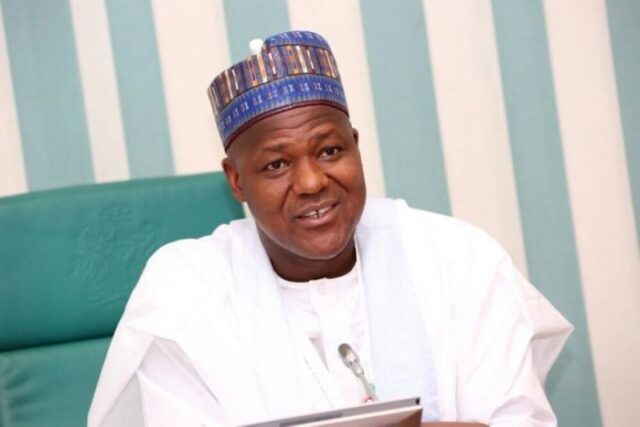
Speaker Abass Raises Alarm As Nigeria’s Soaring Debt Hits N149.4 Trillion


The Speaker of Nigeria’s House of Representatives, Dr. Abass Tajudeen, has voiced deep concern over the nation’s escalating debt burden, which has reached ₦149.39 trillion (approximately $97 billion) as of Q1 2025.

Speaking at the opening session of the 11th Annual Conference and General Assembly of the West Africa Association of Public Account Committees (WAAPAC), held at the National Assembly complex in Abuja, the Speaker described the debt situation as “worrying” and a “threat to fiscal sustainability.”

According to Dr. Abass, domestic debt accounts for 53% of the total, while external borrowing makes up 47%.

He noted that this figure marks a steep rise from ₦121.7 trillion recorded the previous year, highlighting how rapidly the debt load has grown.

“Even more concerning is the debt-to-GDP ratio, which now stands at approximately 52 per cent, well above the statutory ceiling of 40 per cent set by our own laws,” he warned.

The Speaker argued that breaching the debt ceiling signals growing pressure on Nigeria’s economic framework, and called for enhanced transparency in borrowing, as well as stronger fiscal oversight mechanisms.

He stressed that every borrowed naira must deliver tangible social and economic returns.

Shifting focus to the broader African landscape, Dr. Abass painted a troubling picture.

He said that Africa’s public debt hit $1.8 trillion by 2022, with external debt alone expected to surpass $1 trillion by 2023. Several countries, he said, are already in critical debt territory.

“Sudan’s debt-to-GDP ratio stands at 344 per cent, Angola at 136.8 per cent, Ghana at 84 per cent, Kenya is approaching 70 per cent, and South Africa is above 77 per cent,” he noted.

“In many of these countries, more is spent servicing debt than on critical areas like healthcare, thereby shrinking the fiscal space for development.”

He described the situation not just as a fiscal challenge, but a structural crisis that demands urgent and coordinated parliamentary intervention across the continent.

Dr. Abass further revealed that 35% of Africa’s government debt is currently held by Western private lenders such as banks, asset managers, and oil traders.

Another 39% is owed to multilateral institutions like the IMF and World Bank, 13% to bilateral lenders, and 12% to Chinese creditors, a figure he said is often exaggerated in public debate.

“To place this in sharper focus, in 2019, bondholders alone represented 27 per cent of Africa’s external debt, making them the single largest creditor group, ahead of China at 13 per cent,” he explained.

“The implications of this structure are far-reaching. A significant share of our national revenues is tied to debt servicing rather than being invested in the things our people need most: roads, schools, hospitals, and innovation.”

Dr. Abass warned that the high cost of commercial loans, combined with the obligation to repay in foreign currencies, leaves many African economies exposed to market shocks.

This, he said, severely limits policy flexibility and slows sustainable development.

“If Africa is to grow stronger, we must not only negotiate fairer terms of borrowing but also rethink our dependence on external finance,” he urged.

“We must channel more energy into mobilising domestic resources, fostering intra-African trade, and creating financial instruments that serve the continent’s own development priorities.”

The Speaker concluded with a rallying call for public financial accountability:

“Effective oversight of public debt demands vigilance, knowledge, and institutional strength,” he said, stressing the need to empower Public Accounts and Finance Committees.

He encouraged conference participants to share ideas and experiences that could lead to responsible debt governance, and urged for reforms that strengthen fiscal discipline across the continent.

Google search engine

JAMB Panel Exposes Over 4,000 Fingerprint Manipulations, 190 AI Cheating Cases In 2025 UTME


The Joint Admissions and Matriculation Board (JAMB) has received a damning report from its Special Committee on Examination Infractions (SCEIi), detailing thousands of technology-driven malpractices uncovered during the 2025 Unified Tertiary Matriculation Examination (UTME).

Presenting the report in Abuja, the Chairman of the Committee, Jake Epelle, revealed that the investigation uncovered 4,251 cases of “finger blending”, a form of biometric fraud used to bypass identity verification as well as 192 confirmed instances of AI-assisted impersonation, achieved through image morphing.

The panel, which was inaugurated on August 18, was tasked with investigating growing exam malpractices, reviewing existing JAMB systems, and recommending necessary reforms to protect the integrity of the examination process.

Beyond biometric and AI-related fraud, the committee also identified 1,878 cases of false disability claims, use of forged documents, multiple NIN registrations, and extensive collusion between candidates and organized exam syndicates.

Epelle expressed deep concern over the sophistication and normalization of malpractice in Nigeria’s education system.

“Malpractice has become highly organised, technology-driven, and dangerously normalised,” he said, highlighting the role of parents, tutorial centres, schools, and even some Computer-Based Test (CBT) centres in facilitating the fraud.

He also pointed out that weak legal enforcement frameworks continue to hamper accountability, allowing the practice to persist with little consequence.

In response, the committee urged JAMB to adopt a multi-layered strategy to tackle exam fraud.

Among the key recommendations were; Deployment of AI-driven biometric anomaly detection tools, Real-time examination monitoring systems and Establishment of a centralised Examination Security Operations Centre.

The panel stressed that only through coordinated technological investment and legal reform can the credibility of Nigeria’s admission process be fully restored.

Google search engine

2027: Ebonyi PDP, LP, APGA, YPP, Others Back ADC Coalition


Key opposition leaders from various political parties have thrown their support behind the African Democratic Congress (ADC) in preparation for the 2027 general elections.

At a Coalition Stakeholders’ Meeting held on Sunday in Abakaliki, leaders from the Peoples Democratic Party (PDP), Labour Party (LP), All Progressives Grand Alliance (APGA), Young Progressives Party (YPP) and a faction of the All Progressives Congress (APC) joined forces under the ADC banner, pledging to work together to take over the state government.

Speaking at the gathering, Chief Linus Okorie, a former Labour Party senatorial candidate for Ebonyi South, said the coalition was driven by a shared vision for good governance, not personal rivalry or political attacks.

“We are not here to attack or castigate anyone,” Okorie stated.

“We are here to build a united front with Nigerians for real change through democratic means.”

He declared that the ADC is poised to lead Nigeria starting from 2027, based on sound ideas, intellectual engagement, and a people-oriented manifesto.

Okorie also announced that a formal unveiling of the ADC in Ebonyi would be held soon and urged party stakeholders to remain committed to growing the party’s support base.

Also addressing the meeting, Mrs. Jenifer Adibe, the ADC Chairperson in Ebonyi State, said the party’s focus on transparency, inclusivity, and accountability has attracted a growing number of supporters.

“We are building a strong base. ADC will deliver at least 3 million votes in Ebonyi State in 2027,” she declared confidently.

Former PDP Chairman in the state, Chief Silas Onu, urged Ebonyians to take charge of their political future and not be deterred by intimidation or political pressure.

“We are ready to constructively challenge the ruling party and push for better governance,” Onu said.

Among those present at the coalition meeting were Chief Fidelis Nwankwo, former Minister of State for Health and 2023 LP governorship aspirant, Chief Sunday Opoke, YPP’s 2023 governorship candidate, Chief Jerry Obasi, former Deputy National Secretary of APGA and Chief Haroun Ajah, a former PDP governorship aspirant and current APC factional leader in the state, among others.

Google search engine

MOST COMMENTED

- Advertisement -
Google search engine