Home Blog Page 332

JUST IN: Pope Leo XIV Names Another Catholic Saint


In a deeply moving ceremony that drew thousands to St. Peter’s Square, Pope Leo XIV formally canonized Pier Giorgio Frassati, honoring the young Italian layman as a saint of the Catholic Church and a beacon of faith, service, and youthful joy.

At just 24 when he died in 1925, Frassati left behind a legacy that continues to inspire generations.

Known for his deep spirituality, adventurous spirit, and tireless dedication to the poor, Frassati’s life was described by Pope Leo as “a testimony to what holiness looks like in action, not isolation.”

Born into privilege in Turin, Italy, Frassati chose a life of humility.

Despite being the son of a wealthy newspaper magnate and diplomat, he spent his days working quietly among the sick and the poor, delivering food, medicine, and hope through the St. Vincent de Paul Society.

He was also an enthusiastic mountain climber and outdoorsman, earning him the nickname “the Man of the Beatitudes.” His faith was not only rooted in the church pew but also lived out in the streets and on the summits he loved to climb.

“He lived high,” Pope Leo said during the canonization Mass, “not only in the mountains but in virtue, in compassion, and in his courageous love for Christ and others.”

Two miracles attributed to Frassati’s intercession paved the way for his sainthood:

  • In 1933, a man suffering from Pott’s disease, a spinal infection, was healed after praying to Frassati.
  • In 2017, an American seminary student recovered miraculously from a torn Achilles tendon after completing a novena prayer to him.

The Vatican officially recognized both events as medically inexplicable, fulfilling the requirement for canonization.

Frassati’s short life continues to ripple through time.

He has become a patron for young adults, social justice advocates, and even sports enthusiasts.

His famous quote, “Verso l’alto” (meaning “To the heights”), is not just about mountains but about reaching toward God in everyday life.

Pilgrimages to his tomb in Turin draw thousands annually, and his story is told in youth retreats, Catholic schools, and social outreach centers around the world.

This canonization follows closely behind the naming of Carlo Acutis, the Church’s first millennial saint, marking a powerful message from Pope Leo XIV: that holiness is not reserved for ancient times or secluded lives.

“Frassati and Acutis show us,” Pope Leo said, “that sainthood is possible today. In a noisy world, their quiet witness speaks volumes.”

Google search engine

Police Uncover Fake Soft Drink Factory In Anambra, Suspect Nabbed


The Anambra State Police Command has shut down an illegal factory involved in the production of counterfeit soft drinks in Okpoko, a community in Ogbaru Local Government Area of the state.

The operation, carried out by officers of the Rapid Response Squad (RRS) based in Awkuzu, led to the discovery of several batches of fake juice products labeled “Iyi Obeleagu Juice.”

A 48-year-old suspect, Chigozie Okafor, was arrested at the scene.

Police spokesperson, Tochukwu Ikenga, confirmed the development in a statement issued on Sunday, September 7.

He said the drinks were being manufactured without the approval of the National Agency for Food and Drug Administration and Control (NAFDAC) and posed serious health risks to consumers.

“The products are highly dangerous to both adults and children and were being produced in an unhygienic, unregulated setting,” Ikenga warned.

The Commissioner of Police, Ikioye Orutugu, has ordered a full-scale investigation to uncover other accomplices and determine how far the distribution network may have reached.

He also issued a stern warning to individuals engaging in similar activities to desist immediately.

“We are committed to protecting public health and will continue to clamp down on those endangering lives through criminal production of fake consumables,” the CP stated.

This latest bust adds to a troubling trend of illegal factories operating across Anambra and other parts of Nigeria.

These outfits often produce counterfeit beverages, pharmaceuticals and other consumables under dangerous conditions, with no oversight.

This isn’t the first time law enforcement has uncovered such operations in the state:

In October 2024, a task force discovered an illegal fake wine production facility in Nkpor, Onitsha, where imitation brands such as “Classic Heaven,” “Baron Devanis,” “Dutch Black,” and fake “Hennessy” were being produced. Seven suspects were arrested.

In June 2024, police also shut down an illegal pharmaceutical production site in Umuoji, Idemili North, where counterfeit drugs including paracetamol and Flagyl were being manufactured. Six suspects were taken into custody.

The police are urging residents to be alert and report suspicious activities, especially concerning food and beverage production.

Authorities also advised consumers to check for NAFDAC registration numbers and avoid unbranded or poorly packaged products.

The Anambra State Police Command reiterated its commitment to dismantling all forms of illegal trade that put public health at risk.

Google search engine

BREAKING: Pope Leo XIV Canonises Carlo Acutis As First Millennial Saint


In his first official act as the new leader of the Catholic Church, Pope Leo XIV on Sunday canonised Carlo Acutis, officially naming him the first saint of the millennial generation.

The historic event took place at St. Peter’s Square in Vatican City, drawing tens of thousands of faithful, especially young people who came to witness the elevation of the 15-year-old Italian teen known as “God’s Influencer.”

Carlo Acutis was born in 1991 in London but spent most of his life in Milan, Italy.

From a young age, he showed deep spiritual devotion, frequently attending Mass and spending time in Eucharistic adoration.

What made Acutis stand out in the modern era was how he embraced technology to serve his faith.

He created a multilingual website documenting Eucharistic miracles, using the internet to spread the Catholic message in a way that resonated with the digital generation.

Acutis died of leukaemia in 2006 at the age of 15.

He was beatified in 2020, a step below sainthood, after the Vatican recognized one miracle attributed to his intercession.

Earlier this year, the Catholic Church confirmed a second miracle, the healing of a Costa Rican student who suffered a traumatic brain injury.

This cleared the way for canonisation, the final step in declaring someone a saint.

Originally, the canonisation ceremony was scheduled for April 27, 2025, but it was postponed following the death of Pope Francis.

With the recent election of Cardinal Robert Francis Prevost, now Pope Leo XIV, the ceremony was rescheduled and held on September 7.

The occasion was shared with another figure, Pier Giorgio Frassati, an early 20th-century Italian known for his service to the poor and strong Catholic faith.

However, it was Acutis’ youth and digital legacy that captured the spotlight.

Pope Leo XIV’s decision to make Acutis his first canonisation is being interpreted as a powerful message to young Catholics.

By elevating someone who blended faith and modern technology, the pope signals a desire to reconnect the Church with younger generations and embrace innovation without losing tradition.

Acutis’ story has inspired millions around the world, particularly young Catholics navigating faith in a fast-changing world.

His devotion, humility, and use of technology have made him a symbol of modern holiness, showing that sainthood isn’t confined to cloisters or centuries past.

As Pope Leo XIV declared him a saint, the square erupted in applause, a moment both sacred and symbolic of a Church stepping confidently into the 21st century.

Google search engine

SERAP Drags RMAFC To Court Over Proposed Salary Increase For Tinubu, Governors, Lawmakers


The Socio-Economic Rights and Accountability Project (SERAP) has filed a lawsuit against the Revenue Mobilisation Allocation and Fiscal Commission (RMAFC) over its proposal to increase the salaries of Nigeria’s top political and public office holders.

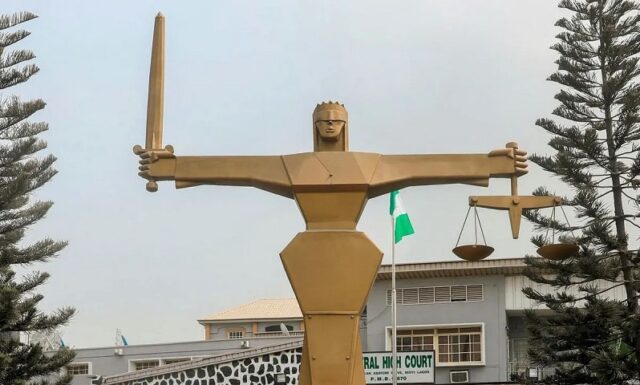
The legal action, filed at the Federal High Court in Abuja (Suit No. FHC/ABJ/CS/1834/2025), challenges the planned pay rise for the President, Vice President, governors, their deputies and members of the National Assembly.

RMAFC had in August announced its intention to review upward what it described as the “paltry” salaries of these office holders.

However, SERAP is arguing that such a move is unlawful, unconstitutional, and inconsistent with the principles of the rule of law and current economic realities.

In a statement released on Sunday by SERAP Deputy Director Kolawole Oluwadare, the group is asking the court to declare the proposed salary increase unlawful and unconstitutional, restrain RMAFC and its agents from implementing the new pay structure and order RMAFC to instead review downward the salaries and allowances of political office holders in line with Nigeria’s economic conditions.

SERAP maintains that any arbitrary salary increment for top officials especially at a time when over 133 million Nigerians live in poverty and many states struggle to pay salaries and pensions, is a violation of the public interest and constitutional principles.

SERAP’s legal team led by Kolawole Oluwadare, Oluwakemi Oni and Andrew Nwankwo argues that RMAFC’s constitutional and statutory mandates do not give it unchecked powers to hike salaries, especially in the face of widespread economic hardship.

The suit references the 1999 Constitution (as amended), particularly Chapters 2 and 4, which outline the state’s obligations to promote economic justice and ensure equality and non-discrimination.

It also cites Section 42, reinforcing citizens’ socio-economic rights.

According to SERAP, RMAFC appears to prioritize the interests of political elites over the suffering of ordinary Nigerians.

The organization is calling for a rebalancing of national priorities.

“The Commission should focus on cutting the excessive allowances and life pensions enjoyed by political office holders, instead of rewarding them with higher salaries.”

The statement further criticized the rationale behind the proposed hike, noting that the RMAFC Chairman, Mohammed Bello, claimed the pay review was necessary as salaries had not been comprehensively adjusted since 1992, despite executive increments since 2002.

Bello had described the proposed salary adjustment as “fair, realistic, and sustainable,” and in tune with Nigeria’s socio-economic realities, a position SERAP firmly rejects.

SERAP also pointed to a 2021 Federal High Court judgment delivered by Justice Chuka Austine Obiozor, which ordered RMAFC to reduce the salaries and allowances of lawmakers to reflect prevailing economic conditions.

That case was brought by SERAP alongside BudgIT, EiE Nigeria, and over 1,500 concerned citizens.

Under the Constitution, members of the RMAFC are appointed by the President, subject to Senate confirmation, in line with Sections 154(1), 156(3), and Paragraph 31, Part I of the Third Schedule.

SERAP’s suit is currently awaiting a hearing date.

Google search engine

FIFA Appoints Referees For Nigeria vs. South Africa World Cup Qualifier


World football governing body FIFA has named Gabonese referee Pierre Ghislain Atcho to officiate the crucial 2026 FIFA World Cup qualifying match between Nigeria’s Super Eagles and South Africa.

The fixture will take place on Tuesday at the Toyota Stadium in Bloemfontein as part of Matchday 8 of the African qualifiers.

According to FIFA’s announcement, Atcho will lead the officiating team, supported by his compatriots Boris Marlaise Ditsoga and Amos Abeigne Ndong as assistant referees, with Cregue Fleury Moukagni serving as the fourth official.

Additional officials include Olivier Safari Kabene from the Democratic Republic of Congo, appointed as referee assessor, and Ugandan Mike Letti, who will act as match commissioner, as per a September 5 release from the Nigeria Football Federation (NFF).

The upcoming clash is regarded as one of the key matches in the qualification race, with both Nigeria and South Africa eager to secure vital points. Atcho, known for his experience in CAF Champions League matches, is expected to maintain fairness and composure throughout the heated encounter.

In a related update, Nigeria’s Super Eagles secured a narrow 1-0 victory over Rwanda in a tense World Cup qualifier at the Godswill Akpabio International Stadium in Uyo.

The winning goal came in the 51st minute when substitute Tolu Arokodare capitalized on a scramble inside the Rwandan penalty area.

Despite losing star striker Victor Osimhen to injury in the first half, Nigeria’s defense, led by Calvin Bassey, held firm to claim all three points.

This win lifts Nigeria to 10 points from seven matches, closing in on group leaders South Africa, while Rwanda remains just behind on 8 points.

For the Uyo fixture, FIFA had appointed Chadian referee Allaou Mahamat, assisted by compatriots Bogollah Issa, Moussa Hafiz, and Abdelkerim Ousmane.

The referee assessor was Taher Abdelsalam Mahmoud of Egypt, with Bakary Jammeh from Gambia as commissioner.

Google search engine

APC Tightens Grip With 72 Senators, PDP 28, LP 5, APGA 2, NNPP, SDP One Each


The ruling All Progressives Congress (APC) has solidified its control over the Nigerian Senate following the defection of Senator Ahmed Wadada from the Social Democratic Party (SDP).

Wadada, who represents Nasarawa West, rejoined the APC, boosting the party’s presence to 72 out of the 109 Senate seats.

This development further diminishes the Peoples Democratic Party (PDP), which now holds only 28 senators.

Other parties include the Labour Party with five senators, the All Progressives Grand Alliance with two and the New Nigeria Peoples Party and SDP with one each.

Senator Wadada, who chairs the Senate Committee on Public Accounts, had left the APC in 2022 to run under the SDP banner and won his seat in the 2023 elections.

His official return was communicated in a letter dated September 2, addressed to the APC chairman in his ward, in which he expressed his desire to contribute to the party’s progress and success.

This recent defection follows a wave of PDP senators who have also switched allegiance to the APC.

Just two months ago, four senators; Francis Fadahunsi (Osun East), Oluwole Olubiyi (Osun Central), Aniekan Bassey (Akwa Ibom North East) and Samson Ekong (Akwa Ibom South)—crossed over, citing internal divisions and crisis within the PDP.

In their resignation letters, read aloud by Senate President Godswill Akpabio, the senators described their decisions as well-considered and necessary due to fractured party structures and shifting political realities in their states.

Senator Bassey invoked constitutional provisions in explaining his defection, while Senator Ekong pointed to a realignment of key political players within Akwa Ibom State favoring the APC.

Senate Leader Opeyemi Bamidele welcomed the defectors warmly, hinting that more senators may soon join the APC.

Google search engine

Sowore Refuses To Delete Tweet Criticising Tinubu Despite DSS Request


Omoyele Sowore, human rights activist and former presidential candidate, has declared he will not take down a post on X (formerly Twitter) in which he criticised President Bola Tinubu despite a formal request by Nigeria’s Department of State Services (DSS) to the social media platform demanding its removal.

On Sunday, Sowore disclosed via his X account that the platform had notified him of the DSS’s complaint.

The controversial post, shared on August 25, referred to President Tinubu as a “criminal” and accused him of lying during a state visit to Brazil, where the president claimed that corruption no longer exists in Nigeria.

Sowore wrote:

“This morning, X (formerly Twitter) officially contacted me about the despicable threat letter they received from the lawless DSS over my tweet on Tinubu. One option I will NOT be taking is deleting that tweet. Thank you, @X.”

He also shared a message from X, which confirmed that it had received a takedown request from the DSS on the grounds that the tweet allegedly violated Nigerian laws.

However, X stated it had not taken any action and would notify the user in line with its transparency policy.

The message from X included a link to its legal and transparency policies, encouraging Sowore to evaluate the situation and consider legal counsel if necessary.

The DSS had earlier claimed the tweet posed a threat to national security and could incite unrest.

It cited provisions of the Criminal Code, the Cyber Crimes Act 2025, and the Terrorism (Prevention and Prohibition) Act 2022 as legal grounds for its request to delete the post.

Sowore, known for his pro-democracy activism and as the publisher of Sahara Reporters, has long been a vocal critic of the Nigerian government.

He previously faced arrest and prolonged detention by the DSS in 2019 over his “RevolutionNow” movement.


Google search engine

DSS Asks X To Delete Sowore’s Tweet Calling Tinubu A Criminal

President Tinubu

The Department of State Services (DSS) has written to X Corp (formerly Twitter), demanding the immediate removal of a post by activist and former presidential candidate, Omoyele Sowore, over comments deemed offensive to President Bola Tinubu and a threat to national security.

The controversial post was shared by Sowore on August 25 via his verified X handle, @YeleSowore. In the post, he criticised President Tinubu’s remark during a state visit to Brazil, where Tinubu claimed that corruption had been eradicated in Nigeria.

Sowore called the president a “criminal” and accused him of lying, referencing Tinubu’s official handle, @officialABAT.

In a letter dated September 6 and signed by B. Bamigboye on behalf of the Director-General of the DSS, the agency described the tweet as false, inflammatory and a violation of both national security and online conduct standards.

The DSS warned that the post had the potential to incite public unrest, particularly among Tinubu’s supporters, some of whom had already staged protests.

Part of the letter read:

“The said tweet is still in circulation and has attracted widespread condemnation by majority of Nigerians, some of whom may resort to unwholesome activities… thereby creating political tension and threatening the country’s national security.”

The DSS also raised concerns about the tweet’s impact on the President’s reputation internationally, stating that it could undermine Nigeria’s standing before the “comity of nations.”

Citing Nigerian laws, the agency said Sowore’s post breached provisions of the Criminal Code Act, the Cyber Crimes Act 2025, and the Terrorism (Prevention and Prohibition) Act of 2022.

Specifically, the letter referenced sections dealing with spreading false information, online harassment, incitement, and hate speech.

The DSS insisted that the post violated Sections 19, 22, and 24 of the Cyber Crimes Act, which criminalise the publication of content intended to embarrass, provoke hatred, or cause public disorder, both online and offline.

It claimed Sowore’s tweet amounted to “domestic terrorism.”

“The words employed by Mr. Omoyele Sowore,” the letter said, “are misleading information, online harassment and abuse, and a willful attempt to spread an ideology capable of serious harm to national unity.”

X Corp was given a 24-hour ultimatum to take down the tweet and any re-posts or related content.

The DSS also warned that failure to comply could lead to severe action from the Federal Government.

“If your corporation fails to comply with the command, the Federal Government will be compelled to take far-reaching, sweeping and across-the-board measures,” the agency said.

Google search engine

FG Seeks Fresh $1.75bn World Bank Loan Despite Revenue Boost


The Federal Government is seeking a new $1.75 billion loan from the World Bank, even as it records a significant boost in revenue performance for 2025.

According to the presidency, Nigeria generated ₦20.59 trillion between January and August 2025, a 40.5% increase compared to the ₦14.6 trillion collected in the same period last year.

Non-oil revenue now accounts for 75% of total collections, suggesting a growing shift away from oil dependence.

Presidential spokesperson, Bayo Onanuga, said the strong revenue aligns with budget projections and puts the government on track to meet its non-oil revenue targets for the year.

However, despite this improved performance, the government is turning again to borrowing to address funding gaps in critical sectors like infrastructure, agriculture, healthcare, and digital development.

Contractors under the All Indigenous Contractors Association of Nigeria recently protested at the Ministry of Finance over unpaid debts totalling about ₦4 trillion for projects executed in 2024.

The fresh $1.75 billion loan request will be channelled into four major development projects: one focused on boosting agriculture and value chains; another on digital infrastructure development; a third aimed at improving health security; and a fourth targeting access to finance for small and medium-sized enterprises (MSMEs).

Each project is currently at various stages of the World Bank approval process, with final approvals expected between September and December 2025.

This new request comes on the heels of a broader trend.

The World Bank has already approved $8.4 billion in loans to Nigeria over the last two years, covering projects in energy, education, healthcare and governance.

These include both concessional and commercial loans from the International Development Association (IDA) and the International Bank for Reconstruction and Development (IBRD), respectively.

Yet, the federal government’s reliance on borrowing is raising questions, especially after President Bola Tinubu claimed earlier this week that Nigeria had met its revenue targets ahead of schedule and would no longer depend on loans to fund the budget.

Economists have offered mixed reactions. Adewale Abimbola, a Lagos-based economist, believes concessional loans aren’t a bad move if tied to viable, revenue-generating projects.

He argues that the focus should be on how funds are used, not just the act of borrowing itself.

On the other hand, development economist Dr. Aliyu Ilias expressed concern over the country’s rising debt, which has jumped from ₦87 trillion under President Buhari to about ₦149 trillion under Tinubu, with projections that it could approach ₦180 trillion.

He said the government’s continued borrowing, despite increased revenue and savings from fuel subsidy removal, undermines its credibility.

Dr. Muda Yusuf, CEO of the Centre for the Promotion of Private Enterprise, added that while borrowing to fund budgets isn’t unusual, the bigger issue is Nigeria’s ability to repay.

He stressed the importance of tying debt to clear development priorities and boosting the country’s revenue base to avoid falling into a debt trap.

As of March 2025, Nigeria owed $18.23 billion to the World Bank, making up nearly 40% of the country’s total external debt.

Most of that debt is from concessional IDA loans.

The figure has grown from $17.81 billion in December 2024, reflecting a continued upward trend.

Despite government assurances that the loans are necessary for development, critics argue that the increasing debt service burden is already squeezing capital expenditure, weakening the naira and crowding out essential public services.

The concern now is whether the Tinubu administration will stay true to its word about reducing borrowing or if the revenue gains are simply not enough to plug Nigeria’s financial holes.

Google search engine

NNPP Declares Jibrin’s Expulsion Null And Void, Blames Kwankwaso Loyalists


The New Nigeria People’s Party (NNPP) has disowned the purported expulsion of Abdulmumin Jibrin, member representing Kiru/Bebeji Federal Constituency in Kano State, calling the move illegal and baseless.

In a statement issued on Saturday, the party’s National Secretary, Oginni Sunday, described the expulsion as a “joke taken too far,” insisting that it was orchestrated by individuals who no longer have any legal standing within the party.

According to Sunday, the announcement was made by Hashim Dungurawa, a former NNPP Kano State chairman who himself had been expelled and, therefore, lacked the authority to speak on behalf of the party.

“The expulsion announced by Dungurawa is null and void. He is not a member of the NNPP and has no locus standi to act on party matters,” Sunday stated.

Citing a Federal Capital Territory High Court ruling dated April 2, 2025, as well as a judgment from an Abia State High Court, Sunday explained that Senator Rabiu Kwankwaso alongside Dungurawa and others was legally expelled from the party and cannot make decisions on its behalf.

He alleged that Jibrin’s refusal to align with the Kwankwasiyya faction angered loyalists of Kwankwaso, who are now working to undermine him.

Sunday also warned that the strong influence of Governor Abba Yusuf’s loyalty to Kwankwaso could jeopardize the NNPP’s control of Kano in the 2027 elections.

“One of the smartest ways for Governor Yusuf to secure victory in 2027 is to travel to Lagos and tender an apology to the party’s founder and national leadership,” he said.

In his own reaction on Saturday, Abdulmumin Jibrin described the expulsion as “a rude shock,” adding that the claims against him stemmed from a media interview he granted in both English and Hausa.

“I strongly believe the contents of the interview should not warrant such a heavy penalty,” Jibrin said.
“No invitation was extended to me to defend myself before any organ of the party. Even under a military dictatorship, an accused is subjected to a court-martial.”

Jibrin also pushed back on claims of non-payment of party dues, stating that he had not defaulted and was ready to settle any outstanding amounts upon receipt of an invoice.

“If the party sends me an invoice, I will pay it promptly,” he said.

He further criticised the NNPP for its perceived lack of appreciation for members’ contributions.

“The party does not believe anybody has political value or deserves respect at various levels,” he added.

Jibrin, a former Director-General of the Tinubu Support Group, is widely regarded as a key political player in Kano and was instrumental in building bridges between the NNPP and APC during the last election cycle.

Google search engine

MOST COMMENTED

- Advertisement -
Google search engine