Home Blog Page 359

Nigeria Strong Enough To Withstand Trump’s Economic Moves, Says Tinubu
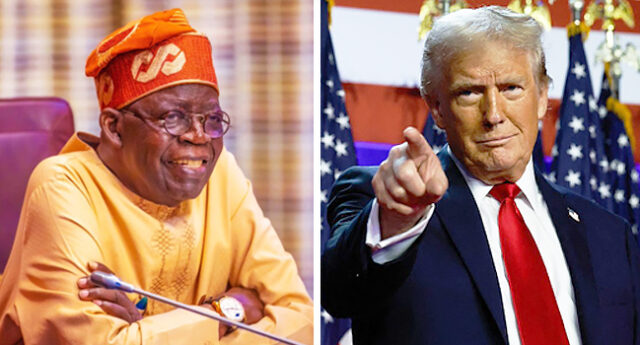
 

President Bola Tinubu has assured Nigerians that the country’s economy is resilient enough to weather any global challenges arising from the policies of U.S. President Donald Trump.

Speaking during a visit by members of The Buhari Organisation, led by former Nasarawa State Governor Tanko Al-Makura, Tinubu revealed that Nigeria had already surpassed its 2024 revenue target — and did so months ahead of schedule.

“We achieved our revenue goals by August. Our non-oil revenue is performing strongly, and that gives us confidence. We’re not worried about whatever President Trump is doing across the ocean,” Tinubu said.

He emphasized that his administration has stabilized the economy and significantly reduced dependence on oil revenues, making Nigeria less vulnerable to international shocks.

President Trump’s economic measures including tariffs and oil market interventions have drawn criticism globally.

In April, he signed an executive order suspending duty-free treatment for several countries, including Nigeria, under the International Emergency Economic Powers Act.

He also introduced a 14% tariff on Nigerian imports.

In July, under pressure from Trump, the Organization of Petroleum Exporting Countries (OPEC) and its allies agreed to raise oil production by 548,000 barrels per day to bring down global oil prices.

Despite these developments, Tinubu maintained that Nigeria’s shift towards non-oil revenue streams has paid off.

According to 2023 data from the Observatory of Economic Complexity, Nigeria exported goods worth $6.29 billion to the U.S Crude oil accounted for $4.73 billion, petroleum gas for $920 million, and nitrogen-based fertilizers for $167 million.

Google search engine

2027: CPC Bloc Will Work For Tinubu’s Re-Election – Speaker Abbas


Speaker of the House of Representatives, Tajudeen Abbas, has declared that former members of the now-defunct Congress for Progressive Change (CPC) are fully behind President Bola Ahmed Tinubu as he seeks re-election in the 2027 general elections.

Speaking during a high-level meeting with President Tinubu and former CPC stakeholders at the Presidential Villa on Tuesday, Abbas stated that the CPC bloc within the ruling All Progressives Congress (APC) is united and committed to supporting Tinubu’s second-term bid.

Abbas, who was first elected into the House of Representatives under the CPC banner in 2011, emphasized that their loyalty to the president is firm and unconditional.

“This is the first time since the merger that CPC members have come together in such large numbers to show appreciation and support for our president,” Abbas said, according to a statement issued by his media aide, Abdullahi Musa Krishi.

“On behalf of all former CPC members, I assure you of our total and unconditional support. Over 90 percent of those who actively built the CPC are present here.”

To further demonstrate their commitment, Abbas announced plans to launch a grassroots mobilisation initiative tagged “Former CPC Members for Asiwaju”, which will operate across all states, local government areas, wards, and polling units.

The Speaker commended President Tinubu for the significant roles he played in the political career of late former President Muhammadu Buhari, the CPC’s founding leader.

He also appreciated the president for the “unprecedented honour” given to Buhari after his death.

Abbas highlighted that the CPC legacy remains visible in Tinubu’s government, with several former members currently holding prominent positions.

“We have three sitting governors, numerous ministers, and many lawmakers from the CPC family who are serving in this administration. This shows the legacy is alive and well,” he added.

Google search engine

Full List Of JSS & SS Subjects As FG Unveils New Curriculum For Secondary Schools


The Federal Government has announced a major update to Nigeria’s national curriculum for junior and senior secondary schools, set to begin in September 2025.

The new curriculum places a strong emphasis on digital skills, entrepreneurship, and innovation.

According to the Ministry of Education, Digital Literacy and Basic Entrepreneurship will now be mandatory subjects for all Junior Secondary School (JSS) students.

The reform also introduces Coding and Robotics as foundational subjects to equip students with essential technology skills early in their education.

For Senior Secondary School (SSS) students, the curriculum expands further to include: Programming, Artificial Intelligence (AI), Data Science and Cybersecurity.

These subjects will be taught alongside existing core academic subjects.

Officials say the changes are aimed at aligning Nigeria’s education system with global standards and preparing students for careers in the modern, digital economy.

The new curriculum also introduces project-based learning, designed to encourage creativity, practical problem-solving and hands-on experience.

The review comes in response to ongoing demands from industry leaders and education stakeholders who have long called for a curriculum that fosters skills in technology, innovation, and enterprise.

The Ministry of Education also stated that the rollout will be supported by comprehensive teacher training, availability of learning materials and partnerships with private sector organizations to provide digital infrastructure.

Google search engine

Compiling List Of Ambassadorial Nominees Has Proven Difficult, Tinubu Admits


President Bola Tinubu has admitted that compiling a list of ambassadorial nominees has proven difficult, nearly two years after he recalled all Nigerian envoys from the country’s 109 foreign missions, which include 76 embassies, 22 high commissions, and 11 consulates.

He made this known on Tuesday while hosting a delegation from The Buhari Organisation, led by former Nasarawa State Governor, Senator Tanko Almakura, during a courtesy visit at the Presidential Villa in Abuja.

According to Tinubu, the delay in appointing new ambassadors is largely due to the complex political balancing required to make the selections.

“I couldn’t appoint everybody at once, and I appreciate your patience. There are still a few ambassadorial slots open, and many people are interested. But finalising the list has not been an easy task,” he said.

The recall of all ambassadors in September 2023 was part of a broader diplomatic overhaul initiated by Tinubu’s administration.

Since then, many missions have been temporarily managed by chargés d’affaires or senior consular officials while the government works toward nominating new representatives.

By April 2025, sources close to the presidency indicated that security and background vetting of potential nominees had been completed.

However, the final list has yet to be sent to the National Assembly for confirmation.

One major reason for the delay, insiders say, is the lack of funds, an estimated $1 billion is needed to clear arrears owed to foreign service workers, cover embassy renovations, upgrade transport and meet other operational costs.

Once nominated, ambassadorial candidates are expected to go through Senate screening conducted by the Senate Committee on Foreign Affairs, which evaluates their qualifications and experience.

After Senate confirmation, the President officially appoints them.

New ambassadors must then attend an orientation programme facilitated by the Ministry of Foreign Affairs, after which they receive Letters of Credence.

These letters are formally presented to the head of state or government in their host countries, marking the start of their official diplomatic duties.

However, Nigeria’s prolonged lack of diplomatic leadership in several regions, including parts of Europe, Southeast Asia and Latin America has raised concerns among both foreign service experts and international partners.

Analysts warn that continued delays could undermine Nigeria’s foreign policy objectives, including trade relations, international cooperation and global influence.

In his remarks, President Tinubu reaffirmed his commitment to inclusive consultations in making important appointments.

“It takes hard work and deep consultation to get this right,” he told the delegation.

He also thanked party loyalists for their ongoing support, noting that their dedication has inspired him to continue working diligently despite political and economic challenges.

Google search engine

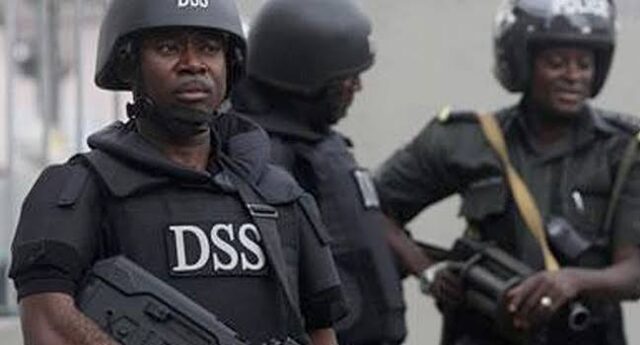
BREAKING: DSS Arraigns Nine Over Benue, Plateau Killings


The Department of State Services (DSS) has formally arraigned nine individuals believed to be key players in the recent violent attacks in Benue and Plateau States. The arraignment took place on Wednesday at the Federal High Court in Abuja.

Among those charged are Haruna Adamu and Muhammad Abdullahi, both from Awe Local Government Area of Nasarawa State.

They face a four-count charge related to coordinated attacks that occurred on June 13, 2025, in Abinsi and Yelewata communities, located in Guma LGA of Benue State.

Authorities say the crimes were committed alongside other accomplices who are still at large.

In a related case, two men from Guma LGA in Benue; Terkende Ashuwa and Amos Alede are facing a three-count charge for allegedly carrying out reprisal attacks.

These actions reportedly led to property destruction and the death of 12 cattle in Ukpam village.

The DSS has also filed charges against Halima Haliru Umar, a 32-year-old woman from Faskari LGA, Katsina State.

She is accused of withholding critical information about a man identified as Alhaji Sani, an alleged arms dealer, kidnapper and bandit.

Her four-count charge centers on her failure to report his activities.

Additionally, a separate case involves a suspected arms trafficker found in possession of seven M16 rifles, who is also facing prosecution.

Google search engine

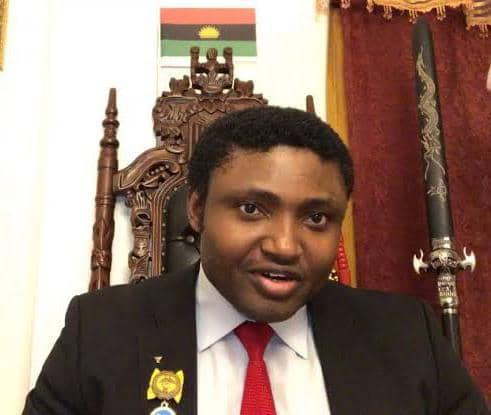
Ohanaeze Hails Finnish Authorities For Sentencing Simon Ekpa To Six Years In Prison, Lauds FG’s Fight Against Insecurity In Southeast


Ohanaeze Ndigbo has applauded the Federal Government’s firm stance against insecurity in the Southeast, citing Simon Ekpa’s incarceration as a clear signal of resolve.

In a statement from Abakaliki, Mazi Okechukwu Isiguzoro, Deputy President-General of an Ohanaeze faction, acknowledged that Ekpa’s six-year prison sentence in Finland on terrorism-related charges demonstrates the government’s progress in dismantling the terror network that severely impacted the region.

Isiguzoro also extended heartfelt appreciation to the National Security Adviser, Mallam Nuhu Ribadu, the Minister of State for Defence, Dr. Bello Matawalle and the Chief of Defence Staff, General Christopher Musa, recognizing their concerted efforts in combating regional insecurity.

He credited their actions for significantly reducing the influence of terror, including bringing an end to the protracted “sit-at-home” orders orchestrated by Ekpa, describing it as “a significant step towards stability and progress.”

“This development, marked by the Finnish government’s sentencing of Simon Ekpa, underscores the Igbo people’s resolute opposition to armed struggle under the guise of Biafra agitation,” Isiguzoro affirmed.

“We unequivocally condemn terrorism in all its forms and reject any deviation from the principles of nonviolent self‑determination.”

Ohanaeze also appealed directly to Ekpa’s followers, many of whom, data indicates, are educated young entrepreneurs misled into embracing armed struggle:

“Ohanaeze Ndigbo appeals to all Biafra agitators who have been misled by Simon Ekpa into embracing armed struggle to lay down their arms and embrace peace. We recognise that many of Ekpa’s followers are educated graduates and young entrepreneurs who were lured by false promises.”

He described Ekpa’s arrest as a renewed rallying point for peace:

“This marks a renewed clarion call and a rallying cry for all armed Biafra agitators to surrender their arms, emerge from their hiding places, and cease the violence that has plagued the Southeast.”

The group promised to advocate for rehabilitative and empowerment programs for returning agitators:

“We assure them that the Igbo leadership will implore the Federal Government to establish specialised rehabilitation and youth empowerment programs for repentant agitators, thus facilitating their reintegration into society.”

“Ekpa’s imprisonment represents a watershed moment for the Southeast. The Igbo people are deeply indebted to Mallam Nuhu Ribadu, Dr. Bello Matawalle, and General Christopher Musa for ending Ekpa’s reign of terror.”

Finally, he acknowledged that not all regional political leaders are openly celebrating but assured that privately they share Ohanaeze’s sentiments:

“We are cognizant that some Igbo political leaders, particularly Southeast governors, may be hesitant to publicly express their elations, but nevertheless, behind closed doors, they share our appreciation for the Federal Government’s landmark achievements in addressing the Southeast’s insecurity challenges.”

Google search engine

Chatham House Survey Shows Presidency, Police Among Nigeria’s Least Trusted Institutions


A new nationwide survey by Chatham House, conducted in partnership with the National Bureau of Statistics (NBS), has revealed a steep decline in public trust in key Nigerian institutions.

According to the report, the Nigeria Police Force, the Presidency, and the federal government rank among the least trusted bodies in the country.

The findings, published under the Social Norms and Accountable Governance Project, show that nearly 46% of Nigerians said they “greatly distrust” the police, while only 7% expressed strong trust in the institution.

The Presidency fared only slightly better, with 36% of respondents expressing deep distrust, and 35% saying the same of the federal government.

Other public bodies, including the judiciary, local government councils, and state-level politicians, also scored low in public confidence, highlighting a broad and systemic trust crisis across Nigeria’s governance structure.

Chatham House linked the widespread distrust to years of ineffective reform efforts. Despite more than two decades of anti-corruption campaigns, many Nigerians believe these measures have failed to produce meaningful accountability.

The report pointed to entrenched political patronage, impunity, and selective justice as key factors eroding trust in public institutions.

“Corruption has not only weakened Nigeria’s economy but corroded public trust in governance, fuelling repeated crises of legitimacy,” the report said.

The survey also revealed a contradiction in public values.

While 59% of respondents agreed that in their communities, “power matters more than honesty,” a larger percentage—73%—said they feel disturbed when people are exploited.

Researchers interpret this paradox as a reflection of harsh economic and social conditions that force individuals to prioritize survival, even while maintaining a desire for justice and fairness.

Despite the pessimism, the report highlighted some positive signs.

Nearly half of the respondents believe their local communities are willing to monitor public spending on development projects. According to Chatham House, this shows a strong civic potential that can be harnessed to drive citizen-led accountability.

To rebuild trust, the report recommends that political leaders provide visible evidence of how tax revenues are used to deliver public services.

It also warns that the government’s efforts to expand its tax base may fail unless citizens believe their contributions are being put to good use.

“Nigeria is faced with a fundamental question: how to reduce the cost of being honest in a system where corruption is entrenched and formal institutions are widely distrusted,” the report concluded.

Google search engine

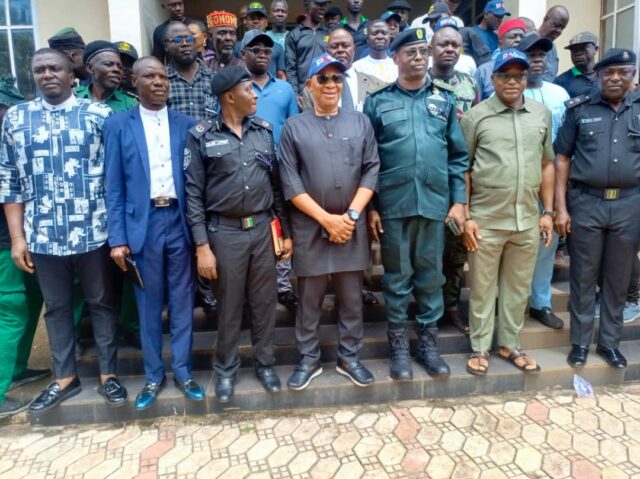
Enugu Forest Guard To Recruit 5,000 As Nkanu West Council Boss, Hon. Ogbodo Leads Security Dialogue


The Executive Chairman of Nkanu West Local Government Area, Hon. John Chukwuma Ogbodo, on Tuesday hosted an interactive security engagement at the council headquarters.

The high-level meeting brought together the Commander of the Enugu State Forest Guard, Dr. Akinbayo O. Olasoji, traditional rulers, heads of security agencies and key community stakeholders from across the Enugu East Senatorial District.

The engagement focused on collaborative approaches to tackling rural insecurity, forest protection, and safeguarding emerging agricultural estates within the state.

Speaking during the session, Dr. Olasoji announced a bold plan to recruit between 2,000 and 5,000 new officers into the Enugu State Forest Guard.

He assured participants that the recruitment would be transparent, merit-based and in alignment with Governor Peter Ndubuisi Mbah’s vision of making Enugu the safest and most secure state in Nigeria.

He emphasized the Forest Guard’s growing role in combating threats such as illegal logging, banditry and land encroachment, and called for continued cooperation from communities and traditional institutions.

In his address, Hon. Ogbodo reiterated his administration’s unwavering commitment to security, particularly in protecting rural communities and agricultural investment zones.

He commended Governor Mbah for prioritizing security and supporting local government efforts in that direction.

“The safety of our people and the protection of our farmlands and emerging estates is a top priority,” Hon. Ogbodo said.

“We fully support the governor’s security vision and welcome the expansion of the Forest Guard.”

Also lending his voice, the Chairman of Isi-Uzo LGA, Barr. Obeagu, applauded the state government’s proactive security policies.

“Governor Mbah’s leadership has made Enugu safer and more secure,” he noted. “I commend Dr. Olasoji for his hands-on approach in mobilizing efforts to safeguard our forests and rural communities.”

The engagement had in attendance high-ranking security operatives, including representatives of the Department of State Services (DSS), Assistant Commissioner of Police (ACP) Alabe, who serves as the Area Commander for Agbani, as well as the Divisional Police Officers (DPOs) of Agbani and Ozalla.

Other notable attendees include Barr. Onochie Igwesi, Barr. Chidi Ani, Rev. Okoye and Oz Nwobodo Agbo.

Others are councillors, supervisory councillors, town union presidents and a broad representation of stakeholders across the senatorial district.

Google search engine

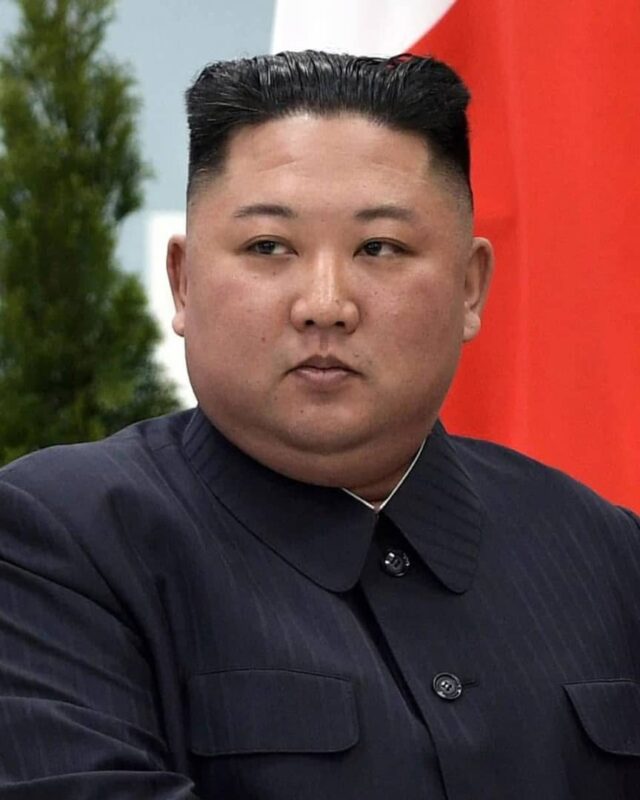
Kim Jong Un Arrives Beijing Ahead Of WWII Anniversary Parade


North Korean leader Kim Jong Un arrived in Beijing on Tuesday aboard his signature olive-green armoured train, ahead of a major military parade commemorating the 80th anniversary of the end of World War II.

His arrival, confirmed by both AFP reporters and South Korea’s Yonhap News Agency, marks only his second known trip abroad in six years.

The visit signals deepening ties among North Korea, China, and Russia, as Kim is set to appear alongside Chinese President Xi Jinping, Russian President Vladimir Putin, and leaders from over two dozen other countries.

The parade, scheduled for Wednesday at Tiananmen Square, will showcase China’s military strength through grand displays, including flyovers, precision marching, and advanced weaponry.

While specific systems remain undisclosed, observers have already spotted rumored new technology, such as a gigantic laser weapon.

Kim’s appearance at this high-profile event highlights what analysts see as a formal public alignment between Beijing, Moscow, and Pyongyang.

“Kim’s presence signals a growing trilateral partnership among these nations,” said Soo Kim, a former CIA analyst, speaking to AFP.

Photos released by North Korea’s KCNA showed Kim during the journey, smoking outside his train with top aides and smiling inside a lavish, wood-paneled carriage adorned with national symbols.

Beijing has undergone heightened security in preparation for the celebration.

Streets are lined with military personnel, white barricades, and patriotic art installations bearing the inscription “1945–2025.” Chinese flags flutter across neighborhoods, while parts of the city remain closed to the public.

The event wraps up a week of intense diplomacy for Xi, who hosted leaders of the Shanghai Cooperation Organisation (SCO) in Tianjin earlier this week.

The summit, attended by Putin and other Eurasian leaders, underscored China’s push to build non-Western alliances and challenge U.S. influence.

At the summit, Xi condemned global “bullying”, a veiled criticism of the U.S, while Putin reiterated support for Russia’s actions in Ukraine, blaming Western powers for the conflict.

Many of the SCO leaders, including Belarusian President Alexander Lukashenko, are expected to join Xi and Kim at the Wednesday parade.

Google search engine

Burkina Faso Criminalises Homosexuality, Imposes Stiff Penalties


Burkina Faso has officially passed a new law criminalising homosexuality, marking a significant shift in its legal stance on LGBTQ+ rights.

The country’s transitional, unelected parliament approved the legislation on Monday, following a draft family code earlier adopted by the cabinet.

Justice Minister Edasso Rodrigue Bayala, speaking on state television, explained the implications of the new law.

“The law provides for a prison sentence of between two and five years as well as fines,” he said.

Bayala also stated that foreign nationals found guilty under the law would face deportation.

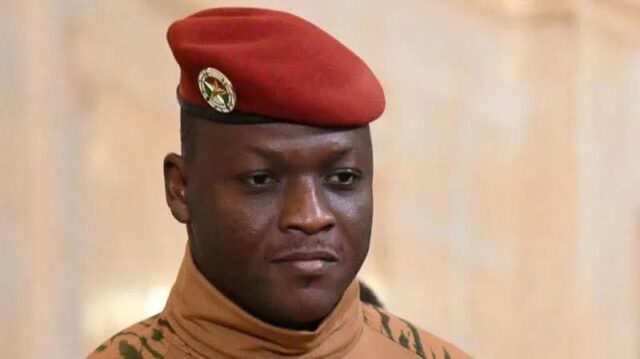
The legislation now awaits the formal signature of the country’s military leader, Captain Ibrahim Traoré, who seized power in 2022 after ousting Lt. Col. Paul-Henri Damiba. Traoré’s approval will make the law fully effective.

Before this change, Burkina Faso was among the few African countries that allowed same-sex relationships.

Unlike former British colonies that inherited anti-gay laws, Burkina Faso, once a French colony, did not have such laws at independence in 1960.

However, the nation remains deeply conservative and religious, with less than 10% of the population identifying as non-religious.

The move aligns Burkina Faso with similar legislation in neighbouring countries. Mali, also under military rule, criminalised homosexuality last year.

Nigeria has long enforced a strict ban, while Ghana passed a controversial anti-LGBTQ+ bill that was never signed into law.

Uganda has implemented some of the harshest measures, including life sentences for consensual same-sex acts and the death penalty for “aggravated homosexuality.”

International human rights organisations have criticised the growing wave of anti-LGBTQ+ laws across Africa.

The World Bank previously suspended loans to Uganda over similar legislation, although the ban was later lifted.

Google search engine

MOST COMMENTED

- Advertisement -
Google search engine