Home Blog Page 381

Resign And Join Private Sector If You Want Higher Salaries – Lawal To Politicians
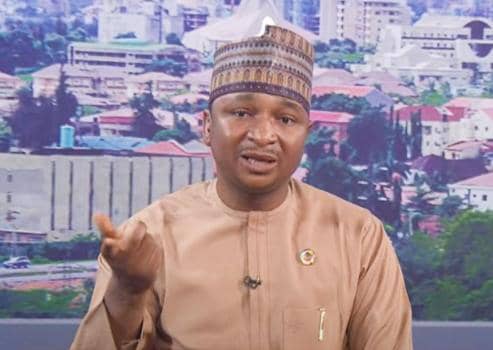
 

Founder of Follow The Money, Hamzat Lawal, has criticized Nigerian politicians seeking salary increases, urging them to resign and explore private sector opportunities instead of burdening already struggling citizens.

Speaking Thursday on Channels Television’s The Morning Brief, Lawal reacted to the Revenue Mobilisation Allocation and Fiscal Commission’s (RMAFC) recent proposal to review the salaries of political officeholders, including President Bola Tinubu.

“If they believe their salaries are inadequate, they should quit and find private sector jobs or even start businesses where they can pay themselves what they want,” Lawal stated.

He acknowledged that public office salaries hadn’t been reviewed in over three decades but argued that the country’s current economic conditions make such a review “insensitive” and ill-timed.

Lawal described the proposal as a “political trap” aimed at damaging President Tinubu’s public image, warning that any move to implement salary hikes would contradict the president’s earlier call for national sacrifice.

“Mr. President said Nigerians should tighten their belts so why are political leaders unwilling to do the same?” he asked.

The activist also criticized the RMAFC for failing to prioritize its constitutional responsibilities, such as ensuring value for public expenditure and promoting infrastructure investment.

He questioned why the focus remained on salaries rather than broader allowances, foreign travel estacodes, and the luxury enjoyed by top officials, such as armored vehicles.

Lawal further recommended slashing the salaries of high-earning politicians to boost the earnings of low-income public servants and called for full autonomy for local governments as a better use of national resources.

Meanwhile, RMAFC Chairman Mohammed Shehu revealed that President Tinubu currently earns ₦1.5 million monthly, while ministers earn under ₦1 million, a pay scale that has remained unchanged since 2008.

Shehu described these figures as outdated and inadequate in light of increasing national responsibilities.

Google search engine

2025 Bye-Elections Mirror 2015 Failures, Nothing Has Changed – Expert Faults INEC Over Repeated Irregularities


Despite a decade of electoral reforms and technological upgrades, the 2025 by-elections have shown no significant improvement over past polls, says Bukola Idowu, Executive Director of the Kimpact Development Initiative (KDI).

Speaking on Political Paradigm, a Channels Television programme, Idowu described last Saturday’s by-elections as a repeat of long-standing electoral failures, citing reports from both local and international observer groups.

“From what we observed across key states, there’s no marked difference between the irregularities in 2015 and what happened in 2025,” he said.

“We’re still seeing voter suppression, electoral violence, and issues with result transparency.”

Idowu singled out Kogi as a flashpoint of violence, while also referencing disturbances in Anambra, Ogun, Enugu, Kaduna, and Kano.

He criticised the Independent National Electoral Commission (INEC) for not fully uploading results to the IReV portal, despite having nearly a year to prepare following the postponement of the polls.

“INEC cannot continue to hide behind excuses like funding shortfalls. The delay should have provided ample time to get logistics right,” he stressed.

He also questioned INEC’s continued partnership with the National Union of Road Transport Workers (NURTW) for election logistics, citing allegations of partisanship.

He called for private sector logistics providers to replace the union in future elections.

On voter turnout, Idowu noted a steady decline driven by waning public trust in the electoral system.

“The process has become increasingly transactional. Voters no longer believe their ballots matter,” he observed.

He added that international development partners who support Nigeria’s democratic process have grown disillusioned, with minimal progress despite significant investments.

Saturday’s by-elections were held in 16 constituencies across 12 states to fill legislative vacancies caused by resignations and deaths.

The elections included races for Senate, House of Representatives and State Assembly seats.

Google search engine

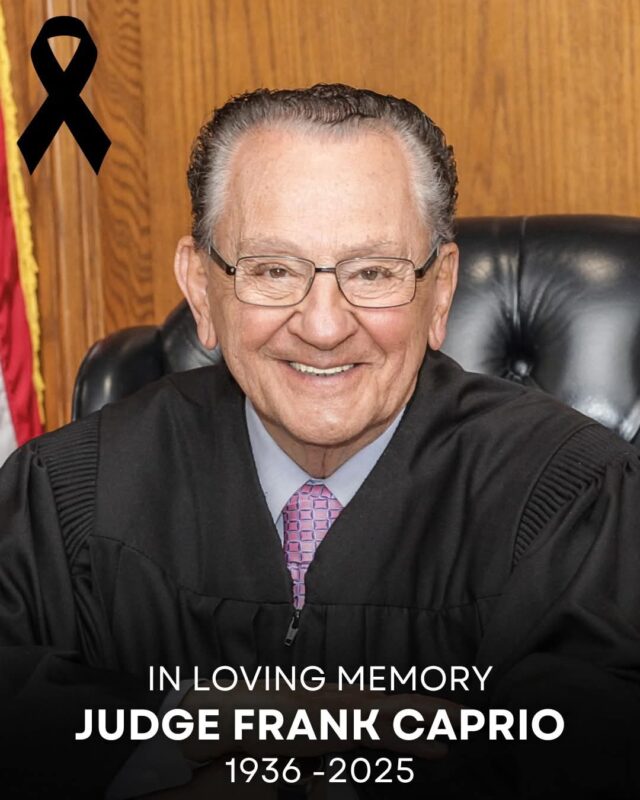
Frank Caprio, America’s Beloved ‘Compassionate Judge’, Dies At 88


Frank Caprio, the widely admired U.S. judge who gained international fame for his empathy and kindness in court, has died at the age of 88.

His family confirmed the news on Wednesday through a video shared on his official Instagram page.

Caprio, who spent nearly four decades on the bench before retiring in 2023, passed away peacefully surrounded by loved ones after a long battle with pancreatic cancer, according to his son, David Caprio.

“Judge Caprio was beloved around the world for his deep compassion, humility, and unwavering faith in humanity,” the family said in a separate statement, describing him as “a true example of what it means to serve with heart.”

Caprio became a household name through his courtroom TV show Caught in Providence, which aired from 2000 and showed him presiding over minor traffic and parking violation cases with extraordinary empathy.

His gentle manner and often humorous interactions, especially with children and elderly defendants, resonated with viewers globally.

Clips from the show attracted tens of millions of views online, earning him the nickname “America’s Nicest Judge.”

Just a day before his passing, Caprio shared a heartfelt video from his hospital bed asking fans for prayers, revealing that he had suffered a recent health setback.

Born in 1936 in Providence, Rhode Island, Caprio came from humble beginnings.

He worked various jobs growing up, shining shoes and delivering newspapers, before attending Suffolk University Law School at night while teaching school during the day.

He eventually became Chief Judge of the Providence Municipal Court, a position he held from 1985 until his retirement.

In 2022, Caprio published an autobiography titled Compassion in the Court: Life-Changing Stories from America’s Nicest Judge, reflecting on his unique approach to justice and the lives he touched.

Rhode Island Governor Dan McKee paid tribute to Caprio, calling him “a symbol of empathy on the bench” and announcing that flags across the state would fly at half-staff in his honor.

“He will be remembered not only as a respected jurist but also as a devoted husband, father, grandfather, great-grandfather, and friend,” his family added.

Google search engine

Benue Assembly Confirms Six Commissioners, Rejects Law Professor

Professor Ornguga,

The Benue State House of Assembly has confirmed six out of eight commissioner nominees sent by Governor Hyacinth Alia but rejected the nomination of Professor Timothy Yangien Ornguga, citing multiple petitions and questions over his academic credentials.

During Thursday’s plenary session presided over by Speaker Aondona Dajoh, the lawmakers also turned down the nomination of James Dwen, directing the governor to submit replacements for both candidates.

Professor Ornguga, a law lecturer, faced scrutiny after four petitions were submitted by former students, alleging misconduct.

Additionally, members of the Assembly raised concerns over his educational background, particularly the absence of a primary school certificate.

The Majority Leader, Saater Tiseer, presented the petitions, while Manger Manger, the lawmaker representing Tarka Constituency, questioned the professor’s academic history.

In response, Ornguga denied wrongdoing, claiming that a grading issue involving a student was the result of interference by the dean of Benue State University, not personal misconduct.

Meanwhile, the House approved the nominations of six other individuals: Theresa Ikwue, Benjamin Ashaver, Adamu Ijaguwa, Peter Egbodo, Denis Iyaighgba, and Paul Ogwuche, all of whom were confirmed as commissioners-designate.

Following the session, the Assembly’s spokesperson and Makurdi North representative, Alfred Berger, addressed the media.

He clarified that the controversial report about a bill seeking to ban public displays of affection among couples in Benue was false and said a panel had been constituted to investigate the source of the misleading publication.

The Assembly is expected to reconvene on Friday to continue its screening of additional nominees.

Google search engine

Obizue Takes Over As New Controller Of Corrections In Enugu


Mr. Valins Obizue has officially assumed duty as the new Controller of Corrections for Enugu State, taking over from Mrs. Prisca Oku, who has been promoted to the rank of Assistant Controller General (ACG) and deployed as the new Zonal Coordinator of the Nigerian Correctional Service (NCoS), Zone M, Enugu.

Speaking during the handover ceremony held on Thursday in Enugu, Obizue called on officers and personnel of the command to rededicate themselves to duty and uphold professionalism in the discharge of their responsibilities.

“I have worked with many of you in different capacities and locations. I know your discipline and commitment to duty,” Obizue said.

“Together, we will work in unity to sustain and improve the achievements of this command, making it a model across the country.”

He also pledged to uphold the high standards and legacies left behind by his predecessors, emphasizing collaboration and accountability as key pillars of his leadership.

In her remarks, outgoing Controller Mrs. Prisca Oku reflected on her brief but impactful tenure, which lasted four months.

She noted that significant strides had been made in enhancing the welfare and healthcare of inmates under her watch.

“One of our key achievements was securing the attention of the state government towards enrolling inmates into the Enugu State Universal Healthcare Coverage,” Oku said.

“I encourage all personnel to extend their support to the new Controller as they did for me, and to continue striving to maintain the command’s high performance.”

The handover ceremony featured the signing of official documents, the symbolic presentation of the command’s flag and an inspection of departments and offices at the command headquarters.

Google search engine

Nigerian Pidgin Now A Global Language, Says NOUN Professor


A Professor of Linguistics at the National Open University of Nigeria (NOUN), Christine Iyetunde Ofulue, has declared Nigerian Pidgin (Naija) a growing global language, citing its increasing use and widespread influence across borders.

Delivering NOUN’s 35th inaugural lecture in Abuja, titled “Reclaiming Marginalised Voices: Intersections of Diversity and Educational Spaces”, Professor Ofulue highlighted the rise of Nigerian Pidgin as a powerful communication tool and cultural symbol.

According to her, the language is now spoken by an estimated 100 to 120 million people, making it the 14th most spoken language in the world.

She noted that among 76 documented global pidgins and creoles, Nigerian Pidgin stands out for both its reach and impact.

Ofulue explained that what began as a colonial-era trade language has evolved into a national lingua franca, uniting diverse groups across Nigeria and serving as a medium for everyday conversation, artistic expression, and social cohesion.

“Nigerian Pidgin is a testament to our resilience. It reflects how ordinary Nigerians connect, share stories, and create identity beyond official structures,” she said.

Highlighting Nigeria’s unique linguistic landscape, she described it as Africa’s most linguistically diverse nation, with about 540 languages spanning three major language families, Afro-Asiatic, Nilo-Saharan, and Niger-Congo, spoken by over 223 million people.

“In Nigeria, multilingualism isn’t rare, it’s a way of life,” she added. “People switch seamlessly between local, regional, and national languages.”

However, Ofulue raised concerns over the marginalisation of minority languages, noting that many face extinction due to policy neglect, lack of intergenerational transmission, and the dominance of English in formal domains.

She emphasized that despite its popularity, Nigerian Pidgin remains largely excluded from official and educational platforms, calling for deliberate efforts to promote its inclusion and that of other underrepresented languages.

Some Nigerian Pidgin words already recognized by the Oxford English Dictionary include eba, japa, abi, suya, danfo, okada, Yahoo boy, and area boy.

On reclaiming marginalised voices, Ofulue recommended curriculum reforms, inclusive teaching methods, and technological innovations that embrace indigenous languages as valuable assets rather than outdated traditions.

She also advocated for the digitisation of indigenous knowledge, creation of technical glossaries, and development of multimedia content in native languages to enhance learning and representation in digital spaces.

In his closing remarks, NOUN Vice-Chancellor, Professor Olufemi Peters, praised Ofulue’s lecture, humorously switching to pidgin himself to applaud her insights, a move that earned him enthusiastic cheers from the audience.

Google search engine

ASUU Slams FG Over Approval Of New Private Universities Despite Moratorium

Education Minister,

The Academic Staff Union of Universities (ASUU) has criticised the Federal Government for approving the establishment of new private universities, despite its recently announced seven-year moratorium on creating new tertiary institutions.

In a strongly worded statement issued on Thursday and signed by ASUU President, Dr. Christopher Piwuna, the union described the move as contradictory and questioned the logic behind licensing more private universities when access to university education is no longer a major issue in Nigeria.

“ASUU watched in awe as the government announced a moratorium on new tertiary institutions, only to turn around and approve nine new private universities,” the statement read.

While acknowledging the constitutional right of private individuals to establish universities, ASUU insisted that the process must be strictly regulated to ensure quality.

The union accused successive administrations of using university licences as tools of political patronage, warning that the unchecked growth of tertiary institutions poses a threat to educational standards.

“We now have a total of 339 universities—72 federal, 108 state, and 159 private institutions, averaging about nine universities per state, excluding polytechnics and colleges of education,” ASUU noted.

The union called the situation a “scandalous proliferation” of universities and argued that both public and private sectors should be subject to the moratorium if the goal is to strengthen existing institutions.

“Past and present administrations should be ashamed of this reckless expansion, which continues to pull Nigerian universities down in global rankings,” ASUU stated.

The union also pointed fingers at university administrators and regulatory agencies for their role in poor staffing and inadequate planning across the tertiary education sector.

ASUU warned that expanding the number of institutions without adequate manpower would dilute academic quality, devalue degrees, and harm the country’s reputation in global education rankings.

ASUU further recalled its decade-long opposition to what it called “mushroom universities” and expressed disappointment that its warnings have been largely ignored.

“It’s no surprise that the Education Minister revealed that over 30 universities currently have zero admission subscriptions. These institutions are unsustainable and wasteful,” the union stated.

ASUU welcomed the moratorium in principle but emphasized that it must be genuinely enforced across both public and private universities to be effective.

The Federal Executive Council had, on August 13, approved the suspension of new federal tertiary institutions for a seven-year period, citing underutilization of existing schools.

Minister of Education, Dr. Tunji Alausa, said some federal universities are operating far below capacity, revealing that one northern university had 1,200 staff for fewer than 800 students, calling it a “waste of government resources.”

Meanwhile, ASUU reiterated its longstanding demands, which include the renegotiation of the 2009 agreement, payment of revitalisation funds, clearing of outstanding salary arrears, and resolution of promotion backlogs affecting lecturers in public universities.

Google search engine

Dual Mandate For Colleges Of Education Will Strengthen Teacher Training – FG

Education Minister

The Federal Government has announced that the recently granted dual mandate to Colleges of Education will enhance the quality and scope of teacher education in Nigeria.

Speaking at the National Education Summit in Abuja on Thursday, the Minister of Education, Dr. Maruf Tunji Alausa, represented by the Minister of State for Education, Suwaiba Ahmad, described the reform as a “historic milestone” for Nigeria’s educational system.

The new policy, backed by the Federal Colleges of Education (Establishment) Act No. 43 of 2023, allows Colleges of Education to offer both Nigerian Certificate in Education (NCE) and degree programmes simultaneously.

“For the first time, our Colleges of Education are legally empowered to run NCE and degree programmes concurrently. This gives them full legislative and operational authority to expand academic offerings while staying true to their core mission of training professional teachers,” Ahmad said.

The Executive Secretary of the National Commission for Colleges of Education (NCCE), Prof. Paulinus Okwelle, also praised the reform, stating that it would revitalize teacher education and broaden access for aspiring educators.

“Previously, colleges had to partner with universities to award degrees. Now, with legal backing, they can offer degree programmes independently using their own academic resources and staff,” he noted.

Prof. Okwelle emphasized that the dual mandate will lead to the graduation of teachers with both NCE and Bachelor of Education (B.Ed) degrees, improve the teacher supply pipeline, and help retain skilled educators within the system.

Also speaking, Chairman of the House Committee on Federal Colleges of Education, Hon. Adamu Tanko, assured stakeholders that degrees awarded by Colleges of Education will hold the same value and recognition as those awarded by traditional universities.

Google search engine

INEC Presents Certificates Of Return To Winners Of Bye-Elections


The Independent National Electoral Commission (INEC) on Thursday officially presented Certificates of Return to newly elected senators and House of Representatives members who emerged victorious in the August 16 by-elections.

The presentation took place at INEC’s national headquarters in Abuja, where National Commissioners handed certificates to the winners.

Among the new senators is Emmanuel Nwachukwu of the All Progressives Grand Alliance (APGA), who was elected to represent Anambra South Senatorial District, and Joseph Ikpea of the All Progressives Congress (APC), who won the Edo Central Senatorial District.

Five newly elected members of the House of Representatives also received their certificates:

Barrister Omosede Igbinedion (APC) – Ovie North East and Ovie South West Federal Constituency, Edo State

Mukhtar Rabi’u Garki (APC) – Babura/Garki Federal Constituency, Jigawa State

Fidelix Bagudu (APC) – Chikun/Kajuru Federal Constituency, Kaduna State

Adesola Ayoola-Elegbeji (APC) – Ikenne/Shagamu/Remo North Federal Constituency, Ogun State

Fola Oyekunle (PDP) – Ibadan North Federal Constituency, Oyo State.

Google search engine

Confusion As PDP Leaders Reject Zoning


A major rift has emerged within the People’s Democratic Party (PDP) as key leaders from Southern Nigeria have distanced themselves from a zoning summit currently taking place in Lagos.

The summit, convened by the party’s Zoning Committee at the Legend Hotel in Ikeja, is intended to discuss power-sharing arrangements within the PDP’s National Working Committee (NWC) ahead of the party’s upcoming convention scheduled for November 15 and 16, and to prepare for the 2027 general elections.

However, in a joint statement released on Thursday, several state party chairmen, National Assembly members and other prominent southern PDP stakeholders rejected the legitimacy of the summit, describing it as unrepresentative and exclusionary.

“Any resolutions or outcomes from that meeting are not binding on us and do not reflect the collective will of the PDP across Southern Nigeria,” the group said.

“Decisions made in secrecy and exclusion cannot represent consensus.”

The statement was signed by the PDP Chairmen of Imo, Abia, Cross River, Akwa Ibom, and Rivers States; Austin Nwachukwu, Abraham Amah, Venatius Ikem, Aniekan Akpan, and Aaron Chukwuemeka.

Others included the National Vice Chairman (South-East), Hon. Chidiebere Egwu Goodluck, and House Minority Leader, Hon. O.K. Chinda.

Also among the signatories were Senators Igwe Nwagu, Mao Ohuabunwa, George Sekibo and Mike Ama Nnachi, along with former National Secretary Rt. Hon. Onwe S. Onwe, Deputy National Legal Adviser Barr. Okechukwu Osuoha and ex-Ebonyi State Legal Adviser Barr. Mudi Erhenede.

They described the summit titled the “PDP Southern Zoning Consultative Summit” as flawed from the start, noting that several state chairmen, national officers, and prominent PDP leaders, especially from the South-East and South-South, were not invited.

“It is deeply disturbing that such a meeting took place without informing key state party chairmen and other vital stakeholders,” the statement said.

“Even the National Secretary and Deputy National Legal Adviser were left out, along with several former governors and high-ranking party members.”

The group accused the organizers of acting to promote the personal ambitions of a few individuals rather than the party’s collective interest.

They also noted that the official PDP Zoning Committee has not yet submitted its report to the National Executive Committee (NEC), making any early conclusions from this summit both premature and inappropriate.

They called on the PDP’s National Working Committee, NEC, and all party stakeholders to disregard any outcomes of the Lagos summit, labeling the gathering as “illegal” and “divisive.”

“This process undermines our party’s core principles of inclusiveness and consensus-building,” the group warned.

Google search engine

MOST COMMENTED

- Advertisement -
Google search engine