Home Blog Page 39

2027: Kwankwaso, Atiku, Obi, Amaechi Join Forces Against Tinubu

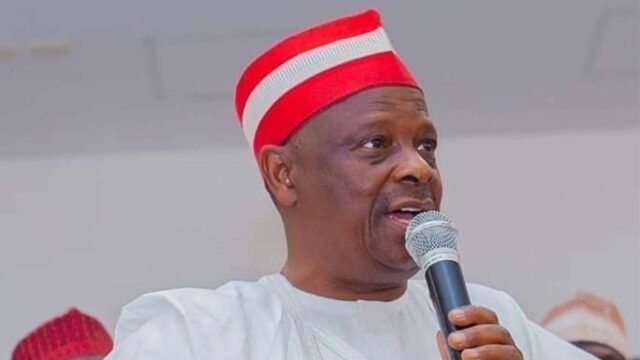
In a development set to energize opposition politics ahead of the 2027 general elections, former Kano State governor Rabiu Musa Kwankwaso resigned yesterday from the New Nigeria Peoples Party (NNPP).

This move clears the way for him to join the African Democratic Congress (ADC) and align with other major opposition figures.

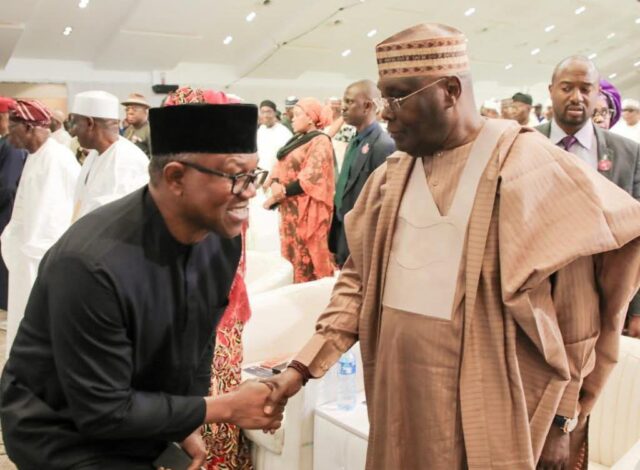
Former Vice President Atiku Abubakar (PDP), ex-presidential candidate Peter Obi (Labour Party), former Senate President David Mark, and former governors Rauf Aregbesola (Osun) and Rotimi Amaechi (Rivers) are already associated with the ADC.

Analysts suggest that this coalition raises hope for a more viable opposition in 2027.

Observers note that the lack of a similar alliance in 2023 contributed to the opposition’s inability to clinch the presidency.

In that election, Atiku (PDP) polled 6,984,520 votes, Obi (Labour Party) 6,101,533 votes, and Kwankwaso (NNPP) 1,496,687 votes, while Bola Ahmed Tinubu (APC) won with 8,794,726 votes.

Analysts contend that had these votes been combined under one platform, the ruling party might have been defeated.

Despite these calculations, the opposition now faces a more challenging landscape. Over the past three years, the ruling APC has consolidated power across Nigeria, sweeping the nucleus of major and minor parties.

For the first time since 1999, Lagos, Kano, Kaduna, and Rivers all have APC governors, while resource-rich states like Lagos, Rivers, Akwa Ibom, and Delta remain under APC control.

Kano, previously resistant due to Kwankwaso’s influence, remained outside APC’s full control. Efforts to woo him failed, and as negotiations lingered, Kwankwaso opted to move independently, creating new concerns for both APC leaders and NNPP stalwarts.

For APC members, including Deputy Senate President Barau Jibrin, Kwankwaso’s defection could mean adjusting governorship ambitions to accommodate the new political entrant.

For Kwankwaso, it entails rebuilding a support base and forming new alliances loyal to his vision.

Political analysts see this as a strategic step capable of energizing opposition politics in Nigeria. Kwankwaso, a former governor, ex-minister, and presidential candidate, now positions Kano as a renewed center of opposition ahead of 2027.
Why Kwankwaso left NNPP

In a statement, Kwankwaso cited “strategic realignment” as the reason for leaving NNPP. He emphasized that the move reflects the broader challenges smaller parties face in translating regional strength into national success.

Though NNPP performed well in Kano and pockets of other regions in 2023, it lacked the organizational depth and nationwide reach of dominant parties like APC and PDP.

His departure leaves NNPP with a leadership vacuum, and party officials are cautiously assessing the situation.

Kwankwaso’s choice to join the ADC reflects a strategic preference for coalition-building rather than political isolation.

The ADC has emerged as a platform uniting fragmented opposition forces, offering credibility and national reach. With figures like Atiku Abubakar and Rotimi Amaechi on board, ADC becomes a viable vehicle for opposition consolidation.

The move grants Kwankwaso multiple advantages: expanding his political arena, enhancing negotiating power, and positioning him as a key stakeholder in national politics.

Importantly, it allows him to remain relevant in a landscape where alliances often determine electoral outcomes.

According to the Kwankwasiyya Movement’s spokesperson, Mansur Kurugu, the decision prioritizes national interest over personal ambition.

“The focus is the ‘Save Nigeria Project,’ a broad initiative to address systemic national challenges,” he said.

Kurugu stressed that the coalition aims to provide Nigerians a credible alternative to the current administration.

On questions about arrangements with ADC leaders or ambitions for 2027, Kurugu indicated a flexible, collective approach: if calculations call for Kwankwaso to contest the presidency, he will; if it calls for him to serve as vice president, he will do so.

The 2019 experience, when Atiku, Obi, and Kwankwaso worked together in PDP, supports the feasibility of such coordination.

Recent engagements with Atiku Abubakar and other opposition figures signal renewed willingness to set aside past rivalries.

Discussions focused on building a unified front, power-sharing arrangements, and avoiding fragmentation that weakened past opposition efforts.

ADC officials confirmed that Kwankwaso joined without conditions, aiming to build the party and opposition ranks while ensuring a level playing field for all aspirants.

Analyst Kabiru Sufi believes Kwankwaso’s defection could reshape Nigeria’s political trajectory. With alignment alongside Atiku, Obi, and Amaechi, the opposition may mount a competitive challenge to APC, creating a potential two-bloc system.

However, internal party dynamics and candidate calibre will influence how strong Kwankwaso’s impact will be.

Kano as the backbone of Kwankwaso’s influence
Kano remains central to Kwankwaso’s political relevance. With strong grassroots support through the Kwankwasiyya Movement, Kano could provide a crucial electoral advantage.

In 2023, Kwankwaso secured nearly one million votes in the state.

Despite past conflicts with his former political godson, Governor Abba Kabir Yusuf, Kwankwaso could still challenge APC dominance in Kano, depending on whether his supporters follow him to ADC.

Historically, Kano has been a decisive battleground, influencing northern political outcomes. Kwankwaso’s ability to mobilize voters there could tilt national calculations.

His defection mirrors past shifts that reshaped Nigerian politics, such as the 2013 PDP-to-APC defections that contributed to APC’s 2015 victory.

While defections in Nigeria often revolve around survival, coalition-building, and access to winning structures rather than ideology, Kwankwaso’s strategy adds a twist: he aims not just to join a larger party but to transform a smaller one into a national force.

Kwankwaso’s defection accelerates opposition consolidation, intensifies competition, and reshapes regional dynamics.

If managed well, it could make the 2027 elections Nigeria’s most competitive since 2015.

Mismanagement, however, risks fragmenting the opposition and handing APC another easy victory.

Google search engine

2027: ADC Faces Collapse Without Obi, Atiku Set To Emerge Flagbearer – Fayose

Former Ekiti State Governor, Ayodele Fayose, has warned that the African Democratic Congress (ADC) risks losing its political relevance if Peter Obi fails to secure the party’s presidential ticket ahead of the 2027 elections.

Speaking on the sidelines of the PDP National Convention in Abuja, Fayose described Obi as a “fantastic individual” whose influence was pivotal in the 2023 elections, but argued that the same momentum may not automatically translate into victory in 2027.

“If Obi is not on the ADC ballot, that could mark the end of the party. From current indications, he may not be, and that leaves the door open for Atiku Abubakar to clinch the ticket,” Fayose said.

He further suggested that Obi’s political future remains uncertain within the evolving opposition landscape, dismissing the possibility of a return to the Labour Party and questioning whether he would accept a vice-presidential role.

“Obi is a good man, a fantastic guy, but becoming president at this time is not an easy task,” he added.

Fayose also emphasised that Obi’s 2023 performance was largely driven by personal appeal rather than party structure, noting that his influence could still generate impact regardless of platform.

Meanwhile, the Peoples Democratic Party (PDP) National Convention is underway in Abuja, drawing over 2,500 delegates from across the country.

The convention, organised by the Abdulrahman Mohammed-led caretaker committee, aims to reposition the party ahead of the 2027 elections despite internal divisions.

Chairman of the convention planning committee, Okezie Ikpeazu, confirmed the participation of delegates nationwide, while assuring that reconciliation efforts would continue to address lingering disputes within the party.

Google search engine

2027: APC Still Jittery Despite 31 Governors, 90 Percent NASS Members – ADC

The African Democratic Congress (ADC) has taken a swipe at the ruling All Progressives Congress (APC), accusing it of showing signs of anxiety ahead of the 2027 general elections despite its overwhelming control of Nigeria’s political landscape.

Speaking during a television interview, the ADC’s National Publicity Secretary, Bolaji Abdullahi, questioned why a party with 31 governors and a dominant presence in the National Assembly would appear unsettled.

“Why is a party with such massive control still panicking? Why the constant moves to destabilise opposition parties?” he asked, suggesting that the APC’s posture reflects deeper concerns about its electoral strength.

Abdullahi argued that the ruling party’s dominance should ordinarily inspire confidence, but instead appears to be breeding unease, particularly in the face of a potentially free and fair election.

According to him, the APC’s current stance indicates uncertainty about its chances at the polls.

He further claimed that the party’s cohesion is largely tied to the leadership of President Bola Ahmed Tinubu, warning that the APC could struggle to remain united once that influence wanes.

“If you take power away from the APC, the party could quickly unravel. It is largely held together by the current leadership,” he said, describing the party as a “special purpose vehicle” that has already achieved its primary goal of producing presidents.

Looking ahead, Abdullahi disclosed that the ADC is considering a consensus approach in selecting its presidential candidate for 2027, describing it as a cost-effective and unifying strategy.

He noted that while direct primaries remain an option, indirect primaries have been ruled out in line with the amended Electoral Act.

Google search engine

Tinubu Donates Entire Salaries Since Assuming Office To Armed Forces

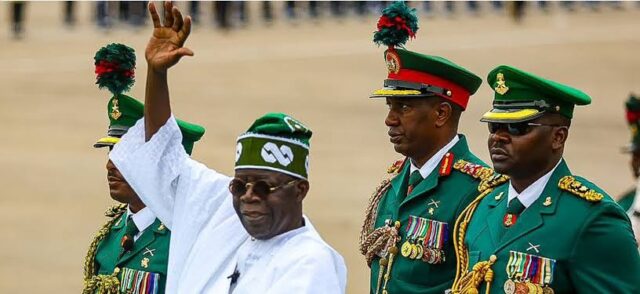
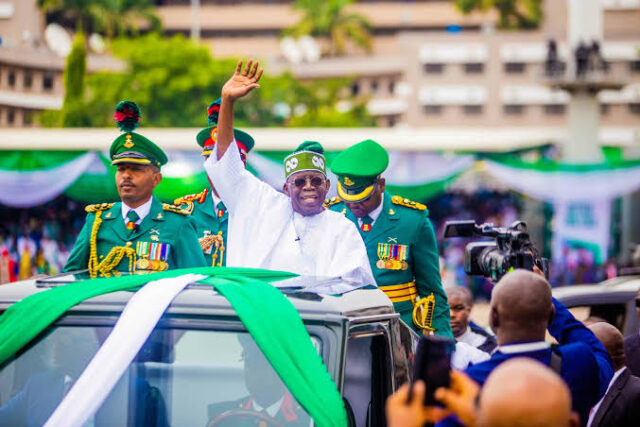
President Bola Ahmed Tinubu has pledged to donate all his salaries since assuming office in May 2023 to a newly created welfare fund for members of the Nigerian Armed Forces and their families.

The President made the announcement in a personally signed statement to mark his 74th birthday, describing the initiative as a moral obligation to those who risk their lives for the nation.

According to him, the fund will cater to serving personnel, soldiers wounded in the line of duty, those who have lost limbs, and the families of fallen heroes.

He disclosed that he has directed the Accountant-General of the Federation to set up a dedicated account for the scheme.

“As a personal commitment, all my salaries since assuming office will be paid into this account as seed funding,” Tinubu stated, adding that the gesture is independent of existing welfare and insurance structures for military personnel.

He called on governors, lawmakers, the private sector, and well-meaning Nigerians to support the initiative, stressing that caring for the nation’s defenders is a collective responsibility.

“We must never forget those who stand in harm’s way for our peace, nor the sacrifices borne by their families. This is not charity—it is a duty,” he said.

The move builds on earlier efforts by the President, including his ₦200 million donation to the Armed Forces Remembrance Day Appeal Fund and the launch of the “Thank a Soldier” digital platform aimed at supporting military veterans.

Tinubu, who opted for a low-key birthday celebration in light of current economic realities, has continued to receive goodwill messages from political leaders and stakeholders across the country.

Google search engine

2027: Obi Raises Alarm Over Alleged Plot To Stop His Presidential Bid

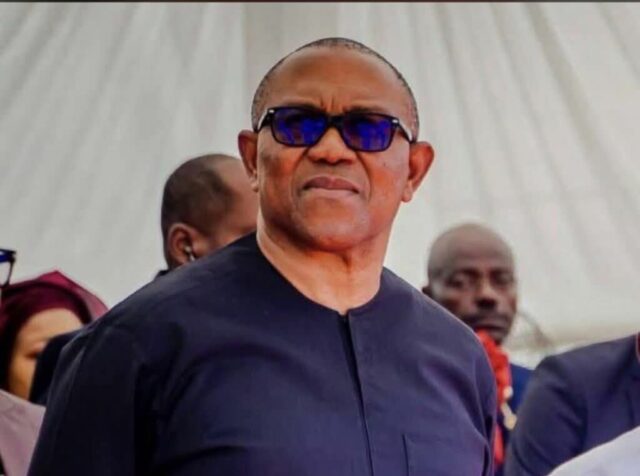
Former Anambra State Governor, Peter Obi, has alleged that forces within the administration of President Bola Ahmed Tinubu are working to undermine his chances ahead of the 2027 presidential election.

Speaking during a radio interview, Obi claimed there were deliberate efforts to block him from emerging as a candidate under any political platform in the next general elections.

He described the situation as troubling, warning that it raises concerns about the integrity of Nigeria’s democratic process.

Obi also took aim at elements of the country’s electoral framework, criticising provisions in the recently signed electoral law.

He described as “shameful” what he termed the omission of forgery as a punishable electoral offence, arguing that such gaps could weaken accountability in the system.

Reiterating his stance on governance, the former Labour Party presidential candidate insisted that Nigeria’s challenges demand competent and experienced leadership, particularly in economic management and administration.

He maintained that he possesses the capacity to steer the country in a better direction.

Google search engine

El-Rufai’s Mother Buried In Abuja Amid High-Profile Tributes

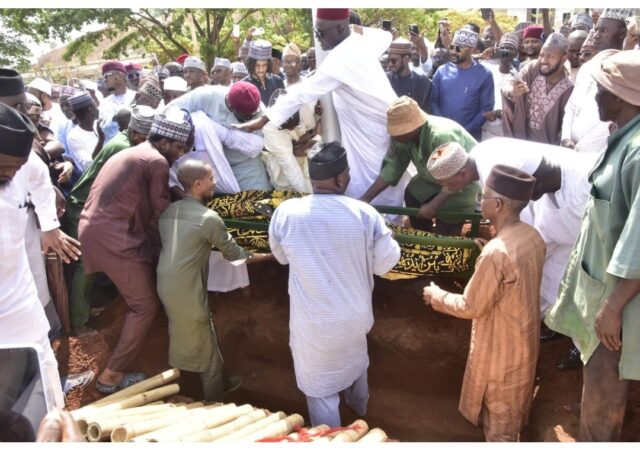
Hajiya Umma El-Rufai, mother of former Kaduna State governor Nasir El-Rufai, was laid to rest in Abuja on Sunday in accordance with Islamic rites.

She was buried at the Gudu Cemetery following funeral prayers attended by a host of top government officials, political figures, and dignitaries from across the country.

The matriarch passed away on Friday in Cairo, Egypt, where she had been receiving medical treatment. Her death came shortly before the release of her son, who had been in detention for over a month.

Among those who extended condolences were President Bola Ahmed Tinubu, Kaduna State Governor Uba Sani, and the National Security Adviser, Nuhu Ribadu.

Prominent political figures, including former Vice President Atiku Abubakar, also paid condolence visits to the family at their Abuja residence.

Google search engine

Oluwo Sparks Debate, Says Nigerians May Push For Tinubu’s Third Term

The Oluwo of Iwoland, Oba Abdulrosheed Adewale Akanbi, has stirred fresh political conversation by suggesting that Nigerians may push for a constitutional amendment to allow President Bola Ahmed Tinubu to remain in office beyond the current two-term limit.

Speaking through his spokesperson, Ibrahim Alli, in a message marking Tinubu’s 74th birthday, the monarch described the President as a decisive and courageous leader whose policies are beginning to reposition the nation’s economy.

According to him, Tinubu’s reforms have already produced measurable gains, including improved currency stability, a sharp rise in foreign reserves—from about $1 billion to nearly $50 billion—and stronger economic indicators.

He attributed these developments to bold structural reforms such as exchange rate unification, increased oil production, and rising foreign investment inflows.

The monarch also highlighted key governance strides, including local government autonomy, increased allocations to states, ongoing road infrastructure projects, and enhanced palliative measures at the grassroots level.

He noted that while previous administrations attempted similar reforms, they often retreated under public pressure.

In contrast, he said Tinubu has demonstrated the resolve to take tough decisions and stand by them.

“Many Nigerians may eventually call for a constitutional review to allow him serve beyond two terms,” the Oluwo said, adding that only strong leadership can drive the kind of transformation Nigeria needs.

Since assuming office in May 2023, Tinubu has implemented major economic changes, including the removal of fuel subsidy and reforms in the foreign exchange system—moves the government says are aimed at long-term stability.

However, Nigeria’s constitution currently limits presidents to two terms of four years each, meaning any extension would require approval through a constitutional amendment by both the National Assembly and state legislatures.

The remarks come amid growing political discussions about Tinubu’s leadership style and the future direction of governance in Nigeria.

Google search engine

JUST IN: Kwankwaso Resigns From NNPP

Former Kano State Governor and 2023 NNPP presidential candidate, Rabiu Musa Kwankwaso, has officially resigned from the New Nigeria People’s Party (NNPP), citing the need for a strategic repositioning in Nigeria’s evolving political landscape.

In a statement released on Sunday, Kwankwaso described the decision as “difficult but necessary,” emphasizing that the move reflects his desire to align with a platform that offers the greatest potential to effect meaningful change in the country.

“I wish to formally announce my resignation from the New Nigeria People’s Party (NNPP) with immediate effect,” he said.

“As a committed and bonafide member of the party, this was not an easy decision. But considering the current political trajectory of the nation, I find it necessary to identify with another platform that will allow me to contribute more effectively to Nigeria’s future.”

Kwankwaso expressed heartfelt gratitude to NNPP leaders, including National Chairman Ajuji Ahmed, the National Working Committee, the Board of Trustees, and all party officials from the ward to state level for their unwavering support.

He also thanked members of the Kwankwasiyya Movement and party supporters for their loyalty.

“We shall continue to collaborate and work together towards charting a better and more prosperous future for our nation,” he added.

The former governor did not disclose which political party he intends to join next, leaving the nation speculating on his next move ahead of the 2027 elections.

Google search engine

2027: ADC To Adopt Consensus For Presidential Primary – Spokesperson


The African Democratic Congress (ADC) says it is considering a consensus approach in picking its presidential candidate for the 2027 elections, citing cost-effectiveness and internal harmony as key reasons.

Speaking on Arise TV’s One-on-One, the party’s National Publicity Secretary, Bolaji Abdullahi, said the ADC has ruled out indirect primaries in line with the amended Electoral Act, leaving direct primaries and consensus as the main options.

“Our focus is on consensus because it is the least costly and most strategic route. That’s what we are working towards,” he explained.

Abdullahi also took aim at the ruling All Progressives Congress (APC), claiming the party’s unity hinges entirely on its leader.

“Take power out of APC, and it is nothing. Post-Tinubu, the party will unravel faster than they imagine. He is the glue holding it together,” he said.

Describing the APC as a “special purpose vehicle” designed to deliver Buhari’s and Tinubu’s presidencies, Abdullahi argued the party is already showing anxiety about future elections.

“With all their governors and parliamentary dominance, they still panic. In any free and fair election, they cannot win. Nigerians are tired of them,” he said.

The ADC, positioning itself as a key opposition platform, has been linked with potential 2027 presidential aspirants, including former Vice President Atiku Abubakar, former Anambra Governor Peter Obi, and ex-Transportation Minister Rotimi Amaechi. No official declarations have been made yet.

Google search engine

JUST IN: Explosions Rock Tehran As Israel Intensifies Strikes, Houthis Join Fight, Middle East Tensions Spiral

A plume of smoke rises from the site of a strike in Tehran early on March 28, 2026. Israel and the United States launched strikes on Iran on February 28, killing the Islamic republic's supreme leader and sparking a war that has since spread across the Middle East. (Photo by ATTA KENARE / AFP) /

Tensions in the Middle East escalated sharply on Saturday as Israel launched fresh strikes on key military-linked facilities in Iran, triggering powerful explosions across the capital, Tehran.

The Israeli military confirmed it had targeted a major naval research facility linked to Iran’s Marine Industries Organisation, describing it as a hub for the development of advanced naval weaponry, including both manned and unmanned systems.

Residents reported multiple blasts that shook the city, with thick plumes of smoke rising into the night sky.

The strikes are part of an intensified campaign, with Israeli officials indicating that operations against Iran’s military infrastructure are far from over.

The conflict took a dangerous new turn as Yemen’s Houthi movement declared its entry into the war, launching a missile towards Israel—reportedly intercepted.

Their involvement raises fresh concerns about the security of Red Sea shipping routes, already under strain from earlier attacks.

The broader regional fallout is deepening. The effective shutdown of the strategic Strait of Hormuz has disrupted global oil and gas flows, sending energy prices soaring and forcing shipping companies to seek costly alternatives.

Diplomatic efforts are now gathering pace. Pakistan is set to host key regional powers—including Saudi Arabia, Turkey, and Egypt—for crisis talks, while signals have emerged of possible direct engagement between Washington and Tehran.

Meanwhile, the humanitarian toll continues to mount. Airstrikes and missile attacks have damaged infrastructure across the region—from industrial facilities in Iran to airports in Iraq and Kuwait.

In the United Arab Emirates, an Iranian strike hit a major economic zone in Abu Dhabi, leaving several injured and causing significant damage.

Iran has vowed retaliation, warning it could target economic assets across the region if hostilities persist.

Its leadership also cautioned neighbouring countries against allowing their territories to be used as staging grounds for attacks.
Beyond the battlefield, the war is fuelling widespread anxiety.

In Tehran, civilians speak of sleepless nights and a longing for normalcy, while protests have erupted in Tel Aviv and other Israeli cities, with demonstrators demanding an end to the conflict.

With more actors drawn in, critical trade routes threatened, and no clear off-ramp in sight, the crisis is fast evolving into one of the most volatile confrontations the region has seen in years.

Google search engine

MOST COMMENTED

- Advertisement -
Google search engine