Home Blog Page 45

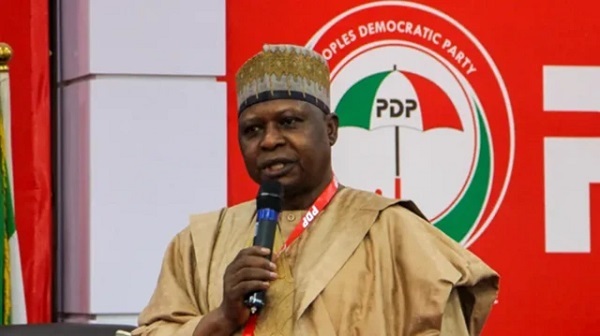
Court Orders Arrest Of PDP Factional Chair Turaki 

Justice Peter Kekemeke of the Federal Capital Territory High Court has issued a bench warrant for the arrest of Tanimu Turaki, the factional National Chairman of the Peoples Democratic Party (PDP), after he failed to appear in court for his arraignment.

Turaki is facing charges filed by the Nigeria Police Force, led by the Inspector-General of Police, over allegations of providing false information to law enforcement authorities.

During proceedings, prosecution counsel Usman Rabiu told the court that the matter was scheduled for the defendant to take his plea. He stressed that Turaki had been duly served with both the charge and hearing notice but was absent without explanation.

Invoking Section 396(2) of the Administration of Criminal Justice Act (ACJA) 2015, the prosecution urged the court to compel the defendant’s appearance through a bench warrant.

Defence counsel Abdulaziz Ibrahim, SAN, opposed the move, requesting additional time to file arguments in support of a motion seeking to quash the charge.

He argued that his client’s presence in court was not necessary until the motion had been determined.

However, Justice Kekemeke rejected the defence’s position, ruling that the defendant’s absence, despite confirmed service of court documents, was unjustified.

The court held that any challenge to the validity of the charge could only be entertained after the defendant has entered a plea.

Consequently, the judge ordered the immediate issuance of a bench warrant to ensure Turaki’s appearance in court.

The case has been adjourned until April 22 for arraignment.

Google search engine

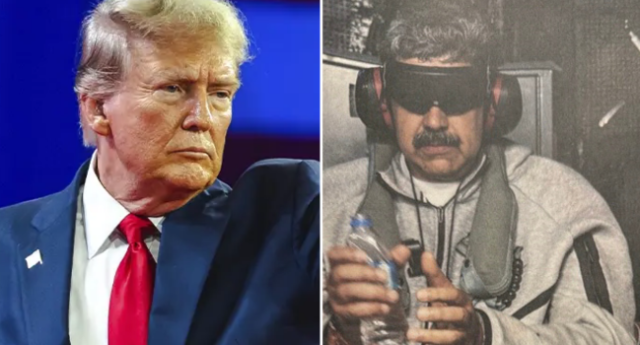
Captured Ex-Venezuela Leader Maduro Returns To US Court As Legal Battle Intensifies

Ousted Venezuelan leader Nicolás Maduro is set to appear in a New York court on Thursday, marking his second court appearance since his dramatic capture by United States forces earlier this year.

Maduro, 63, alongside his wife Cilia Flores, has been detained in a Brooklyn federal facility for nearly three months following a high-risk nighttime raid by American commandos in Caracas in early January.

The operation effectively ended his presidency, which began in 2013.

Facing multiple charges including narco-terrorism conspiracy and cocaine importation, Maduro has pleaded not guilty, insisting he is a “prisoner of war.”

His legal team is expected to push for a dismissal of the case during Thursday’s proceedings, citing procedural concerns over restrictions tied to US sanctions.

His lawyer, Barry Pollack, has argued that the requirement for a special US license to allow Venezuela fund Maduro’s legal defense infringes on his constitutional rights.

Currently held at the Metropolitan Detention Center in Brooklyn, Maduro is reportedly in isolation, with limited communication privileges. Sources say he spends his time reading religious texts and remains resolute despite his circumstances.

The January 3 operation that led to his arrest reportedly involved coordinated air and naval strikes, leaving dozens dead and over a hundred injured, according to Venezuelan authorities.

Meanwhile, Venezuela is now under the leadership of interim president Delcy Rodríguez, who has initiated sweeping reforms under pressure from Washington.

These include the release of political prisoners and policy shifts aimed at reopening the country’s oil sector to foreign involvement.

The situation has also prompted a shift in US-Venezuela relations, with the United States Department of State signaling a gradual restoration of diplomatic ties.

Thursday’s hearing, overseen by veteran judge Alvin Hellerstein, is expected to draw heightened security as global attention remains fixed on one of the most extraordinary political and legal sagas in recent history.

Google search engine

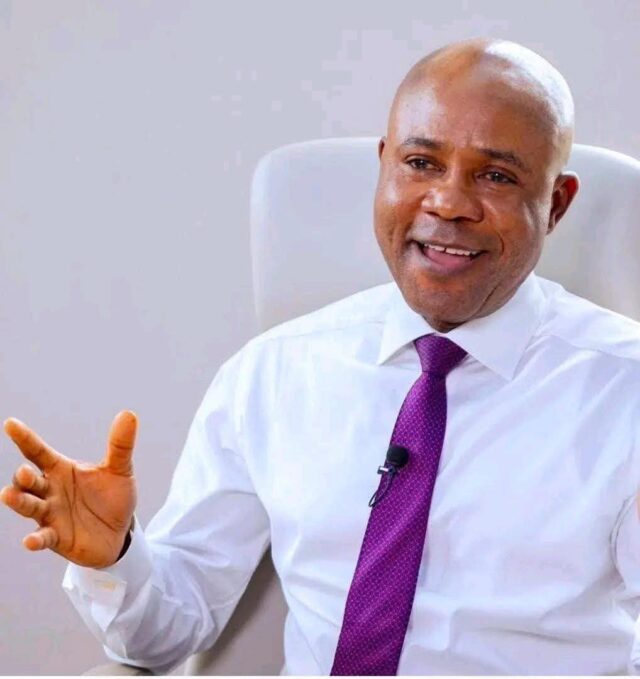
Gov Mbah And 2027: A Case Of Good Commodity And Large Market Value

By Dr. Malachy Chuma Ochie

In the marketplace of leadership, where promises are often louder than performance, a rare figure emerges from time to time, one whose record speaks so clearly that persuasion becomes unnecessary.

In Enugu State today, Governor Peter Mbah has come to embody that rare “good commodity” our people speak of; one that sells itself not through noise, but through undeniable value.

What distinguishes Mbah is not merely the speed of his actions, but the clarity of his vision. From the outset, his governance has projected a decisive break from the inertia that once defined public administration in the state.

Rather than conforming to the slow grind of bureaucracy, he has re-engineered governance into a results-driven enterprise; one where timelines matter, outcomes are measurable, and citizens are not distant observers but active stakeholders.

His leadership style carries the urgency of a man who understands both the weight of expectation and the brevity of opportunity.

Like a prairie fire sweeping across dry land, his reforms have moved with intensity, touching critical sectors such as infrastructure, education, security, and economic development.

Roads are not just being constructed; they are being strategically deployed to unlock commerce. Schools are not merely standing; they are being reimagined as centers of excellence.

Governance is no longer a closed circuit; it is an open bridge connecting policy directly to the people.

Beyond physical development, perhaps his most profound transformation lies in institutional rebirth. Systems that once resisted change are being recalibrated to serve with efficiency and transparency.

This is where true leadership reveals itself, not just in projects that can be seen, but in processes that endure.

Equally important is the psychological shift he has inspired among Ndi-Enugu. Confidence in government, once fragile, is steadily being restored.

There is a growing belief that leadership can indeed be purposeful, that public office can be a platform for measurable progress rather than mere political survival. This renewed trust is the invisible currency fueling his rising political value.

Mbah’s “commodity value” is therefore not manufactured; it is earned. It is built on consistency, reinforced by delivery, and sustained by a governance philosophy that places people at its core. In political terms, he has reduced the distance between promise and proof; and that is a rare achievement.

As 2027 approaches, the conversation in Enugu is shifting in tone. It is less about speculation and more about continuity.

The electorate is not merely being persuaded; they are responding to evidence. And in a democratic marketplace, evidence is the most powerful campaign tool.

Indeed, a good commodity does not beg for buyers; it attracts them. Peter Mbah’s governance has positioned him not just as a participant in the political future of Enugu, but as a defining force within it.

The people, having seen, felt, and measured the impact, are not just observers of his journey; they are investors in it. And that, ultimately, is why the market is responding.

Google search engine

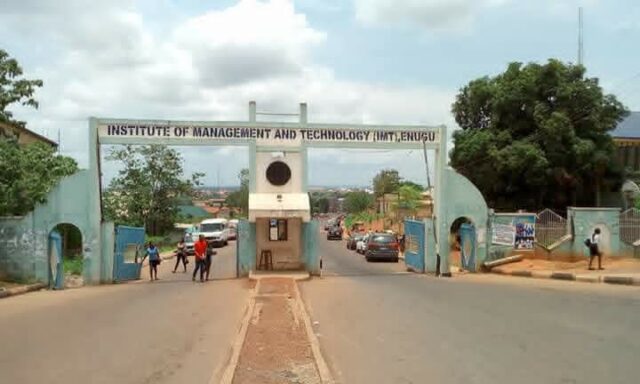
IMT, UNICROSS Seal Deal To End HND–Degree Divide With Top-Up, Postgraduate Programmes

The Institute of Management and Technology (IMT) Enugu has officially partnered with the University of Cross River State (UNICROSS) in a groundbreaking agreement aimed at revolutionizing higher education in Nigeria.

This Memorandum of Understanding (MoU) signed Thursday paves the way for holders of Higher National Diplomas (HND) to earn Bachelor’s degrees through a structured top-up programme, helping close the academic gap that has limited the advancement of HND graduates.

This historic collaboration also extends to postgraduate studies, with over twenty academic disciplines set to benefit from this partnership, enhancing research capacities and equipping graduates with the advanced skills needed to compete globally.

In his address, IMT Rector, Prof. Gozie Ogbodo, hailed the agreement as a major step forward in promoting academic excellence and human capital development.

The collaboration is seen as a timely and much-needed intervention in the Nigerian educational landscape.

Google search engine

2027: Cabinet Shake-Up Looms As Ministers Plot Governorship Bids Ahead Of Resignation Deadline

With the March 31 resignation deadline fast approaching, several ministers in the administration of Bola Ahmed Tinubu are locked in intense consultations, assessing their political strength and chances ahead of the 2027 governorship races.

At least nine cabinet members are believed to be considering resignation to pursue electoral ambitions, but many remain cautious, balancing the advantages of incumbency against the uncertainties of grassroots politics and party primaries.

Among those widely tipped to join the race is the Minister of Power, Adebayo Adelabu, who is expected to re-enter the Oyo State governorship contest.

However, his path appears fraught with challenges, including the entrenched influence of Seyi Makinde and the strong grassroots machinery of the Peoples Democratic Party in the state.

Adelabu must also navigate internal divisions within the All Progressives Congress, alongside concerns about public perception of his performance in Nigeria’s troubled power sector.

In Bauchi State, the Minister of Health, Muhammad Ali Pate, and the Minister of Foreign Affairs, Yusuf Maitama Tuggar, are both linked to governorship ambitions.

Yet, analysts point to zoning constraints, weak grassroots structures, and stiff competition within party ranks as potential hurdles.

Elsewhere, the Minister of Communications and Digital Economy, Bosun Tijani, is said to be testing the waters in Ogun State, while Abubakar Kyari is linked to the Borno governorship race.

Other figures, including Ekperikpe Ekpo and Bernard Doro, are also believed to be positioning for electoral contests.

Despite these ambitions, many aspirants are hesitant to resign immediately, as remaining in office offers strategic advantages, including access to influence and visibility.

Some are reportedly waiting for clearer signals on party zoning arrangements and endorsements before making a final decision.

Political watchers note that success in these contests will depend heavily on grassroots mobilisation, party unity, and public perception—factors that may not favour technocrats lacking deep local networks.

Meanwhile, speculation surrounds the Minister of the Federal Capital Territory, Nyesom Wike, who is said to be considering a broader political strategy ahead of 2027.

Insiders suggest he may resign as part of a calculated move linked to internal dynamics within the PDP and possible presidential ambitions.

Analysts argue that the potential exit of key cabinet members may not significantly disrupt governance, as permanent secretaries are expected to assume interim leadership roles.

However, concerns persist that such transitions could slow decision-making and expose structural weaknesses within government institutions.

Critics also question the performance records of some ministers, warning that electoral contests will ultimately test their acceptance among voters beyond technocratic achievements.

As the deadline looms, the unfolding scenario underscores a familiar pattern in Nigerian politics—where public office often serves as a springboard for higher ambition, leaving governance and political aspirations in a delicate balancing act.

Google search engine

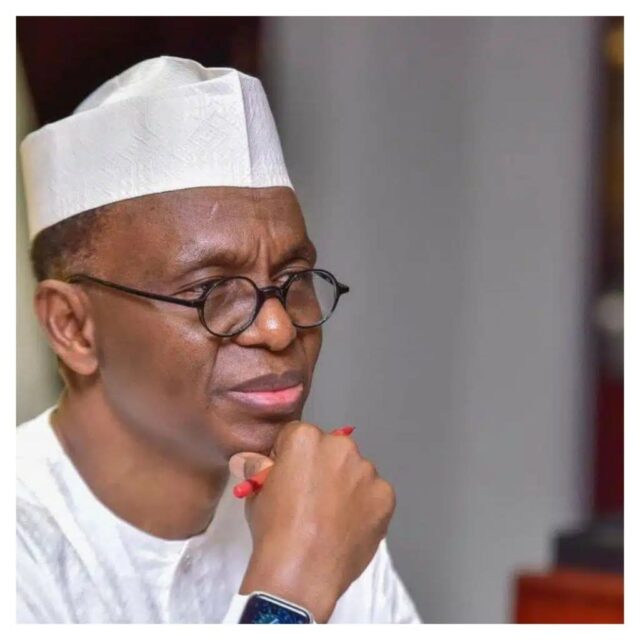
Court Keeps El-Rufai In ICPC Custody, Shifts Bail Fight To March 31

A Federal High Court sitting in Kaduna has adjourned the hearing of the bail application filed by former Kaduna State governor, Nasir El-Rufai, to March 31, ordering that he remain in custody of the Independent Corrupt Practices and Other Related Offences Commission.

El-Rufai was arraigned on Tuesday on a 10-count charge bordering on alleged conversion of public assets and money laundering. He pleaded not guilty to all the charges brought against him.

The former governor arrived at the court premises under heavy security at about 9:00 a.m. and was initially held inside a security vehicle before being escorted into the courtroom for proceedings.

During the hearing, defence counsel, Ukpon Akpan, urged the court to grant bail to allow his client adequately prepare for trial.

However, the prosecution, led by Dr Osuobeni Ekoi Akponimisingha, opposed the request, arguing that releasing the defendant could jeopardise ongoing investigations.

After considering submissions from both sides, the presiding judge, Rilwanu Aikawa, fixed March 31 for the bail hearing.

El-Rufai has been in ICPC custody since February 19, shortly after his release by the Economic and Financial Crimes Commission, as legal proceedings against him continue.

Google search engine

2027 Push: Action Alliance Unveils Digital Portal To Drive Mass Membership

The Action Alliance has taken a major step toward modernising its operations with the launch of a digital membership portal designed to enhance transparency, inclusiveness, and grassroots participation ahead of the 2027 elections.

Unveiled in Abuja, the platform allows Nigerians to seamlessly register as party members online and receive instant digital identification cards, eliminating the bottlenecks associated with manual registration processes.

National Chairman, Udeze Kenneth, described the initiative as a turning point for the party, noting that it signals a shift toward a more citizen-driven political movement.

“We are building a platform that prioritises the people and opens up participation to all Nigerians,” he said.

The portal enables registration using phone numbers, simplifying access while issuing digital membership cards embedded with QR codes for easy authentication during party activities such as rallies and primaries.

Developed by Augustine Ugbede Thomas of Stinet Digital, the system incorporates real-time verification using phone numbers and National Identification Numbers (NIN), helping to eliminate duplicate entries and strengthen data credibility.

Party officials disclosed that the platform spans all 36 states and the Federal Capital Territory, with detailed coverage extending to local government areas and polling units, ensuring nationwide accessibility.

A live membership counter, which displays real-time registration figures, is also integrated into the system to promote transparency and encourage wider participation.

Beyond registration, members can access benefits such as digital ID cards, participation in party primaries, event notifications, and easy profile management.

Administrators, on the other hand, are equipped with a centralised dashboard for monitoring, verification, and strategic mobilisation.

Thomas described the innovation as a practical example of technology advancing democratic engagement, adding that the platform is scalable and capable of accommodating millions of users.

Planned upgrades include SMS notifications, campaign tools, event check-ins, payment features, and a dedicated mobile application.

The party said the initiative aligns with its broader vision of reforming Nigeria’s political space and attracting greater youth involvement.

“This represents the future of political participation—open, transparent, and accessible to every Nigerian with a mobile phone,” the party stated.

Google search engine

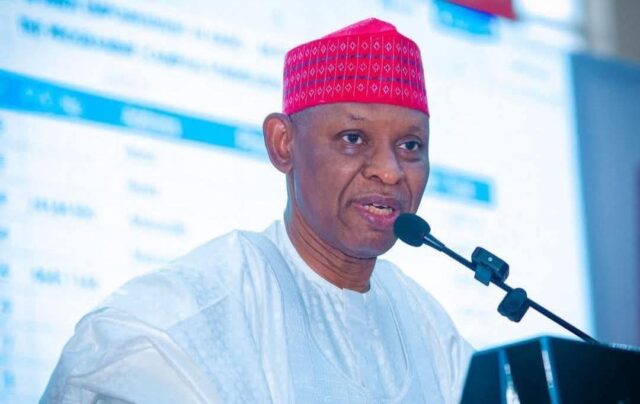
2027: Gov Yusuf Gives Appointees 7-Day Notice  To Quit

Governor Abba Kabir Yusuf of Kano State has directed all political appointees and public servants with ambitions to contest in the 2027 elections to resign from their positions within seven days.

The directive, conveyed in a statement by the Secretary to the State Government, Umar Faruq Ibrahim, and obtained by DAILY GAZETTE, sets a deadline of March 31, 2026, for affected officials to either step down or formally retire from service.

Those covered by the order include commissioners, special advisers, directors-general, executive secretaries, managing directors, senior special assistants, special assistants, and other aides across government agencies.

The state government said the move is in line with provisions of the Electoral Act 2026, particularly Section 88(1), which governs the involvement of public office holders in partisan politics.

According to the statement, the decision is intended to enforce compliance with legal standards while preserving neutrality, accountability, and ethical conduct within the public service.

“All affected officials are required to resign or retire on or before the stipulated date if they intend to participate in the forthcoming general elections,” the statement emphasised.

The directive has been circulated to key government offices, including the Chief of Staff, the Head of Civil Service, the Clerk of the State Assembly, and judicial authorities, signalling the administration’s resolve to ensure strict adherence.

Google search engine

PDP Crisis Eases As Rival Factions Open Talks For Truce

The National Chairman of the Peoples Democratic Party, Kabiru Tanimu Turaki, has revealed that warring factions within the party have begun exploring concrete pathways toward resolving the lingering internal crisis.

In a statement issued on Wednesday, Turaki called for calm among party loyalists, urging them to tone down hostile rhetoric and actions that could undermine ongoing reconciliation efforts.

He stressed that the current peace moves were partly in response to guidance from the Court of Appeal, which recently advised aggrieved parties to seek amicable settlement.

According to him, the party’s Board of Trustees, led by Adolphus Wabara, has constituted a high-level committee to engage estranged members, resolve contentious issues, and reposition the party ahead of future elections.

As part of the de-escalation strategy, the party’s National Working Committee has postponed key meetings, including those of the National Executive Committee and National Caucus, while also scaling back confrontational communications.

Turaki, however, expressed concern over what he described as continued provocative statements from the opposing faction, despite expectations of mutual restraint.

He warned that such actions could derail reconciliation efforts, especially given the tight timelines imposed by Nigeria’s electoral framework.

“Leaders on both sides have broken the ice and are actively exploring solutions for a lasting resolution,” he said, urging supporters to align with the peace process.

Reassuring party faithful and aspirants, Turaki affirmed that the PDP remains committed to fielding candidates for all elective positions in upcoming elections, in line with its constitution.

He also commended Nigerians who continue to identify with the party, noting that despite internal challenges, the PDP’s core support base remains strong.

Highlighting the party’s democratic role, Turaki described the PDP as a legacy political force with a responsibility to provide credible opposition and strengthen democratic governance in Nigeria.

He further conveyed a vote of confidence by the party’s leadership in Bala Mohammed and Seyi Makinde, praising their resilience amid the ongoing crisis.

The PDP chairman concluded by assuring Nigerians that the party is stabilising and will actively participate in forthcoming elections, positioning itself as a viable platform for competitive and people-driven politics.

Google search engine

Governor Mbah: Equipping Today’s Children For Tomorrow’s Possibilities 

By Chukwuemeka Odoh, Ph.D

Equipping today’s children for tomorrow’s possibilities and helping every child reach their full potential in Enugu State is the driving force behind the vision of Peter Ndubuisi Mbah and his smart school initiative.

What we are witnessing with the rollout of over 260 smart schools across the state is not just another government project; it is a real and meaningful shift in how education is seen and delivered. For many people, this kind of transformation once felt like something far off in the future. Today, it is becoming reality.

At a very simple level, the idea behind these smart schools is clear: children learn better when they are engaged, supported, and given the right tools. Instead of relying only on traditional teaching methods, these schools combine classroom learning with technology in a way that makes lessons come alive.

Students are no longer just sitting and listening, they are asking questions, exploring ideas, and participating actively. Learning becomes something they experience, not just something they are told.

The difference this makes can already be felt. With access to digital tools, students can see, hear, and interact with what they are learning.

A science lesson, for example, is no longer just theory, it can be visual, practical, and easier to understand. Teachers can give feedback faster, helping students correct mistakes and improve without long delays. This kind of support builds confidence and keeps students motivated.

As time goes on, the benefits become even more meaningful. Children begin to develop skills that go beyond the classroom. They learn how to think critically, how to solve problems, and how to use technology in a smart and responsible way.

These are the kinds of skills that matter in today’s world that prepare them not just for exams, but for life. In a world that is becoming more digital every day, this kind of early exposure gives them a real advantage.

Teachers are also a big part of this success story. With the tools available in smart schools, teaching becomes more effective and less stressful. They can better understand each student’s progress and adjust their approach when needed.

Instead of teaching everyone the same way, they can support each child based on their individual needs. At the same time, they are learning and growing too, gaining new skills that help them stay current and confident in their profession.

One of the most important aspects of this initiative is that it creates a more level playing field. Whether a child lives in a city or a rural community, they now have access to similar learning opportunities.

This helps reduce the gap between different parts of the state and ensures that no child is left behind simply because of where they were born. Education becomes not just a privilege for a few, but a real opportunity for all.

It’s also worth noting how naturally children connect with technology. When learning includes tools they are already curious about, it becomes easier to hold their attention.

They become more eager to participate, more willing to try, and more confident in expressing themselves. That spark of interest can make all the difference in how far a child is willing to go.

In the end, what Peter Ndubuisi Mbah is building goes beyond classrooms and equipment. It is about shaping a future where children in Enugu State are prepared, capable, and confident.

It is about giving them the chance to compete, not just within Nigeria, but anywhere in the world.

The smart school initiative is about giving children the tools they need to dream bigger, learn better, and achieve more. If sustained, it will not only change individual lives, but will shape the future of the entire state for generations to come.

Google search engine

MOST COMMENTED

- Advertisement -
Google search engine