Home Blog Page 46

Iran Snubs US Peace Deal, Vows To Dictate Endgame Of War
Iran has rejected a United States-backed proposal to end the ongoing Middle East conflict, insisting that any ceasefire will occur strictly on its own terms, according to reports from state media.

Iranian state television, quoting a senior unnamed official, said the country gave a firm negative response to what it described as an American plan to halt the war.

The official stressed that Tehran would not be pressured into ending hostilities based on external timelines.

“The war will end when Iran decides—not when Donald Trump or any other actor dictates,” the official said, underscoring the country’s defiant stance.

Although there has been no formal statement from the Iranian government, the report has been widely circulated by local outlets, including Press TV, as well as Mehr and Tasnim news agencies.

Iran’s Foreign Minister, Abbas Araghchi, who previously led diplomatic engagements with the United States before the escalation, has yet to publicly respond to the reported proposal.

Meanwhile, Pakistan is said to be playing a mediatory role. Senior officials in Islamabad disclosed that a 15-point framework incorporating US proposals had been relayed to Tehran in a bid to de-escalate tensions in the nearly month-long conflict.

However, Iran is reportedly advancing its own conditions for peace.

These include an immediate end to military attacks and targeted killings, firm guarantees that hostilities will not resume, and compensation for war-related destruction to support reconstruction efforts.

Tehran is also demanding a halt to operations across all regional fronts, including actions against allied groups such as Hezbollah.

Additionally, Iran is seeking international recognition of its sovereignty over the strategically vital Strait of Hormuz—a critical global oil transit corridor that has become central to the conflict.

The developments highlight widening gaps between the parties, despite ongoing backchannel diplomacy, raising fresh concerns about the prospects for a swift resolution to the crisis.

Google search engine

Court Seals $13m Forfeiture Linked To Achimugu Firm, Rejects ‘Gift’ Defence

Justice Emeka Nwite of the Federal High Court, Abuja, has upheld the final forfeiture of $13 million tied to businesswoman Aisha Achimugu and her company, Oceangate Engineering Oil & Gas Ltd, ruling that the funds are proceeds of unlawful activity.

Delivering judgment, the court held that the Economic and Financial Crimes Commission successfully established that the money was linked to fraud and could not be traced to any legitimate business transactions.

The judge noted that the company failed to provide credible evidence explaining the source of the funds.

Justice Nwite dismissed claims that the $13 million constituted gifts to Achimugu, stressing that neither the alleged donors nor the beneficiary appeared in court to substantiate the claim.

He ruled that the burden of proof placed on the company to show lawful ownership of the funds was not discharged.

The court further observed that Oceangate did not demonstrate any business activity or contractual engagement capable of generating such revenue, nor did it provide evidence of payments from clients.

The forfeiture followed an earlier interim order granted on August 22, 2025, after which the anti-graft agency was directed to publish notices inviting interested parties to show cause why the funds should not be permanently seized.

No convincing response was received within the stipulated period.

According to an affidavit deposed to by EFCC investigator, Usman Aliyu, the funds were linked to suspicious financial transactions involving the acquisition of oil blocks—PPL 302 and PPL 3007—from the Nigerian Upstream Petroleum Regulatory Commission.

Investigations revealed that Oceangate allegedly moved large sums through multiple channels, including cash transactions facilitated by unlicensed bureau de change operators and intermediaries.

The EFCC claimed that part of the funds originated from contractors linked to the Lagos State Government and were later converted into dollars and routed into the company’s accounts.

The commission alleged that over $13 million was handled outside formal financial systems and used to meet obligations tied to oil block licensing.

It also claimed that the funds were not derived from any verifiable or legitimate business operations of the company.

In its defence, Oceangate, through a director, Iliya Wakil, maintained that the funds were sourced partly from lawful earnings and partly from gifts to its Group Chief Executive Officer.

The company denied any involvement in illicit dealings or conspiracy with unregistered financial operators, insisting that all transactions were conducted within legal bounds.

However, the EFCC challenged the credibility of the defence, describing Wakil as a nominal director with no financial stake in the company.

It further alleged that Oceangate functioned largely as a shell entity used to warehouse petroleum assets acquired with suspicious funds.

The anti-graft agency also questioned the authenticity of the company’s audit report, claiming it was prepared without access to actual financial records and relied solely on informal agreements.

The court ultimately agreed with the EFCC’s position, ruling that the totality of evidence pointed to unlawful origins of the funds and justified their permanent forfeiture to the Federal Government.

The ruling reinforces ongoing efforts by Nigerian authorities to clamp down on financial crimes within the oil and gas sector, particularly in the acquisition of strategic national assets.

Google search engine

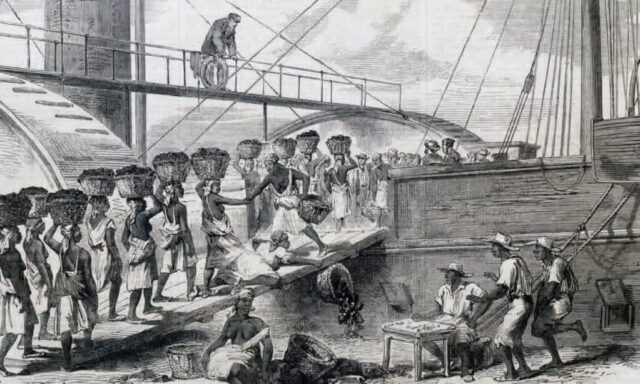
UN Declares Slave Trade Humanity’s Gravest Crime, Pushes For Reparations

The United Nations General Assembly has adopted a landmark resolution describing the transatlantic slave trade as the “gravest crime against humanity,” in a move aimed at advancing global calls for justice and reparations for people of African descent.

The resolution, spearheaded by Ghana, received overwhelming backing with 123 votes in favour.

However, United States, Israel, and Argentina voted against it, while 52 nations—including the United Kingdom and several European Union member states—abstained.

The resolution calls on UN member states to issue formal apologies for their roles in the slave trade and to support reparations initiatives, including funding for education, skills development, and endowment programmes.

While it stops short of specifying financial compensation, it reinforces the growing global demand for restorative justice.

Speaking ahead of the vote, Ghana’s President, John Mahama, described the move as a moral obligation to honour the millions who suffered under slavery and those still affected by its legacy.

“History demands that we act in remembrance of those who endured the indignity of the slave trade and those who continue to face racial injustice,” he said, noting that the resolution helps guard against historical amnesia while confronting enduring inequalities.

Ghana’s Foreign Minister, Samuel Okudzeto Ablakwa, clarified that the demand is rooted in justice rather than personal gain.

“We are not asking for money for ourselves. We are seeking justice—through support for education, heritage preservation, and empowerment initiatives,” he stated.

The resolution aligns with broader continental and global efforts, as the African Union has already adopted “reparatory justice” as a central theme, while discussions continue within the Commonwealth.

According to UN estimates, more than 15 million Africans were forcibly taken during the transatlantic slave trade, with many perishing during the brutal Middle Passage.

Historical data also shows that hundreds of thousands died aboard British ships alone.

The resolution highlights that the legacy of slavery persists today through systemic racial inequalities and underdevelopment affecting people of African descent worldwide.

Despite the widespread support, some nations raised legal and procedural concerns.

The United Kingdom acknowledged the historical harm but questioned aspects of the resolution’s framing under international law.

Similarly, the United States argued that it does not recognise a legal basis for reparations tied to actions that were not deemed illegal at the time.

In addition, the resolution calls for the repatriation of cultural artefacts taken during the colonial era, underscoring the need to restore cultural identity and heritage.

Although resolutions of the UN General Assembly are not legally binding, they carry significant moral and political influence, signalling a growing international consensus on confronting the legacy of slavery and advancing reparative justice.

Google search engine

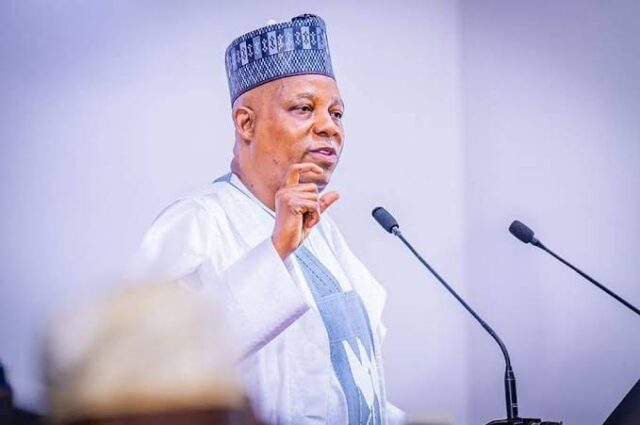
2027: ADC Empty Bone, Has Nothing To Offer – VP Shettima


Vice-President Khashim Shettima has asked Nigerians not to align with the African Democratic Congress (ADC), which he described as an empty bone.

He said this at Gusau Trade Fair Complex, while addressing the mammoth crowd of his party supporters.

Shettima said the ADC has nothing to offer to Nigerians, describing it as an empty political party.

“Do you know that ADC? It has nothing to offer for you, therefore you shall not go there.

“Do you know bone? ADC is just like an empty bone neither has bone marrow nor flesh on it,” Shettima said.

The Vice president further criticised ADC for ‘”lacking the qualities needed to deliver Nigerians”.

Google search engine

2027: ADC Empty Bone, Has Nothing To Offer – VP Shettima


Vice-President Khashim Shettima has asked Nigerians not to align with the African Democratic Congress (ADC), which he described as an empty bone.

He said this at Gusau Trade Fair Complex, while addressing the mammoth crowd of his party supporters.

Shettima said the ADC has nothing to offer to Nigerians, describing it as an empty political party.

“Do you know that ADC? It has nothing to offer for you, therefore you shall not go there.

“Do you know bone? ADC is just like an empty bone neither has bone marrow nor flesh on it,” Shettima said.

The Vice president further criticised ADC for ‘”lacking the qualities needed to deliver Nigerians”.

Google search engine

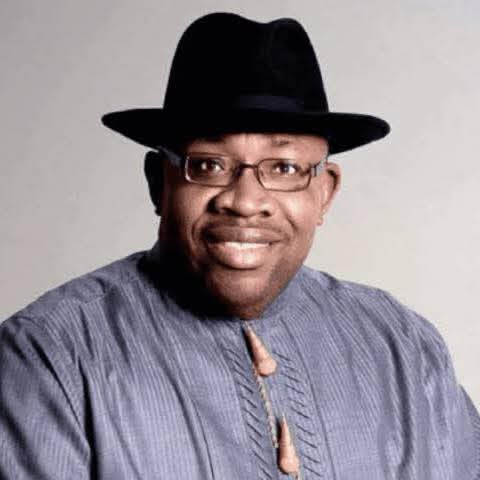
Revised Election Timetable Mounting Pressure On Parties – Former Gov Dickson

Former Bayelsa State governor and senator representing Bayelsa West, Seriake Dickson, has cautioned political parties against complacency, warning that recent adjustments to the electoral timetable have intensified pressure ahead of the 2027 general elections.

Dickson, who serves as national leader of the Nigeria Democratic Congress (NDC), gave the warning during the party’s maiden National Executive Committee meeting at its national secretariat in Abuja.

He stressed that the revised timetable leaves little room for delay, urging party members to ramp up mobilisation and maximise the limited time before the polls.

“There is no time to waste,” he declared, noting that elections often present rapid growth opportunities for political parties willing to engage effectively with the electorate.

The senator dismissed concerns about the shortened timeline, insisting that victory would depend more on grassroots connection than financial muscle.

According to him, parties must focus on real voter engagement rather than relying on money or inflated support figures.

Dickson charged members to intensify voter registration efforts, particularly through the party’s e-registration process, and to build a credible support base across polling units, wards, and communities nationwide.

He also alleged that some parties were leveraging state resources to manipulate voter data, urging his party to counter such tactics by focusing on genuine, registered voters.

“Go to the people and ask if their lives are better. That is where the real campaign lies,” he said, emphasising people-driven politics over financial influence.

Earlier, the NDC National Chairman, Cleopas Moses, reaffirmed his commitment to the party’s ideals, calling on members to remain united, disciplined, and passionate in advancing its vision.

Dickson’s remarks come weeks after the Independent National Electoral Commission (INEC) revised the 2027 election timetable following the enactment of the Electoral Act, 2026.

Under the new schedule, presidential and National Assembly elections have been moved to January 2027, while governorship and state assembly polls are set for February—effectively shortening the political calendar and raising the stakes for early preparation among parties.

Google search engine

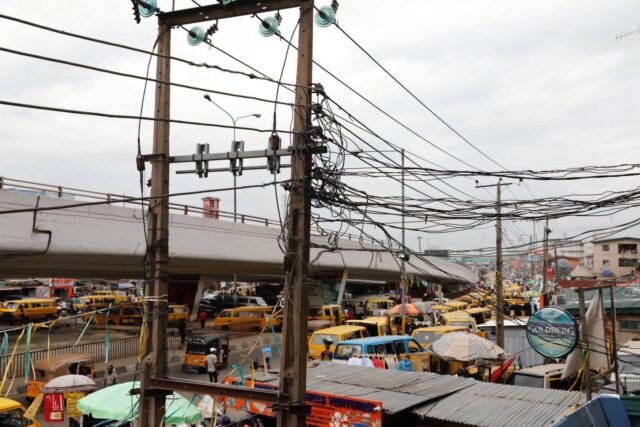
Enugu Power Market Opens Up As Mainpower DisCo Woos Investors

The Mainpower Electricity Distribution Limited (MEDL) on Tuesday engaged key stakeholders and prospective investors at the Enugu State Investor Forum, signaling renewed efforts to unlock opportunities in the state’s evolving electricity market.

The forum, held at the International Conference Centre, focused on critical areas including investment prospects in Enugu’s power sector, vendor financing, and the Smart Metering Demonstrator initiative.

The pilot project—implemented by the United Kingdom Nigeria Infrastructure Advisory Facility (UKNIAF) in partnership with MEDL—demonstrated how artificial intelligence can be deployed by distribution companies to strengthen revenue assurance and attract private capital through data-driven metering systems.

Speaking during panel sessions, MEDL’s Managing Director, Ernest Mupwaya, alongside Chief Commercial Officer, Ikenna Akabogu, highlighted practical strategies for bridging the gap between utility bankability and investor confidence.

They also explored scalable models that could be replicated across other subnational electricity markets.

Mupwaya reiterated the company’s readiness to partner with investors, assuring that MEDL remains open to collaborations aimed at closing the metering gap across its network.

Dignitaries at the event included Samuel Ogbu-Nwobodo, who represented Governor Peter Ndubuisi Mbah.

Also in attendance were Enyinnaya Franklin Ogbonna; Chijioke Okonkwo, alongside commissioners of the Enugu State Electricity Regulatory Commission; and Frank Edozie.

Google search engine

South-East APC Rebuilds Structure, Elects New Leaders In Enugu Congress

The All Progressives Congress (APC) has elected a new South-East zonal executive through a consensus arrangement at a well-attended congress held in Enugu.

The congress, which took place at the Hotel Presidential, drew top party figures including Hope Uzodimma, Francis Nwifuru, and Peter Ndubuisi Mbah, alongside other key stakeholders.

At the end of the exercise, delegates adopted a consensus list, producing Ijeoma Arodiogbu as the new zonal chairman to lead the party in the region.

Addressing the gathering, Uzodimma, who chairs the South-East Governors’ Forum, emphasized unity and national interest, conveying the goodwill of Bola Ahmed Tinubu and expressing optimism about the country’s economic direction.

Explaining the adoption of consensus, he noted that the approach aligns with the party’s constitution and was designed to foster cohesion while ensuring a smooth and timely process.

The congress progressed with a motion by Nwifuru to dissolve the outgoing zonal executive, which was seconded by Patrick Ndubueze.

Subsequently, the Deputy Speaker of the House of Representatives, Benjamin Kalu, presented the list of consensus candidates for ratification.

He also moved motions to formally adopt consensus as the mode of election in line with the Electoral Act, as well as to affirm the outcomes of prior ward, local government, and state congresses.

The motions received overwhelming support from delegates, with Eugene Uchenna Ugwu seconding the proposals.

Other members of the newly constituted zonal executive include Innocent Itakpa Azuoba as Secretary; Rex Mayor Ogbonna as Legal Adviser; Henry Onwughalaonye as Publicity Secretary; Chima Kenneth Ogbonnaya as Youth Leader; Nwachukwu; Oby Aji; and Arinze Ikedife.

In his remarks, Mbah described the congress as a clear demonstration of unity and strength within the party in the South-East, noting that the outcome has dispelled predictions of internal division.

The event also attracted prominent party stalwarts, including Ken Nnamani, Emma Eneukwu, and several federal lawmakers such as Osita Izunaso, Ezenwa Onyewuchi, Uche Ekwunife, Onyekachi Nwebonyi, Kelvin Chukwu, and Osita Ngwu.

Also in attendance were Nkeiru Onyejeocha, Chris Ngige, and Kingsley Udeh, among others.

Google search engine

North Korea Reappoints Kim Jong Un, Tightens Hold On Power

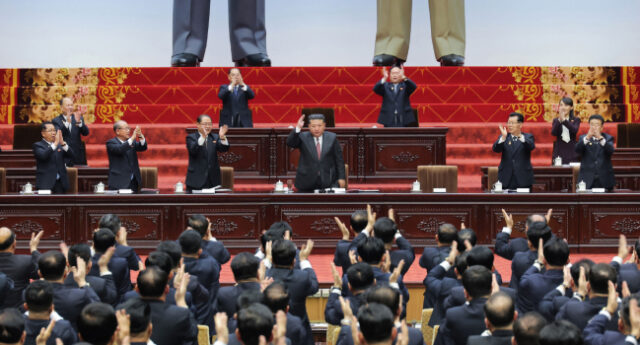
North Korea’s leader, Kim Jong Un, has been re-elected as President of State Affairs, further consolidating his authority over the reclusive, nuclear-armed nation.
The decision was announced by state media after the country’s legislature, the Supreme People’s Assembly, convened in Pyongyang and unanimously endorsed his continuation in office.
According to the Korean Central News Agency, the reappointment reflects the “unanimous will” of the people, though critics argue the process is largely ceremonial and tightly controlled to project an image of democratic legitimacy.
Kim Jong Un, a third-generation ruler, has been in power since 2011, succeeding his father, Kim Jong Il, and continuing the dynastic leadership established by his grandfather, Kim Il Sung.
Analysts describe the elections as highly choreographed, with pre-determined outcomes that reinforce the regime’s control.
In the latest vote, turnout was reported to be near total, with an overwhelming majority approving the sole candidates presented.
The assembly session is also expected to deliberate on key constitutional changes, including redefining relations with South Korea in more adversarial terms—potentially signalling a shift in Pyongyang’s long-standing rhetoric on reunification.
Observers say the tone and language used by Kim Jong Un during the session will serve as a critical indicator of the country’s future stance toward Seoul and the broader Korean Peninsula.

Google search engine

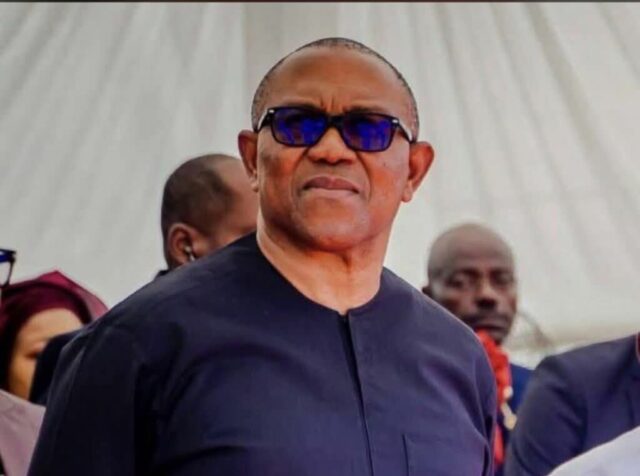
Why Peter Obi Shouldn’t Have Been On The 2023 Ballot – Justice Salami Spits Fire

Justice Salami Blasts Judiciary, Says Peter Obi Shouldn’t Have Contested 2023

A former President of the Court of Appeal, Isa Salami, has stirred fresh controversy by declaring that former Anambra State governor, Peter Obi, was not qualified to contest the 2023 presidential election under the Labour Party Nigeria.

Speaking in Ilorin during an award presentation by the Wole Soyinka Centre for Investigative Journalism, the retired jurist blamed judicial inconsistencies on what he described as incompetence among some judges.

According to Salami, Obi’s emergence as the Labour Party candidate violated constitutional provisions, arguing that the party had already submitted its membership list to the Independent National Electoral Commission before Obi defected from the Peoples Democratic Party.

“In strict terms, he ought not to have been allowed to contest because the Constitution does not recognise independent candidacy,” Salami said.

He drew a parallel with the case of Abba Yusuf, questioning the legitimacy of his earlier political status, and criticised the Supreme Court for upholding decisions he believes were flawed.

The former Appeal Court President lamented that judicial appointments are increasingly influenced by regional considerations rather than merit, leading to what he called a decline in competence on the bench.

“At times, when you read some judgments, even from the Supreme Court, you are left wondering what is going on,” he remarked.

Despite his criticisms, Salami expressed optimism that reforms would eventually correct the anomalies within the judiciary.

He also acknowledged the honour bestowed on him by the WSCIJ, praising the organisation for recognising excellence and integrity.

Reflecting on his personal journey, Salami credited Obafemi Awolowo for inspiring his decision to study law, while also noting that the boldness of Wole Soyinka shaped his outlook on national issues.

Google search engine

MOST COMMENTED

- Advertisement -
Google search engine