Home Blog Page 459

Politicians Using Atiku’s Old Video For Mischief – Spokesman


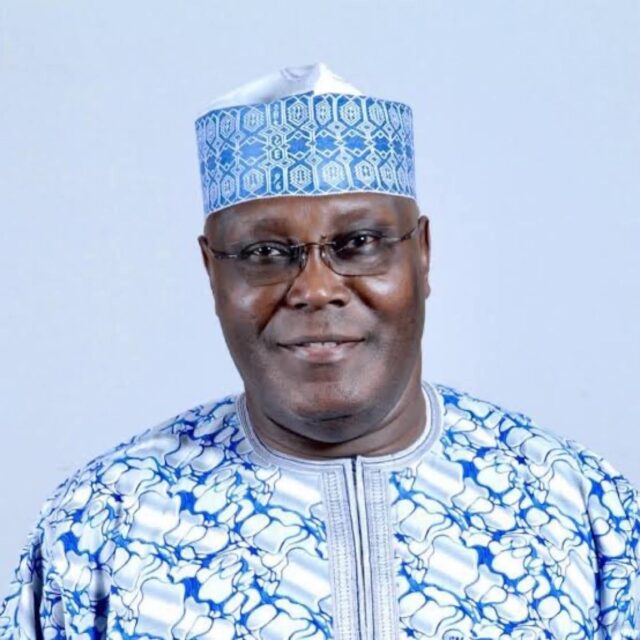
Paul Ibe, the spokesperson for former Vice President and 2023 presidential candidate of the Peoples Democratic Party (PDP), Atiku Abubakar, has warned against the misuse of an old video of Atiku for political mischief.

Ibe issued the caution in a post on X (formerly Twitter), where he shared a clip showing Atiku addressing journalists prior to the 2023 PDP presidential primaries.

“Yes, this was former Vice President of Nigeria (1999–2007), Atiku Abubakar, speaking to journalists ahead of the 2023 PDP presidential primary,” he stated.

He explained that the video was being recirculated without context to mislead the public and stir unnecessary speculation about Atiku’s political intentions.

“He sounded confident because that is what is expected of a man who had worked hard and was optimistic of victory in the primaries of the 2023 election,” Ibe wrote.

The spokesperson stressed the need to clarify the timeline and context of the footage in order to stop deliberate misrepresentation.

“It is important to provide the context of this video to deprive mischief makers of the opportunity of misrepresenting what this video is all about,” he added.

Google search engine

Nnamdi Kanu Slams N60 Billion Defamation Suit Against Reno Omokri


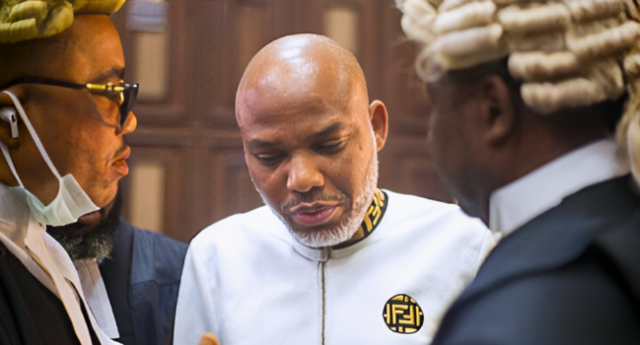
Mazi Nnamdi Kanu, detained leader of the Indigenous People of Biafra (IPOB), has filed a ₦60 billion defamation suit against social media commentator Reno Omokri, on behalf of himself and IPOB.

The case (Suit No. E/1034/2025) is before the Enugu State High Court and is spearheaded by his legal team under Special Counsel Aloy Ejimakor, Esq.

Kanu is seeking a formal retraction and apology, claiming that Omokri falsely alleged on his verified X account in early July 2025 that IPOB and Kanu were responsible for the killings of Nigerian soldiers, police officers, and other security personnel by so‑called “Unknown Gunmen.”

The suit states: “The said statements are false, baseless, prejudicial, and defamatory, as they portray the Plaintiff as a criminal and a terrorist, thereby injuring his reputation, character, exposing him to public hatred, contempt, ridicule, and prejudicing his ongoing judicial proceedings in Charge No: FHC/ABJ/CR/383/15.”

According to the plaintiff, as of July 6, 2025, no Nigerian court had convicted him of terrorism or killing security personnel, making Omokri’s allegations maliciously intent-driven.

Kanu’s legal team delivered a pre‑action notice to Omokri on July 10, 2025, demanding:

Retraction of the statements in two national newspapers and on Twitter/X

A public apology and commitment to avoid further defamatory remarks

The notice went unheeded, prompting formal legal action.

DAILY GAZETTE gathered that reliefs Sought is N50 billion in general damages for defamation and emotional distress and N10 billion in aggravated damages for malicious publication.

– A court order requiring Omokri to publish full retraction and apology in two national newspapers and online within seven days of judgment

– A perpetual injunction against repeating defamatory statements

– Legal costs and 10% per annum interest on all monetary awards.

Google search engine

Canada ‘Disappointed’ As US Hikes Tariffs To 35% – Prime Minister Carney


Canadian Prime Minister Mark Carney expressed his government’s disappointment on Friday over the United States’ decision to raise tariffs on Canadian goods from 25 to 35 percent.

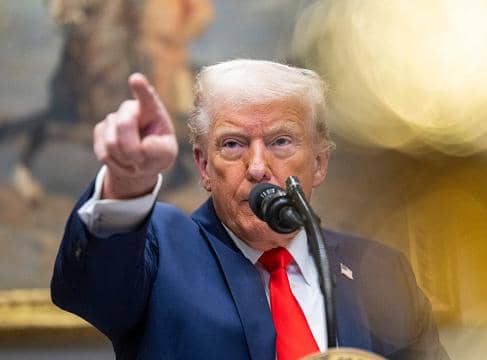
The tariff increase, announced in a new executive order signed by President Donald Trump, comes amid diplomatic tensions between the two countries.

DAILY GAZETTE recall that Trump had earlier warned of potential trade consequences after Carney revealed plans to support the recognition of a Palestinian state at the upcoming UN General Assembly in September.

“The Canadian government is disappointed by this action,” Carney said in an official statement.

While some Canadian goods remain protected under the 2020 United States-Mexico-Canada Agreement (USMCA), the broader increase will affect key sectors of Canada’s export economy.

Trump’s order cited multiple reasons for the new tariffs, including Canada’s alleged failure to help “curb the ongoing flood of fentanyl and other illicit drugs” into the US, and what the administration called “retaliation” against earlier U.S measures.

Carney, however, defended Canada’s efforts. “Canada accounts for only one percent of US fentanyl imports and has been working intensively to further reduce these volumes,” he said, adding that the country has also taken steps to boost border security.

Despite the growing tensions, the Canadian leader reaffirmed Ottawa’s commitment to the trilateral trade agreement.

“The US application of CUSMA means that the US average tariff rate on Canadian goods remains one of its lowest for all of its trading partners,” Carney noted.

Still, he acknowledged that several major sectors, including lumber, steel, aluminum, and automobiles remain vulnerable to the rising wave of US tariffs.

Google search engine

Gov. Alia Sends First Batch Of Commissioner-Nominees To Benue Assembly


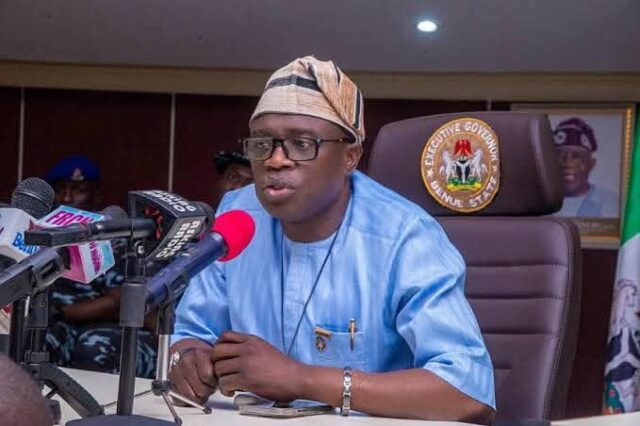
Governor Hyacinth Alia of Benue State has submitted the names of eight commissioner-nominees to the Benue State House of Assembly for screening and confirmation.

This follows the recent dismissal of all former commissioners and the Chief of Staff, Mr. Paul Biam, who has since been replaced by former banker, Mr. Moses Atagher.

According to a statement released by the Governor’s Chief Press Secretary, Tersoo Kula, the nominees in the first batch include:

Mrs. Theresa Ikwue

Dr. Benjamin Ashaver

Dr. Ijaguwa Adamu

Dr. Peter Egbodo

Dr. Yangien Ornguga

Denis Iyaighgba

James Dwem

Dr. Paul Ogwuche

Kula’s statement emphasized the administration’s commitment to improving governance and service delivery.

“Governor Hyacinth Alia has transmitted the first batch of Commissioner-nominees to the Benue State House of Assembly for screening and confirmation in line with constitutional provisions.”

He described the move as a major step in rebuilding the state’s executive functions:

“This development marks a significant step in enhancement of the machinery of governance and ensuring effective service delivery across various sectors.”

He also revealed that more nominations are forthcoming:

“The second batch of nominees is expected to be forwarded to the House of Assembly in a matter of days.”

Reaffirming the administration’s guiding principles, Kula added “The Governor reaffirms his administration’s commitment to transparency, competence, and inclusivity in the selection of individuals who will drive his vision and mission for the state.”

Google search engine

South Africa In Intense Talks With US To Avert Tariffs – President Ramaphosa


South African President Cyril Ramaphosa said on Friday that the country is engaged in “intensive negotiations” with the United States to avoid the looming 30-percent tariffs recently announced by President Donald Trump.

The tariffs, initially scheduled to take effect on August 1, have been delayed by one week, giving Pretoria time to push for a resolution.

“Within the window that’s still open, we’re hoping that we will find a way to settle this matter,” Ramaphosa told journalists.

“So intensive negotiations are now under way.”

South Africa is one of nearly 70 nations targeted by the new U.S. tariff regime, which threatens to hit its export economy hard.

The United States is the country’s second-largest trading partner after China, and the new measures could cost the local economy as many as 100,000 jobs, according to central bank governor Lesetja Kganyago.

“Our task is to negotiate as strongly and as hard as we can with the United States,” Ramaphosa added. “Our objective, really, is to save jobs.”

The sectors most at risk from the 30-percent tariff hike include agriculture and automotive manufacturing, both critical industries in a nation grappling with an unemployment rate above 30 percent.

While engaging with Washington, South Africa is also working to diversify its export destinations to reduce dependence on any single market.

“Because it is too risky just to focus on one,” the president explained.

According to the Department of Trade, Industry and Competition, South Africa has proposed to import U.S. liquefied natural gas and agricultural goods as part of its offer to ease trade tensions.

Additionally, South African companies have pledged to invest in the U.S mining and metals recycling sectors, with further plans for joint ventures in pharmaceuticals, agri-machinery, and critical minerals development.

Google search engine

Nigeria Among Countries Hit By Trump’s New Global Tariff


United States President, Donald Trump, has officially imposed a 15 percent tariff on Nigeria and other African countries.

Other countries affected by the new tariff regime include Zimbabwe, Zambia, Uganda, Mozambique, Mauritius, Ghana, Malawi, Lesotho, and Madagascar.

The modified reciprocal tariff rates were announced by the White House on Thursday.
This Executive Order, titled “Further Modifying the Reciprocal Tariff Rates,” said “These modifications shall be effective with respect to goods entered for consumption, or withdrawn from the warehouse for consumption, on or after 12:01 am.”

The US also slammed different degrees of tariffs on South Africa (30 percent), Libya (30 percent), and Tunisia (25 percent).

The list of tariffs also contained the United Kingdom (10 percent), India (25 percent), Japan (15 percent), and other countries.

In April, Trump had slammed sweeping tariffs on global trading partners, imposing 14 percent on Nigeria.

The “reciprocal” tariffs were later postponed for 90 days to allow for time to negotiate individual trade deals, with the deadline moved to August 1.
See how the revised taxes were spread below:
10% – Falkland Islands, United Kingdom, and all other countries not listed in the executive order

15% – Afghanistan, Angola, Bolivia, Botswana, Cameroon, Chad, Costa Rica, Côte d`Ivoire, Democratic Republic of the Congo, Ecuador, Equatorial Guinea, Fiji, Ghana, Guyana, Iceland, Israel, Japan, Jordan, Lesotho, Liechtenstein, Madagascar, Malawi, Mauritius, Mozambique, Namibia, Nauru, New Zealand, Nigeria, North Macedonia, Norway, Papua New Guinea, South Korea, Trinidad and Tobago, Turkey, Uganda, Vanuatu, Venezuela, Zambia, Zimbabwe

18% – Nicaragua
19% – Cambodia, Indonesia, Malaysia, Pakistan, Philippines
20% – Bangladesh, Sri Lanka, Thailand, Taiwan, Vietnam
25% – Brunei, India, Kazakhstan, Moldova, Tunisia
30% – Algeria, Bosnia and Herzegovina, Libya, South Africa
35% – Iraq, Serbia
39% – Switzerland
40% – Laos, Myanmar (Burma)
41% – Syria

Google search engine

Nurses Have Suspended Nationwide Strike, Says Health Minister


The National Association of Nigerian Nurses and Midwives (NANNM) has officially suspended its seven-day warning strike, the Ministry of Health announced, after talks with government officials.

According to Health Minister Ali Pate, the decision came following a closed-door meeting in Abuja where the government and union leaders reached key agreements.

“Nurses have suspended strike,” the minister told journalists after the meeting, confirming that terms were agreed upon between both parties.

Although the minister made the announcement, union leadership has not yet addressed the public following the meeting.

The nurses and midwives had launched their nationwide warning strike on July 29, pressing for demands including better welfare packages, fairer allowances, and improved working conditions in federal health institutions.

The action was originally scheduled to last until August 5.

Google search engine

2027: INEC To Begin Online Voter Pre-Registration August 18


The Independent National Electoral Commission (INEC) has announced that its nationwide Continuous Voter Registration (CVR) exercise will begin with online pre-registration on August 18, 2025, as part of early preparations for the 2027 general elections.

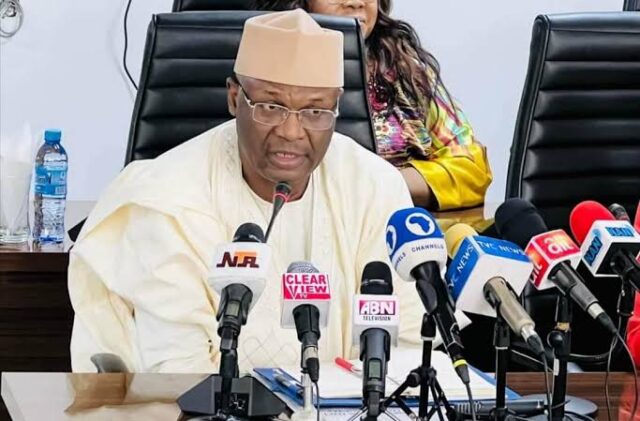
INEC Chairman, Professor Mahmood Yakubu, made the disclosure during a courtesy visit from the management of the National Orientation Agency (NOA) to INEC headquarters in Abuja.

“The nationwide continuous voter registration is scheduled to commence in about three weeks, with the online pre-registration of voters scheduled for the 18th of August,” said Yakubu.

He further revealed that physical (in-person) registration will kick off one week later, enabling citizens without internet access to also participate.

Yakubu explained that the CVR is a key part of INEC’s broader strategic plans, which include preparations for the Anambra State governorship election scheduled for November 8, 2025, and the next general elections in 2027.

The INEC boss used the meeting to reaffirm the commission’s commitment to partnering with the NOA to enhance voter education, public awareness, and the application of artificial intelligence (AI) technologies to improve the electoral process.

“I am particularly glad that this meeting is at the instance of the DG in furtherance of the longstanding partnership between INEC and the National Orientation Agency,” Prof. Yakubu said, highlighting the role of NOA in mobilising voters at the grassroots level.

During the visit, NOA Director-General Malam Lanre Issa-Onilu described the agency’s current transformation efforts aimed at positioning it as a stronger player in advancing Nigeria’s democracy.

He noted that NOA is deploying a hybrid outreach strategy that combines traditional methods with modern technology.

He said the agency had revamped its outreach strategy using both traditional and digital tools, including weekly newsletters, AI-driven feedback mechanisms, and a network of over 818 local offices nationwide.

Google search engine

Tinubu Encouraging Misgovernance By Rewarding Errant Governors – Former APC Leader Lukman


Salihu Lukman, a former National Vice Chairman of the All Progressives Congress (APC) and now a leading figure in the African Democratic Congress (ADC), has faulted President Bola Tinubu’s approach to state governance, accusing him of rewarding governors who mismanage public funds.

Speaking during an appearance on Sunrise Daily, a Channels Television programme, Lukman argued that the president’s failure to enforce accountability has allowed state governors to continue their poor financial practices unchecked.

“Yes, the president has said the right thing, but what is he doing to ensure that governors do what they need to do?” Lukman queried.

“The president can do something, but what I see him doing is to reward them for doing the wrong things.”

His remarks come shortly after President Tinubu publicly urged governors to prioritize poverty alleviation and ensure governance delivers tangible benefits to citizens.

But Lukman believes the president’s words have not been backed by meaningful actions.

According to him, state governors have maintained their dominance over political party structures, effectively shielding themselves from oversight.

“Once we have a system where the structure of the party is subordinated to them, they will continue with this arrogance, and continue to be unaccountable and convert public resources as if it is their personal property,” he said.

Lukman also criticized the APC’s approach to political expansion, particularly its acceptance of defecting opposition governors without holding them to clear standards of performance or accountability.

“When your recruitment policy in your party is blindly informed in a way that all you want is for people to come into your party without giving them the conditions that need to happen for them to be accountable to their people, the objectives of many of them become to be where they are and not to deliver services,” he stated.

Turning to the state of the APC, Lukman did not hold back. He accused the party leadership of betraying the confidence reposed in them by members and citizens alike.

“In APC, we invested every trust in the leaders and at the end of the day, leaders betrayed that trust, and that is why APC is damaged today, whereby it is worse than the PDP,” he said.

Now active in the opposition, Lukman said the ADC intends to restore integrity to public office through more accountable governance structures.

He explained that the party is working toward creating an internal system that compels elected officials to align with the party’s manifesto and goals.

“The mistake many of us make is to imagine that leaders are rational and, left on their own, they will do the right thing. Our objective is to organise the party in such a way that governance is accountable to the party and aligned with the manifesto,” he added.

Google search engine

Trump Slaps New Tariffs On Nearly 70 Countries, Targets Canada With 35% Duty


US President, Donald Trump, has announced a sweeping set of new tariffs affecting nearly 70 countries, escalating his push to overhaul global trade in favor of American interests.

Among the most notable moves is a sharp 35% tariff on goods imported from neighboring Canada.

The tariffs, formalized in a new executive order, were initially set to take effect immediately but will now begin in one week for most countries, according to a statement from the White House.

This delay is seen as a window for last-minute negotiations.

The administration says the move is meant to assert U.S. economic dominance, bolster domestic manufacturing, and protect American exporters.

Still, the aggressive shift has sparked concerns about inflation and broader economic consequences in the United States, which remains the world’s largest economy.

The new duties follow an earlier round of 10% tariffs imposed in April, which Trump called “reciprocal” in response to what he views as unfair trade practices.

The latest tariffs vary by country, with some reaching as high as 41%.

A further 40% duty will apply to any goods “transshipped” through third countries in an attempt to sidestep the U.S tariff wall, the executive order states.

Canada, which had been subject to a 25% tariff, now faces a 35% duty starting Friday.

Trump’s order singles out Canada’s “retaliation” to earlier U.S actions and accuses the country of failing to “cooperate in curbing the ongoing flood of fentanyl and other illicit drugs.”

The decision also follows Canadian Prime Minister Mark Carney’s announcement that his government plans to recognize a Palestinian state during the upcoming UN General Assembly session in September, a move Trump had warned could carry trade consequences.

In response, Carney said his administration was “disappointed” by the tariff hike and defended Canada’s efforts to combat fentanyl trafficking and bolster border security.

Trump offered more time to Mexico, another major trading partner, delaying a proposed tariff increase from 25% to 30% for 90 days following talks with President Claudia Sheinbaum.

Some exemptions remain in place under the North American trade pact, shielding various Canadian and Mexican goods from the new duties.

Despite recent bilateral agreements with Japan, the European Union, and other partners, the long-term effectiveness of Trump’s trade strategy remains uncertain.

“No doubt about it, the executive order and related agreements concluded over the past few months tears up the trade rule book that has governed international trade since World War II,” said Wendy Cutler, senior vice president of the Asia Society Policy Institute.

“Whether our partners can preserve it without the United States is an open question,” she added.

China, notably absent from the latest tariff action, responded to U.S. trade protectionism with strong words.

“The Chinese side’s opposition to tariffs has been consistent and clear,” said Foreign Ministry spokesman Guo Jiakun.
“There is no winner in a tariff war or trade war.”

The expanded tariffs come amid growing legal scrutiny. Trump’s reliance on emergency economic powers has drawn lawsuits, and a U.S. Court of Appeals is currently hearing arguments on whether the president overstepped his authority.

While Trump boasts of rising customs revenues, economists warn the broader impact could be more harmful than helpful, potentially fueling inflation across sectors.

Still, some countries have negotiated lower tariffs to avoid steeper penalties.

Vietnam, Japan, Indonesia, the Philippines, South Korea, and the EU were among those striking deals to avert harsher rates.

In the latest round of adjustments:

Switzerland now faces a 39% tariff.

Taiwan’s duty was reduced from 32% to 20%, though President Lai Ching-te pledged to lobby for further reductions.

Cambodia and Thailand saw their tariffs cut to 19% — down from initially proposed levels of 49% and 36%, respectively.

The UK, though not previously targeted by reciprocal tariffs, also reached a trade agreement with Washington.

China remains under a separate timeline, with new tariff decisions expected by August 12.

Though both countries had previously escalated tariffs to triple-digit levels, they have since agreed to temporary reductions while talks continue.

Google search engine

- Advertisement -
Google search engine

MOST COMMENTED