Home Blog Page 468

US Ends Shoe Removal Requirement At Airport Security Checkpoints


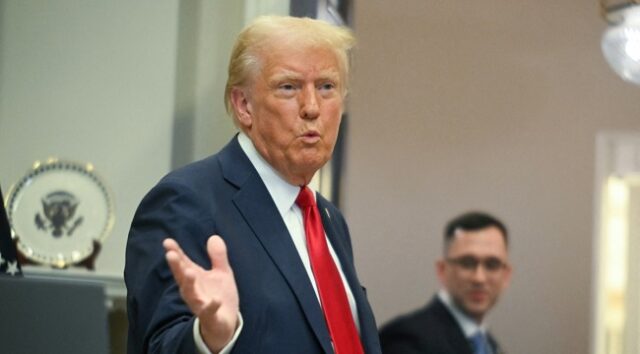
Passengers flying through US airports will no longer need to remove their shoes during security screening, marking the end of a rule that’s been in place for nearly two decades.

The change was officially announced on Tuesday by Homeland Security Secretary Kristi Noem during a press conference held at Ronald Reagan National Airport in Washington, D.C.

The controversial policy was first introduced in 2006, five years after Richard Reid, the so-called “Shoe Bomber,” attempted to detonate explosives hidden in his footwear aboard an American Airlines flight from Paris to Miami in December 2001.

Reid, later identified as a member of Al-Qaeda, was subdued by fellow passengers before he could ignite the fuse.

“In those 20 years since that policy was put in place, our security technology has changed dramatically. It’s evolved. TSA has changed. We have a multi-layered whole of government approach now to security,” Noem said.

“We are very confident that we can continue to provide hospitality to folks and for American travelers and for those visiting our country, while maintaining the same standard of security for passengers and for our homeland,” she added.

Reid ultimately pleaded guilty to terrorism-related charges and is currently serving a life sentence at a maximum-security facility in Colorado.

Following the announcement, the Transportation Security Administration (TSA) issued a statement confirming that while the shoe-removal requirement is being scrapped, other layers of security will remain intact.

“Other aspects of TSA’s layered security approach will still apply during the TSA checkpoint process. For example, passengers must still clear identity verification, Secure Flight vetting, and other processes,” the agency said.

The move is seen as part of a broader modernization of airport security procedures that have evolved significantly in the wake of past terror threats.

The September 11, 2001 attacks prompted a wave of new safety protocols, and the 2006 foiled UK-based plot to use liquid explosives on multiple flights led to the current restrictions on liquids and gels in carry-on luggage.

Despite advancements in screening technology, TSA maintains that key safeguards, such as thorough vetting and surveillance, will continue to protect travelers across the country.

Google search engine

LG Polls: Police Announce Movement Restriction Across Lagos On Saturday


Police authorities in Lagos State have declared a total restriction of movement across the state on Saturday, July 12, in connection with the upcoming local government elections.

The Lagos State Police Command, in a statement released on Wednesday, said the restriction will begin early on election day.

According to the command, there will be a “total restriction of vehicular movement throughout Lagos State” from 3:00 am to 3:00 pm on Saturday, July 12, 2025.

“The restriction of vehicular movement will apply to all roads and waterways within Lagos State jurisdiction,” the statement added.

Despite the restrictions, certain categories of individuals will be exempt.

“Essential services such as those on medical emergency, and other emergency responders and their workers, the duly accredited officials of the Lagos State Independent Electoral Commission (LASIEC), and accredited election observers and media practitioners on election coverage accredited by the Lagos State Independent Electoral Commission (LASIEC),” the police clarified.

Additionally, the police emphasized that:

“All the security agencies personnel and other stakeholders, including the media and election observers accredited by LASEIC for the election, will be in possession of and wear their identification tags certified by LASEIC throughout the election.”

The Command confirmed that security arrangements had been finalized to ensure the safety and peaceful conduct of the elections across all 20 Local Government Areas (LGAs) and 37 Local Council Development Areas (LCDAs).

“The Lagos State Police Command wishes to inform the general public in Lagos State, that an elaborate security arrangement and comprehensive security measures have been put in place to ensure security, safety, peaceful and orderly conduct of the Local Government Elections scheduled for Saturday, July 12, 2025 in the 20 LGAs and 37 LCDAs.”

The statement added that the decision was made in conjunction with other agencies:

“To this end, the Lagos State Police Command in full agreement with the other security and safety agencies complimenting the Police under the Interagency Consultative Committee on Election Security (ICCES) in Lagos State and other critical stakeholders in the election… hereby wishes to announce and inform the general public in Lagos State of total restriction of vehicular movement throughout Lagos State from 3 am on Saturday, 12th July, 2025 till 3 pm of same Saturday, 12th July, 2025.”

The Command outlined further enforcement provisions in line with the Electoral Act, including:

(i) Prohibition of armed escorts and security aides at polling units and collation centres:

“Police escorts and Armed Security aides are strictly prohibited from accompanying their principals to polling units or collation centers. This measure is to prevent any undue influence or intimidation during the election.”

(ii) Ban on the indiscriminate use of sirens and covered number plates:

“The use of sirens at or in the vicinity of polling units and collation centers is prohibited. Furthermore, only vehicles designated for essential services such as ambulances…”

The Command urged the public to comply fully with the measures to support a free, fair, and peaceful election process across Lagos State.

Google search engine

I Gave My Baby Coca-Cola, Not ‘Action Bitters’, Woman In Viral Video Clarifies


A woman seen in a viral video feeding a baby from what appeared to be a sachet of the alcoholic drink Action Bitters has clarified that the substance was actually Coca-Cola, not alcohol, as widely assumed.

The video, which caused public outrage after circulating online, included a caption claiming the beverage was given to the child “every night just for her to sleep.”

In response, the Nigeria Police Force launched an investigation into the incident.

In a follow-up video, the unidentified woman explained that the clip was intended purely for entertainment and not meant to depict real actions.

“About the video I posted earlier, that is not Action Bitters. It is Coke. I poured Coke into the sachet,” she said.

“To be sincere, it was Coke I poured into the Action Bitters sachet. I even have a video on my phone showing when I was doing it.”

She admitted the move was a poor attempt at gaining attention online and acknowledged that the idea had “backfired.”

“I would never give her Action Bitters. I am not that kind of mother. I do not even take it myself,” she said, while insisting that the child, who is only five months old, was never given alcohol.

Appealing to the public for leniency, she added:

“We are begging Nigerians, please forgive us.”

As of the time of this report, the police have not issued a formal update on the status of the investigation.

Google search engine

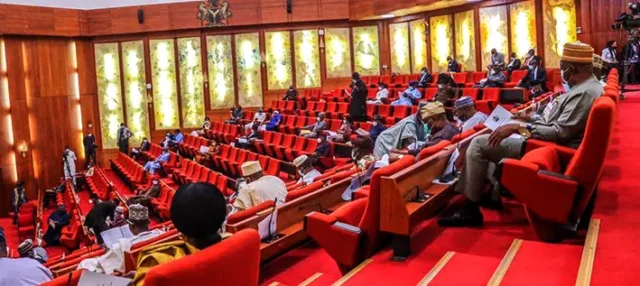
Senate Move Against Ponzi Schemes After CBEX Collapse Devastates Investors


The Nigerian Senate has directed a joint committee to launch a thorough investigation into the growing number of Ponzi schemes in the country.

This follows the dramatic collapse of Crypto Bullion Exchange (CBEX), which is believed to have swindled investors out of more than ₦1.3 trillion.

The resolution came in response to a motion presented by Senator Adetokunbo Abiru (Lagos East), who expressed alarm at the unchecked proliferation of fraudulent investment platforms.

He cited past schemes like MMM Nigeria (2016) and MBA Forex (2020), alongside CBEX, as examples of ventures that promised massive returns on digital assets but ended in losses for millions.

Lawmakers voiced serious concerns over the human impact of the latest collapse.

They warned that CBEX’s sudden disappearance had caused severe financial hardship, emotional trauma, and even led to cases of suicide among victims.

During the session, senators also condemned the apparent failure of financial regulators to act swiftly, despite CBEX’s widespread visibility and operations.

They questioned the silence of the Securities and Exchange Commission (SEC), Central Bank of Nigeria (CBN), Nigerian Financial Intelligence Unit (NFIU), and the Economic and Financial Crimes Commission (EFCC).

The Senate has tasked the joint committee to conduct a public hearing in the coming weeks and deliver a report within a month.

Back in April, the EFCC had already issued warnings about the rising threat of Ponzi schemes in Nigeria.

Speaking on The Morning Brief on Channels Television, EFCC spokesperson Dele Oyewale said:

“You’ll recall that on March 11 this year, the Executive Chairman of the EFCC, Mr. Ola Olukoyede, had cause to instruct us to alert Nigerians about 58 Ponzi scheme companies; we came out with a list–that shows that we’re proactive and we have our hands on what is happening.”

He highlighted the agency’s ongoing efforts to inform the public about the dangers posed by fraudulent investment platforms.

In a related legal move, Justice Emeka Nwite of the Federal High Court, Abuja, on April 25, granted the EFCC permission to arrest and hold six individuals linked to CBEX.

They are facing allegations of orchestrating a scam worth over $1 billion.

According to EFCC counsel Fadila Yusuf, the anti-corruption agency had applied for the court’s approval to detain the suspects while it completes its investigation and prepares for possible prosecution.

The EFCC’s application requested two key orders: one to issue arrest warrants and another to keep the suspects in EFCC custody during the investigative process.

The agency emphasized that these steps fall within its legal mandate to detect, investigate, and prevent financial crimes.

Google search engine

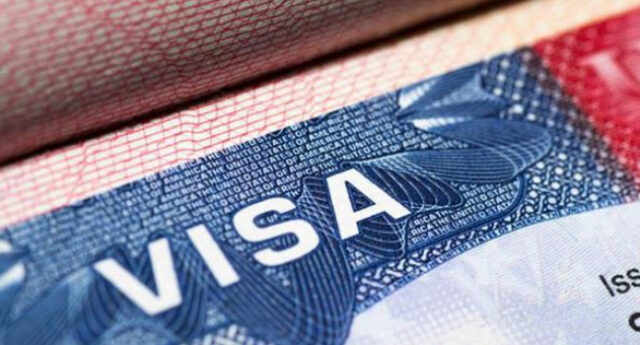
US Embassy Now Requires Nigerian Student Visa Applicants To Make Social Media Accounts Public


The United States Mission in Nigeria has introduced a new requirement for Nigerians applying for F, M, and J nonimmigrant visas, mandating that applicants make their personal social media accounts public for screening purposes.

The policy, aimed at strengthening vetting procedures, is effective immediately.

According to an announcement made via the official X (formerly Twitter) handle of the U.S. Mission Nigeria on Monday, all applicants under these visa categories are now required to adjust their social media privacy settings.

“Effective immediately, all individuals applying for an F, M, or J nonimmigrant visa are requested to adjust the privacy settings on all of their personal social media accounts to ‘public’,” the embassy stated.

The embassy emphasized that this adjustment is part of the vetting process to confirm applicants’ identities and their admissibility to the U.S.

“We use all available information in our visa screening and vetting to identify visa applicants who are inadmissible to the United States, including those who pose a threat to U.S. national security.”

“Every visa adjudication is a national security decision.”

The statement highlights that since 2019, the U.S. government has already required applicants to provide social media identifiers as part of both immigrant and nonimmigrant visa applications.

The latest policy update follows a formal announcement issued by the U.S Department of State on June 18, 2025, confirming expanded digital screening measures for several visa classes, particularly those related to education and cultural exchange programs.

“Since 2019, the United States has required visa applicants to provide social media identifiers on immigrant and nonimmigrant visa application forms.”

Additionally, the U.S. reiterated a longstanding principle regarding visa decisions:

“Every visa adjudication is a national security decision.”

In its statement, the government reaffirmed that being granted a visa is a privilege, not an entitlement, and is subject to discretion based on security vetting outcomes.

Google search engine

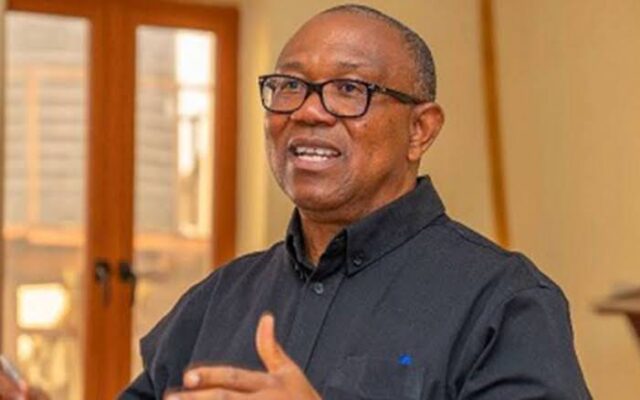
Labour Party To Expel Peter Obi Over Anti-Party Activities – Arabambi


The Labour Party has announced that it is moving to expel its former presidential flag bearer, Peter Obi, over his active involvement in an emerging opposition coalition aimed at challenging President Bola Tinubu’s administration in 2027.

This revelation came from Labour Party chieftain Abayomi Arabambi, who appeared Tuesday on Channels Television’s The Morning Brief.

He argued that Obi’s alignment with the new coalition, while still identifying with the Labour Party, violates the party’s constitution and would not be tolerated.

“Let me make it very clear: we are convening a NEC [National Executive Council] meeting where he [Obi] will be expelled. It is unconstitutional for you to belong to two political parties at a time. They have deceived him to their side, and there he shall remain,” Arabambi declared.

Arabambi explained that the party’s NEC will formally recommend Obi’s expulsion, which would be ratified at the party’s national convention.

He sharply criticized Obi’s association with the opposition bloc, describing it as disloyalty to the Labour Party.

“Obi will be expelled from our party. He is no longer a member. It is not within his right to claim, ‘I am still a member of the Labour Party,’ and at the same time be hobnobbing with what we call the ‘yahoo yahoo’ coalition. We are not going to accept that,” he said.

Challenging the perception that Obi built the Labour Party, Arabambi insisted it was the party that gave Obi the opportunity to shine in 2023.

“I want to correct a very wrong notion, Obi did not make the Labour Party; the Labour Party made Peter Obi. It was just a chance of circumstance because of the #EndSARS protests and the failings of past administrations. Nigerians were simply tired.”

“It’s because of our own integrity. That was what gave Obi what he is today. He should be banking on our goodwill, not the other way around. He started the crisis in the Labour Party,” Arabambi added.

He further accused Obi of authoritarian behavior, arguing that it disqualifies him from playing a leadership role in the party.

“If he can fight party members to do his will, then he is not fit to run the party.”

Arabambi reaffirmed that there is no factional leadership in the Labour Party and that Julius Abure remains the party’s only national chairman.

“Let me also make it clear: we do not have groups in the Labour Party. We have only one leadership under Julius Abure, our national chairman.”

The statements follow a 48-hour ultimatum issued to Peter Obi by the Abure-led leadership, demanding that he resign from the party due to his growing relationship with the opposition coalition.

“Labour Party is not part of the coalition. Therefore, any of our members who are part of the coalition are given within 48 hours to formally resign his membership of the party,” the party’s spokesperson Obiora Ifoh said in a statement dated July 3.

“Labour Party is not available for people with dual agendas or deceptive personas. We will not allow individuals to have one leg in our party and the other elsewhere.”

Ifoh went on to criticize the coalition, describing its members as political opportunists.

He said they are “interested in relaunching themselves into the circle of power.”

The opposition coalition had earlier held a major strategy meeting in Abuja on July 2, where it adopted the African Democratic Congress (ADC) as its official platform for the 2027 elections.

Former Senate President, David Mark, was named interim national chairman, while ex-Osun State governor Rauf Aregbesola was appointed secretary.

Several notable political figures were present at the meeting, including Atiku Abubakar, Nasir El-Rufai, Rotimi Amaechi, Dino Melaye, Dele Momodu, Gabriel Suswam, Ireti Kingibe, Emeka Ihedioha, and Sadique Abubakar, as well as Peter Obi himself.

Google search engine

Senate Should Celebrate Natasha As ‘Star Girl’, Not Suspend Her – Ex-Presidential Aspirant Tsado


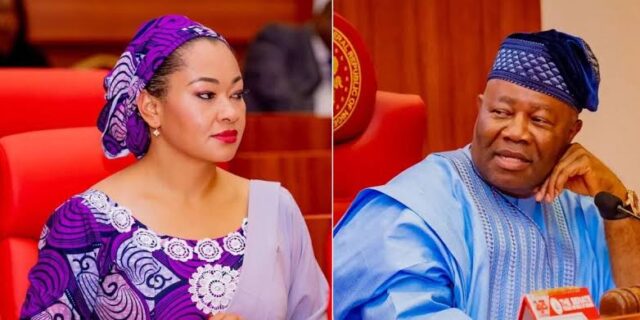
Former presidential aspirant under the Action Democratic Party (ADP), Mathias Tsado, has criticised the Nigerian Senate over its refusal to reinstate Senator Natasha Akpoti-Uduaghan despite a court ruling in her favour.

He described her as the Senate’s “star girl,” arguing that she deserves praise, not punishment.

Speaking on Channels Television’s Sunrise Daily on Tuesday, Tsado condemned the upper chamber’s stance following a Federal High Court verdict that voided Akpoti-Uduaghan’s six-month suspension from legislative activities.

“I was reading a poll conducted by the API (Africa Polling Institute), and they said 82 per cent of Nigerians do not have confidence in the Nigerian Senate. Now, their star girl, the person who is supposed to be their number nine striker, is the one they are attacking.”

“In the midst of all this, Senator Natasha is still touching the lives of the people. She has become a source of inspiration to many young people. The Senate should have been worshipping her, saying, ‘You are our star girl,’” he said.

Though the court has ruled in Akpoti-Uduaghan’s favour, the Senate insists it has not received the Certified True Copy (CTC) of the judgment, a condition it claims is necessary before any formal action can be taken.

Tsado challenged that reasoning, saying the Senate has no legal justification to delay compliance with the court’s order.

“It’s rather unfortunate that we have reduced ourselves as a country to these kinds of deliberations. From the very beginning, we saw how the Senate mishandled Natasha’s situation. For someone, a woman, to fight her way, against all odds, into the Senate is inspiring.”

“And yet, the Senate says it cannot admit her without the CTC of the judgment. They don’t have the right to admit her in the first place. It’s unfortunate that when judgments are delivered in Nigeria, which are supposed to be clear and unambiguous, the enforcement is selective.”

“If the judge had declared that Senator Natasha should be imprisoned, would they be waiting for the CTC? When she was found guilty of contempt and asked to pay ₦5 million, did they wait for the CTC before they started talking about it?”

He also faulted the Senate’s interpretation of its disciplinary powers, urging them to respect constitutional limits.

“They suspended someone beyond the 14 days allowed in their rule book. That is illegal. If Natasha is being punished by the court for contempt, who punishes the Senate for overreaching their constitutional limits?
I heard her yesterday when she said she would wait for the documents before resuming.”

“But I am calling on the Nigerian Senate: man up, forget about this theatre. These are not the things Nigerians want to see.”

On March 6, 2025, Senator Akpoti-Uduaghan was suspended after a heated dispute in the Senate over seat allocations.

The Kogi Central lawmaker had accused Senate President Godswill Akpabio of abuse of office and sexual harassment, allegations Akpabio has strongly denied.

Her initial petition was dismissed on technical grounds, but upon resubmission, the Senate moved to suspend her for six months and exclude her from plenary activities.

The suspension drew widespread criticism and protests across parts of the country.

In response, Akpoti-Uduaghan challenged the Senate’s action in court and took the matter to the international stage, labelling the suspension illegal.

On July 4, Justice Binta Nyako of the Federal High Court in Abuja declared the suspension “excessive and unconstitutional,” stating that it denied her constituents their right to representation.”

“The judge criticised the Senate’s disciplinary procedures and faulted the Legislative Houses’ Powers and Privileges Act for being overreaching.

The court, while acknowledging the Senate’s power to discipline its members, ruled that such actions must not infringe on constitutional rights.

The judge also fined Akpoti-Uduaghan ₦5 million for violating a gag order and ordered her to publicly apologise in two national newspapers within seven days.

Despite the ruling, the Senate has remained non-committal, saying it would not act until the full court documents are received.

“Since no party to the case has been officially served the enrolled order of the judgment, none can enforce any perceived order or relief,” Senate spokesperson Yemi Adaramodu explained in a statement.

“Our legal representatives, who were in attendance at the proceedings, have confirmed that the complete judgment was not read in open court. Consequently, we have formally applied for the CTC to enable a thorough review and informed determination of the appropriate legal response.”

He added: “Pending receipt and examination of the CTC, and acting on the advice of counsel, the Senate shall refrain from taking any steps that may prejudice its legal position. The Senate remains committed to upholding the rule of law.”

Meanwhile, Senator Akpoti-Uduaghan is still facing separate charges of cybercrime and defamation, currently pending before courts in Abuja.

Google search engine

A Quiet Benediction Of Hope: Prof. Nnamchi’s Surprise Visit To His Scholarship Beneficiaries


In a time when leadership is too often measured by rhetoric and distance, Hon. Prof. Paul Sunday Nnamchi offered something altogether rare: presence.

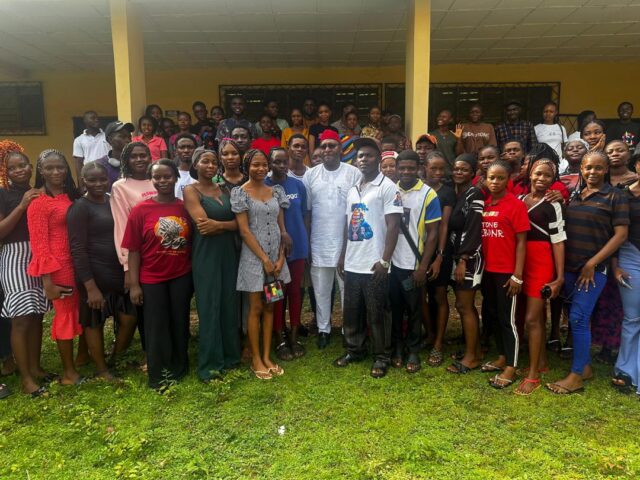
This past weekend, at Ebonyi State University, Abakaliki, the lawmaker representing Enugu East/Isi-Uzo Federal Constituency quietly arrived, unannounced, among the beneficiaries of his constituency scholarship programme.

What followed was not mere applause, but an outpouring of something deeper: recognition. Recognition of a leader whose actions have etched their way into the hearts and hopes of a rising generation.

Many of the students who might never have imagined stepping through the gates of a university without this intervention, gathered swiftly, their songs filled with gratitude, their prayers unforced. In that moment, politics gave way to something more sacred: human connection.

Over one hundred students at the CAS campus are beneficiaries of this singular vision, a vision not just of access, but of transformation.

Here, education is not charity; it is legacy in motion.

Hon. Prof. Nnamchi did not arrive with a long convoy or camera crews.

He came to see. To listen. To encourage. And in a gesture as symbolic as it was practical, he distributed stipends for their journey home, a small act with a profound message: I see your needs, not from afar, but beside you.

He charged them to remain diligent, to wear discipline as their garment, and to know that their triumphs would be his truest reward.

“Each of your graduations,” he said, “is a chapter written in the book of our shared progress. Make it a story worth telling.”

He pledged continued visits and sustained support not just of funds, but of presence, the kind that makes young people feel not forgotten, but remembered and uplifted.

One student, speaking on behalf of the others, captured the moment perfectly: You have given us more than education. You have given us a reason to believe in the future.”

In a country yearning for leaders who do not rule from above but walk among the people, Hon. Prof. Paul Nnamchi has shown that greatness often lies not in thunderous declarations, but in quiet, consistent acts of faith in others.

This was not just a visit.
It was a benediction.
A leader writing his name not on billboards, but on the lives of his people.

Google search engine

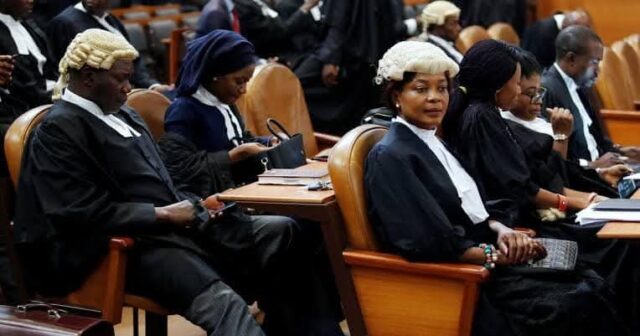
ADC Assembles 97 Lawyers To Defend Interim Leadership


The African Democratic Congress (ADC), which currently anchors a new political coalition ahead of the 2027 general elections, has mobilised a legal team of 97 lawyers to defend its interim leadership in a court battle triggered by what the party described as politically motivated litigation.

In a statement released Tuesday by its media office, the party alleged that the lawsuit was engineered by the ruling All Progressives Congress (APC) in a bid to undermine its newly established interim structure.

According to the ADC, the individuals who filed the case; Adeyemi Emmanuel, Ayodeji Victor Tolu, and Haruna Ismaila, are not registered members of the party, despite claiming to represent ADC interests in Kogi and Nasarawa states.

“The ADC accused the APC of deceiving Nigerians by using the names of non-ADC members to file a suit against the party and its interim leadership,” the statement read.

“It smacks of desperation that a party elected in charge of the lives of no fewer than 200 million people can engage in shopping for the names of its citizens in pursuit of Machiavellian politics,” the party added.

The legal action, filed at the Federal High Court in Abuja under case number FHC/ABJ/CS/1328, seeks to invalidate the current ADC leadership structure by removing Senator David Mark from his role as interim national chairman.

It also questions the legitimacy of the recent leadership transition within the party, alleging that it may have violated an earlier court judgment.

Listed as defendants in the suit are the ADC itself (first defendant), the Independent National Electoral Commission (INEC), and former ADC national chairman Ralph Nwosu.

Others include Senator David Mark (fourth defendant), former Interior Minister Rauf Aregbesola (fifth), and ex-Sports Minister Bolaji Abdullahi (sixth).

The ADC’s National Legal Support Group confirmed that extensive legal preparations are underway to counter the suit.

According to Barrister Mohammed Sheriff, who leads the group, a total of 97 legal professionals have volunteered to defend the party.

“According to Barrister Mohammed Sheriff, head of the group, 97 lawyers have expressed willingness to represent the party in court,” the statement confirmed.

Google search engine

ADC Bars Presidential Aspirants From Public Declarations, Rules Out Preferential Treatment

David Mark, ADC Interim National Chairman

The Interim National Chairman of the African Democratic Congress (ADC), David Mark, has assured that “no presidential aspirant will be given preferential treatment,” pledging complete transparency under his leadership.

At a stakeholders’ meeting of the Kogi State chapter in Abuja yesterday, Mark emphasized that all party members are “equal stakeholders and co‑owners,” and the immediate goal is to establish “a strong and credible platform that can win the trust of Nigerians.”

He declared, “The ADC has no preferred or favoured presidential aspirant. We are first focused on building a platform that is attractive and acceptable to the majority of Nigerians.”

He added: “We must act now to prevent this great ship called Nigeria from sinking. If we don’t rise up together, it will go down with all of us.”

Mark also called for unity: “We must bond together to build the party before we can start talking about individual ambitions,” adding, “I don’t own this party more than any other member. We must show Nigerians that ADC is different, a party ready to run democracy properly in this country.”

He took aim at the ruling APC’s handling of insecurity, saying, “If the APC admitted that insecurity was a problem and promised to fix it, but ended up making it worse, why should Nigerians still support them?”

He urged a collective focus on national rebuilding: “Let us not waste time attacking individuals. Instead, let us focus on rebuilding our nation and securing a better future for generations to come.”

Meanwhile, amid concerns over internal divisions and fears of pre‑election collapse, the ADC has instructed all its leaders with presidential ambitions to “suspend any public expression of interest until solid party structures are established,” ahead of the 2027 elections.

Salihu Lukman, a key party stakeholder, conveyed this during an appearance on AIT’s Jigsaw programme in Abuja yesterday.

He said that former Vice President Atiku Abubakar, 2023 PDP candidate; Peter Obi, ex‑Labour Party flagbearer; and ex‑Transport Minister Rotimi Amaechi are all rumored to be eyeing the party’s 2027 ticket.

Lukman stressed: “What we are telling everybody in the coalition is that the structures of the party will not be handed over to aspiring candidates.”

He maintained that ADC must first build a self‑regulating party structure.

He further explained, “I think that the suspension of the expression of ambition has to continue. I can see some leaders have already become hyper‑reactive.”

Lukman also dismissed claims by Dumebi Kachikwu that ADC had been hijacked, pointing out that Kachikwu “lacked the locus standi to challenge the leadership of Senator David Mark and Rauf Aregbesola.”

He revealed that Kachikwu had been expelled and explained that ADC leadership had conducted “legal due diligence” and verified things with INEC before entering a coalition.

“I can tell you, some of the issues being raised in the public about some of the litigation, there are issues which, even by INEC records… you’ll find out that they have been resolved long ago.”

He added: “…the Dumebi Kachikwu who came out to make noise… by the record of INEC… Dumebi Kachikwu and some others, I think about 15 of them, have been expelled from the party.”

Lukman also informed INEC and the APC-led Federal Government that they must not obstruct registering new parties, confirming the coalition’s support for registering the All Democratic Alliance (ADA), saying: “We want to ensure that INEC discharges its responsibility.”

The ADC accused the APC of mounting “a legal plot” against its interim leadership by using names not found in Kogi or Nasarawa party registers “shocking and desperate,” the ADC said. In response, the ADC’s National Legal Support Group announced that “98 lawyers have volunteered to represent the party in the suit,” noting, “This overwhelming support from the legal community reflects the confidence in our cause.”

The ADC condemned President Bola Tinubu’s administration after Nigeria was excluded from a recent high-level U.S.–Africa trade meeting at the White House.

In a statement by ADC spokesperson Bolaji Abdullahi, the party said the exclusion was a “damning verdict on Nigeria’s declining global relevance under the APC government.”

Abdullahi said that while the meeting included leaders from Gabon, Guinea-Bissau, Liberia, Mauritania, and Senegal, Nigeria, despite being “Africa’s largest economy and most populous country” was omitted.

He said, “What this means in plain language is that under President Tinubu, Nigeria is no longer taken seriously,” going on: “The U.S. chose to bypass us in favour of nations whose combined GDP is a fraction of ours.”

He lamented that just a few years ago, Nigeria would have automatically participated, but now finds itself “sidelined.”

He blamed the Tinubu administration’s “weak diplomacy, incoherent economic management, and failure to uphold Nigeria’s strategic weight.”

Referencing Nigeria’s BRICS membership, he cautioned that it “should not come at the cost of Nigeria’s standing with Western allies,” especially with Donald Trump threatening a “ten per cent tariff on Nigeria.”

He added that Tinubu’s week-long trip to St. Lucia—a nation with “less than one per cent of Nigeria’s GDP” remained unexplained.

The ADC warned that “Nigeria is punching below its weight” and urged citizens to reject what it calls the APC’s “culture of propaganda over performance.”

Felix Morka, APC National Publicity Secretary, retorted by labelling the ADC a “coalition of Nigeria’s most inept politicians” and accused it of spreading “phantom lies… to cover up its internal crisis.”

He said ADC’s claims such as a “secret meeting” where zonal chairmen were supposedly coerced, were unsubstantiated, dismissing them as “vague” and “mischievous.” According to him, the ADC is “drowning in its own confusion.”

He described the coalition as “failed and restless presidential contenders” lacking a “coherent vision for Nigeria,” adding that previous leadership records of figures such as Peter Obi, Nasir El‑Rufai, Rauf Aregbesola, and Hadi Sirika were “marred by incompetence.”

“None of the proponents of the coalition has the vision, the courage, competence, credibility, track record, zeal and patriotism to serve Nigeria better than President Bola Tinubu,” Morka asserted.

He concluded that while the opposition is immersed in “self-inflicted confusion,” the Tinubu-led government remains “focused on rebuilding Nigeria.”

Bayo Onanuga, Special Adviser on Information and Strategy to President Tinubu, claimed there is a conspiracy to remove the president, describing his administration as “the most focused and transformative in Nigeria’s history.”

Speaking on X (formerly Twitter) yesterday, he quoted Emir Sanusi II: “’It’s not going to be easy.’ If anybody tells you it would be easy, don’t vote for him.”

Onanuga warned of “haters of Nigeria’s progress” working to “overthrow an administration that has been the most focused, most transformative in our history,” linking this alleged plot to the newly formed ADC opposition coalition.

Google search engine

MOST COMMENTED

- Advertisement -
Google search engine