Home Blog Page 477

US, Iran To Resume Nuclear Talks Next Week – Trump


President Donald Trump announced on Wednesday that the United States is set to resume nuclear negotiations with Iran next week, hinting at the potential for a new agreement despite having recently declared the Islamic Republic’s nuclear program “crippled” by U.S military strikes.

Speaking to reporters, Trump claimed that the recent American attacks had resulted in the “total obliteration” of Iran’s nuclear infrastructure, allegedly pushing the country’s nuclear ambitions back by “decades.”

“They’re not going to be building bombs for a long time,” Trump said, emphasizing that the strikes had severely disrupted Iran’s capabilities.

However, leaked U.S intelligence reports appear to contradict Trump’s assessment, suggesting that the strikes may have delayed Iran’s program by only a few months rather than years.

The development follows a 12-day military conflict between Israel and Iran, during which Israel launched intense airstrikes on Iranian military and nuclear sites.

Iran responded with a barrage of missiles targeting its regional rival in what has become their deadliest confrontation to date.

Before a ceasefire was agreed upon on Tuesday, the United States intervened in support of Israel, deploying bunker-buster bombs to strike two key nuclear facilities in Iran, and launching a guided missile from a submarine to destroy a third.

Despite the escalation, Trump said the truce was “going very well” and that both nations appeared weary from the conflict.

“Israel and Iran are both tired, exhausted,” he said. “They had a war, they fought, now they’re going back to their world.”

Asked whether a formal agreement with Iran was imminent, Trump remained noncommittal.

“We may sign an agreement. I don’t know. I don’t care if I have an agreement or not,” he said.

Meanwhile, Iranian President Masoud Pezeshkian on Tuesday expressed readiness to return to the negotiating table, though he reaffirmed Iran’s commitment to its “legitimate rights” to pursue peaceful nuclear energy.

The recent conflict has taken a heavy toll on civilians.

According to Iran’s health ministry, at least 627 civilians were killed and over 4,800 injured in Israeli strikes. Iranian missile attacks on Israel reportedly resulted in 28 deaths, according to official sources and rescue agencies.

Google search engine

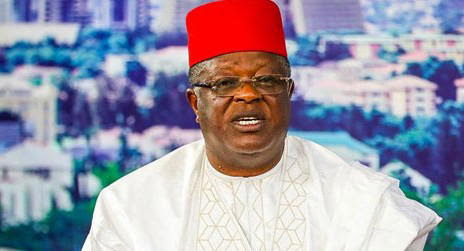
Hon. Sunday Umeha: The New Bride Of Enugu APC As Political Tides Shift In Udi/Ezeagu


In what many political observers have described as a game-changer for opposition politics in Enugu State, Hon. Sunday Cyriacus Umeha, the Member representing Udi/Ezeagu Federal Constituency in the House of Representatives, has officially joined the All Progressives Congress (APC).

His defection positions him as a pivotal figure in the party’s emerging growth trajectory in the state.

Elected on the Labour Party platform, Umeha formally defected to the APC on May 17, 2025, during a well-attended rally in Igbo-Eze South Local Government Area.

His move, which drew applause and strategic interest, marks a historic development—he becomes the first elected political officeholder on the APC platform in Enugu State.

The significance of this political shift was further underscored on June 7, when Umeha was officially received into the APC by the National Chairman, represented by the Deputy National Chairman (South), Chief Emma Eneukwu.

This high-profile endorsement not only signaled the party’s intensified focus on Enugu politics but also validated Umeha’s stature as a strategic political asset.

“Hon. Umeha’s entry into the APC has redefined the political direction of Enugu State. He brings grassroots support, legislative experience, and bold leadership. With him, the APC has found not just a member, but a pathfinder,”  Chief Emma Eneukwu, during the reception at Akama-Oghe Hall.

The ripple effects of Umeha’s defection were immediate and profound. In a dramatic realignment, no fewer than 40 ward chairmen of the Labour Party from Udi and Ezeagu also announced their defection to the APC, pledging loyalty to Umeha’s new political direction.

This mass defection has disrupted existing political calculations in the constituency and beyond.

As political dynamics in Udi and Ezeagu continue to shift, Umeha has wasted no time consolidating his influence.

He has embarked on a strategic mission to strengthen APC structures, holding consultative meetings, rebuilding party units, and forging new alliances across Enugu State.

Political analysts view Umeha’s move as indicative of larger realignments ahead of the 2027 general elections, with many suggesting that his emergence could spark a wave of further defections and reposition the APC as a formidable force in Enugu State politics.

“Umeha is the face of political courage and recalibration. He has not only broken the dominance of traditional parties but has proven that the APC can gain strong grassroots acceptability in Enugu,”
— Political analyst based in Enugu.

As Hon. Sunday Cyriacus Umeha cements his position within the APC and charts new ground for the party in Enugu State, one thing is certain: he is no longer just a lawmaker — he is the new bride of the APC in Enugu, and perhaps the face of the political transformation the party has long awaited.

Google search engine

Tinubu Signs Four Tax Reform Bills Into Law, Implementation Begins January 2026


President Bola Tinubu has officially signed into law four critical tax reform bills recently approved by the National Assembly.

The signing ceremony, held on Thursday at the Presidential Villa, was witnessed by top officials including lawmakers, governors, ministers, and presidential aides.

The newly enacted laws include:

The Nigeria Tax Bill

The Nigeria Tax Administration Bill

The Nigeria Revenue Service (Establishment) Bill

The Joint Revenue Board (Establishment) Bill

These legislative instruments were passed following “extensive consultations with various interest groups and stakeholders,” according to official sources.

A statement from the presidency emphasized that the reforms are expected to overhaul the nation’s tax structure, increase revenue collection, and improve Nigeria’s overall business climate, while also attracting both domestic and international investment.

Speaking at the event, Chairman of the Federal Inland Revenue Service (FIRS), Zacch Adedeji, highlighted the importance of preparation for the new system’s implementation.

“It takes time for all the stakeholders, participants, operators, and the regulator to change the system.
So, with the magnanimity of the National Assembly, Mr President assented to the bills. So, the effective date will be January 1, 2026. We have six full months for both sensitisation and planning. This is also considering the fiscal year of the government because when you have this kind of change, it’s not what you do in the media.”

The transition period is intended to ensure a smooth adaptation for all involved parties before the laws take effect at the start of the next fiscal year.

Google search engine

Court Adjourns PDP National Secretary Dispute


Justice Mohammed Umar of the Federal High Court in Abuja has adjourned the legal battle over the rightful National Secretary of the Peoples Democratic Party (PDP) to September 22, 2025.

The date was set for a definite hearing of all pending motions in the suit filed by embattled PDP National Secretary, Samuel Anyanwu.

The adjournment followed a mutual agreement among the parties involved in the case, which came before Justice Umar for the first time.

The matter had previously been assigned to Justice Inyang Ekwo, who had already scheduled it for judgment.

However, the plaintiff later filed a motion to amend the originating process, prompting a delay.

Anyanwu originally filed the suit against the Independent National Electoral Commission (INEC) and the acting PDP National Chairman, Umar Damagun, listed as first and second defendants.

In his ex-parte application, Anyanwu—through his lawyer, Ken Njemanze (SAN)—asked the court to issue an interim injunction to:

“…restrain INEC from accepting, acting on or giving effect to any correspondence from the PDP not signed by him pending the hearing and determination of the motion on notice for interlocutory injunction.”

He also sought another interim order:

“…restraining Damagun from dispatching to INEC any correspondence purportedly emanating from PDP signed by the acting chair and not counter-signed by him.”

Justice Ekwo had initially fixed March 25 for judgment but was later presented with a request by Anyanwu to amend the originating process to address the questions for determination.

As a result, the hearing was rescheduled to May 19, although that date also faced objections from some of the parties.

Following requests for joinder, the court added more parties to the case. These include:

PDP (3rd defendant)

Udeh-Okoye (4th defendant)

Ali Odela, PDP National Vice Chairman (South-East) (5th defendant)

Setonji Koshoedo, PDP Deputy National Secretary (6th defendant)

Eventually, the case was reassigned to Justice Umar for continued proceedings.

At Thursday’s hearing, Anyanwu’s counsel, U. C. Njemanze-Aku, informed the court that the session was initially set for mention.

He also revealed that the plaintiff had received a letter from the 5th defendant requesting an adjournment until September.

Njemanze-Aku said “While we are not against the request for an adjournment, we would appreciate a shorter date from the court.”

Other lawyers present echoed this sentiment and aligned with the plaintiff’s position.

Paul Erokoro (SAN), representing Udeh Okoye, told the court:

“The issue currently before the court had been resolved by the apex court,” noting that, “the apex court held that the subject matter before the court was exclusive of political parties.”

He added that he intends to file an application to submit the relevant Supreme Court judgment.

In response, Justice Umar directed all parties to submit their responses to Anyanwu’s amendment motion. He concluded:

“The motion, as well as all objections, will be heard on September 22.”

Google search engine

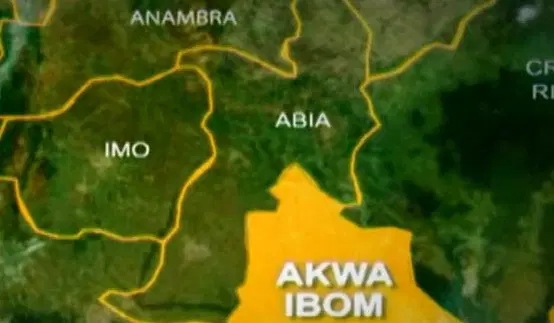
INEC Announces Dates For Bye-Elections In Enugu, Others


The Independent National Electoral Commission (INEC) has announced that bye-elections to fill legislative vacancies across the country will be held on Saturday, August 16, 2025.

The elections will cover 16 constituencies in 12 states, involving over 3.5 million registered voters.

In addition, the Commission disclosed that Continuous Voter Registration (CVR) will resume nationwide, with online pre-registration starting on Monday, August 18, and in-person registration set for Monday, August 25, 2025.

INEC Chairman, Prof. Mahmood Yakubu, made these announcements on Thursday during the second quarterly consultative meeting with political party leaders at the Commission’s headquarters in Abuja.

According to him, the bye-elections will take place in two senatorial districts, five federal constituencies, and nine state assembly constituencies across 32 local government areas, 356 wards, and 6,987 polling units.

“In the last two years since the inauguration of the National and State Assemblies in June 2023, vacancies requiring bye-elections have occurred nationwide,” Yakubu said.

“You may recall that in February last year, the commission conducted nine by-elections to fill vacancies resulting from the deaths or resignations of members of the National and State Houses of Assembly. Since then, more vacancies have been declared nationwide.”

“Consequently, the commission has fixed Saturday, August 16, 2025, for bye-elections in 16 constituencies across 12 states of the country involving a total of 3,553,659 registered voters spread across 32 local government areas, 356 wards and 6,987 polling units. The commission will deploy 30,451 officials.” he added.

However, Yakubu noted that bye-elections will not take place in Khana II State Constituency in Rivers State, due to a state of emergency, and Talata Mafara South in Zamfara State, owing to a pending legal dispute.

The Commission revealed that party primaries must be held between July 17 and 21, with submission of nomination forms via INEC’s portal from July 22 to 26. Political campaigns will be allowed from August 2 to midnight on August 14.

In addition to the bye-elections, Yakubu stated that two previously disrupted court-ordered re-run elections in Enugu South I (Enugu State) and Ghari/Tsanyawa (Kano State) would also be held on August 16.

Regarding the resumption of voter registration, the INEC chairman announced that CVR will take place in INEC’s 37 State/FCT offices and all 774 local government offices across the country, with 30,451 officials deployed for the process.

He specified that voter registration in Anambra State will begin earlier—from July 8 to July 17, 2025, in all 326 wards.

“During the registration period, new voters as well as those who wish to transfer their registration to Anambra State from other states of the federation or one location to another within the state will have the opportunity to do so,” Yakubu explained.

“Similarly, registered voters whose Permanent Voters Cards (PVCs) are lost or damaged will have the opportunity to apply for a replacement. Uncollected PVCs from previous registrations will also be available for collection at the registration centres. Interested and eligible Nigerian citizens are encouraged to appear in person to register.”

“The online pre-registration option is not available for the time being. Voter registration and the compilation of the voters’ register must be completed not later than 90 days before the date fixed for the election as provided by law. Detailed information, including the locations of the 326 registration centres in Anambra State, is included in your folders for this meeting.”

Meanwhile, Yusuf Dantalle, Chairman of the Inter-Party Advisory Council (IPAC), urged INEC to use the upcoming Anambra governorship election scheduled for November 8, 2025, to demonstrate its capability for credible, technology-driven elections.

Dantalle acknowledged recent improvements but expressed concern over continued low voter turnout.

“Voter turnout remains disturbingly low, largely due to a lingering distrust in the electoral process, fears over electoral violence, and a general lack of confidence in political actors.”

He advised the Commission to rebuild public trust through the strategic deployment of new technologies, including artificial intelligence (AI):

“INEC should leverage its new technologies, especially artificial intelligence (AI), to drive decision-making, risk management, voter engagement, predictive analytics, automation, and integrity safeguards.”

Google search engine

‘Small Man Using Excerpts From Obasanjo’s Book’, Onanuga Takes A Swipe At El-Rufai


Bayo Onanuga, Special Adviser to President Bola Tinubu on Information and Strategy, has taken aim at former Kaduna State Governor, Nasir El-Rufai, by sharing biting excerpts from former President Olusegun Obasanjo’s memoir My Watch (Volume 2).

This came in response to El-Rufai’s recent critical comments about the Tinubu administration during an appearance on Arise TV.

In the interview, El-Rufai, who supported Tinubu in the 2023 election, claimed: “God saved me from the disaster called Tinubu’s government,” adding that the president “would be lucky to come third” in the 2027 election as there was “no pathway to win.”

Reacting via social media, Onanuga posted segments from Obasanjo’s book, where the former president offered a scathing character assessment of El-Rufai, suggesting the former governor suffers from “small man syndrome” and deeper psychological issues possibly rooted in childhood trauma.

Obasanjo is quoted as writing:

“Nasir’s penchant for reputation savaging is almost pathological. Why does he do it? Very early in my interaction with him, I appreciated his talent. At the same time, I recognised his weaknesses; the worst being his inability to be loyal to anybody or any issue consistently for long, but only to Nasir El-Rufai.

Obasanjo described El-Rufai as someone who had a habit of lying and harming the reputations of those close to him:

“He lied brazenly, which he did to me, against his colleagues and so-called friends. I have heard of how he ruthlessly savaged the reputation of his uncle, a man who, in an African setting, was like a foster father to him. I shuddered when I heard the story of what he did to his half-brother in the Air Force, who is senior to him in age.”

The former president explained why he never considered El-Rufai as a potential successor during his presidency:

“Character-wise, Nasir does not have much going for him. But he is a talented young man who can always deliver under close supervision. So, when Osita Chijoka approached, among others, propping Nasir as my possible successor, believing that whoever I supported would make it, which was a false belief, I did not hesitate to point to Nasir’s naivety and immaturity, talk less of his inability to give honour to whom honour is due.”


Obasanjo further said:

“My vivid recollection of him is a penchant for lying, for unfair embellishment of stories, and his inability to sustain loyalty for long. Two years after I had left office, Osita came to me to confirm how right I was in my assessment and judgement of Nasir.”

Despite his concerns, Obasanjo acknowledged El-Rufai’s capabilities—though he believed those talents must be tightly managed:

“I knew what I could make him achieve, and he achieved it for my administration and the country. I believe that he can still be used in public service, but under guidance and sufficient oversight, making allowance for the psychology of his petite size and his elephantine brain. He was described as a malicious liar. He was more than that; he is a pathological purveyor of untruths and half-truths with little or no regard for integrity. In all of this, he unwittingly does more harm than good to himself.”

Obasanjo concluded his assessment with a reflection on El-Rufai’s personality and background:

“He’s always playing himself up to give himself more ‘height’ than he has. Whichever way, he has my sympathy. It was characteristic of him. Unfortunately, his character could also be seen as a reflection of his upbringing, which may spread the blame beyond him.”

“In a typical African society, it would be asked, ‘Did he not receive home training, or did he reject home training?’ Is there nobody in the family to call him to order? One may also wonder how much his losing his father at the tender age of eight years had rendered him devoid of fatherly care, guidance, paternal direction, and home training.”

Google search engine

PDP In Disarray As NWC Disputes Damagum, Rejects Anyanwu’s Return As National Secretary


Confusion has erupted within the ranks of the Peoples Democratic Party (PDP) following a clash between the National Working Committee (NWC) and the party’s Acting National Chairman, Ambassador Umar Damagum, over key decisions regarding the party’s leadership and upcoming meetings.

On Wednesday, the NWC issued a statement firmly denying reports that the 100th National Executive Committee (NEC) meeting of the party, scheduled for Monday, June 30, 2025, had been postponed.

In addition to dismissing the alleged postponement, the NWC also refuted claims that Samuel Anyanwu had been reinstated as the National Secretary of the party.

The NWC’s statement came in direct response to a press briefing earlier the same day by Damagum, in which he had announced both the postponement of the NEC meeting and Anyanwu’s reinstatement.

According to the NWC, Damagum’s declarations stand in clear violation of the decision reached at the 99th NEC meeting, which had not only confirmed June 30 as the date for the next NEC session but also deferred all matters concerning the National Secretary’s position to that very meeting.

“The pronouncements by the Acting National Chairman have no foundation as no organ of the Party (including the NWC), individual or group has the power to cancel, overrule, veto or vary the resolution of the National Executive Committee (NEC),” the statement read.

Google search engine

IBB University Shut Down By Niger State Govt


The Niger State Government has ordered the immediate closure of Ibrahim Badamasi Babangida University (IBBU) in Lapai, following a surge in security threats that recently culminated in the loss of lives within the university community.

The decision was announced in a statement issued by the Secretary to the State Government (SSG), Abubakar Usman.

According to the statement, the move became necessary due to the worsening security situation in and around the campus.

Governor Umaru Bago approved the shutdown, which takes effect immediately and will continue until further notice.

“The safety and security of all citizens, particularly students and staff, is of utmost priority to the Niger State Government,” the statement read.

“We are deeply saddened by the unfortunate events, and immediate action is being taken to address the situation.”

The closure comes on the heels of protests sparked by violent incidents, including a recent robbery attack that led to the fatal stabbing of a student, further intensifying fears among the university community.

In the statement, the government urged students, university personnel, and residents to remain calm and to cooperate fully with security agencies throughout the temporary closure.

“We remain resolute in our commitment to upholding law and order and to safeguarding the lives and property of all residents in Niger State,” it said.

While investigations into the incidents are currently underway, the government reassured the public that those found culpable would be brought to justice.

“We are deeply saddened by the unfortunate events, and immediate action is being taken to address the situation,” the statement emphasized.

The government also called for continued vigilance from the public as efforts to restore normalcy and ensure long-term security at IBB University progress.

Google search engine

Obi Advised To Report Brother’s Property Demolition To Police – Sanwo-Olu’s Aide


Wale Ajetunmobi, the Special Assistant on Media to Lagos State Governor Babajide Sanwo-Olu, has advised former presidential candidate Peter Obi to lodge a formal complaint with the police regarding the demolition of his brother’s property in Lagos.

The statement follows Obi’s social media post in which he narrated how his younger brother’s company building in Ikeja, Lagos, was demolished under unclear circumstances.

According to Obi, the property, which had stood for over 15 years, was brought down without proper notice or identifiable legal grounds.

In a post shared on X (formerly Twitter), Obi wrote, “This morning, my youngest brother called me frantically, informing me that a group of people had invaded his company property in Ikeja, Lagos, and were demolishing the building.

He had just come in from Port Harcourt and was denied entry to the property by security men who told him the building was being pulled down.

“They even informed him that this demolition had started over the weekend. As a peace-loving Nigerian, he quickly started processing to go to court immediately, not knowing what must have resulted in this, as they moved fast to destroy his home without any restraint.”

Obi continued, explaining how he visited the site himself and was nearly denied access.

“I humbly pleaded with them that the property belonged to my brother’s company, and from the records, the company had owned the property for over a decade.

“They told me they had a court judgment, and I immediately requested it. You would not believe that the court judgment they claim was issued against an unknown person, and squatters. I went further to ask about a demolition order or permit, and there was none,” he said.

“How do you sue an unknown person? How does a court issue a judgment in such a farce of a case? No one was served. No name was written. Yet they showed up with excavators and began destroying a structure that had stood for over 15 years,” Obi added.

Although Obi did not explicitly blame the Lagos State Government, several online users speculated that the Commissioner for the Environment and Water Resources, Tokunbo Wahab, might have played a role.

Responding to the growing criticism, Sanwo-Olu’s media aide, Wale Ajetunmobi, defended the commissioner, stating, “Tokunbo Wahab won’t come out to answer questions about a demolition he never sanctioned. Peter Obi should report the matter to the police. They will help him find people who ordered the building’s demolition.”

He emphasized that Wahab’s responsibilities do not include issuing legal rulings or demolition orders.

“Whatever game Peter Obi wants to play, first things first, Who is responsible for the demolition has to be well stated. If he can’t reach them, he should go to the police station and report. A commissioner who doesn’t issue court orders should not be questioned,” Ajetunmobi said.

He also pointed out the public’s frequent misunderstanding of the commissioner’s duties.

“People probably think HC Tokunbo Wahab’s primary job is to demolish people’s houses. They can’t differentiate between removal of contraventions along drainage/canal’s right-of-way and demolition of distressed buildings, which is out of HC Wahab’s purview,” he added.

Google search engine

UK To Purchase New Fighter Jets, Boost Nuclear Capabilities

The UK has announced plans to purchase 12 new F-35A fighter jets capable of carrying nuclear weapons, marking what Prime Minister Sir Keir Starmer describes as “the biggest strengthening of the UK’s nuclear posture in a generation.”

The jets, which can also deploy conventional weapons, will join NATO’s airborne nuclear mission. The announcement is set to be formally delivered at the NATO summit in the Netherlands this week.

Unlike the F-35B aircraft currently operated by the RAF and Royal Navy, the new F-35A models have longer range and can carry a wider variety of armaments, including the American-made B61 tactical nuclear bombs, already stockpiled in Europe by the US.

These dual-capability aircraft will be based at RAF Marham in Norfolk and are expected to significantly upgrade the UK’s tactical strike options.

Until 1998, British aircraft had carried the UK-designed WE177 nuclear bombs, which were later retired, leaving submarines as the UK’s sole nuclear delivery system.

This move comes amid rising global tensions and what UK defence officials describe as a new era of nuclear uncertainty.

According to the recently published National Security Strategy, the UK must now prepare for the possibility of direct threats to its homeland, even in a wartime context.

Sir Keir Starmer defended the investment, stating, “In an era of radical uncertainty we can no longer take peace for granted.”

He emphasized that the acquisition will also have economic benefits, supporting around 20,000 jobs and 100 UK businesses.

The decision aligns Britain with seven other NATO members, including the US, Germany, and Italy, already participating in the alliance’s nuclear-sharing arrangement.

In this program, NATO aircraft are configured to carry B61 bombs, though their deployment would still require joint authorization from the NATO Nuclear Planning Group, the US President, and the UK Prime Minister.

While the UK’s Trident missile system, launched from Vanguard-class submarines, remains its primary nuclear deterrent, this development introduces a second delivery mechanism.

However, experts point out that Britain would remain reliant on the US for control over the actual bombs, a potential sticking point in sovereignty debates.

Defence expert Justin Bronk from the Royal United Services Institute (RUSI) notes that it will take time for the RAF to reestablish nuclear delivery capabilities after a nearly three-decade pause.

This strategic purchase is part of a broader defence overhaul.

The UK has committed to meeting a new NATO spending goal: dedicating 5% of GDP to national security by 2035, with 3.5% going directly to defence.

All 32 NATO member states are expected to endorse this target at the summit.

NATO Secretary-General Mark Rutte praised the UK’s decision, calling it “yet another robust British contribution to NATO.”

Google search engine

MOST COMMENTED

- Advertisement -
Google search engine