Home Blog Page 495

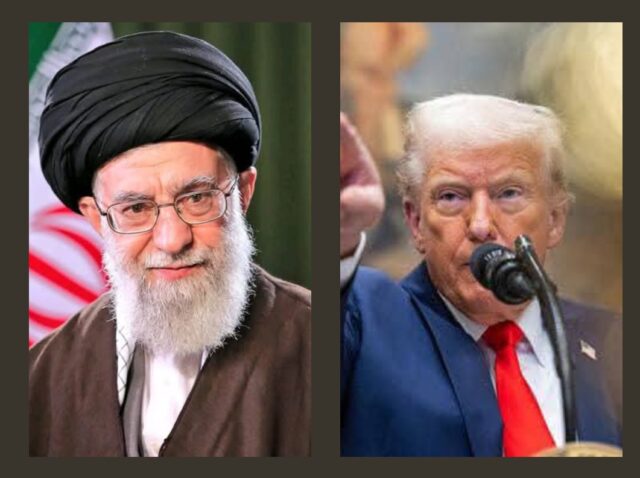
When Iran’s Supreme Leader Emerges From Hiding He Will Find A Very Different Nation
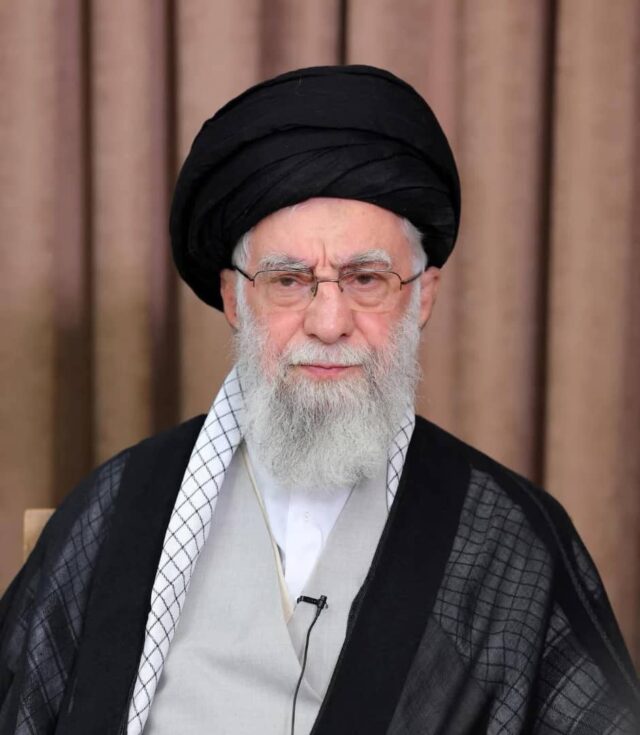
 

After nearly two weeks in hiding amid a brutal war with Israel, Iran’s Supreme Leader Ayatollah Ali Khamenei could soon reappear, but he will find a country profoundly changed.

The 86-year-old leader is believed to have retreated into a secret underground bunker, completely cut off from even senior government officials, over fears of a potential assassination by Israel.

His self-imposed isolation coincided with a devastating Israeli air campaign and a volatile regional conflict that has left Iran reeling.

Now, with a fragile ceasefire brokered by U.S. President Donald Trump and the Emir of Qatar in place, the possibility of his return to public life looms.

But even with President Trump reportedly urging Israel not to kill the Supreme Leader, Israeli Prime Minister Benjamin Netanyahu has not ruled it out entirely.

When Khamenei does resurface, if he does, he will confront the wreckage of a country that many Iranians believe he led into unnecessary war.

During the war, Israel established rapid control over much of Iran’s airspace and launched a series of precise strikes that dismantled key military and nuclear infrastructure.

Many senior figures in the Revolutionary Guard Corps and army were killed early on, with repeated bombings further degrading Iran’s already strained military capacity.

Notably, Iran’s nuclear facilities, developed over decades at the cost of hundreds of billions of dollars and severe international sanctions were heavily damaged.

The extent of the destruction remains unclear, but the airstrikes mark a severe setback for a program Iran long hoped would secure its power.

“What was it all for?” many Iranians are now asking.

For many inside Iran, the war has crystallized decades of frustration with Ayatollah Khamenei’s rule, which began in 1989.

Critics blame him for pushing an ideological agenda that prioritized the destruction of Israel over the well-being of Iran’s population.

His belief that nuclear capability would secure Iran’s global standing is now seen by many as a strategic miscalculation.

“It is difficult to estimate how much longer the Iranian regime can survive under such significant strain, but this looks like the beginning of the end,” said Professor Lina Khatib, a visiting scholar at Harvard University.

“Ali Khamenei is likely to become the Islamic Republic’s last ‘Supreme Leader’ in the full sense of the word.”

Amid the chaos, murmurs of dissent have emerged within Iran’s leadership.

According to reports from a semi-official news agency, influential religious scholars in Qom, traditionally separate from the political elite, have been urged by former regime figures to intervene in the nation’s leadership crisis.

“There will be a reckoning,” said Professor Ali Ansari, founding director of the Institute of Iranian Studies at the University of St Andrews.
“It’s quite clear that there are huge disagreements within the leadership, and there’s also huge unhappiness among ordinary people.”

During the war, ordinary Iranians exhibited remarkable acts of solidarity—opening homes to the displaced, lowering prices on essential goods, and supporting neighbors in need. But their support was for one another.

While many oppose the current leadership, the prospect of regime change imposed from outside also makes them wary.

Demonstrations across the country have reflected this tension, anti-Israel and anti-US sentiments, mixed with an equally strong desire to see Iran’s ruling elite held accountable.

Despite years of repression, Iran’s internal opposition remains fragmented.

Most political opponents are in jail or exile, and the exiled opposition has failed to organize a viable alternative leadership inside the country.

“It is unlikely that the Iranian regime will be toppled through domestic opposition,” said Prof. Khatib.
“The regime remains strong at home and will ramp up domestic oppression to crush dissent.”

In the two weeks since the war began, Iran has executed at least six people accused of spying for Israel and arrested hundreds more.

Fear is mounting among Iranians that a humiliated regime may turn its anger inward.

“What I fear more than the war itself is the revenge the regime will take on us,” one woman told BBC Persian.

“If the regime is unable to supply basic goods and services, then there will be growing anger and frustration,” warned Prof. Ansari.

“I see it as a staged process. I don’t see it as something that will take root until long after the bombing is over.”

Few believe the ceasefire will hold. Many expect that Israel, having achieved air superiority, may yet resume its offensive.

Despite the damage, Iran’s network of ballistic missile silos, many buried under mountains, reportedly remains mostly intact.

Israeli military leaders have estimated that Iran began the war with about 2,500 surface-to-surface missiles, around 1,500 of which are believed to remain.

This continued capability, combined with lingering nuclear ambitions, has raised alarm in Tel Aviv, Washington, and other world capitals.

Iran claims it has moved its 60% enriched uranium stockpile, enough for roughly nine nuclear bombs, to a secure location. Just before the war, it had also announced a new secret enrichment facility.

Meanwhile, the Iranian parliament has voted to reduce cooperation with the International Atomic Energy Agency (IAEA), and may soon consider exiting the Nuclear Non-Proliferation Treaty (NPT) altogether.

At 86 and in poor health, Ayatollah Khamenei may be seeing the final chapter of his leadership unfold.

Though his regime may have narrowly survived this latest crisis, his personal authority has been severely weakened.

There is growing speculation about who may succeed him.

Some suggest a transition to another senior cleric, while others envision a council-based leadership, possibly controlled by the remaining elite in the Revolutionary Guard, who have remained loyal to him.

Whatever the outcome, few believe Iran will ever return to what it was before the war.

Google search engine

Households Earning N250,000 Or Less Monthly Won’t Pay Tax – Oyedele


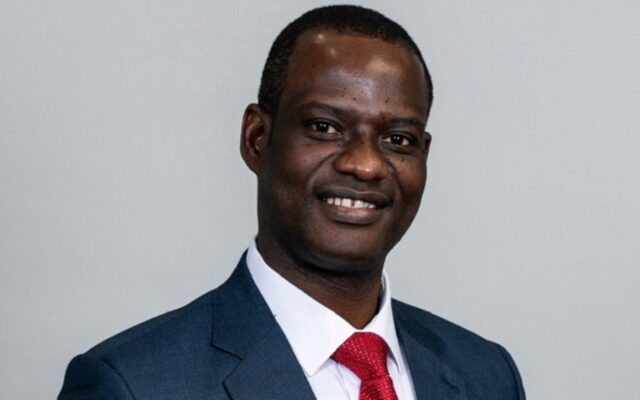
Chairman of the Presidential Committee on Fiscal Policy and Tax Reforms, Taiwo Oyedele, has announced that households earning ₦250,000 or less per month will be exempt from taxation under Nigeria’s new tax laws.

Speaking on Politics Today, a Channels Television programme aired on Thursday, Oyedele clarified that the newly signed tax legislation is not aimed at burdening low-income earners but rather at stimulating economic growth and enhancing tax compliance.

“This tax law will not give you cash in your pocket, but at least it won’t take your cash away if you are poor,” he said.

The exemption policy comes shortly after President Bola Tinubu signed four new tax bills into law, a development that marks a major milestone in the country’s ongoing fiscal reforms.

Oyedele, formerly a top executive at PriceWaterhouseCoopers (PwC) and appointed by Tinubu in July 2023, said the reforms will become effective in January 2026.

According to him, the reforms were carefully designed to avoid taxing poverty.

Instead, they aim to protect small businesses, streamline tax processes, and close the country’s significant tax gap.

“We have eliminated the tax component for people at the bottom, we have reduced for people at the middle, and we have increased slightly for people at the top,” Oyedele explained.

The reforms define “middle-income” as those earning between ₦1.8 million to ₦2 million monthly.

He noted that this group represents only about 5% of Nigeria’s population, and while they will still pay taxes, the amount will be lower than what they currently pay.

“That middle, we estimated it at about ₦1.8 to ₦2m a month. If you are earning that amount and below, your tax will not be zero but it will reduce from what you are paying today,” he stated.

Addressing the process behind determining the income threshold for tax exemption, Oyedele said his committee engaged in extensive deliberations on how to define poverty within the Nigerian context.

“We debated this question; we said: ‘Who is a poor person in Nigeria?’
First, we started with data like the World Bank and the UN will tell you two dollars, fifteen cents a day per person means you are at the poverty line, but there are people who do not earn two dollars a day but they are not poor because they produce the food that they eat and they do not pay for transportation. I lived and grew up in the village.”

He continued by explaining how the team localized the poverty line by analyzing the economic reality of a typical Nigerian household.

“So, we had to factor that in. We drew our own (poverty) line for Nigeria on the basis of an average of five people per family: two people working if they are lucky, taking care of the five.
When we did the maths, it gave us an amount, and that was what we used in determining the income below which nobody should pay taxes.
We came up with a ₦120,000 or ₦130,000 per two people working in a household of five. If the earnings are about ₦250,000, they can take care of themselves. Of course, they are not going to have luxury, but at least they can take care of themselves. They are poor, and they shouldn’t pay taxes.”

Oyedele also revealed a startling gap in the nation’s tax revenue performance. He said Nigeria currently collects only about 30% of what it ought to be generating through taxation.

“The objective of the new tax laws is to close the 70% gap,” he said.

Google search engine

NDLEA Seizes 1.26 Tons Of Illicit Drugs In Enugu


The National Drug Law Enforcement Agency (NDLEA) has reported the seizure of 1,257.213 kilograms (approximately 1.26 tons) of assorted illicit drugs in Enugu State over the past year.

This was disclosed on Thursday by Mr. Abel Wadahi, the NDLEA Commander in Enugu, during the commemoration of the 2025 United Nations International Day Against Drug Abuse and Illicit Trafficking.

The event, themed “The Evidence Is Clear, Invest In Prevention: Break the Cycle #StopOrganisedCrime,” was held in partnership with the Enugu State Government.

The day, marked globally every June 26, raises awareness of the devastating impacts of drug abuse and illegal drug trade.

According to the News Agency of Nigeria (NAN), the NDLEA’s seizures in Enugu within the 12-month period included:

977.711kg of Cannabis Sativa

6.462kg of Methamphetamine

70.182kg of Tramadol

0.734kg of Cocaine

Additional assorted substances

Mr. Wadahi stated, “These figures reflect more than statistics; they signify a disruption of drug chains and restoration of hope for affected Nigerian families.”

A total of 446 individuals were arrested for drug-related offenses—399 males and 47 females. Of these, 62 persons, including two women, have been convicted.

Meanwhile, 78 cases (66 males and 12 females) remain ongoing in court.

Wadahi also revealed that 120 cases had been filed at the Federal High Court in Enugu, currently at various trial stages.

Six vehicles and two motorcycles linked to drug operations were seized and placed under interim forfeiture.

Efforts to rehabilitate drug users have also seen progress.

According to him, “452 individuals were successfully counselled, treated and rehabilitated at the command’s facility.”

In terms of preventive outreach, the NDLEA conducted 152 sensitisation programmes targeting youth and the general public across schools, parks, places of worship, workplaces, and communities.

“We reached 81,415 people—40,803 males and 40,612 females,” Wadahi said.

He also highlighted the agency’s Drug Integrity Test initiative, which promotes a sustained anti-drug culture throughout the country.

Delivering the keynote address, Enugu State Governor Peter Mbah, represented by Commissioner Emeka Ajogwu, emphasized that addressing poverty and trauma is key to preventing substance abuse.

He also underscored the importance of youth empowerment and reducing stigma toward drug users.

Chairman of the Enugu State Traditional Rulers’ Council, Samuel Asadu, represented by Vincent Ugwuanyi, pointed out the broader impact of narcotics, saying they “fuel crime, corruption and terrorism worldwide.”

He called for united efforts to dismantle drug networks and foster a drug-free society.

During a lecture, Dr. Vincent Egbuogu of the National Orthopaedic Hospital, Enugu, described drug abuse as both “destructive and profit-driven,” urging simultaneous action to cut both the supply and demand of narcotics.

Also speaking, Mrs. Onyinye Obeagu, wife of the Isi-Uzo Council Chairman, noted that their partnership with NDLEA had significantly strengthened local drug abuse prevention efforts.

The event drew wide participation from civil society organizations, law enforcement agencies, academic institutions, NYSC members, students, and other stakeholders in the state.

Google search engine

Kidnappers Seize Father Who Brought Ransom After Sons’ Escape


In a shocking twist to a kidnapping case in Oreke, Ifelodun Local Government Area of Kwara State, a father who delivered ransom money to secure the release of his three abducted sons has instead been taken hostage by the kidnappersescaped, after the children had already escaped.

Security sources revealed that the three brothers were abducted last week while returning from a nearby town.

The abductors later contacted the family, demanding ₦7 million for the boys’ release.

Driven by desperation to save his sons, the father reportedly raised the money and went deep into the forest to meet the kidnappers at the agreed location.

However, unknown to him, the three boys had miraculously escaped captivity just before his arrival.

What should have been a joyful reunion turned tragic. Upon discovering the children were no longer in their custody, the kidnappers detained the father instead.

“They told him that since the children were no longer with them, he would now be held in their place,” a police source at the command headquarters in Ilorin told DAILY GAZETTE on condition of anonymity.

Following the incident, the abductors are said to have demanded a new ransom, reportedly higher than the original ₦7 million, as a condition for the father’s release.

It was gathered that the escaped siblings were at the police headquarters over the weekend to assist authorities with the investigation.

Security operatives have reportedly intensified efforts to locate the kidnappers’ hideout and secure the father’s release.

Attempts to reach the Kwara State Police Public Relations Officer, Adetoun Ejire-Adeyemi, were unsuccessful as calls and text messages went unanswered as of press time.

However, a senior officer within the command confirmed the incident, saying that the matter, involving a ransom drop and a surprising development in the abduction case, was receiving “top-level attention.”

Google search engine

Bola Tinubu Conference Centre Fully Booked Till 2027 – Wike


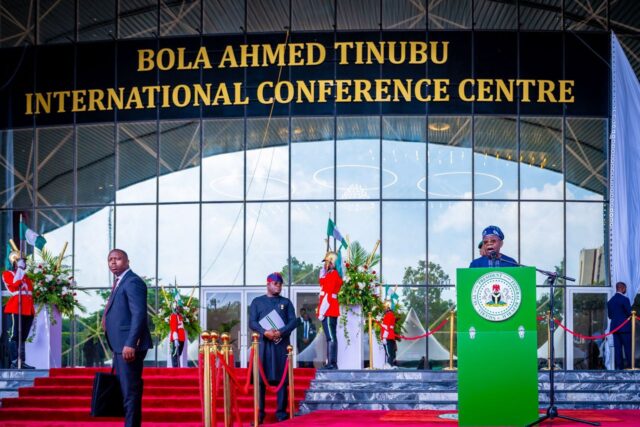
The FCT Minister, Nyesom Wike, has announced that the newly refurbished Bola Ahmed Tinubu International Conference Centre in Abuja is fully booked through 2027.

President Tinubu officially inaugurated the upgraded facility on June 10, 2025, marking his second anniversary in office.

Although the N39 billion renovation drew criticism, most notably from former Labour Party presidential candidate Peter Obi, who argued the funds could have been better utilised in education, its popularity is now evident, according to Wike.

Speaking during the opening of the Kugbo Bus Terminal in Abuja on Thursday, the minister noted that even the House of Representatives Committee on Constitution Review had applied to use the venue but found no available slots.

“You know, Nigerians pretend. They like good things, but they will pretend as if they don’t. That Conference Centre has been booked now till 2027, no space. In fact, I saw an application by the Deputy Speaker, on Constitutional Amendment. There’s no space, no day,” Wike said.

He underscored that the National Assembly would need to pay for usage.

“I’m trying to adjust if he can pay on time. Because it’s not free. There’s nothing like it’s the National Assembly. You have to pay something for us to sustain the facility.”

“Yes, you are helping us to pass our budget, but it’s not for that area. We have to do it very well. Yes, you are passing the budget, which is part of your function, but the sustainability is key, because you won’t like it to be what it used to be before,” Wike added.

At the same event, Senate President Godswill Akpabio, representing President Tinubu urged Wike to refund anyone with existing bookings to accommodate the constitutional review committee. He also cautioned against extending bookings into 2028:

“I’m not happy to hear that the Constitutional Confab that we are planning by the National Assembly, we will not have space in the International Conference Centre, because of what you have done, that it has been booked till 2027. If they book it till 2027, what are we going to do? Was it our fault that you finished the job in such an international manner?”

“Please find a way to return the money to those who booked, we will pay. Because we need that space to also showcase to the world.”

“We are inviting a lot of international people, we would like them to see the good things in Nigeria. Don’t allow them to book it in 2028, otherwise we won’t even see a place to jubilate after we have won the election.”

Google search engine

2027: Coalition Members Want Me Out To Seize Control Of SDP – Gabam Alleges


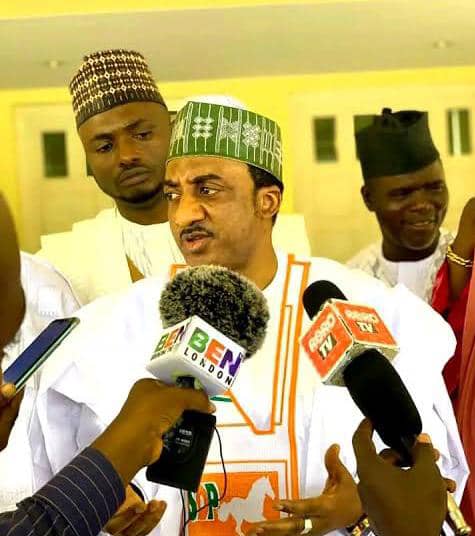
Shehu Gabam, the National Chairman of the Social Democratic Party (SDP), has alleged that certain members of an opposition coalition are plotting to oust him from his position in a bid to hijack the party’s structure ahead of the 2027 general elections.

Speaking during an appearance on Politics Today, a Channels Television programme aired on Tuesday, Gabam claimed that the coalition is trying to impose conditions on the SDP, including a demand to take over its National Working Committee (NWC).

According to him, these moves are part of a larger strategy to dominate the party’s internal structure and position it under external control.

“They gave us a condition to take over the National Working Committee of the SDP,” Gabam revealed.

Despite the pressure, he firmly maintained that he remains the legitimate national chairman of the party and vowed not to cave to political manipulations.

“I am still the National Chairman of the SDP,” he stated categorically, pushing back against speculation about his position.

Google search engine

US, Iran To Resume Nuclear Talks Next Week – Trump


President Donald Trump announced on Wednesday that the United States is set to resume nuclear negotiations with Iran next week, hinting at the potential for a new agreement despite having recently declared the Islamic Republic’s nuclear program “crippled” by U.S military strikes.

Speaking to reporters, Trump claimed that the recent American attacks had resulted in the “total obliteration” of Iran’s nuclear infrastructure, allegedly pushing the country’s nuclear ambitions back by “decades.”

“They’re not going to be building bombs for a long time,” Trump said, emphasizing that the strikes had severely disrupted Iran’s capabilities.

However, leaked U.S intelligence reports appear to contradict Trump’s assessment, suggesting that the strikes may have delayed Iran’s program by only a few months rather than years.

The development follows a 12-day military conflict between Israel and Iran, during which Israel launched intense airstrikes on Iranian military and nuclear sites.

Iran responded with a barrage of missiles targeting its regional rival in what has become their deadliest confrontation to date.

Before a ceasefire was agreed upon on Tuesday, the United States intervened in support of Israel, deploying bunker-buster bombs to strike two key nuclear facilities in Iran, and launching a guided missile from a submarine to destroy a third.

Despite the escalation, Trump said the truce was “going very well” and that both nations appeared weary from the conflict.

“Israel and Iran are both tired, exhausted,” he said. “They had a war, they fought, now they’re going back to their world.”

Asked whether a formal agreement with Iran was imminent, Trump remained noncommittal.

“We may sign an agreement. I don’t know. I don’t care if I have an agreement or not,” he said.

Meanwhile, Iranian President Masoud Pezeshkian on Tuesday expressed readiness to return to the negotiating table, though he reaffirmed Iran’s commitment to its “legitimate rights” to pursue peaceful nuclear energy.

The recent conflict has taken a heavy toll on civilians.

According to Iran’s health ministry, at least 627 civilians were killed and over 4,800 injured in Israeli strikes. Iranian missile attacks on Israel reportedly resulted in 28 deaths, according to official sources and rescue agencies.

Google search engine

Hon. Sunday Umeha: The New Bride Of Enugu APC As Political Tides Shift In Udi/Ezeagu


In what many political observers have described as a game-changer for opposition politics in Enugu State, Hon. Sunday Cyriacus Umeha, the Member representing Udi/Ezeagu Federal Constituency in the House of Representatives, has officially joined the All Progressives Congress (APC).

His defection positions him as a pivotal figure in the party’s emerging growth trajectory in the state.

Elected on the Labour Party platform, Umeha formally defected to the APC on May 17, 2025, during a well-attended rally in Igbo-Eze South Local Government Area.

His move, which drew applause and strategic interest, marks a historic development—he becomes the first elected political officeholder on the APC platform in Enugu State.

The significance of this political shift was further underscored on June 7, when Umeha was officially received into the APC by the National Chairman, represented by the Deputy National Chairman (South), Chief Emma Eneukwu.

This high-profile endorsement not only signaled the party’s intensified focus on Enugu politics but also validated Umeha’s stature as a strategic political asset.

“Hon. Umeha’s entry into the APC has redefined the political direction of Enugu State. He brings grassroots support, legislative experience, and bold leadership. With him, the APC has found not just a member, but a pathfinder,”  Chief Emma Eneukwu, during the reception at Akama-Oghe Hall.

The ripple effects of Umeha’s defection were immediate and profound. In a dramatic realignment, no fewer than 40 ward chairmen of the Labour Party from Udi and Ezeagu also announced their defection to the APC, pledging loyalty to Umeha’s new political direction.

This mass defection has disrupted existing political calculations in the constituency and beyond.

As political dynamics in Udi and Ezeagu continue to shift, Umeha has wasted no time consolidating his influence.

He has embarked on a strategic mission to strengthen APC structures, holding consultative meetings, rebuilding party units, and forging new alliances across Enugu State.

Political analysts view Umeha’s move as indicative of larger realignments ahead of the 2027 general elections, with many suggesting that his emergence could spark a wave of further defections and reposition the APC as a formidable force in Enugu State politics.

“Umeha is the face of political courage and recalibration. He has not only broken the dominance of traditional parties but has proven that the APC can gain strong grassroots acceptability in Enugu,”
— Political analyst based in Enugu.

As Hon. Sunday Cyriacus Umeha cements his position within the APC and charts new ground for the party in Enugu State, one thing is certain: he is no longer just a lawmaker — he is the new bride of the APC in Enugu, and perhaps the face of the political transformation the party has long awaited.

Google search engine

Tinubu Signs Four Tax Reform Bills Into Law, Implementation Begins January 2026


President Bola Tinubu has officially signed into law four critical tax reform bills recently approved by the National Assembly.

The signing ceremony, held on Thursday at the Presidential Villa, was witnessed by top officials including lawmakers, governors, ministers, and presidential aides.

The newly enacted laws include:

The Nigeria Tax Bill

The Nigeria Tax Administration Bill

The Nigeria Revenue Service (Establishment) Bill

The Joint Revenue Board (Establishment) Bill

These legislative instruments were passed following “extensive consultations with various interest groups and stakeholders,” according to official sources.

A statement from the presidency emphasized that the reforms are expected to overhaul the nation’s tax structure, increase revenue collection, and improve Nigeria’s overall business climate, while also attracting both domestic and international investment.

Speaking at the event, Chairman of the Federal Inland Revenue Service (FIRS), Zacch Adedeji, highlighted the importance of preparation for the new system’s implementation.

“It takes time for all the stakeholders, participants, operators, and the regulator to change the system.
So, with the magnanimity of the National Assembly, Mr President assented to the bills. So, the effective date will be January 1, 2026. We have six full months for both sensitisation and planning. This is also considering the fiscal year of the government because when you have this kind of change, it’s not what you do in the media.”

The transition period is intended to ensure a smooth adaptation for all involved parties before the laws take effect at the start of the next fiscal year.

Google search engine

Court Adjourns PDP National Secretary Dispute


Justice Mohammed Umar of the Federal High Court in Abuja has adjourned the legal battle over the rightful National Secretary of the Peoples Democratic Party (PDP) to September 22, 2025.

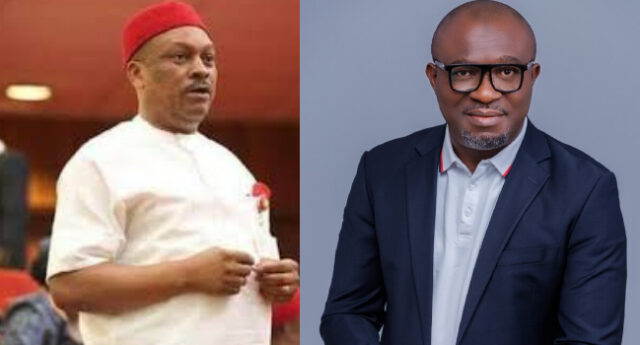
The date was set for a definite hearing of all pending motions in the suit filed by embattled PDP National Secretary, Samuel Anyanwu.

The adjournment followed a mutual agreement among the parties involved in the case, which came before Justice Umar for the first time.

The matter had previously been assigned to Justice Inyang Ekwo, who had already scheduled it for judgment.

However, the plaintiff later filed a motion to amend the originating process, prompting a delay.

Anyanwu originally filed the suit against the Independent National Electoral Commission (INEC) and the acting PDP National Chairman, Umar Damagun, listed as first and second defendants.

In his ex-parte application, Anyanwu—through his lawyer, Ken Njemanze (SAN)—asked the court to issue an interim injunction to:

“…restrain INEC from accepting, acting on or giving effect to any correspondence from the PDP not signed by him pending the hearing and determination of the motion on notice for interlocutory injunction.”

He also sought another interim order:

“…restraining Damagun from dispatching to INEC any correspondence purportedly emanating from PDP signed by the acting chair and not counter-signed by him.”

Justice Ekwo had initially fixed March 25 for judgment but was later presented with a request by Anyanwu to amend the originating process to address the questions for determination.

As a result, the hearing was rescheduled to May 19, although that date also faced objections from some of the parties.

Following requests for joinder, the court added more parties to the case. These include:

PDP (3rd defendant)

Udeh-Okoye (4th defendant)

Ali Odela, PDP National Vice Chairman (South-East) (5th defendant)

Setonji Koshoedo, PDP Deputy National Secretary (6th defendant)

Eventually, the case was reassigned to Justice Umar for continued proceedings.

At Thursday’s hearing, Anyanwu’s counsel, U. C. Njemanze-Aku, informed the court that the session was initially set for mention.

He also revealed that the plaintiff had received a letter from the 5th defendant requesting an adjournment until September.

Njemanze-Aku said “While we are not against the request for an adjournment, we would appreciate a shorter date from the court.”

Other lawyers present echoed this sentiment and aligned with the plaintiff’s position.

Paul Erokoro (SAN), representing Udeh Okoye, told the court:

“The issue currently before the court had been resolved by the apex court,” noting that, “the apex court held that the subject matter before the court was exclusive of political parties.”

He added that he intends to file an application to submit the relevant Supreme Court judgment.

In response, Justice Umar directed all parties to submit their responses to Anyanwu’s amendment motion. He concluded:

“The motion, as well as all objections, will be heard on September 22.”

Google search engine

MOST COMMENTED

- Advertisement -
Google search engine