Home Blog Page 541

BREAKING: Alexander-Arnold Signs Six-Year Deal With Real Madrid


Real Madrid have officially secured the signing of England international Trent Alexander-Arnold from Liverpool on a six-year contract.

The 26-year-old defender will join the Spanish giants starting June 1, 2025, with his contract running through to June 30, 2031, following an agreement reached between the two clubs.

In an official announcement on their website, Real Madrid stated, “Real Madrid C.F. and Liverpool FC have reached an agreement for Trent Alexander-Arnold, who will be linked to our club for the next six seasons.”

Alexander-Arnold joins Real Madrid after a distinguished career at Liverpool, where he won nine major trophies including the UEFA Champions League, FIFA Club World Cup, UEFA Super Cup, two Premier League titles, an FA Cup, two EFL Cups, and an FA Community Shield.

A product of Liverpool’s academy, Alexander-Arnold has spent his entire professional career at Anfield.

He made his senior England debut in 2018 and has since represented the national team at the 2018 and 2022 FIFA World Cups, as well as UEFA Euro 2024.

Individually, Alexander-Arnold has been widely recognised for his exceptional performances.

He earned a place in the FIFA FIFPro World 11 in 2020, was included twice in the UEFA Champions League Team of the Season (2018/19 and 2021/22), and has been selected three times for the Premier League Team of the Season (2018/19, 2019/20, and 2021/22).

He was also named Premier League Young Player of the Season for 2019/20.

The defender is expected to make his Real Madrid debut at the upcoming FIFA Club World Cup, set to take place in the United States from June 14.

Google search engine

‘It’s Time To Turn The Page,’ Says Suspended Rivers Governor, Fubara


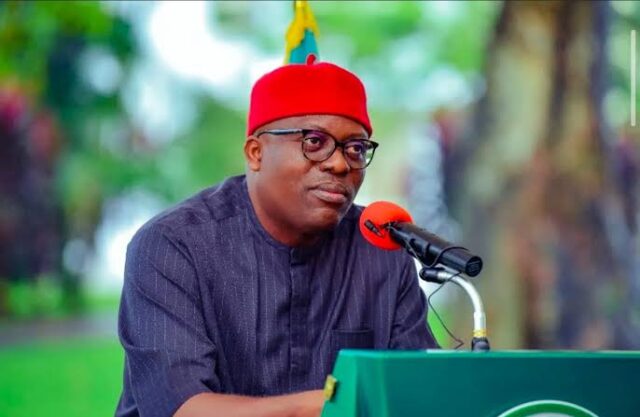
As he marked his second year in office, suspended Rivers State Governor Siminalayi Fubara delivered a heartfelt message to the people of the state, calling for peace, unity, and reconciliation amid ongoing political tensions.

In his May 29 anniversary address, Fubara expressed gratitude to the citizens of Rivers State for their continued support during what he described as a turbulent yet progressive tenure.

“Your support has emboldened me to press on and not to retreat, but to work harder to foster peace, reconciliation, and forgiveness,” he said.

According to the governor, the people’s backing has been his source of courage and strength as he continues efforts to deliver on his administration’s promise of transformative development.

“These are essential to restoring normalcy and delivering transformational infrastructure, impactful programmes, and life-changing services across the State.”

Reflecting on his journey since his inauguration on May 29, 2023, Fubara described the moment as one of sober reflection and renewed determination.

He acknowledged the political challenges that have defined parts of his tenure, admitting they may have slowed progress but not derailed the mission.

“Despite the turbulence, I have remained steadfast and focused, guided by the oath I took and the solemn promise I made to always put Rivers State first.”

He listed progress made in healthcare, education, infrastructure, youth empowerment, and gender inclusion as evidence of what he called “modest but significant” achievements under his leadership.

“While we have faced daunting political challenges that have, at times, slowed our pace, these two years have not been without meaningful progress,” Fubara said.

“I am proud of the visible milestones we have achieved, modest but significant strides in healthcare, education, infrastructure, youth empowerment, human capital development, and the inclusion of women in governance.”

He thanked Rivers citizens for their sacrifices and contributions, promising to double efforts to consolidate gains in peace, security, and socio-economic growth.

“These achievements would not have been possible without your unwavering support and hope in the brighter future we all envision for Rivers State.”

“For your sacrifices, contributions, and the roles you’ve played in your respective capacities, I say a heartfelt thank you.”

Fubara used the anniversary to reach out directly to political opponents and stakeholders, urging them to set aside their grievances for the greater good of the state.

“To those still carrying the weight of our recent political struggles, I appeal to you—let us turn the page, come together, and focus on our shared goal of progress and unity. The time to rebuild and rise is now,” he said.

Looking ahead, Fubara reaffirmed his commitment to making difficult decisions in the interest of the people, promising that every action taken by his government will be guided by the best interest of Rivers State.

“We are at a crucial point in our journey, where difficult decisions must be made. Be assured that every step we take will be guided by your best interests and the enduring good of Rivers State.”

He closed with a message of hope and partnership, pledging to work alongside all Rivers citizens in building a future-oriented, unified state.

“As we reflect on the lessons of the past two years, I am hopeful for what lies ahead. I look forward to working hand in hand with all of you to build a State we can all be proud of: a RIVERS STATE that stands as a model for the rest of Nigeria.”

“Thank you once again for the opportunity to serve. God bless Rivers State.”

Google search engine

Nnamdi Kanu Received ‘Presidential Treatment’ In Custody, DSS Operative Tells Court


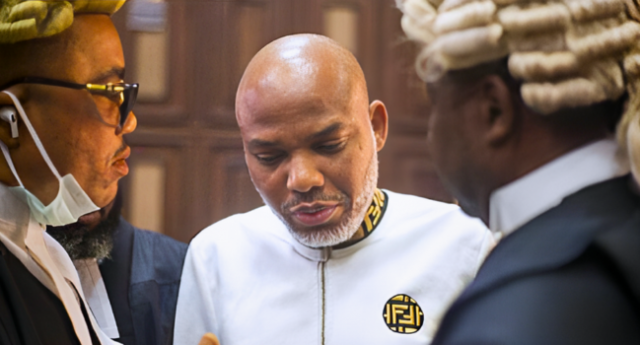
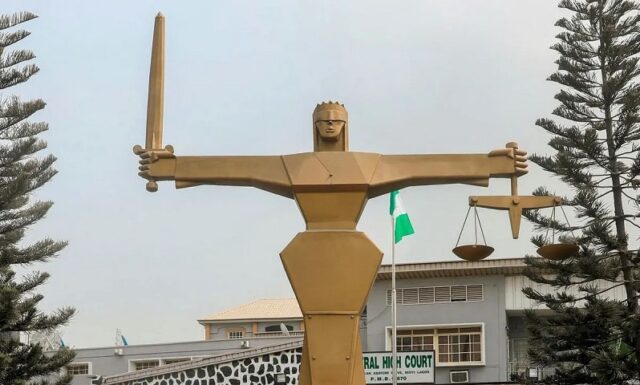
A Department of State Services (DSS) operative testified before the Federal High Court in Abuja on Wednesday that detained IPOB leader Nnamdi Kanu was treated with “presidential” care while in custody, contradicting his claims of coercion.

At the resumed session of his alleged terrorism trial, the DSS operative, identified as Mr CCC, the third prosecution witness, dismissed accusations that threats of solitary confinement were used to force Kanu into making statements during interrogation sessions in 2015.

“Mr CCC stated that Kanu was given presidential treatment,” the report noted, “and expressed shock at the allegations of using any form of force to get him to make certain statements including calling Presidents Goodluck Jonathan and Muhammadu Buhari unprintable names, and also alleging that Senator Rochas Okorocha ‘Islamised’ his people.”

Kanu had alleged that a DSS operative, referred to as Mr Brown, threatened him with solitary confinement in a “dungeon” if he refused to cooperate.

However, the DSS witness disputed this, stating:

“The names of the officers who took part in the interview are James, Ibrahim, and Collins, with no Mr Brown among them.”

The court also admitted into evidence three videos during the hearing. One of the videos reportedly shows Kanu inspecting a radio transmitter that was allegedly smuggled into the country.

These videos were presented to support the prosecution’s claim that Kanu made his statements voluntarily.

The statements in question were made at the DSS headquarters on October 23, 24, and November 4, 2015, and also include video recordings of oral statements from October 21 and 23, 2015.

Kanu is said to have made some of these statements during an interview with Sahara Reporters, a U.S.-based online media outlet.

“These are statements he allegedly made when he granted an interview with a US-based online medium known as Sahara Reporters. It was during the same interview that, according to the witness, Kanu used the term ‘Zoo’ to refer to Nigeria.”

In the courtroom, Justice James Omotosho ordered a trial-within-trial to assess whether the defendant’s statements were made under duress or voluntarily.

“It is law that whenever an issue of involuntariness is raised, the Evidence Act and the law requires that an order for trial within trial be made to determine whether a statement was taken under duress or otherwise,” Justice Omotosho said.

“Establishing duress will therefore make the statement in contention inadmissible.”

Justice Omotosho further clarified that the court will also decide whether the absence of Kanu’s legal team at certain points in the proceedings impacts the credibility of his claims.

In one of the video clips played in court, the IPOB leader allegedly confirmed his role in the separatist movement.

“In the three footage played in court by the prosecution to prove that Nnamdi Kanu made his statements voluntarily, the Biafra nation agitator admitted to being the founder and director of Radio Biafra.”

“In one of the footage, Kanu claimed that the Biafra cause enjoyed funding across the globe from all those who believe in the ideals of the secessionist agenda.”

“He claimed the group has representatives in over 80 countries.”

During the trial-within-trial, Kanu also took the witness stand to give his version of events. He told the court he had been physically assaulted during his arrest.

“The defendant claimed, in his testimony, that he was struck by a DSS operative when he was picked up in Lagos in 2015. But the same operative later apologised on their way to the airport to Abuja.”

Following the day’s proceedings, Justice Omotosho adjourned the matter to Thursday, May 29, 2025, for continuation of the trial and a ruling on the admissibility of the contested statements.

Google search engine

Ghost Town In Umuahia As Residents Observe Biafra Day Sit-at-Home


On Friday, Umuahia, the capital of Abia State, came to a standstill as residents observed a sit-at-home order in commemoration of Biafra Day, a solemn occasion to honour those who died in the Biafran conflict.

The normally vibrant city took on a quiet, somber tone, with its streets completely deserted and commercial activity grinding to a halt.

The action followed a directive by the Indigenous People of Biafra (IPOB), who annually call for a stay-at-home protest to mark the day.

Shops, markets, and motor parks across the city were shut.

Banks remained closed, forcing residents to rely on whatever cash they had on hand.

Both public and private schools were also shut down, leaving classrooms empty for the day.

Despite the lockdown, the atmosphere remained calm.

There were no reports of clashes or confrontations between security operatives and members of the public, and no uniformed personnel were visibly patrolling the streets.

In some neighborhoods, a few youths made use of the open roads to play football, while others gathered in front of their homes, quietly discussing current affairs and recent national developments.

Biafra Day continues to hold deep emotional and political significance in southeastern Nigeria, especially in cities like Umuahia where memories of the civil war remain etched in the collective consciousness.

Friday’s peaceful observance reflected the continued resonance of that history in the state.

Google search engine

Tinubu Reaffirms Commitment To Security, Anti-Corruption On Second Anniversary


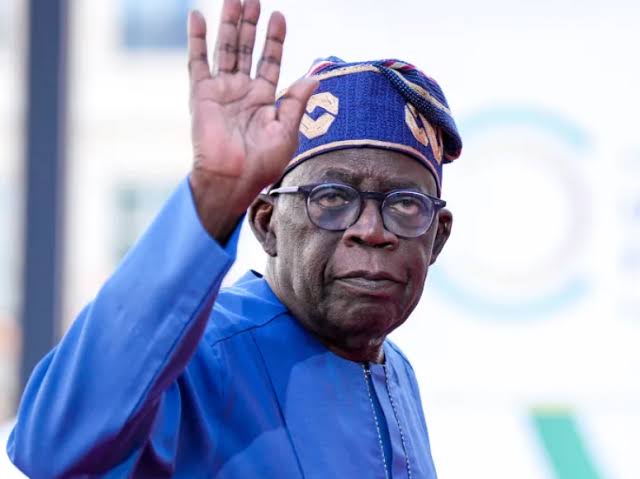
On the second anniversary of his administration, President Bola Ahmed Tinubu has pledged renewed efforts to tackle insecurity, reduce corruption, and implement reforms aimed at stabilizing the Nigerian economy and uplifting citizens.

Addressing the nation on Wednesday morning, Tinubu acknowledged the widespread concerns over rising insecurity but assured Nigerians that his administration is working diligently to address the situation.

He emphasized that security operatives will be fully equipped to combat terrorism and banditry across the country.

“We do not take your patience for granted. I must restate that the only alternative to the reforms our administration initiated was a fiscal crisis that would have bred runaway inflation, external debt default, crippling fuel shortages, a plunging Naira, and an economy in a free-fall,” Tinubu stated.

Reaffirming the goals of his Renewed Hope Agenda, the president said the administration’s mission includes tackling economic instability, enhancing national security, combating corruption, reforming governance, and alleviating poverty.

“Under our Renewed Hope Agenda, our administration pledged to tackle economic instability, improve security nationwide, reduce corruption, reform governance, and lift our people out of poverty,” Tinubu reiterated.

On economic matters, the president admitted the difficulties families have endured as a result of ongoing reforms, but stressed that these policies are essential for long-term stability and prosperity.

The president also noted progress in the agricultural and energy sectors.

He pointed to declining prices of staple foods like rice and a recovery in oil and gas operations, stating that rig counts have surged by over 400% in 2025 compared to 2021.

He added that the sector has attracted more than $8 billion in new investments this year alone.

“We have stabilised our economy and are now better positioned for growth and prepared to withstand global shocks,” he said.

Tinubu concluded his address by expressing appreciation for the support and patience of Nigerians, underscoring that the administration remains focused on delivering its vision for a stronger and more united country.

He said, “Our administration has implemented several reforms to restore and reinvigorate the national economy and strengthen its social fabric as a strong and united country.”

The president also expressed gratitude to citizens, saying, “We do not take your patience for granted.”

Google search engine

‘It Is Unconstitutional’, US Court Blocks Trump Tariffs


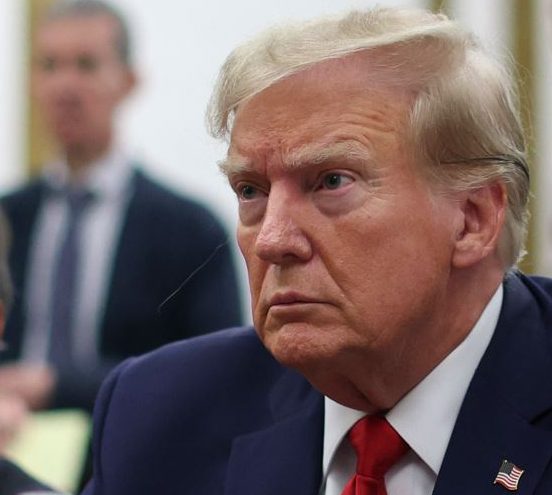
A United States federal court has halted the implementation of most of former President Donald Trump’s broad tariffs, delivering a legal setback to his efforts to reshape global trade through aggressive import levies.

Markets responded positively on Thursday, with major indexes climbing after the decision by the Court of International Trade, which ruled that Trump had overstepped his presidential authority.

“President Trump pledged to put America first, and the administration is committed to using every lever of executive power to address this crisis and restore American greatness,” said Trump spokesman Kush Desai, reacting to the ruling.

The court’s decision marks a significant challenge to Trump’s trade strategy, which relied heavily on tariffs to pressure foreign governments into renegotiating trade agreements.

Since returning to office in January, Trump has used national emergency powers to justify sweeping duties on imports from countries including China, Mexico, and Canada, arguing the trade imbalance and drug influx pose serious threats.

“The question in the two cases before the court is whether the International Emergency Economic Powers Act of 1977 (“IEEPA”) delegates these powers to the president in the form of authority to impose unlimited tariffs on goods from nearly every country in the world,” the three-judge panel wrote in its unsigned opinion.

“The court does not read IEEPA to confer such unbounded authority and sets aside the challenged tariffs imposed thereunder.”

According to court documents, the ruling determined that interpreting the IEEPA as granting “unlimited tariff authority is unconstitutional.”

The law allows the president to act during emergencies to combat “an unusual and extraordinary threat,” but the panel ruled that Trump’s actions fell outside those bounds.

The court gave the White House 10 days to begin the process of unwinding the tariffs.

The ruling came from two lawsuits, one filed by businesses, and another by a coalition of state governments, arguing that Trump had infringed on Congress’s constitutional authority over trade and spending.

The White House immediately filed an appeal, with top Trump ally Stephen Miller denouncing the ruling online as a “judicial coup” and claiming the courts were “out of control.”

“Unelected judges” have no right to weigh in on Trump’s handling of trade issues, the administration insisted.

Despite the legal setback, Trump has maintained that his tariff policies are already paying off.

He unveiled the sweeping new tariffs on April 2, setting a baseline rate of 10 percent, with much higher rates for targeted countries and sectors, including steep penalties on Chinese and European goods.

Earlier disruptions caused by the rollout were temporarily eased after Trump suspended some of the tariffs and introduced a 90-day delay on others to allow for negotiations.

Markets rebounded in response to the ruling. Asian stocks rallied, while U.S. and European markets showed early gains.

Japan’s chief trade negotiator, Ryosei Akazawa, said Tokyo would review the court’s decision as it headed into another round of talks in Washington.

“Trump’s declaration of a bogus national emergency to justify his global trade war was an absurd and unlawful use of IEEPA,” said Rep.

Gregory W. Meeks, the top Democrat on the House Foreign Affairs Committee.
“These tariffs are an illegal abuse of executive power.”

The Justice Department, defending Trump’s policies, argued that courts had limited oversight over presidential actions under the IEEPA, a claim that drew criticism from constitutional scholars and lawmakers who say the administration is encroaching on the authority of the legislative and judicial branches.

Trump, meanwhile, continues to frame his strategy as beneficial to Americans, citing early wins in trade talks with Britain and China.

However, economic analysts caution that the tariffs could backfire by raising consumer prices, fueling inflation, and prompting the Federal Reserve to maintain high interest rates, potentially slowing economic growth.

Google search engine

Kano TikToker  Jailed For Naira Abuse


Murja Ibrahim Kunya, a social media influencer popularly known on TikTok, has been sentenced to six months in prison by the Federal High Court in Kano for abusing the Nigerian currency.

The conviction was secured on Wednesday by the Kano Zonal Directorate of the Economic and Financial Crimes Commission (EFCC) before Justice Simone Amobeda.

The EFCC confirmed the sentencing in an official statement released by its Head of Media and Publicity, Dele Oyewale.

Kunya was arrested after she was seen spraying Naira notes for entertainment purposes while staying at Tahir Guest Palace in Kano.

Her actions were deemed to have violated the provisions of the Central Bank of Nigeria (CBN) Act that prohibits the abuse and mutilation of the Naira.

“She was granted an administrative bail by the Commission pending her arraignment before the Federal High Court in Kano.”

“However, when it was time for her court appearance, she absconded in her bid to evade the legal processes,” the EFCC stated.

Following a period of surveillance, EFCC operatives re-arrested Kunya on Sunday, March 16, 2025, and she was arraigned on May 20, 2025, where she pleaded guilty to the amended one-count charge.

The charge read:

“You Murja Ibrahim Kunya on the 28th of December, 2023 at Tahir Guest Palace, Kano, within the jurisdiction of this Honorable Court whilst dancing in one of the rooms at Tahir Guest Palace tampered with Naira notes issued by Central Bank of Nigeria by spraying and matching on same in the said occasion and you thereby committed an offence contrary to Section 21 (1) of the Central Bank of Nigeria Act, 2007.”

During proceedings, Prosecution Counsel Musa Isah reviewed the facts of the case and urged the court to convict her in accordance with the law.

In his judgment, Justice Amobeda sentenced the influencer to six months in prison, offering her an option of a ₦50,000 fine.

Beyond the jail term, the court added a unique twist to the ruling aimed at rehabilitation.

Recognizing her significant social media following, the judge also appointed Kunya as an EFCC and CBN Ambassador for online advocacy against Naira abuse.

“The court order requires Kunya “to utilize her social media reach to educate her followers on the importance of respecting the Nigerian currency and the legal consequences of its abuse or mutilation.”

Google search engine

Kenyan Literary Icon Ngugi wa Thiong’o Dies At 87


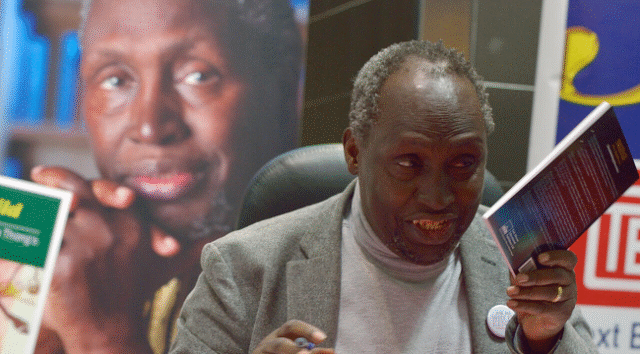
Celebrated Kenyan author and academic Ngugi wa Thiong’o, widely regarded as one of East Africa’s greatest literary minds, has passed away at the age of 87.

His daughter, Wanjiku wa Ngugi, confirmed the news in a heartfelt announcement on Facebook early Wednesday.

“It is with a heavy heart that we announce the passing of our dad, Ngugi wa Thiong’o this Wednesday morning,” she wrote.

“He lived a full life, fought a good fight,” she added.

News of his passing quickly drew tributes from across Kenya and beyond, honoring a man whose work defined post-colonial African literature and resistance.

Opposition leader Martha Karua took to X (formerly Twitter) to express her condolences.

“My condolences to the family and friends professor Ngugi wa Thiong’o, a renowned literary giant and scholar, a son of the soil and great patriot whose footprints are indelible,” she posted.

Ngugi’s influence extended far beyond literature.

In 1977, his politically charged play “Ngaahika Ndeenda” (“I Will Marry When I Want”) was deemed too provocative by authorities.

He was jailed without charge soon after its premiere, a move that drew international condemnation.

Amnesty International designated him a prisoner of conscience, and a global campaign ultimately led to his release from Kamiti Maximum Security Prison in December 1978.

“Thank you Mwalimu (teacher) for your freedom writing,” the Kenya branch of Amnesty International wrote on X.

“Having already earned his place in Kenyan history, he transitions from mortality to immortality.”

Following a government crackdown on theatre groups in 1982, Ngugi went into self-imposed exile, first in Britain and later in the United States.

There, he continued to write and teach, championing African languages and identity through his academic and literary work.

In 1986, he published one of his most influential books, “Decolonising the Mind”, a collection of essays that examined the power of language in shaping post-colonial identity and nationhood.

Ngugi wa Thiong’o’s legacy as a fierce advocate for linguistic and cultural decolonization continues to resonate in literary and political spheres alike.

His life and works remain a testament to the enduring power of words in the fight for justice and cultural pride.

Google search engine

WAEC Apologises For Delay In English Exam, Cites Anti-Leakage Measures


The West African Examinations Council (WAEC) has issued an apology following the delayed commencement of the English Language Paper 2 in the ongoing 2025 West African Senior School Certificate Examination (WASSCE).

The News Agency of Nigeria (NAN) reports that the exam, originally scheduled for earlier in the day, was eventually held on Wednesday evening, sparking criticism and concern from candidates and stakeholders alike.

In a statement released by Moyosola Adesina, the Acting Head of WAEC’s Public Affairs Department, the council acknowledged the disruption and attributed the delay to efforts aimed at preventing examination malpractice.

“While maintaining the integrity and security of our examination, we faced considerable challenges primarily due to our major aim of preventing leakage of any paper,” the statement read.

WAEC admitted that while its objective to secure the exam content was achieved, the decision had unintended consequences on the exam’s logistics and timing.

“We recognise the importance of timely conduct of examinations and the impact of this decision on candidates, their schools and parents, and we sincerely apologise for any inconveniences caused,” the council added.

The examination body also cited broader issues that contributed to the disruption.

“In spite of our best efforts, we encountered logistical hurdles, security concerns and socio-cultural factors that negatively influenced our operations,” WAEC explained.

Reiterating its mission, the council affirmed its dedication to preserving high standards in its examination processes.

“The council re-affirms its commitment to upholding the highest standard in examination conduct, and pledged to continue to promote academic excellence.”

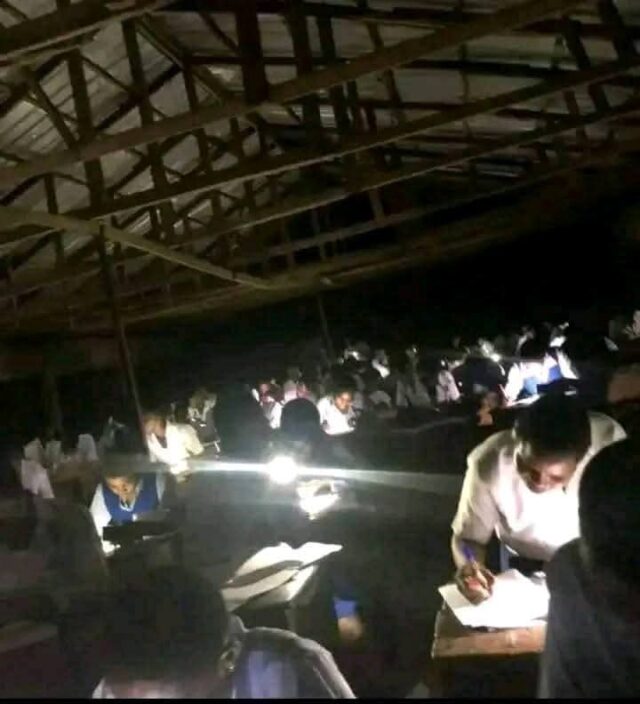
WAEC’s apology follows mounting criticism, including backlash from student bodies and lawmakers, with many citing concerns about candidate safety, especially in regions grappling with power outages and insecurity during the evening exam session.

Google search engine

Over 10,217 Killed Since Tinubu Took Office, Amnesty International Alleges


Amnesty International has revealed that over 10,217 Nigerians have been killed in attacks by armed groups since President Bola Ahmed Tinubu assumed office two years ago.

The human rights organization stated that Benue State recorded the highest number of deaths with 6,896 fatalities, followed by Plateau State with at least 2,630.

According to the report, the violence has escalated despite President Tinubu’s promise to improve national security.

Isa Sanusi, Director of Amnesty International Nigeria, said, “Today marks exactly two years since President Bola Tinubu assumed office with a promise to enhance security.”

“Instead, things have only gotten worse, as the authorities continue to fail to protect the rights to life, physical integrity, liberty and the security of tens of thousands of people across the country.”

Sanusi emphasized the need for urgent action in light of the resurgence of threats from Boko Haram and other armed groups.

He noted that “recent escalations by Boko Haram and other armed groups indicate the current security measures are ineffective.”

During the period under review, Amnesty reported the rise of new armed groups such as Lakurawa in Sokoto and Kebbi states and Mamuda in Kwara state.

Hundreds of communities across Benue, Borno, Katsina, Sokoto, Plateau, and Zamfara have suffered devastating attacks.

In Zamfara alone, 638 villages were destroyed, while 725 villages remain under bandit control across 13 local government areas.

The report further highlighted that over 273 people were killed and 467 abducted in Zamfara within the last two years.

Maru local government area witnessed severe attacks, including one on April 24, 2025, where over 20 miners were killed at Gobirawar Chali. In Kebbi State, the Lakurawa group was linked to 70 deaths in 22 attacks.

Benue and Plateau states, in particular, suffered alarming levels of violence. In Bokkos, Plateau State, a deadly coordinated attack on April 3, 2025, resulted in the deaths of entire families.

In Benue, communities were not only attacked but also stripped of critical infrastructure.

“Attackers have destroyed boreholes, clinics, schools, grain reserves, and places of worship in addition to killing residents,” Amnesty stated.

The humanitarian toll is staggering. All 23 local government areas in Benue State have faced assaults, displacing approximately 450,000 people.

In Plateau, about 65,000 people have been displaced in 38 attacks in just two years. Many victims have suffered repeated violence, including assaults on IDP camps.

“The humanitarian situation is worsening as most affected are farmers who have lost access to their land, threatening food security,” Amnesty noted.

Many displaced individuals in Plateau and Katsina now rely on begging to survive. In Zamfara’s Dangulbi district, farmers are unable to sell their sweet potato harvests due to insecurity.

“These attacks deprive people of their right to life while the survivors are deprived of their livelihood,” Sanusi said.

In Sokoto’s Isa local government area, four villages were overrun by gunmen between May 9 and 11, displacing residents and exacerbating hunger.

The report also described how armed groups are now demanding levies via phone threats in Zamfara, Sokoto, and Katsina, with non-compliance punishable by death.

Frustration over the government’s perceived inaction is widespread. A resident from Maru, Zamfara said, “The only relationship between us and the government is that they issue media statements after we are attacked and killed.”

“That is all they do. When the next attack comes, they will issue another empty statement while bandits escalate their atrocities. We are helpless.”

Amnesty International reminded the Nigerian government of its obligations under international law to protect lives and ensure justice for victims.

“Authorities must move swiftly to match their words with serious and concrete action to guarantee the human rights of everyone in Nigeria if they are to be taken seriously on their oft-expressed commitment to stop the killings, violence, abductions and other human rights crimes in several parts of the country,” said Sanusi.

He warned that unchecked impunity is worsening insecurity and urged immediate action to stop the violence. “Time is running out,” he stressed.

Amnesty International has been documenting Nigeria’s security crisis since 2016 and continues to call for accountability and protection for vulnerable rural communities.

Google search engine

MOST COMMENTED

- Advertisement -
Google search engine