Home Blog Page 577

INEC Justifies N126 Billion Budget Request, Allocates N85 Billion For Salaries
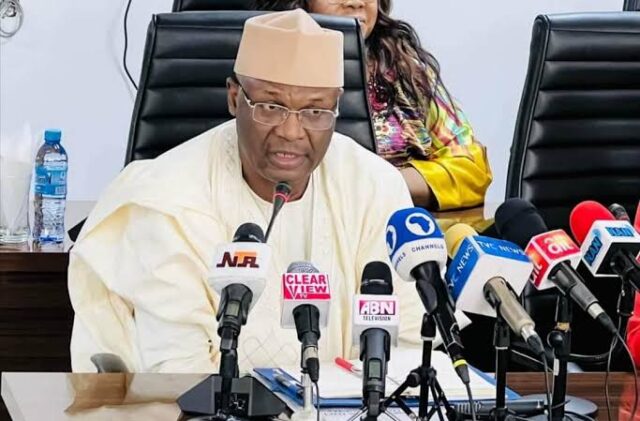
The Independent National Electoral Commission (INEC) has defended its N126 billion budget request for 2025, clarifying that N85 billion is earmarked for personnel costs, while the remainder will fund electoral activities and preparations for the 2027 general election.

INEC Chairman, Prof. Mahmood Yakubu, provided this explanation while presenting the commission’s budget proposal to the Joint Committee on Electoral Matters in the National Assembly.

His remarks followed public scrutiny over the substantial budget request in a non-election year.

Speaking at a consultative meeting with media executives in Abuja on Friday, Yakubu emphasized that INEC’s budget for 2024 was also N40 billion, despite rising operational costs.

He explained that the funding constraints had affected critical activities, such as the continuous voter registration, which had to be suspended.

“Our budget for this year is N40 billion, the same as last year. However, last year, we struggled to cover essential activities. We had to put the resumption of voter registration on hold due to financial limitations,” he stated.

Yakubu further elaborated on the commission’s workforce, noting that INEC employs approximately 15,000 permanent staff but requires nearly one million ad hoc personnel during general elections.

“Polling units across Nigeria total about 177,000, each requiring four officials. Clearly, our 15,000 permanent staff are insufficient to manage elections alone. Additionally, we maintain offices in all 774 local government areas, state offices, an electoral institute, and nationwide storage facilities for election materials,” he explained.

On electoral offences, Yakubu disclosed that 774 individuals from the 2023 general elections are currently facing prosecution.

He cited a recent successful conviction of a Returning Officer in Akwa Ibom State for an offence committed during the 2019 elections, highlighting the commission’s commitment to addressing electoral malpractice.

“Through our collaboration with the Nigerian Bar Association (NBA), electoral offence cases from the 2023 elections are being prosecuted. We have secured convictions in Kebbi and Kogi States, while our partnership with the Economic and Financial Crimes Commission (EFCC) on vote-buying has yielded results in Lagos, Kwara, and Gombe States,” he said.

However, Yakubu noted that a major challenge in tackling electoral offences is the slow judicial process, as cases are prosecuted in Magistrate and State High Courts without priority consideration.

Google search engine

Reps Endorse Tinubu’s Proposal To Increase 2025 Budget To N54.2 Trillion

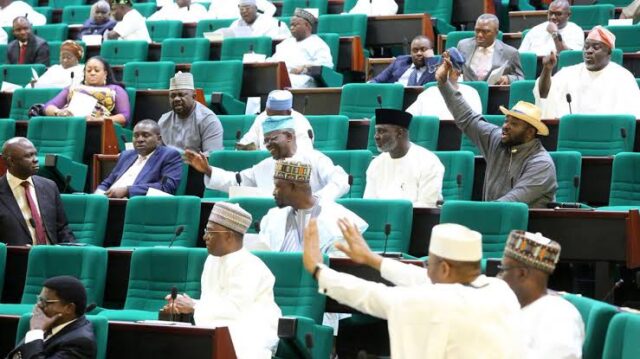
The House of Representatives has backed President Bola Tinubu’s request to increase the proposed 2025 national budget from N49.7 trillion to N54.2 trillion, citing anticipated additional revenue from key government agencies.

During plenary sessions this week, Senate President Godswill Akpabio and Deputy Speaker of the House of Representatives Benjamin Kalu referred the proposal to the Committees on Finance and Appropriations for further review.

Speaking to journalists in Abuja on Friday, the House Deputy Spokesman, Philip Agbese, affirmed the National Assembly’s willingness to approve the adjustment, describing it as a strategic move to strengthen the economy and improve the well-being of Nigerians.

Agbese highlighted the administration’s focus on key sectors such as agriculture, emphasizing the planned funding boost for the Bank of Agriculture.

He noted that this initiative would empower farmers, drive rural development, and enhance food security.

Additionally, he pointed to the budget’s provisions for national security, particularly the construction of military barracks, as a testament to the government’s commitment to safeguarding the country and improving the welfare of security personnel.

“As lawmakers, we are committed to ensuring that every naira is allocated effectively and in the best interest of Nigerians,” Agbese stated, assuring that the 10th House, under Speaker Tajudeen Abbas, would ensure transparency and accountability in the budget’s implementation.

Google search engine

FG Postpones Implementation Of New Basic Education Curriculum To September 2025

Education Minister, Alausa

The Federal Government has delayed the rollout of the revised basic education curriculum, shifting its implementation to September 2025.

Minister of Education, Dr. Tunji Alausa, announced the decision at a press conference in Abuja on Friday, citing the need for adequate preparations, including teacher training and classroom setup.

The revised curriculum, initially scheduled for January 2025, was introduced under the leadership of former Education Minister, Prof. Tahir Mamman.

However, logistical challenges had raised concerns about the feasibility of the original timeline.

A key feature of the new curriculum is the introduction of 12 years of uninterrupted basic education, which will result in the gradual phasing out of the Basic Education Certificate s weExamination (BECE), commonly known as ‘Junior WAEC.’

“We are now going through the final phase of preparations, including training teachers to implement the curriculum. The rollout will begin with new students’ enrollment in the September 2025 academic session,” Alausa stated.

He emphasized that the removal of BECE aims to ensure that students progress seamlessly from primary to secondary education without interruption, reducing dropout rates and enhancing learning outcomes.

“Currently, students take the Common Entrance Examination for Federal Unity Schools and the BECE before advancing to Senior Secondary School. The new system will allow for a smoother transition, ensuring students receive a more comprehensive education,” the minister explained.

Alausa also revealed plans to seek an increase in the allocation of the Consolidated Revenue Fund to the Universal Basic Education Commission (UBEC), proposing a rise from two per cent to five per cent.

This additional funding would support early childhood education, an area he described as critically underfunded.

Google search engine

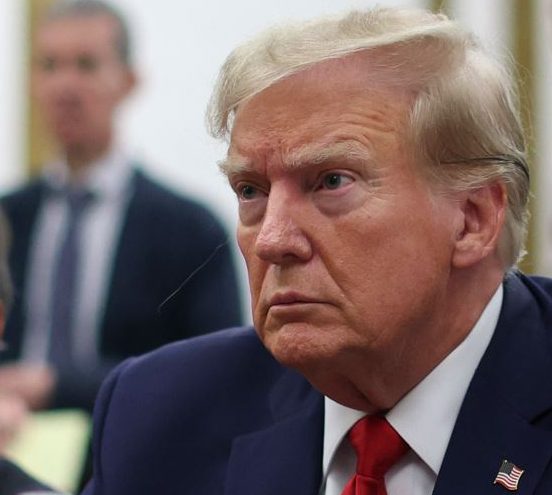
Trump Disbands DOJ Team Tracking Abacha’s Multibillion-Dollar Loot For Nigeria

The U.S. Department of Justice (DOJ) has quietly disbanded the Kleptocracy Asset Recovery Initiative, an elite team responsible for tracing and recovering assets looted by Nigeria’s former military ruler, Sani Abacha, as well as funds linked to other international corruption cases.

According to sources familiar with the matter, the decision was authorized by former President Donald Trump and executed by newly appointed Attorney General Pam Bondi earlier this week.

The move comes as the Trump administration winds down several government programs in its final months.

The now-disbanded team had played a critical role in tracing and prosecuting cases tied to billions of dollars in stolen assets.

Among its ongoing efforts was the litigation involving funds linked to Atiku Bagudu, Nigeria’s Minister of Budget and Economic Planning under President Bola Tinubu.

The dismantling of the unit raises concerns over the future of ongoing investigations and the potential discovery of additional Abacha-linked assets, which authorities believe remain hidden.

Since its establishment in 2010, the Kleptocracy Asset Recovery Initiative had worked alongside international partners to track illicit wealth and return stolen funds to affected nations.

Efforts to obtain comments from Nigeria’s Economic and Financial Crimes Commission (EFCC) and presidential spokesperson Bayo Onanuga were unsuccessful at the time of this report.

It also remains unclear how the DOJ will handle existing cases or whether cooperation will continue in asset recovery efforts across the UK and other jurisdictions.

The Trump administration has justified the move by shifting its focus toward combating narcotics and human trafficking networks instead.

However, critics argue that shutting down the unit could hinder global efforts to tackle high-level corruption.

Google search engine

Experts Disagree On New 12-4 Education Policy, Say Nigeria Not Ready

The Federal Government’s proposal to transition from the current 9-3-4 education system to a new 12-4 model has sparked mixed reactions among education experts, with some describing the move as premature and others viewing it as a step in the right direction.

The Minister of Education, Dr. Tunji Alausa, announced the proposed reform at the 2025 Extraordinary National Council of Education meeting in Abuja.

He argued that a 12-year basic education structure would provide a more continuous and comprehensive learning experience, ultimately improving educational outcomes and boosting Nigeria’s economic development.

Under the existing 9-3-4 system, students complete nine years of basic education, three years of senior secondary schooling, and four years of tertiary education. The proposed 12-4 model would extend basic education to 12 years, before proceeding to four years of higher learning.

However, reactions from education stakeholders reveal deep divisions on the proposal’s feasibility.

A retired principal, Mrs. Olufowowe, expressed skepticism, stating that the country is not ready for such a drastic shift.

She highlighted challenges such as poor teacher remuneration and inadequate school funding, which she believes would hinder the successful implementation of the 12-year structure.

“The government is yet to adequately fund schools under the current system. Until more resources are allocated to education, this policy may not succeed,” she said.

Similarly, a former director at the State Universal Basic Education Board (SUBEB), Mr. Musbau Adewole, acknowledged that while change is necessary, the focus should be on integrating vocational and technology-based skills into the curriculum rather than restructuring the system.

“Our schools should prioritize tech skills and vocational training to prepare students for the modern economy. The world is evolving, and Nigeria’s education system must adapt to these changes rather than just modifying the structure,” he stated.

Another expert, who preferred to remain anonymous, criticized the proposal, calling it a misplaced priority at a time when Nigerians are struggling with basic needs.

“The government should focus on improving existing facilities, paying teachers and lecturers promptly, and ensuring students can access quality education. How many of their children are studying in Nigerian schools? Changing the system now is unnecessary,” he argued.

He also pointed out the economic difficulties many families face, adding, “People are struggling to afford two meals a day, and yet we are discussing a policy that will require more resources. This is just like the unnecessary change of the national anthem—it doesn’t solve pressing issues.”

As debates continue over the feasibility of the 12-4 system, experts agree that Nigeria’s education sector needs reform.

However, whether this proposed shift will bring meaningful improvement or add more strain to an already challenged system remains a key concern.

Google search engine

Proposed Electricity Tariff Hike Will Escalate Production Costs, Worsen Inflation, Force More Companies To Shut Down – Manufacturers Warn FG

The Manufacturers Association of Nigeria (MAN) has cautioned the Federal Government against increasing electricity tariffs, warning that such a move would hurt businesses, escalate production costs, worsen inflation, and force more companies to shut down.

Joining the opposition, the Trade Union Congress of Nigeria (TUC) also rejected the proposed 65 percent tariff hike, describing it as an additional burden on struggling Nigerians.

Meanwhile, the Kaduna State Government has stepped in to mediate an ongoing dispute between Kaduna Electric and its workers’ union, which led to a four-day blackout across the state and other areas within the company’s coverage.

Segun Ajayi-Kadir, Director-General of MAN, highlighted the critical role of electricity in manufacturing, stating that frequent tariff increases have hindered industrial growth.

He argued that sustainable and affordable energy is essential for large-scale production and competitiveness.

Ajayi-Kadir criticized Nigeria’s power sector privatization, initiated in 2013 to boost electricity supply, stating that it has failed to deliver results.

He attributed this failure to the lack of technical and financial capacity among operators.

“The installed capacity has remained at around 10,000 megawatts, yet it is not fully utilized due to inefficiencies in the Generation Companies (GenCos) and Distribution Companies (DisCos),” he noted.

Despite an unreliable power supply, MAN observed that electricity tariffs have consistently increased without improvements in service delivery.

According to the National Bureau of Statistics (NBS), electricity generation declined from 5,909.83 GWh in Q2 2023 to 5,612.52 GWh in Q2 2024, even after a 230 percent tariff hike, marking a 5.03 percent year-on-year drop.

Ajayi-Kadir stressed that Nigeria needs at least 30,000MW of electricity to meet industrial and household demands, far above the current daily average of 4,000MW.

He warned that continuous tariff hikes force consumers to bear the cost of inefficiencies in the power sector.

“Manufacturers are already struggling, and these increases cannot be passed on to consumers who are facing declining purchasing power,” he said.

MAN urged the government to halt further tariff increases and instead evaluate DisCos’ performance, assess the impact of previous hikes on industries, and audit their investments in power infrastructure.

Following its Q1 2025 National Administrative Council (NAC) meeting in Abuja, the TUC strongly opposed the proposed electricity tariff increase.

TUC President, Festus Osifo, denounced the plan as “economic oppression,” arguing that Nigerians are already suffering from previous tariff hikes.

“It is shocking that the government is considering another increase when citizens are already struggling under unbearable economic conditions,” Osifo said.

In Kaduna, the state government intervened in an industrial dispute between Kaduna Electric and the National Union of Electricity Employees (NUEE), which resulted in a prolonged blackout.

Deputy Governor Hadiza Balarabe met with representatives of both parties at Sir Kashim Ibrahim Government House, urging a swift resolution.

“We implore you to resolve this dispute quickly. The people of Kaduna are suffering, and the outage is affecting homes, businesses, and security,” she pleaded.

NUEE’s National Vice President (Distribution), Wisdom Nwachukwu, clarified that the union was not opposing staff downsizing but demanded proper procedures and full compensation for affected workers.

Kaduna Electric’s Managing Director, Umar Hashidu, defended the decision to lay off 444 employees, citing financial struggles.

“We had to make this move to ensure the company’s survival. We cannot continue operating at a loss,” Hashidu stated.

With negotiations ongoing, Kaduna residents hope for a resolution that restores power supply while addressing the concerns of both workers and the electricity provider.

Google search engine

Nigeria Ranked As Country With Highest Road Accident Rate In The World

The Nigerian Red Cross Society has raised alarm over the country’s high rate of road traffic accidents, revealing that Nigeria accounts for nearly 10 percent of the two million global road accident fatalities recorded annually.

This means about 200,000 Nigerians lose their lives each year due to road crashes.

Speaking at the launch of the Safe Steps Road Safety Campaign, the President of the Nigerian Red Cross Society, Prince Oluyemisi Adeaga, described the situation as critical, citing the 2023 World Health Organization (WHO) Global Status Report on Road Safety, which ranked road accidents as the ninth leading cause of death globally.

Adeaga emphasized that reported road accidents in Nigeria likely represent only a fraction of the actual cases, as many incidents go unreported.

He warned that estimates suggest the real numbers could be up to five times higher than the recorded figures.

The Safe Steps Road Safety Campaign, launched in December 2023 in Abuja, aims to address the crisis by promoting responsible driving habits and strengthening collaboration among key stakeholders.

The initiative brings together agencies such as the Federal Road Safety Corps (FRSC), the Nigeria Police Force, the National Union of Road Transport Workers (NURTW), and the National Association of Road Transport Owners (NARTO) to implement more effective safety measures.

According to Afolabi Lawal, a representative of the Zenith Prudence Foundation, Africa has the world’s highest road fatality rate despite having a relatively small share of the global vehicle population.

He noted that despite interventions from the WHO, the Ministry of Transport, and the FRSC, road accidents remain a major challenge, with 1.35 million fatalities recorded annually.

The Red Cross and its partners are urging stronger enforcement of road safety regulations and improved public awareness to curb the alarming rate of traffic-related deaths in Nigeria.

Google search engine

ESUT’s Maths & Computer Sci. Edu. Dept To Hold Public Lecture On Raw Materials, Sustainable Development

The Department of Mathematics and Computer Science Education, Enugu State University of Science and Technology, ESUT, is set to hold its maiden public lecture, focusing on the role of raw materials education in sustainable development in contemporary Nigeria.

The lecture, themed “Raw Materials Education and Sustainable Development in Contemporary Nigeria,” is scheduled for Thursday, February 13, 2025, at the Prof. Julius Onah Auditorium, ESUT, Agbani.

Speaking to DAILY GAZETTE, the Head of the Department, Assoc. Prof. Samuel O. Nneji, highlighted the significance of the event, stating that it aims to explore how education on raw materials can drive industrial growth, economic sustainability, and technological advancement in Contemporary Nigeria.

The event will be hosted by the Dean of the Faculty of Education, Prof. Titus Owoh, while the Vice Chancellor of ESUT, Prof. Aloysius Michaels Okolie, will serve as the Chief Host.

The lecture will be held under the distinguished chairmanship of Prof. Augustine A. Uwakwe, Pro-Chancellor and Chairman of the Governing Council, Gregory University, Uturu, Abia State.

The maiden public lecture will be delivered by Prof. Nnanyelugo Ike Muonso, Director General of the Raw Materials Research and Development Council, Abuja.

The lecture promises to be an insightful academic discourse, bringing together scholars, researchers, policy makers, and captains of industries to examine the role of education in sourcing and harnessing raw materials for national development.

Google search engine

Former NYSC DG, Others Kidnapped

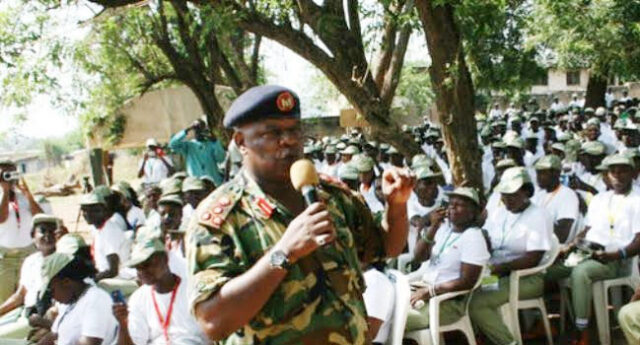
A former Director-General of the National Youth Service Corps (NYSC), Major General Mahrazu Tsiga (retired), has been kidnapped alongside several residents of Tsiga village in Kankara Local Government Area of Katsina State.

Eyewitnesses reported that gunmen, suspected to be bandits, stormed Tsiga’s residence on Wednesday, wielding sophisticated weapons.

The attack, which lasted only a few minutes, left two residents injured, while one of the attackers was mistakenly shot and killed by his colleagues.

Local sources confirmed the abduction, though the Katsina State Government and the police are yet to issue an official statement on the incident.

Katsina State, like other states in the North-West and North-Central regions, has been plagued by banditry.

Criminal gangs, operating from vast forested areas spanning Zamfara, Katsina, Kaduna, and Niger states, have been responsible for mass kidnappings, killings, and destruction of villages.

In response, Governor Dikko Umar Radda launched the Katsina Community Watch Corps (KCWC) in 2023.

The force, consisting of 2,000 vigilantes, was established to support security agencies in combating banditry.

Governor Radda has reiterated that his administration will not negotiate with bandits unless certain conditions are met.

Speaking on January 22 during a courtesy visit by Major General Ibikunle Ademola Ajose, the General Officer Commanding (GOC) 8 Division, Radda emphasized that any peace deal must involve community members and be structured to ensure long-term security.

“We will not engage criminals in negotiations,” Radda stated. “However, we are open to supporting genuine repentance and reintegration efforts through structured initiatives.”

The governor highlighted Katsina’s substantial investment in security infrastructure and expressed satisfaction with the collaborative efforts of the Nigerian Army, Air Force, Police, Civil Defence, and KCWC.

He commended the leadership of security agencies for their dedication and noted that recent efforts have led to tangible improvements, allowing farmers to cultivate their lands without fear.

During the meeting, Major General Ajose affirmed that the Nigerian Army does not negotiate with criminals.

He explained that his visit was part of an operational assessment of states under the 8th Division and to discuss the newly launched Operation Safe Northwest.

“This initiative aims to enhance security operations, engage communities, and promote sustainable peace,” Ajose explained.

He acknowledged reports of some bandits expressing willingness to surrender but emphasized that military operations would continue uninterrupted.

The visit also included discussions on funding for a new Forward Operating Base (FOB) in Katsina, which is expected to strengthen security operations in the state.

The meeting was attended by top government officials, including Deputy Governor Faruk Jobe, Chief of Staff AbdulKadir Mamman Nasir, and members of the state executive council.

Google search engine

Reps Committee Proposes Creation Of 31 New States

The House of Representatives Committee on the Review of the 1999 Constitution has put forward a proposal for the creation of 31 additional states in Nigeria.

If approved, this would increase the number of states in the country from 36 to 67.

Deputy Speaker of the House, Benjamin Kalu, read a letter from the committee detailing the proposed states during Thursday’s plenary session.

The request for state creation must pass through a rigorous constitutional process.

It requires approval by at least two-thirds of the National Assembly, the state Houses of Assembly in the affected areas, and local government councils.

List of Proposed States by Geopolitical Zone:

North-Central

  1. Benue Ala State – from present Benue State
  2. Okun State – from present Kogi State
  3. Okura State – from present Kogi State
  4. Confluence State – from present Kogi State
  5. Apa-Agba State – from Benue South Senatorial District
  6. Apa State – from present Benue State
  7. Federal Capital Territory (FCT) – proposed as a 37th state

North-East

  1. Amana State – from present Adamawa State
  2. Katagum State – from present Bauchi State
  3. Savannah State – from present Borno State
  4. Muri State – from present Taraba State

North-West

  1. New Kaduna State – from present Kaduna State
  2. Gurara State – from present Kaduna State
  3. Tiga State – from present Kano State
  4. Kainji State – from present Kebbi State
  5. Ghari State – from present Kano State

South-East

  1. Etiti State – as the sixth state in the South-East geopolitical zone
  2. Adada State – from present Enugu State
  3. Urashi State – as the sixth state in the South-East geopolitical zone
  4. Orlu State – from present Imo and Anambra States
  5. Aba State – from present Abia State

South-South

  1. Ogoja State – from present Cross River State
  2. Warri State – from present Delta State
  3. Bori State – from present Rivers State
  4. Obolo State – from parts of Rivers and Akwa Ibom States

South-West

  1. Toru-Ebe State – from Delta, Edo, and Ondo States
  2. Ibadan State – from present Oyo State
  3. Lagoon State – from present Lagos State
  4. Ijebu State – from present Ogun State
  5. Ife-Ijesha State – from present Osun State
  6. Oke-Ogun State – from parts of Ogun, Oyo, and Osun States

The process of state creation remains a complex and politically sensitive issue, requiring broad support from various levels of government before any changes can be implemented.

Google search engine

MOST COMMENTED

- Advertisement -
Google search engine