Home Blog Page 584

Information Technology Key To Nigeria’s Economic Diversification, Says Governor Mbah


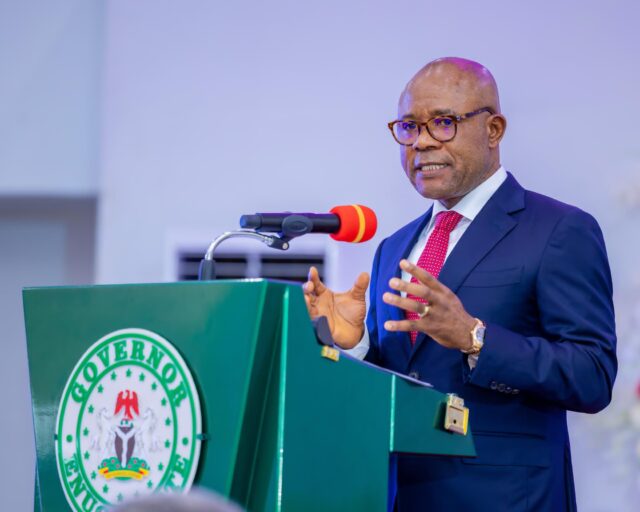
Governor Peter Mbah of Enugu State has emphasized that Nigeria’s economic diversification from a mono-product oil economy can be accelerated through strategic investment in the Information Technology (IT) sector.

He made this known on Wednesday during the commissioning of the South East Zonal Office of the National Information Technology Development Agency (NITDA) in Enugu.

Governor Mbah noted that it was imperative for Nigeria to shift away from overdependence on oil, stressing that IT holds immense potential to drive that transformation.

According to him, “investment into the Information Technology space would do the magic.”

He further stated that establishing a NITDA presence in Enugu would expand opportunities for Nigerian youths and serve as a major step toward realizing the country’s aspiration to diversify its economy.

“The need and urgency to diversify our economy, both at national and sub-national levels, has never been more compelling than now and there are few sectors that hold the opportunities for us to accomplish that like the Information Technology space,” the governor said.

He warned that unless available opportunities are harnessed, the vision of economic diversification would remain unrealized.

He therefore described the new NITDA office as a vital step toward making that goal a reality.

“It is an opportunity for our teeming youths to have a platform to improve themselves to a life long skills set that will prepare them for the dynamic global world space today and tomorrow,” he added.

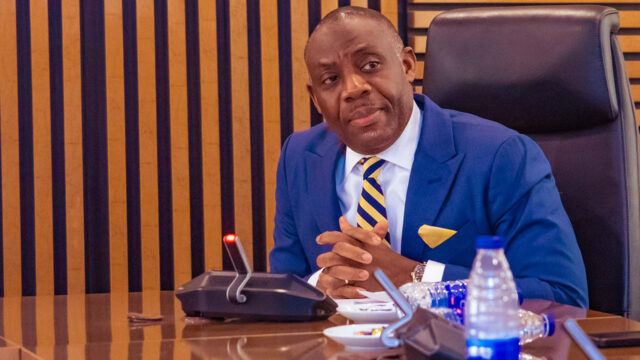
Also speaking at the event, Dr. Bosun Tijani, Minister of Communications, Innovation and Digital Economy, described the new NITDA office as a tangible link between national policies and local capabilities.

“The inauguration of the NITDA Regional Office in Enugu was more than the opening of a building; it is the establishment of a permanent bridge between national policy and local potential,” the minister said.

Dr. Tijani noted that the move aligns with President Bola Tinubu’s Renewed Hope Agenda aimed at broadening inclusion and distributing economic opportunities more equitably across the country.

“It is a strategic move under the Renewed Hope Agenda of President Bola Tinubu, a commitment to decentralising opportunity, deepening inclusion, and unlocking the full power of Nigeria’s digital economy across every region.

“By placing NITDA closer to the people right here in the South-East, we are saying clearly: no region should have to wait for innovation to reach them. Innovation must grow with them,” he stated.

He added that the Enugu Zonal Office would drive digital skill development and entrepreneurship through initiatives like the 3 Million Technical Talent (3MTT) program.

“There will be support for startups and indigenous tech solutions; regulatory advisory, to help businesses thrive within the frameworks that protect Nigerians, and closer partnerships with state governments, academia, and the private sector,” he concluded.

Google search engine

Labour Party Slams Indefinite Suspension On Gov. Otti, Senator Nwokocha, Kingibe, Others Over Anti-Party Allegations


The Labour Party on Wednesday announced the indefinite suspension of six prominent members of the party, including Abia State Governor Dr. Alex Otti and Senators Ireti Kingibe and Darlington Nwokocha, over alleged anti-party activities.

A statement issued by the party after its National Executive Committee (NEC) meeting confirmed the decision, which follows the submission of a report by a five-man disciplinary committee chaired by Deputy National Chairman Dr. Ayo Olorunfemi.

The committee was constituted on May 2 to investigate alleged misconduct by members perceived to be working against the party’s interest.

The suspended members include:

1. Dr. Alex Otti (Governor of Abia State)

2. Senator Ireti Kingibe

3. Senator Darlington Nwokocha

4. Hon. Victor Afam Ogene

5. Hon. Amobi Ogah

6. Hon. Seyi Sowunmi

“These former members of the party will no longer act for and on behalf of the Labour Party,” the statement read.

“All concerned institutions including the Nigeria Governors’ Forum, the National Assembly, INEC, and security agencies are to take note.”

The party, however, distanced itself from Nenadi Usman, a former minister, whose name was reportedly expected to be included in the suspension list.

The party insisted she is not a card-carrying member of the Labour Party but rather a member of the Obidient movement that supported the 2023 presidential campaign.

“She recently pledged loyalty to another political party alongside a former Kaduna State governor. Her allegiance is unclear, and we will not dignify her with a sanction,” the statement added.

The Labour Party also fired back at Nenadi Usman over her comments on corruption, accusing her of lacking moral authority on the matter.

“She is the headmistress of corruption,” the statement claimed, referencing her ongoing cases with the Economic and Financial Crimes Commission (EFCC), her alleged plea bargain, and multiple property forfeitures.

The party challenged her to publicly explain how she acquired assets across Nigeria and abroad, including a radio station in Kaduna and business interests in Cameroon.

On party finances, the Labour Party asserted its books are in order, stating that INEC had audited and commended its financial records.

“In fact, Labour Party’s audited account has been published and received high praise for transparency,” the statement said.

Reacting to recent coalition talks, the party reiterated its firm opposition to any merger or alliance ahead of the 2027 general elections.

It described coalition proponents as lacking “the capacity, character, and competence” to manage a unified political front.

“Labour Party will contest the 2027 elections as a stand-alone entity. There will be no further discussion on the matter,” it declared.

Google search engine

Confusion In Anambra As 18-Year-Old Apprentice Impregnates 10 Girls In Five Months, Commissioner Seeks Help

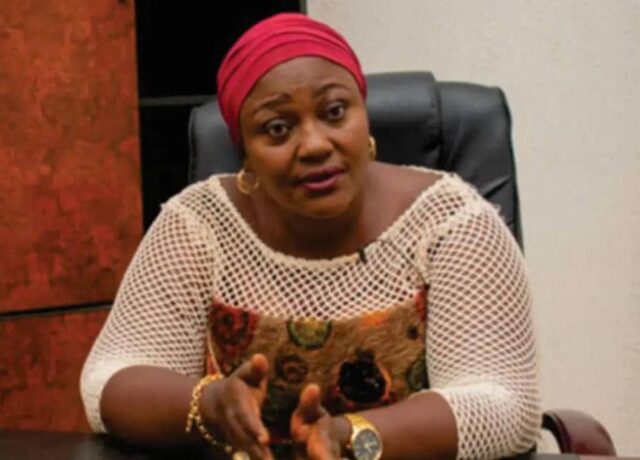
Commissioner Obinabo

An 18-year-old apprentice in Anambra State has allegedly impregnated ten girls in a span of five months, sparking public outcry and confusion.

The state’s Commissioner for Women and Social Welfare, Ify Obinabo, made the shocking revelation during a live social media broadcast on Wednesday.

According to Obinabo, the teenager was originally sent to learn a trade under a master but ended up impregnating both his master’s daughter and a salesgirl within just three months of his apprenticeship.

As a result, he was dismissed from the training.

The commissioner explained that the situation worsened after he returned to his village, where he went on to impregnate eight more girls.

“I want advice from the public because this one is beyond my capacity,” Obinabo said during her broadcast.

“This boy was sent to learn a trade at the age of 18 and three months of apprenticeship, and he impregnated his master’s daughter and his salesgirl. He was sent packing. Two months after that, he impregnated eight other girls in the village.”

The matter was brought to the commissioner’s office by the boy’s mother, who expressed distress over the series of events.

Quoting the mother, Obinabo said, “‘Anytime I see a girl coming towards our house nowadays, my heart would jump, please, I need help.’”

Deeply concerned, Obinabo appealed to the public for suggestions and possible interventions.

“This matter is beyond me, the reason I want the public to help me come up with a solution. Is it spiritual?” she asked.

She further recounted her interaction with the boy regarding his approach to the girls.

“I asked the boy the magic he uses in luring the girls to bed, but he told me he always tells them that he loves them and would like to marry them any time he acquires wealth,” she said.

“This problem is beyond me because of the boy’s age and the number of pregnant girls involved; that’s why I need help to solve it,” Obinabo added.

The identities of the boy, his mother, and their community were not disclosed.

However, the commissioner emphasized the urgent need for community and professional input to address what appears to be an escalating social issue.

Google search engine

Prof. Pat Utomi Forms Shadow Government, FG Fumes


Prominent political economist and activist, Professor Pat Utomi, has unveiled a “shadow government” under the Big Tent Coalition, aimed at offering alternative governance models and holding the Bola Tinubu administration accountable.

Speaking during a virtual launch on Monday, Utomi described the coalition as a response to Nigeria’s governance crisis.

He said the shadow government, composed of technocrats and opposition figures, would engage the public with policy alternatives and ideas for reform.

“Today, I bring to this pioneer body the desperate cries of a people troubled by how their reality seems bound for serfdom,” Utomi declared.

“I challenge you to awaken these people who wrongly believe that everything is fine as long as they can manage a share of what little still trickles down from crude oil sales.”

However, the Federal Government swiftly dismissed the move, calling it unconstitutional. Minister of Information and National Orientation, Mohammed Idris, stated in an interview:

“At a time when our nation is set to celebrate 26 unbroken years of presidential democracy, the idea of a so-called ‘shadow government’ is an aberration.”

He argued that Nigeria is not a parliamentary system, adding: “There is no provision for such in our statute books… While opposition politics is a central feature of democracy, it must be practised at all times within the bounds of propriety.”

“This idea of a shadow government sadly does not pass that test. Our bicameral legislature amply features members of the opposition, and it should be the right place to contest meaningful ideas for nation-building,” he added.

Utomi, defending the coalition, attributed rising poverty, insecurity, and the flight of multinational firms to the current government’s missteps.

“The recent spate of defections to the All Progressives Congress provides further evidence that all is not well with democracy in Nigeria,” he said.

He warned that opposition silence could aid in subverting democracy.

“The imperative is that if a genuine opposition does not courageously identify the performance failures of incumbents, offer options, and influence culture in a counter direction, it will be complicit in subverting the will of the people,” he said.

Utomi emphasized the coalition’s urgency, referring to it as a response to a national emergency.

He said the shadow cabinet will hold weekly meetings to evaluate government policies and recommend viable alternatives.

Priority areas include security decentralization, constitutional reforms, economic strategy, education, healthcare, and infrastructure.

“This shadow team must also address issues of ethics, transparency, and integrity, which continue to challenge this government at every turn,” he asserted.

Utomi criticized the government’s handling of the economy, noting the exodus of multinational companies.

“Nothing is more urgent than tackling the rising poverty across the country. Multinationals are shutting down, and millions are unemployed. Just two recent company exits illustrate how poorly thought-out policies have tanked the economy,” he explained.

He likened the government’s communications strategy to propaganda, warning against authoritarian tendencies.

“The resort to propaganda as a tool of governing, by the party in power, makes rational discussion of the decisions of the APC government difficult, moving us more towards fascist conditions,” Utomi said.

Referencing history, he added: “Like Joseph Goebbels inoculated Germans to Hitler’s deadly path, a massive shower of propaganda insults seeks to prevent patriots from factually critiquing policy choices of the government, and the behaviour of its agents, which can have more negative consequences on our well-being.”

He also faulted the removal of fuel subsidy, saying it was mishandled.

“Making propaganda of most leaders being in agreement on removing the petroleum subsidy was to cover up policy errors of how to remove it without further structural damage to the economy,” he said.

“The sequencing of actions could have produced different outcomes than driving the people into penury.”

Utomi challenged his cabinet to craft implementable economic strategies: “Don’t worry if they steal your ideas and use them—the gain is for Nigeria,” he urged.

On insecurity, he said parts of Benue and Plateau have been abandoned due to terrorist attacks, with little visible state response.

“The threat to peace and the effect of uncertainty on economic activity make this such an important issue more appropriate for emergency measures than that which led to the unconstitutional ousting of Rivers state Governor Sim Fubara,” he said.

Advocating community policing, he added: “Policing for me is a local function. We will travel further if we get the communities to have their own armed and well-trained police forces, which will be layered State police and the Federal National Guard.”

He warned that “the corruption ‘benefit’ of centralisation is fanning rationalisation of centralisation.”

He also criticised the political class for focusing more on elections than governance. “So much seems rooted in politics and positioning for elections that service to the people seems to be a forgotten proposition,” Utomi said.

“This shadow team must emphasise returning to the people and enabling their pursuit of happiness. That is the purpose of the government.”

He also stressed the importance of ethical governance: “This shadow team also has to deal with matters of ethics, transparency and integrity that seem to challenge this government at every turn,” he said.

Utomi pointed to issues such as the Lagos-Calabar contract as examples of state capture and corruption.

“The policy team of the new tribe has a detailed analysis… They can provide you with quality input,” he said.

“I note also with great pain the pervasive state of corruption in current reality. All effort to showcase integrity and transparency as value must be made,” he concluded.

Among the members appointed to the shadow cabinet are human rights lawyer Dele Farotimi (Ombudsman and Good Governance), Cheta Nwanze, Oghene Momoh, Halima Ahmed, Obi Ajuga, Dr. Adefolusade Adebayo, Dr. Otive Igbuzor, Prof. Ukachukwu Awuzie, Aisha Yusuf, and many others drawn from across sectors and political affiliations.

Google search engine

Cardinals Celebrate Final Mass Ahead Of Historic Papal Conclave


On Wednesday, cardinals from across five continents gathered at St. Peter’s Basilica in the Vatican for a final public mass before entering seclusion to elect a new leader for the world’s 1.4 billion Catholics.

A total of 133 cardinal electors, all under the age of 80, are expected to take part in the sacred conclave, the traditional voting process that will determine the successor to Pope Francis, who passed away last month after serving for 12 years.

With no clear favourite emerging among the candidates, the conclave promises to be an open and potentially prolonged decision-making process.

The cardinals represent a broad spectrum of theological views and cultural backgrounds, reflecting the global character of the Catholic Church.

Presided over by the Dean of the College of Cardinals, Giovanni Battista Re, the mass marked the final open liturgical event before the cardinals retreat into the Sistine Chapel to begin voting.

It is from the balcony of St. Peter’s Basilica, several days from now, that the 267th pope will eventually be introduced to the world.

Historically, recent conclaves have concluded swiftly, both Francis and Benedict XVI were elected within two days.

Yet, the Church’s longest papal election stretched over 1,006 days in the 13th century.

This conclave will be the largest in history, with participants from roughly 70 nations.

To be elected, a candidate must receive at least 89 votes, a two-thirds majority.

The cardinals are housed at the Vatican’s Santa Marta guesthouse and the adjacent Santa Marta Vecchia.

They will proceed from there Wednesday afternoon to the Pauline Chapel in the Apostolic Palace for a time of prayer before officially entering the conclave.

The solemn process takes place under the Michelangelo frescoes of the Sistine Chapel, an environment steeped in tradition and secrecy.

During the ceremony, Italian Cardinal Pietro Parolin, one of the key figures and considered a frontrunner, will call upon the Holy Spirit to guide their decision.

In keeping with Vatican protocol, mobile phones have been surrendered.

The cardinals will swear an oath of secrecy and commit to faithfully serving if chosen as pontiff. Upon the command “Extra omnes” (“Everyone out”), the doors will close, and the world’s most secretive election will begin.

Votes will be cast on slips bearing the Latin phrase “Eligo in Summum Pontificem” (“I elect as Supreme Pontiff”), placed on a silver plate and tipped into an urn beneath Michelangelo’s Last Judgment.

The first round of voting is expected Wednesday evening, followed by the symbolic smoke signal: black for no decision, white for a new pope.

Outside in St. Peter’s Square, hundreds of faithful have already gathered, eyes fixed on the chimney, awaiting the first sign from the conclave.

Among the pressing issues facing the next pope are declining numbers of clergy, Church finances, the role of women, and reconciling traditional doctrine with contemporary challenges.

While about 80% of the cardinal electors were appointed by Francis, known for his populist and reformist stance, opinions are divided over whether to preserve his legacy or steer the Church in a more conservative direction.

Names being speculated include Pierbattista Pizzaballa of Italy, Peter Erdo of Hungary, and Malcolm Ranjith of Sri Lanka, but the final outcome remains uncertain.

Google search engine

FG Begins Comprehensive Reform Of NYSC, Plans Teachers’, Medical Corps


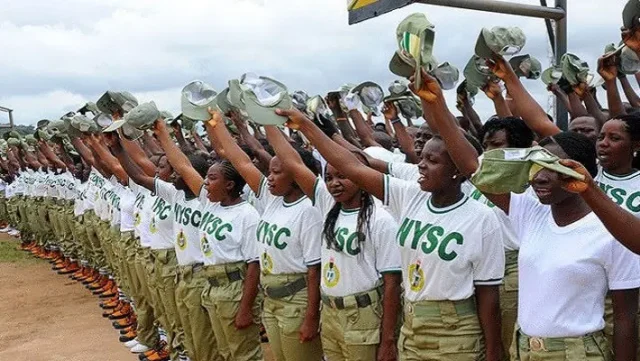
The Federal Government has inaugurated a committee to implement major reforms in the National Youth Service Corps (NYSC), aiming to modernize the scheme, enhance its impact, and better serve the needs of Nigerian youths.

The move comes amid growing concerns about the safety of corps members, outdated infrastructure, and questions around the relevance of the NYSC in today’s socio-economic climate.

The committee was formally inaugurated in Abuja on Tuesday, drawing participation from stakeholders in government, civil society, and the private sector.

Speaking at the event, the Minister of Youth Development, Ayodele Olawande, acknowledged the NYSC’s historic importance in fostering unity and youth development since its inception in 1973.

However, he emphasized the urgent need for reform.

He said, “The issues of corps members’ safety, infrastructural challenges, and the broader question of the scheme’s relevance in an increasingly dynamic socio-economic environment are among the key concerns.

However, these challenges also present opportunities that require urgent, visionary, and determined action.”

Olawande added that the committee’s mandate includes rethinking the structure and function of the NYSC to ensure it becomes a more secure, innovative, and effective instrument of national development.

“The outcome of this review must align with broader national development objectives, positioning the NYSC as a strategic tool for youth empowerment and nation-building,” he noted.

The committee will assess current NYSC operations, engage stakeholders nationwide, and recommend changes to its policies, legal framework, funding mechanisms, and monitoring systems.

The final report is expected to be delivered to the Youth Development Ministry within a specified period.

At the same event, Minister of Education, Maruf Tunji Alausa, announced government plans to introduce a Teachers’ Corps and a Medical Corps.

These initiatives will target NCE graduates and healthcare workers willing to serve in rural communities.

He said, “The Teachers’ Corps would help bridge educational gaps and create a pathway to government employment, while the Medical Corps would strengthen healthcare delivery in underserved areas, addressing critical issues such as maternal and child health.”

Also speaking, Special Adviser to the President on Policy and Coordination, Hadiza Usman, underlined the importance of strengthening vocational and technical training.

“Such alignment would empower young people to make meaningful, long-term contributions to their communities and to the nation as a whole,” Usman said.

Google search engine

2025 UTME: Govt’s Anti-Cheating Measures Effective, Says Education Minister Amid Mass Failure


The Minister of Education, Dr. Tunji Alausa, has described the high failure rate in the 2025 Unified Tertiary Matriculation Examination (UTME) as proof that the government’s clampdown on examination malpractice is working, especially within the Joint Admissions and Matriculation Board (JAMB).

His comments follow public concern after JAMB released statistics revealing that out of 1,955,069 candidates, only around 420,000 scored above 200, indicating that over 78 percent did not meet the 200-mark benchmark.

Appearing on Channels Television’s Morning Brief on Tuesday, Alausa said the results demonstrate that tighter security protocols have made cheating much harder, particularly through JAMB’s computer-based testing system.

“That’s a big concern, and it’s a reflection of exams being done the proper way,” Alausa explained.

“JAMB conducts its exam using a computer-based testing system.”

“They’ve implemented strong security measures, and as a result, fraud or cheating has been completely eliminated. Unfortunately, we cannot say the same for WAEC and NECO.”

The minister revealed that the education ministry undertook a thorough review of Nigeria’s examination systems shortly after he assumed office.

As part of ongoing reforms, Alausa announced that both the West African Examinations Council (WAEC) and the National Examinations Council (NECO) would begin implementing computer-based testing for objective sections starting in November 2025.

He added that a complete transition to the CBT model — covering both objective and essay questions — would take effect during the May/June 2026 exam cycle.

“We have to use technology to fight this fraud,” he said.

“There are so many ‘miracle centres’, and that is simply unacceptable. People cheat during WAEC and NECO exams and then face JAMB, where cheating is nearly impossible. That’s the disparity we’re seeing now. It’s sad,” Alausa added.

He further emphasized the harmful effect of exam malpractice on sincere students, warning that it erodes trust in the education system.

“The worst part of cheating is that it disincentivises the hard-working ones,” he said.

“If I’m preparing for WAEC or NECO and I know some classmates already have access to the questions, do you think I’ll still study hard? No, I’ll be tempted to join them. That’s how good students are corrupted, and that’s exactly what we must stop.”

Alausa reaffirmed the government’s resolve to reform the system using technology to ensure fairness and integrity in both exams and university admissions.

Google search engine

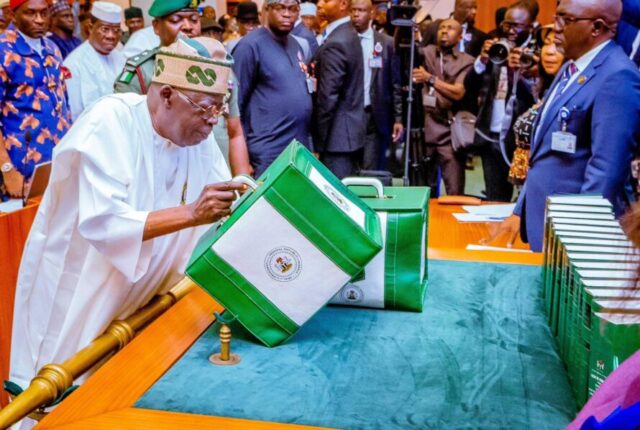
Tinubu Submits N1.78 Trillion FCT 2025 Budget To House of Reps


President Bola Ahmed Tinubu has formally submitted the 2025 budget proposal for the Federal Capital Territory (FCT) to the House of Representatives for consideration and approval.

In a letter addressed to the Speaker of the House, Hon. Abbas Tajudeen, and read during Tuesday’s plenary session, the President cited constitutional backing for the presentation.

The letter reads:
“Pursuant to Section 299 of the Constitution of the Federal Republic of Nigeria, 1999 as amended, which vests legislative powers over the Federal Capital Territory, FCT, Abuja in the National Assembly, I hereby present the 2025 FCT budget proposal to the House of Representatives for consideration.”

President Tinubu emphasized key focus areas of the proposal:
“The 2025 FCT budget proposal prioritizes investment in healthcare services, job creation, youth empowerment, social welfare services, education infrastructure, as well as increase in productivity in agriculture.”

He added that the overarching aim of the budget is to improve citizens’ quality of life:
“Our objective is to lift as many of our citizens out of poverty as we can.”

The President noted the fiscal outlook for the FCT in 2025 and the proposed expenditure framework:
“The House of Representatives is invited to know that, on the basis of revenue forecast for the FCT, a total expenditure of N1,783,823,708,392 is proposed for the year 2025.”

He explained the allocation structure of capital spending:
“As such, 85% of capital expenditure is dedicated to the completion of ongoing projects while 15% is for new capital projects, so as to sustain ongoing efforts at providing basic infrastructure and social amenities in the FCT.”

Concluding the letter, President Tinubu expressed confidence in the House’s swift consideration:
“I hereby forward the 2025 FCT statutory proposals and trust that it would receive expeditious consideration and passage by the House of Representatives.”

Google search engine

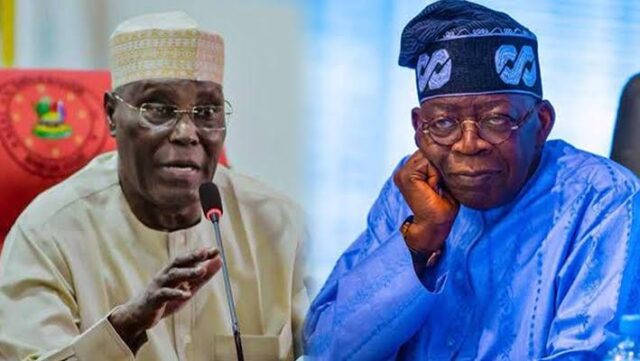
2027: Presidency In Panic Mood Over Looming Coalition – Atiku


Former Vice President Atiku Abubakar has stated that the Presidency is gripped by fear over efforts to form a broad political coalition ahead of the 2027 general elections.

Atiku’s remarks come in response to comments made by Daniel Bwala, Special Adviser to President Bola Tinubu on Policy Communication, who urged the former vice president to drop his presidential ambitions.

Bwala argued that Atiku lacked a divine mandate and had lost significant political support.

“If I could meet him face to face, I’d say: believe in destiny. It may not be God’s will for you to govern Nigeria,” Bwala said during a television interview.

He also claimed that Atiku had already lost “60 to 70 per cent” of his political allies.

Reacting swiftly, Atiku’s media office described Bwala’s statements as “disparaging,” accusing him of being hypocritical and opportunistic.

“It is ironic that Bwala, a political turncoat who once served as Atiku’s spokesperson, now lectures a statesman on legacy and destiny,” the office stated.

The statement further alleged that Bwala’s comments reveal growing concern within President Tinubu’s camp over the emerging coalition being led by Atiku and other progressive leaders.

“The office said Bwala’s remarks reflect desperation within the Tinubu camp, which it claimed is ‘rattled by the unstoppable momentum’ of the opposition coalition being championed by Atiku and other progressive leaders.”

It also questioned the Tinubu administration’s focus on attacking the former vice president:
“If Atiku is a spent force, why the smear campaign? Why dedicate presidential platforms to attack him?” the statement asked.

According to the media team, Atiku remains Nigeria’s most formidable opposition leader, committed to “rescuing the country from economic collapse and democratic erosion,” and will not be swayed by “political jesters masquerading as patriots.”

Google search engine

NASS Moves To Resolve Rivers Crisis, Constitutes Reconciliation Panel


The Speaker of the House of Representatives, Abbas Tajudeen, has announced that the National Assembly will soon establish a high-powered reconciliation committee aimed at resolving the escalating political crisis in Rivers State.

The prolonged feud between the suspended Governor Siminalayi Fubara and his former political ally, current FCT Minister Nyesom Wike, recently led to violent attacks on oil installations.

This prompted President Bola Ahmed Tinubu to declare a state of emergency in the state and suspend both the governor and members of the State Assembly aligned with Wike.

During plenary on Tuesday, marking the resumption of legislative activities after the Easter and Sallah recess, Speaker Abbas disclosed that the planned committee, being formed in partnership with the Senate, would include respected national figures to drive peaceful dialogue and support the restoration of democratic governance in Rivers and other conflict-ridden states.

“In the coming weeks, we shall work with the Senate to constitute a high-level Committee on Reconciliation, comprising respected national figures, to facilitate dialogue, promote peace, and support the restoration of democratic order in Rivers State and other conflict-affected regions,” Abbas told lawmakers.

This development follows the House’s earlier endorsement of President Tinubu’s emergency declaration in Rivers, alongside the inauguration of a 21-member ad hoc committee led by House Leader, Prof. Julius Ihonvbere to oversee the interim administration.

That committee has already begun engaging key stakeholders.

Reiterating the House’s commitment to national stability, Abbas said the reconciliation initiative was designed to address the complex political issues destabilizing the state.

Meanwhile, the Senate also took decisive action on Tuesday by constituting an 18-member committee to monitor the activities of Vice Admiral Ibok-Ete Ibas (retd), who was appointed by President Tinubu as the sole administrator of Rivers State following the emergency declaration.

Senate President Godswill Akpabio, while announcing the committee during plenary, emphasized the importance of ensuring transparency and accountability during the interim period.

He also hinted that the committee’s membership could be reviewed following further consultations.

President Tinubu had declared a state of emergency via a national broadcast, citing political instability and a breakdown of law and order in Rivers.

The proclamation resulted in the suspension of Governor Fubara, Deputy Governor Ngozi Odu, and all elected members of the State Assembly for six months.

Ibas was appointed to oversee the state’s administration with immediate effect.

While the move is aimed at stabilizing the region, it has attracted widespread criticism, especially following Ibas’s appointment of sole administrators for local government councils, a decision many view as unconstitutional and undemocratic.

The Senate’s oversight committee is tasked with ensuring that the actions of the sole administrator remain within constitutional bounds and do not undermine democratic institutions.

Akpabio urged the committee to begin its work immediately, stressing the urgency of preserving democratic accountability.

“The Senate remains committed to upholding democratic principles and ensuring that governance, even in a caretaker capacity, adheres to the rule of law,” he said.

The committee is chaired by Senate Leader Opeyemi Bamidele. Other members include Adamu Aliero (Kebbi), Osita Izunaso (Imo), Osita Ngwu (Enugu), Kaka Shehu (Borno), Aminu Abass (Adamawa), Tokunbo Abiru (Lagos), and Adeniyi Adegbonmire (Ondo).

Additional members are Sani Musa (Niger), Simon Lalong (Plateau), Asuquo Ekpeyong (Cross River), Adams Oshiomhole (Edo), Ireti Kingibe (FCT), Onyekachi Nwebonyi (Ebonyi), Idiat Adebule (Lagos), Ede Dafinone (Delta), and Mohammed Nakudu (Jigawa). The Clerk of the Senate will serve as the committee’s secretary.

Google search engine

MOST COMMENTED

- Advertisement -
Google search engine