Home Blog Page 606

Staying Quiet For 20 Years Nearly Cost Me Everything, Peter Okoye Breaks Silence


Nigerian music star Peter Okoye, also known as Mr P, has opened up once again about the alleged financial betrayal by his elder brother and former manager, Jude Okoye.

According to Peter, his decision to remain silent for over two decades nearly ruined him.

This revelation comes just hours after he testified at the Federal High Court in Lagos on Monday.

In a post shared on X (formerly Twitter), Mr P expressed the emotional toll of enduring silence under the guise of family loyalty.

“Don’t let ‘family’ be the reason you’re drowning in silence. I did — for over 20 years plus. And it almost cost me everything,” Peter wrote.

“But now I know better — love doesn’t manipulate, loyalty doesn’t betray, and family does not steal from you. Family that steals and breaks you isn’t family at all.”

The 43-year-old continued, “A real family doesn’t drain you, shame you, discriminate against you, or ignore your pain. My sanity matters. My mental health is a priority. If it costs my mental health, then it’s too expensive.”

At the Federal High Court, Peter alleged that Jude covertly set up a company, Northside Music Limited, to manage and control the digital royalties of P-Square — the award-winning group Peter formed with his twin brother, Paul — without their knowledge or consent.

Appearing before Justice Alexander Owoeye, Peter claimed he only discovered the company’s existence years after the group first split in 2017.

According to him, the firm was registered under Jude’s name and his wife’s, who owns an 80% share.

“All our earnings from P-Square were funnelled into accounts controlled solely by Jude,” Peter testified.

“From 2017 to 2021, when we were apart, I had no access to anything. Jude was the only signatory.”

He further alleged that royalty records had been tampered with, significantly reducing the value of their music catalogue.

“What used to bring in $8,000 per month was now reduced to about $500. When I asked for financial records, I was told my money was with people in South Africa,” he said.

Peter explained that the lack of access to financial data cost the group not only revenue but potential business partnerships.

“I wasn’t even asking for the money — just access to our data,” he said.

Suspicious of foul play, Peter initially sought legal advice from Senior Advocate of Nigeria and current Minister of Aviation, Festus Keyamo, who proposed a revenue-sharing model.

When that failed, Peter hired another lawyer, Mr. Afolabi, and filed a formal petition with the Economic and Financial Crimes Commission (EFCC).

The EFCC has charged Jude and Northside Music Limited with several offenses, including the alleged purchase of a property in Ikoyi, Lagos, worth ₦850 million using funds suspected to be proceeds of crime.

This act, the agency claims, violates provisions of the Money Laundering (Prevention and Prohibition) Act, 2022.

Another charge accuses Jude of converting over $1 million through a Bureau De Change and routing the money through various Nigerian bank accounts to obscure its origin.

The EFCC alleges a deliberate effort to conceal the source of the funds. Jude has pleaded not guilty to all seven charges.

Peter said he became more alarmed in 2022 when potential investors showed interest in acquiring P-Square’s catalogue.

A deeper audit revealed red flags, including altered backend royalty data, undisclosed transactions, and overlapping aggregators linked to both P-Square and Jude’s company.

Peter is expected to be cross-examined when the trial resumes on June 4.

Jude’s legal troubles began after Peter submitted a petition to the EFCC, accusing his elder brother of mismanaging digital royalties from P-Square’s catalogue.

On February 26, the EFCC alleged that Jude had diverted funds meant for Peter, including payments in dollars and pounds from companies such as Lex Records Limited, Kobalt Music, and Mtech Limited.

He is currently facing trial alongside Northside Music Limited on seven counts of money laundering.

One of the charges states that in 2022, Jude “did directly acquire a landed property known as No 5, Tony Eromosele Street, Parkview Estate, Ikoyi, Lagos… which money you knew or reasonably ought to have known forms part of proceeds of unlawful act.”

Another charge alleges that Jude laundered $1,019,762.87 through a Bureau De Change, distributing the money across multiple Nigerian bank accounts with the intent to disguise its illicit origin.

The EFCC insists that these actions breach the Money Laundering Act of 2022.

Jude has denied all wrongdoing.

The rift between the Okoye brothers resurfaced publicly in August 2024 when Paul Okoye, also known as Rudeboy, confirmed that the group had permanently disbanded.

P-Square, founded in 1999, rose to become one of Africa’s most successful pop duos before first splitting in 2017.

They briefly reunited in 2021, but the reunion collapsed due to unresolved financial and legal issues.

Google search engine

151 False Beacon Emergency Satellite Alerts Recorded In 2024 – NEMA


The National Emergency Management Agency (NEMA) has disclosed that its Nigeria Mission Control Centre (NIMCC) received a total of 151 false emergency satellite beacon alerts across the country in 2024.

NIMCC expressed concern that none of the alerts received last year were genuine, describing it as an unfortunate trend that wastes manpower and logistics committed by emergency response agencies to trace the alerts.

The Director of Search and Rescue Department at NEMA, Air Commodore Kenneth Oyong, made the remarks on Wednesday in Enugu during a Sensitisation and Awareness Campaign/Training for COSPAS-SARSAT Beacon Users in Nigeria.

Represented by the South-East Zonal Director of NEMA, Mr. Wilson Brandon, Oyong stressed the need for more responsible usage of beacon devices.

He acknowledged the support of the Director General of NEMA, Mrs. Zubaida Umar, for approving the training, saying her leadership continues to inspire the agency’s efforts in improving search and rescue operations.

According to him, “The Director General of NEMA’s visionary leadership and unwavering support for enhancement of our capabilities in the Search and Rescue Department in NEMA has been a source of inspiration to us all.”

He added, “As we gather here today, I want to emphasise the critical importance of safety at sea, in the air, and on land.

“The COSPAS-SARSAT (Search And Rescue Satellite Aided Tracking) system is a vital component of our national safety infrastructure, providing distress alert services to those in need.

“However, the effectiveness of this system relies on the proper use and understanding of COSPAS-SARSAT beacons by users.

“This is why we are here today to sensitise beacon users on the proper deployment, operation and maintenance of these life-saving devices. Our campaign aims to reach all beacon users in Nigeria, including maritime, aviation and land-based users.”

The director further stated that the training would cover key areas such as: “The Overview of COSPAS-SARSAT System”; “The Importance of COSPAS-SARSAT Beacons in Emergency Situations”; and “Proper Installation, Testing, and Maintenance of Beacons.”

He added that other training topics include: “Understanding False Alerts and How to Prevent Them” and “Best Practices for Beacon Use and Emergency Procedures.”

The Head of the Mission Control Centre, Commander Ademola Oriyomi, emphasized the objective of encouraging stakeholders to use beacon technology responsibly.

Oriyomi stated that promoting responsible and effective use of the devices would significantly improve national search and rescue efforts.

“We want to ensure that NEMA carries all stakeholders using beacon technology along and achieve zero-false beacon alerts/calls moving ahead,” he said.

He noted that beacon technology experts would present on various relevant topics and that an interactive session would follow to foster collaboration among participants and NEMA-NIMCC officials.

During the training, Mr. Salami Abdullahi delivered a lecture titled: “Prevalence of False Alerts in Nigeria and its Implications,” while Mr. A.O. Ayorinde spoke on: “Emergency Locator Transmitter (ELT) Beacon Handling, Maintenance and Coding Method,” among others.

Participants at the training were drawn from key agencies, including the National Airspace Management Agency (NAMA), the Nigerian Air Force, Federal Road Safety Corps (FRSC), Nigeria Police Force, Nigeria Safety Investigation Bureau, Nigeria Civil Aviation Authority, officials of private and commercial airlines, and the Nigerian Maritime Administration and Safety Agency (NIMASA), among others.

The training is themed: Keeping Abreast with Emerging Technology.”

Google search engine

2027: Seyi Makinde Declares Readiness To Run For President


Governor Seyi Makinde of Oyo State has openly declared that he possesses the capacity to lead Nigeria as President, asserting his confidence during an appearance on Channels Television’s Politics Today on Tuesday.

The two-term governor, who is a prominent figure within the Peoples Democratic Party (PDP), stated that the 2027 general elections will not be a simple face-off between the PDP and the ruling All Progressives Congress (APC), but rather a decision between the Nigerian people and the APC administration.

“I don’t have any doubt that I have the capacity to occupy the highest office in this land and I have what it takes,” Makinde said.

“But what I want to do right now, is it what Nigerians are asking for right now, is it what my party will say we should do, we don’t know; we still have a long time to go.”

He emphasized that the PDP must first undergo internal restructuring.

“We must fix our party, we must have a platform for you to even aspire to be anything,” he added.

Nonetheless, Makinde said he is content with his political journey so far.

“Let me also say this: if my political journey ends here, I am also happy.”

The statement comes at a time when realignments are unfolding ahead of the 2027 polls.

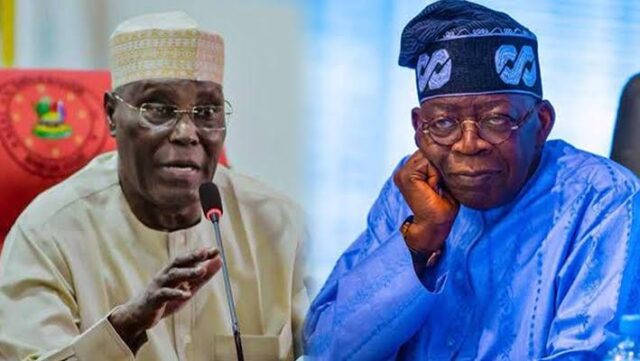
On March 20, 2025, PDP’s 2023 presidential candidate Atiku Abubakar spearheaded an inter-party coalition that brought together key opposition figures such as former Anambra State governor Peter Obi and former Kaduna governor Nasir El-Rufai.

The coalition, announced as a vehicle to dislodge President Bola Tinubu’s APC-led government, is counting on the strong voter base seen in the 2023 elections, where Atiku and Obi secured a combined vote count exceeding 12 million—outnumbering Tinubu’s declared tally by over four million votes.

However, Makinde and other PDP governors distanced themselves from the coalition during a meeting in Ibadan on April 14.

The governors emphasized that any potential alliance should be preceded by internal reorganization within the PDP.

Makinde clarified this during the broadcast: “Your house (the PDP) must be in order before you invite others.”

He acknowledged the right of individual party members to associate freely but underscored that the official stance of the party remains separate.

Veteran PDP leader and member of the party’s Board of Trustees, Bode George, supported the governors’ decision, stressing that the party should field a southern candidate in 2027 instead of backing Atiku again.

When asked directly if he plans to contest for the presidency, Makinde replied, “nobody will set an agenda for me. I will set an agenda for myself.”

He added, “People can say whatever they want to say (but) right now, I am focusing on what Oyo State people have given to me; the task ahead of us.”

Makinde insisted he would not be swayed by political pressure or optics.

“I will not play stunt politics; I will not do things because it feels right in some people’s ears,” he said.

“No, I will stay focused to ensure that we bring dividends of democracy to our people, look after them, and also build infrastructure that will lead our people well into the future.”

He concluded with a note of clarity: “that is not consistent with whether somebody is going to go to the federal level or whether people are saying I must contest. If I want to contest, I will come out at the appropriate time.”

“One thing you should expect from Seyi Makinde is that he would never come out to say I want to do XYZ without preparations and without being held accountable for whatever he says he wants to do,” he affirmed.

Google search engine

N1.3 Trillion CBEX Probe: EFCC Says Nigerians Were Warned Against Ponzi Schemes


The Economic and Financial Crimes Commission (EFCC) has reiterated that it warned Nigerians about investing in Ponzi schemes before the collapse of CryptoBank Exchange (CBEX), a digital trading platform that allegedly defrauded investors of N1.3 trillion.

CBEX reportedly crashed on Monday, leaving many Nigerians unable to access their funds. Several videos circulating online have shown distressed investors lamenting their losses.

Speaking on Channels Television’s The Morning Brief on Wednesday, EFCC spokesperson Dele Oyewale emphasized that the agency had taken proactive steps to educate the public about fraudulent investment schemes.

You’ll recall that on March 11 this year, the Executive Chairman of the EFCC, Mr. Ola Olukoyede, had cause to instruct us to alert Nigerians about 58 Ponzi scheme companies; we came out with a list–that shows that we’re proactive and we have our hands on what is happening,” Oyewale stated.

He added that the commission had been actively working on the CBEX case even before receiving public complaints.

So, concerning this CBEX thing, we’re on it; it’s not that we didn’t know, and you know we’ve been alerting Nigerians about ways and means to separate themselves from this type of shenanigans. So, before the calls came, we were working; while the calls were coming, we were working, and even after the calls, we’re still working.”

Oyewale explained that CBEX is a Chinese-owned digital trading company with no official presence in Nigeria.

We cannot lay any blame on the EFCC concerning this CBEX thing. I’m sure we know that that business venture is a Chinese digital trading company with no jurisdictional link with Nigeria; all the area offices that people are saying are in Ibadan and in some other locations are not functional offices. The entire thing is online.”

He pointed out that the EFCC had consistently warned Nigerians about fraudulent online schemes.

And we have been warning Nigerians against criminal engagements online. So, what would you expect the EFCC to do? We have given empowerment, given enlightenment, given public awareness, and raised intelligence.”

Oyewale highlighted that the EFCC Chairman had previously listed 58 suspicious companies, urging Nigerians to avoid them.

It is to the credit of the EFCC chairman that he came forward to say that there are 58 companies that Nigerians are patronising that they should no longer patronise. So, if the commission is as proactive as that, then the rest is for the people concerned to be more vigilant and to ensure that they guard their investment in line with the information that is available.”

The EFCC spokesperson also emphasized that the newly enacted Investment and Security Act 2025 criminalizes unregulated digital trading.

With the Act, it is a criminal thing to engage in any digital trading activity without being licensed, without complying with all the extant laws, as any form of exchange or business engagement must conform with the Act.”

He urged Nigerians to be skeptical of investment schemes that promise unrealistic returns.

We know that for every business concern, you declare your profit either quarterly, annually or bi-annually, but if somebody says, ‘Bring your money; I’m going to give you a return in 30 days,’ you know that is not realistic; it’s just not pragmatic.”

He added: Or if somebody says if you bring your money, we’re going to give you a 100% return on investment, that is not possible; even we know that the prevailing interest rate in Nigeria is 27.5. So, how will somebody give you a 100% return on investment in 30 days?”

Oyewale advised Nigerians to check whether investment firms comply with financial regulations before putting their money into such ventures.

So if you want to go into any investment, you must look at these fellows that are parading this: how compliant are they with the Money Laundering Prevention and Prohibition Act 2022? How compliant are they with the Proceeds of Crime Act? How compliant are they with the Terrorism Financing Act? It is very important.”

He warned that companies operating outside these legal frameworks were bound to collapse.

Now, if they’re operating at variance with all of these laws, you know that it’s just a matter of time before a problem will come.”

Despite the warnings, Oyewale assured that the EFCC is actively working to recover funds and bring the culprits to justice through international collaboration.

It would be very irresponsible and unprofessional of the EFCC to say you have lost your money and there is nothing the commission can do about it; we’re already working with Interpol and we’re already working with our international development agencies to ensure that these people are brought to book.”

He assured investors that efforts were being made to recover their lost funds.

Investors are going to get their money back and we’re already working on that. All I’m saying is that this kind of thing could have been averted, but we’re not going to throw our hands up helplessly to say that there’s nothing the EFCC can do about it. No, we’re more responsible; we are more professional than that.”

According to him, the EFCC has launched a global effort to track down those responsible for the fraud.

So, we’ve spread our wings; we’re talking to Interpol, we’re talking to all the necessary agencies across the world to be able to bring all the actors to book and the investors are going to have their money back. It might not be in the short term, but I can assure you that the commission, as the leading anti-corruption agency in Nigeria, is not going to allow investors to just lose their money like that because they are not compliant. No. Escapism is not a solution to any problem.”

The EFCC maintains that it had issued multiple warnings about fraudulent digital investment schemes like CBEX. While the commission is working to track the perpetrators and recover investors’ funds, it has urged Nigerians to exercise greater caution before putting their money into any financial scheme.

Efforts to contact CBEX officials for a response have so far been unsuccessful.

Google search engine

UN Humanitarian Office To End Operations In Nigeria


The United Nations Office for the Coordination of Humanitarian Affairs (UNOCHA) has announced its decision to cease operations in Nigeria, amid a broader global restructuring triggered by financial constraints.

This was disclosed on Wednesday by Nigeria’s Minister of Humanitarian Affairs and Poverty Reduction, Professor Nentawe Goshwe, during a Validation Workshop on the Anticipatory Action Framework, held at the National Counter Terrorism Centre, Office of the National Security Adviser in Abuja.

According to the minister, “The UN Resident and Humanitarian Coordinator, Mohamed Fall, had informed me about the decision,” he said.

Professor Goshwe expressed deep concern over the move, particularly as the country continues to grapple with the devastating effects of flooding and insecurity on citizens’ livelihoods.

He, however, praised UNOCHA for its efforts in Nigeria over the years, especially in the conflict-ravaged Northeastern region.

He said, “UNOCHA has made significant interventions in Nigeria, and their support has been crucial.”

Describing the agency’s planned withdrawal as regrettable, the minister noted, “It is unfortunate that UNOCHA is pulling out at a time when humanitarian needs remain daunting across the country.”

Despite this setback, Professor Goshwe reaffirmed the Tinubu administration’s commitment to mitigating disasters and providing support to affected communities.

“President Bola Tinubu remains committed to addressing the menace of floods and other disasters confronting our people,” he emphasized.

The development comes on the heels of a major global downsizing announced by UNOCHA due to a sharp decline in funding. On Friday, the head of the agency, Tom Fletcher, shared a letter on its website outlining a global retrenchment plan.

He wrote, “The humanitarian community was already underfunded, overstretched and literally, under attack. Now, we face a wave of brutal cuts.”

Fletcher attributed the decision to a $60 million funding shortfall projected for 2025, alongside escalating humanitarian needs across the world.

He clarified that the cutbacks are driven by fiscal constraints and not a reflection of declining needs.

“The reductions stem from financial constraints rather than diminished needs,” Fletcher emphasized.

UNOCHA has revealed that it will either withdraw from or scale back its operations in nine countries, including Nigeria, Cameroon, Colombia, Eritrea, Iraq, Libya, Pakistan, Turkey, and Zimbabwe.

The aim, the agency said, is to focus on “dynamic and full responses” in fewer, more critically affected locations.

Najwa Mekki, OCHA’s Director of Communications, noted that approximately 500 staff members will be laid off from the agency’s 2,600-strong global workforce.

The move follows earlier austerity steps such as a hiring freeze and travel limitations, which reportedly saved $3.7 million.

While the agency navigates this challenging financial landscape, the implications of its exit from Nigeria are expected to be far-reaching, especially for vulnerable communities still dependent on international humanitarian support.

Google search engine

IPOB Warns South-East Leaders Against Mobilising Youths For Army Recruitment, Suggests CBN, NNPC Jobs As Alternatives


The Indigenous People of Biafra (IPOB) has issued a stern caution to political and community leaders in the South-East, urging them to desist from mobilising young people in the region for enlistment into the Nigerian Army.

In a statement on Tuesday, IPOB’s Media and Publicity Secretary, Emma Powerful, accused the Nigerian military of manipulating the South-East populace under false pretenses, allegedly seeking to use Igbo youths as cannon fodder in violent conflicts, especially in the northern parts of the country.

According to IPOB, the Nigerian Army has been secretly engaging traditional rulers, clergy, community elders, and youth leaders across the region, encouraging them to rally support for military recruitment drives.

“The Nigerian Army has begun employing Igbo individuals to mislead Ndigbo into enrolling their children in the Nigerian Army,” the group said.

It further claimed, “The Nigerian Army assigned 3000 individuals from Kaduna and various northern states, while only 200 individuals were allocated to each state from the South-East region, indicating that we do not belong to Nigeria at all. Join the Nigerian Army and endure the challenges.”

IPOB raised questions about the fairness and transparency of the recruitment process, and accused the government of marginalising the South-East in gainful employment opportunities.

“The question is, if the Nigerian Army presents a solid job prospect, will the Nigerian government or its violent military provide Igbo youths with such an opportunity?”

“Are our young people not capable of securing jobs in the Central Bank, NNPC, EFCC, Customs, and other profitable parastatals in Nigeria?” the group queried.

IPOB also criticised the government’s treatment of soldiers killed in action, especially those from the South-East.

“What actions has the Nigerian government taken to support the families of soldiers who died in active duty defending Nigeria?” it asked.

“Why were the valiant Igbo soldiers who allied with their peers to prevent Nigeria’s downfall in 1966 characterized, betrayed, and labeled ‘the Igbo coup plotters,’ resulting in the slaughter of thousands of Ndigbo in the North during that same year?”

According to the group, the identities of many soldiers killed in the North are kept secret, and a large proportion of the casualties are of Igbo extraction.

It also condemned the Army’s activities in the South-East, describing them as targeted assaults on local communities.

IPOB further alleged that the military recruitment push was part of a broader “population reduction agenda” targeting the Igbo people.”

“The group also took exception to reported plans to deploy South-East recruits under the ECOWAS standby force mission in the Sahel region, branding it a “proxy war.”

Powerful said, “Our recommendation to the Nigerian Army is to enlist thousands of Igbo youths whom they unlawfully hold in different detention facilities across Nigeria.”

He continued, “Or even better, visit the mass graves where thousands of Igbo youths were buried and enlist their bodies into the Nigerian Army to fight for them.”

In its final warning, IPOB said, “We caution Ndigbo against encouraging and campaigning for Igbo youths to enlist to combat state and foreign-sponsored terrorists who have more resources than the Nigerian Army.”

“We will hold responsible anyone who encourages Igbo youths to the slaughter of Fulani terrorists under the guise of joining the Nigerian Army. IPOB will oppose all depopulation strategies targeting Ndigbo.”

Google search engine

Court Invalidates Obasa’s Removal As Lagos Speaker, Overturns Assembly Actions


The Lagos State High Court in Ikeja has ruled that the removal of Mudashiru Obasa as Speaker of the Lagos State House of Assembly was unlawful, unconstitutional, and of no legal effect.

The judgment, delivered on Wednesday, also voided all proceedings and resolutions passed by the House on January 13, 2025 — the day Obasa was removed from office.

Justice Yetunde Pinheiro, who presided over the case, awarded N500,000 in damages to Obasa for what she described as the “unlawful and illegal removal” and the psychological distress he suffered.

Obasa had taken legal action against the House of Assembly and Hon. Mojisola Meranda, who was appointed Speaker following his removal.

Represented by Senior Advocate of Nigeria Afolabi Fashanu, he contended that the process used to oust him was flawed and lacked legal standing.

He claimed the action was carried out while the House was on recess and he was abroad.

The court first dismissed preliminary objections that challenged the validity of the case.

Justice Pinheiro ruled that failure to issue a pre-action notice did not invalidate the suit.

On the issue of jurisdiction, she affirmed, “A court of law can intervene where the provisions of the constitution have not been met during any proceedings of the house of assembly.”

The court drew upon precedents such as Usman v Kaduna State House of Assembly, Agbaso v Imo State, and Rivers State House of Assembly v Government of Rivers State.

According to the judge, courts are permitted to step in when constitutional gaps exist, or when house rules are ignored and fair hearing is denied.

She emphasized that the issues raised by Obasa pertain to the constitutionality of his removal and the procedures employed by the Assembly.

“The facts of this case are questions that the court can adjudicate upon,” she said, adding that the matter was one of due process.

The court examined the House’s internal rules and determined that only its recognized leaders have the authority to summon a sitting.

The chief whip, who had played a role in the controversial sitting, lacked the capacity to convene the session.

“By the rules of the Lagos State House of Assembly, there exists a hierarchy under Order 7,” Justice Pinheiro stated.

“Rule 30 of the Rules which relates to the authority of the chief whip also does not confer on him such authority.”

She further noted that even if a majority of lawmakers supported the session, the reconvening of the Assembly after an indefinite adjournment required compliance with specific procedural rules.

“Every step taken towards reconvening the meeting of the house after it had adjourned indefinitely cannot stand,” she ruled.

Concluding the judgment, Justice Pinheiro declared the session that led to Obasa’s removal invalid.

“The defendants cannot validly remove the speaker without complying with Order 2, Rule 9 of the Lagos State House of Assembly Rules,” she said.

Accordingly, the court set aside the January 13 session, Obasa’s removal, and the appointment of Hon. Mojisola Meranda as Speaker.

Google search engine

Governor Mutfwang Bans Night Grazing, Restricts Motorcycle Use


Following a series of deadly attacks that have shaken Plateau State, Governor Caleb Mutfwang has announced immediate security measures, including a ban on night grazing and restrictions on motorcycle movement.

During a state-wide broadcast on Wednesday, Governor Mutfwang condemned the violence as “coordinated acts of terror” with the intention of displacing residents from their ancestral lands and eroding their right to live in peace.

To curb the violence, he also prohibited the transportation of cattle by vehicle after 7pm and imposed a state-wide restriction on motorcycle use from 7pm to 6am.

Referencing past tragedies, Mutfwang said, “The tragic echoes of Dogo Na Hawa, Riyom, Barkin-Ladi, Mangu, and the Christmas Eve massacres in Bokkos remain vivid. The cycle continues, but it must not endure. Enough Is Enough.”

He vowed not to let Plateau State succumb to fear or normalize bloodshed.

“As your governor, I stand resolved — Plateau shall not be overrun by fear, nor shall we accept this culture of bloodshed as the new normal,” he declared.

“My administration is intensifying efforts to protect our people and enforce the rule of law across all local governments.”

The measures, effective April 16, include a statewide ban on night cattle grazing, a prohibition on cattle transportation after 7pm, and restricted motorcycle use during nighttime hours.

Addressing residents directly, Mutfwang said, “My Dear People of Plateau, I speak to you not just as your Governor, but as your brother — one who deeply feels the pain and sorrow that has again darkened our land.”

The latest violence struck Zikwe Village in Bassa LGA late on Sunday, April 13th, when unknown gunmen launched a brutal night attack.

The following day, Kimakpa village in Miango district witnessed similar horror, where at least 50 people were reportedly killed.

“There was no specific target. They were just shooting,” said 25-year-old survivor Peter John. Speaking from a hospital bed, he recounted how he fled by climbing onto the roof after gunmen stormed his family home around 10:00 pm.

Tragically, his sister, her daughter, his older brother, and a nine-month-old niece were all killed.

“They shot and killed my younger sister and her daughter right in front of me,” he recalled.

The recurring conflict between farmers and herders in Plateau is often inflamed by competition over land, compounded by climate change, illegal mining, and land grabbing.

The religious and ethnic divide — with Christian farmers and predominantly Fulani Muslim herders — adds further complexity.

John and other witnesses told AFP that the attackers spoke the Fulani language. While a local herder group condemned the violence, they also claimed their own communities were under attack from farmers.

So far, no arrests have been made, and authorities have yet to establish a motive for the fresh wave of violence.

“This is not an isolated conflict between farmers and herders,” Mutfwang emphasized. “What we are witnessing is a systematic and premeditated campaign,” alleging that the attacks had external “sponsors.”

He encouraged communities to protect themselves lawfully and urged vigilante groups to “organize night patrols in coordination with the security agencies”.

Peter John said he attempted to call local vigilantes during the attack but received no help. “It was too late,” he said.

His seven-year-old nephew, suffering machete wounds to the neck and head, lay nearby in severe pain.

Earlier that day, security forces had reportedly been stationed in Kimakpa due to rising insecurity, but they departed before nightfall.

“The attackers came, shouting ‘Allahu Akbar’ (‘God is Greater’), and began shooting, killing people, and burning houses,” John added.

Another victim, Diwe Gado Diwe, described the event as “one of the worst experiences” of his life. His cousin was among the dead, and his brother later died in the ICU after being attacked.

“She told me not to come,” Diwe said of a call from his sister warning him to stay away during the assault.

“I tried calling the vigilante group, but the line didn’t go through.”

Jessica John, 45, sat beside her son, Saryie John, in the hospital, awaiting surgery.

He had returned home with a friend after fleeing the house earlier.

The friend was killed; Saryie survived, though he has a bullet lodged in his chest.

Google search engine

Enugu Govt Committed To Responsible, Tech-Driven Gaming Regulations – Commission

Governor Mbah of Enugu State, 

The Enugu State Government has reaffirmed its dedication to fostering responsible and technology-driven gaming and lottery operations within the state.

This was made known by the Executive Secretary of the Enugu State Gaming Commission, Prince Arinze Arum, during a press briefing held on Wednesday in Enugu.

The briefing marked the official commencement of activities leading up to the 2025 Enugu International Gaming Conference.

The conference is scheduled to take place on July 30 and 31, 2025, at the International Conference Centre, Enugu, with the theme: “From Unification to Diversification – Shaping Nigeria’s Gaming Future.”

Arum noted that the state has been deploying innovative technologies and applications to ensure that regulations in the gaming and lottery sector are effectively enforced and remain seamless.

According to him, “With the help of technological devices and innovations, the commission’s monitoring and sanctioning of unethical practices is top-notch and with the speed required to retain confidence in the gaming and lottery sector.”

He emphasized the Commission’s proactive role in promoting a well-regulated environment.

“As a Commission, we remain committed to our role as a progressive and proactive regulator.

“We believe that fostering a well-structured, transparent, and socially responsible gaming environment is essential to driving sustainable development within the sector and unlocking its full economic potential.”

Speaking on the significance of the upcoming conference, Arum said the theme captures the evolving dynamics within the Nigerian gaming industry.

“The theme reflects not only the current trajectory of the gaming sector in Nigeria but also the bold conversations in response to growing diversity of players, regulators, technologies and jurisdictional realities that characterise the industry,” he said.

He further observed that the gaming industry in Nigeria is undergoing a major shift.

“From the once monolithic structure of centralised regulation, we are now witnessing a shift towards state-led frameworks, technological adoption and deeper socio-economic implications.

“This diversification, though challenging, offers a unique opportunity for innovation, inclusion, and growth; particularly when guided by collaboration and shared values.”

According to Arum, the 2025 Enugu International Gaming Conference will bring together stakeholders from across Nigeria and beyond, including regulators, operators, technology providers, legal experts, financial institutions, and civil society organizations.

“Our collective goal is to create a platform for open dialogue, policy harmonization and the advancement of responsible gaming practices,” he said.

He revealed that several international gaming and lottery companies from the United States, South Africa, and Europe—as well as prominent players in the industry—are expected to attend the two-day conference.

Highlighting the key features of the event, Arum said it would include panel sessions, exhibitions of emerging technologies and regulatory solutions, and the unveiling of the Commission’s Good Cause Projects aligned with international best practices.

“Others are: strategic roundtables with government agencies, investors, and civil society; and targeted networking opportunities for startups, innovators, and operators seeking expansion into the South-East and Nigerian gaming/lottery market,” he said.

“The conference promises to be more than just a gathering as it will be a catalyst for reform, innovation, and partnership,” Arum concluded.

Google search engine

Businessman Bags Four-Year Jail Term For Rejecting Naira In Jewelry Deal


Justice Alexander Owoeye of the Federal High Court in Ikoyi, Lagos, on Tuesday convicted and sentenced businessman Uzondu Chimaobi to four years in prison for refusing to accept the naira as legal tender in a commercial transaction.

Chimaobi was arraigned by the Lagos Zonal Directorate 1 of the Economic and Financial Crimes Commission (EFCC) on February 5, 2025, over a two-count charge stemming from a dollar-based jewelry sale.

One of the charges read: “That you, Precious Chimaobi Uzondu, on the 10th of December 2024, in Lagos, within the jurisdiction of this Honourable Court, refused to accept Naira (Nigeria legal tender) by accepting the sum of $5700 (Five Thousand Seven Hundred USD) as a means of payment for a purchase of a cartier diamond bracelet with serial number (12345678) and you, thereby, committed an offence contrary to Section 20 of the Central Bank of Nigeria Act, 2007.”

Initially, Chimaobi pleaded not guilty, prompting a full trial. The prosecution called its first witness, EFCC operative Owolabi Oyarekhua Jude, who offered details of the investigation.

Led in evidence by prosecuting counsel H.U. Kofarnaisa, Jude told the court: “The Commission received intelligence on the activities of a jewellery company called Unlimited Jewellers Limited, whose owner is one Uzondu Precious Chimaobi.”

He explained further: “The Company, which deals in jewellery at Atlantic Mall, Chevron Drive, Lekki, Lagos, intentionally tags and sells its products in Dollars as against the CBN Act, 2007, which stipulates Naira as the only legal tender in Nigeria.”

According to him, “Subsequently, a covert operation was carried out, where an undercover operative of the Commission disguised as a customer to purchase a Diamond Nail bracelet that was tagged $6000 and bought it for $5700.

“The company refused to receive Naira and demanded Dollars as a means of payment. The payment was made, and the receipt was issued in dollars. The owner of the company was arrested and taken to the Commission’s office.”

At the resumed hearing on April 14, 2025, Chimaobi reversed his initial plea and opted to plead guilty to the charges.

Following the plea change, Kofarnaisa asked the court to rely on the testimony earlier given and to admit the accompanying evidence.

Consequently, “Kofarnaisa prayed the court to rely on the evidence earlier given by the investigating officer and admit the same in convicting the defendant.”

The court also admitted Chimaobi’s statement and additional evidence submitted by the prosecution.

Justice Owoeye adjourned proceedings to April 15 for judgment. Upon resumption, he delivered the ruling, finding Chimaobi guilty on both counts.

“Justice Owoeye then adjourned till Tuesday, April 15, 2025, for ruling. Delivering judgment, they found the defendant guilty and gave him an option of a fine of N50,000 (Fifty Thousand Naira) on count one.”

The judge sentenced the businessman to four years’ imprisonment, offering an alternative fine of N600,000 on the second count.

Furthermore, his Cartier diamond wristwatch was ordered forfeited to the federal government.

Chimaobi’s conviction stems from his refusal to accept naira in a transaction where he instead received $5,700 for a Cartier diamond bracelet, violating the Central Bank Act’s stipulation that naira remains the only legal tender in Nigeria.

Google search engine

MOST COMMENTED

- Advertisement -
Google search engine