Home Blog Page 641

US Orders Migrants Who Used Biden-Era App To Leave


Migrants who entered the United States under former President Joe Biden’s CBP One app policy have been ordered to self-deport “immediately,” according to reports from U.S. media on Tuesday.

A spokesperson for the U.S. Department of Homeland Security (DHS) confirmed to AFP that “formal termination notices” had been issued to certain individuals deemed to be “illegal aliens,” but did not disclose the criteria for selecting those affected.

“Formal termination notices have been issued, and affected aliens are urged to voluntarily self-deport using the CBP Home App,” the DHS official stated.

“Those who refuse will be found, removed, and permanently barred from reentry.”

The CBP One app, which was introduced in January 2023 under the Biden administration, allowed migrants to schedule appointments at designated southwestern ports of entry.

It was part of a broader humanitarian parole strategy designed to manage migration in a more structured manner.

National Public Radio reports that the recent orders could affect over 930,000 migrants who entered the U.S. under this program.

Former President Donald Trump, who returned to office earlier this year, ended the use of the CBP One app on his first day back in the White House.

This decision effectively halted access to a platform that allowed migrants in Mexico to request legal appointments for temporary residency at U.S. border crossings.

Trump, who campaigned on a platform of strict immigration enforcement, has vowed to deport “millions” of undocumented migrants.

He has faced criticism for his inflammatory rhetoric, including calling some migrants “animals” and “monsters,” accusing them of contributing to violent crime.

“Canceling these paroles is a promise kept to the American people to secure our borders and protect national security,” the DHS spokesperson said.

The termination notices were reportedly sent via email, citing the department’s discretionary authority under U.S. immigration law to revoke parole status.

This move follows a broader crackdown by the Trump administration.

Last month, the administration revoked the legal status of 532,000 migrants from Cuba, Haiti, Nicaragua, and Venezuela, giving them only a few weeks to leave the country.

Google search engine

Rivers  Sole Administrator Defies Court Order, Appoints Administrators For 23 Local Government Areas


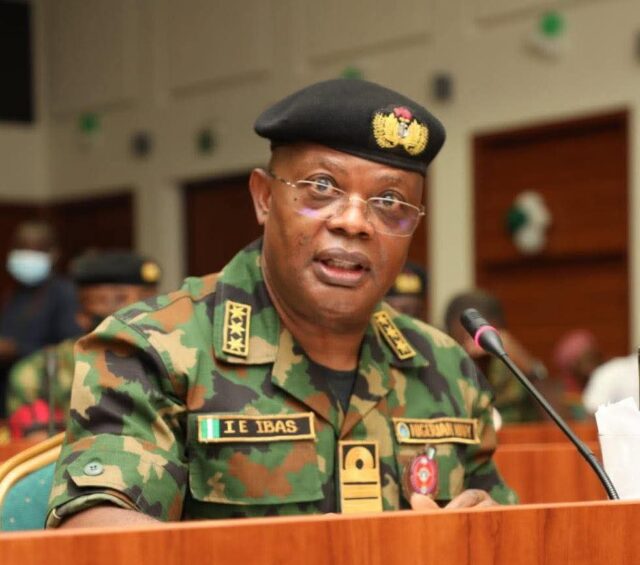
Vice Admiral Ibok-Ete Ekwe Ibas (retd.), the Sole Administrator of Rivers State, has approved the appointment of administrators for all 23 Local Government Areas (LGAs) in the state, despite a recent Federal High Court order that restrained him from making such appointments.

This announcement came less than 24 hours after the court’s ruling.

The appointments, along with the reconstitution of previously suspended boards of agencies, commissions, and parastatals, were disclosed in a Special Government Announcement issued by the Secretary to the State Government (SSG), Prof. Ibibia Worika, on Wednesday morning.

“His Excellency The Administrator of Rivers State, Vice Admiral (Rtd) Ibok-Ete Ekwe Ibas CFR, has approved the appointments of administrators for the 23 Local Government Areas of Rivers State,” the statement said.

“He has also approved the reconstitution of some boards of agencies, commissions, and parastatals, earlier suspended. All appointments take effect from Monday, the 7th of April 2025.”

This move has raised concerns given the ongoing legal uncertainty surrounding it.

On Tuesday, Justice Adam Muhammed of the Federal High Court in Port Harcourt, in the case of suit no. FHC/PH/CS/46/2025, granted an interim order that prohibited the Sole Administrator from making such appointments.

The suit was filed by a civic group, PILEX Centre for Civic Education Initiative, led by Courage Msirimovu.

Msirimovu spoke to the press, expressing his displeasure with the Administrator’s decision to go ahead with the appointments despite the court’s order.

“This is a blatant disregard for the rule of law,” Msirimovu remarked.

“We are witnessing a dangerous trend where court orders are treated as mere suggestions. This undermines the very fabric of democracy and governance.”

In a further administrative shakeup, Ibas also nullified all ongoing procurement and tender processes conducted by Ministries, Departments, and Agencies (MDAs) within the state.

According to a prior statement from the SSG, this cancellation was a result of the absence of an appropriation law following a recent Supreme Court judgment.

“All MDAs that carried out such tender processes are directed to refund the fees collected from contractors immediately,” the statement added.

Just last week, Ibas suspended all heads of MDAs in the state with immediate effect. Analysts view this move as part of a broader effort to consolidate administrative control.

The administrators for the 23 Local Government Areas of Rivers State include:
1. Mr Okroiyobi Animiete – Abua/Odual LGA
2. Mr Goodluck M. Ihenacho – Ahoada East LGA
3. Mr Promise Jacob – Ahoada West LGA
4. Dr Tamunotonye Peters – Akuku Toru LGA
5. Surveyor Atajit Francis – Andoni LGA
6. Barrister Ibiapuve Charles – Asari Toru LGA
7. Mr Kingsley N. Banigo – Bonny LGA
8. Dr Sokari Ibifuro Francis – Degema LGA
9. Dr Gloria Obo Dibiah – Eleme LGA
10. Barr Franklin P. Ajinwon – Emohua LGA
11. Dr Onyemachi S. Nwankwor – Etche LGA
12. Prof. Gospel G. Kpee – Gokana LGA
13. Mr Isaiah Christian Nobuawu – Ikwerre LGA
14. Dr Barinedum Nwibere – Khana LGA
15. Dr Clifford Ndu Walter – Obio Akpor LGA
16. Dr Chukwuma Aje – Ogba/Egbema/Ndoni LGA
17. Eliel Owubokiri – Ogu/Bolo LGA
18. Mr Thompson Isodiki – Okrika LGA
19. Manager Ikechi Wala – Omuma LGA
20. Mr Fred Apiafi – Opobo /Nkoro LGA
21. Eletuuo Ihianacho – Oyigbo LGA
22. Dr Sam Kalagbor – Port Harcourt LGA
23. Mr Nuka O. S. Gbipah – Tai LGA

Google search engine

Bandits Chained Me For 30 Days, Killed My Wife In My Presence – National Assembly Director


Michael Adesiyan, a Deputy Director at the National Assembly Commission, shared his terrifying experience on Tuesday after spending more than a month in captivity with bandits.

Adesiyan, alongside his wife, was abducted from their home in Chikakore, a suburb of Kubwa in Abuja, on January 26, 2025.

He was rescued on April 7 after enduring 32 days in the bandits’ hideout.

Speaking to reporters at the National Counter-Terrorism Centre in Abuja, where 60 recently rescued victims were presented to the National Security Adviser, Nuhu Ribadu, Adesiyan recounted the harrowing ordeal.

Adesiyan urged the federal government to take steps to disarm and educate the criminals, suggesting that reintegration into society could help resolve the issue.

He noted that many of the bandits involved in the kidnapping were young, uneducated, and unaware of the consequences of their actions.

According to Adesiyan, the bandits were between the ages of 17 and 20 and were “stark illiterates” who did not even know how to count large sums of money.

Despite the huge ransom they demanded, he said they were completely unaware of the scale of their demands.

“I want to thank the government for rescuing us. I was chained for 32 days. I want to advise that the government should find a way to disarm or arrest them (the bandits), instead of confronting them,” Adesiyan said.

“They can send them to school. Some cannot even count one million. They are stark illiterates. They are young people of ages 17 and 21. They don’t know what they are doing,” he continued.

Adesiyan called for a focus on re-educating and re-orienting these young bandits, saying that they should be given the opportunity to learn a trade and be reintegrated into society rather than simply being killed.

“So if they can bring them out, if they want to learn a trade, they can let them do that, retrain them, reorient them, so that they can be useful to themselves,” he added.

When asked why the bandits were so insistent on receiving ransom payments, Adesiyan explained, “when they kill someone in your presence, you would give them anything they want. For instance, they killed my wife in my presence. If they request for your head in that situation, you will give it to them.”

Ishaya Kuka, the brother of Catholic Bishop of Sokoto Diocese, Rev. Fr. Matthew Kukah, was another of the 60 rescued victims.

Sharing his own story, Kuka expressed how close he came to losing his life.

“Thank God for what we did yesterday. Frankly speaking, I was already out of my mind, thinking I wasn’t going to see this world again due to how they were treating us in the bush. In the bush, we suffered too much. They used to chain us, two of us. If you are going to relieve yourself, you move with the other one,” Kuka said.

Kuka also explained the pressure the kidnappers exerted on their victims to pay ransom.

“About this money, people are saying they are not supposed to be giving money. It’s because of the pressure they are putting on you. If they beat you in the bush, it will make you say you’ll give money. Because if they discover that you don’t want to open your mouth and say you will give money, they will kill you. They will beat you. So, the pressure will be too much, and you would have to give,” he said.

Kuka expressed gratitude to the federal government for the rescue operation, stating, “It is because of the federal government we are out, if not, up till now, we would still be in the bush. So, we thank you very much for what you have done for us. God bless, thanks.”

Maj. Gen. Adamu Laka, the Coordinator of the National Counter-Terrorism Centre, provided details on the operation, stating that the 60 victims, which included 35 males and 25 females, were rescued on April 7 by troops from the 1st Division of the Nigerian Army.

The rescue operation was supported by other security and intelligence agencies.

Google search engine

US Imposes Tariffs On Nigeria Amid Trade Tensions Over Import Restrictions


The United States has expressed its disapproval of Nigeria’s ban on a wide range of imported goods, stating that it not only hinders American exports but also exacerbates trade tensions between the two countries.

The U.S. Trade Representative (USTR) has included the restrictions, which affect items such as beef, poultry, fruit juice, pharmaceuticals, and spirits, among the top ten unfair trade practices imposed by foreign nations.

This ban, which covers 25 product categories, includes significant U.S. export interests, including agricultural products like beef, poultry, and pork, as well as pharmaceuticals, fruit juice, and alcoholic beverages.

In a post on its official X account, the USTR stated: “These policies create significant trade barriers that lead to lost revenue for U.S. businesses looking to expand in the Nigerian market.”

Nigeria joins a list of countries, including India, Thailand, Kenya, Algeria, and the European Union, which the U.S. accuses of maintaining restrictive policies that prevent billions of dollars in potential American exports.

The USTR noted the negative impact this ban has on U.S. businesses, particularly those in agriculture, healthcare, and consumer goods.

The ban directly affects U.S. exporters of agricultural goods like meat and poultry, as well as processed products such as fruit juice and alcoholic drinks.

Pharmaceuticals and medicaments, which are also on the list, reduce opportunities for U.S. healthcare companies trying to enter or grow in Nigeria.

“These policies not only reduce export opportunities but also undermine the global competitiveness of U.S. industries,” the USTR added.

In a related development, the U.S. implemented reciprocal tariffs on several countries, including Nigeria, on Wednesday.

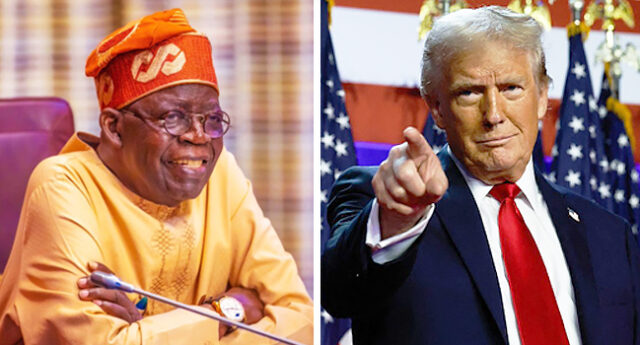
Washington imposed a 14% tariff on Nigeria’s exports, although President Bola Tinubu’s administration has chosen not to retaliate.

Commenting on this, Senior Market Analyst at FXTM, Mr. Lukman Otunuga, stated that it remains unclear whether the Nigerian government’s decision to refrain from retaliation was a strategic move to prevent further tariffs from the U.S.

In his statement, Otunuga explained: “Nevertheless, these tariffs may impact growth, considering that Nigeria’s exports to the U.S. typically range between $5-6 billion annually.”

“While one could argue that Nigeria is somewhat insulated due to the fact that over 90% of its exports are crude oil and gas products, growing concerns surrounding the U.S.-China trade war and its potential to push the global economy into a recession present significant risks for emerging markets,” he added.

Furthermore, Otunuga pointed out that Nigeria remains vulnerable to fluctuating oil prices.

Last week, Brent and WTI crude experienced their steepest weekly losses in over a year.

Oil prices are under pressure due to ongoing trade tensions and a large supply boost announced by OPEC+. As a result, crude oil has dropped over 13% this month, bringing year-to-date losses to nearly 15%.

This decline in oil prices could complicate the Nigerian government’s ability to implement its 2025 budget, which was based on oil prices of $75 per barrel.

“The sharp sell-off in oil prices could lead to further challenges for the Naira, which has already been one of the worst-performing emerging market currencies. The Naira has depreciated by 4% against the dollar year-to-date and could face additional losses if lower oil prices result in falling foreign exchange reserves,” Otunuga warned.

Regarding inflation, Nigeria is set to release its latest inflation figures in mid-April.

The annual inflation rate fell to 23.2% in February, the lowest level since June 2023, while food inflation also decreased to 23.5%, its lowest since September 2022.

Otunuga noted that while this drop in the Consumer Price Index (CPI) is partly attributed to a technical adjustment, further signs of cooling price pressures could spark discussions about potential rate cuts by the Central Bank of Nigeria (CBN) in the second half of 2025.

Google search engine

Presidency Slams Ndume Over Criticism Of Appointments, Labels Him ‘Rabble Rouser’


The Presidency has hit back at Senator Ali Ndume, accusing him of hypocrisy and labeling him a “rabble rouser” for his comments regarding President Bola Ahmed Tinubu’s appointments.

Ndume had criticized the President’s appointments, claiming they were lopsided and violated the constitutional principles of Nigeria.

In an interview, the Borno senator argued that the appointments were skewed and unfairly distributed.

Responding on his official X account, Bayo Onanuga, the Special Adviser to the President on Information and Strategy, dismissed Ndume’s statements as hypocritical and selective.

He wrote: “Senator Ali Ndume’s latest outburst on TV about so-called ‘lopsided appointments’ by President Bola Ahmed Tinubu reeks of hypocrisy and selective perception.”

Onanuga emphasized that the President’s appointments are grounded in merit, integrity, geographical representation, and the capability to serve the people of Nigeria, and not based on Ndume’s “cherry-picked tribal arithmetic.”

He urged the senator to engage in more responsible public discourse, pointing out that such criticisms served only to mislead the public.

“This is a disservice to the nation and the behaviour least expected from a Nigerian Senator,” Onanuga added.

He further pointed out Ndume’s selective stance on fairness, noting, “While the Borno senator grandstanded as a moral authority on equity, he forgot to tell his interviewer that two of his kinsmen featured in recent NNPC Limited top appointments.”

“The Chairman, appointed by President Tinubu, is from Ndume’s senatorial district. If Tinubu and his surrogates’ choices are so ‘tribal,’ how did two of Ndume’s kinsmen clinch NNPC’s top roles?”

Onanuga accused Ndume of prioritizing publicity over facts, stating, “As a politician, Ndume has proven time and time again that he is allergic to facts and addicted to theatrics.”

“His habit of firing half-baked criticisms—only to be contradicted by facts—proves he’s more interested in headline-chasing, rabble rousing, stoking divisive narratives than offering constructive criticism.”

The Presidential aide concluded by reaffirming President Tinubu’s commitment to an inclusive government, stating, “President Tinubu is deeply committed to fostering a government that embraces all Nigerians, irrespective of their ethnic or regional affiliations. He aims to harness our nation’s diverse strengths to achieve a common goal: building a prosperous Nigeria.”

Google search engine

Court Bars Rivers Sole Administrator From Appointing Caretaker Chairmen


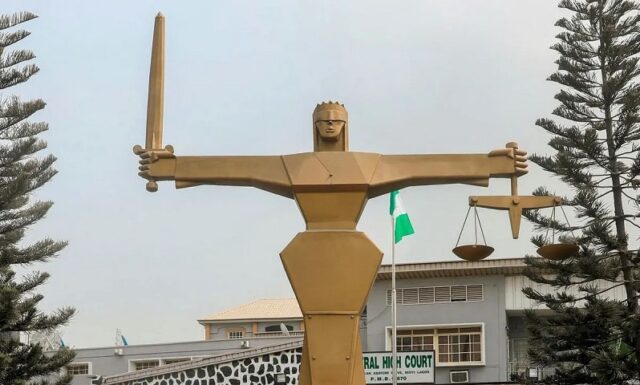
A Federal High Court in Port Harcourt, Rivers State, issued a restraining order on Tuesday, preventing the state’s Sole Administrator, Vice Admiral Ibok-Ete Ibas, from appointing sole administrators to manage the 23 local council areas in the state.

The court order was made in a case filed under Suit No. FHC/PH/CS/46/2025 by the PILEX Centre for Civic Education Initiative, led by Courage Nsirimovu, against the Sole Administrator in his official capacity.

The ex parte motion, filed on March 28, 2025, sought several reliefs, with the primary request being an interim injunction to restrain the respondent or his agents from appointing a sole administrator or any other title for the 23 local government areas.

The motion also included a request for any additional orders deemed appropriate in the circumstances.

Justice Adamu Turaki, the presiding judge, found sufficient grounds to grant the reliefs and set April 14, 2025, for further hearing.

The tenures of the elected local council chairmen, who served under former Governor Nyesom Wike, expired in June 2023, though they obtained term extensions through the support of 27 lawmakers loyal to Wike.

After the expiration of their terms, suspended Governor Siminalayi Fubara dissolved the councils and appointed caretaker chairmen.

Both political factions started vying for control over the local governments, knowing their significant role in the political power structure of the state and beyond.

The Rivers State Independent Electoral Commission (RSIEC) had scheduled local elections for October 5, 2024, but the Wike-backed faction of the All Progressives Congress (APC) took RSIEC to court.

Despite the lawsuit, the election proceeded as planned.

When the case concluded at the Supreme Court on February 28, 2025, in favor of the Wike-backed APC led by Tony Okocha, the governor removed the previously elected chairmen, who had been nullified, and instructed heads of local council administration to oversee affairs until a fresh election was held.

This move was opposed by Okocha and the Martin Amaewhule-led faction of defected lawmakers, who launched an effort to remove the RSIEC chairman.

It was at this juncture that a State of Emergency was declared and a sole administrator was appointed.

Fearing that the Sole Administrator might appoint caretakers to oversee the LGAs in a manner inconsistent with the constitution, the lawsuit became the most viable legal recourse.

Google search engine

Fubara’s Chief Of Staff Files N2 Billion Libel Suit Against Former Rivers Head Of Service, Channels TV


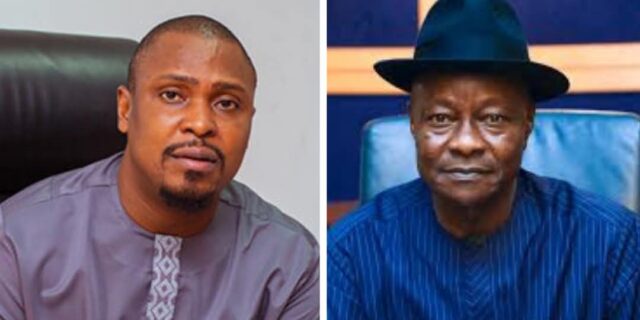
Edison Ehie, Chief of Staff to the suspended Rivers State Governor, Siminalayi Fubara, has filed a N2 billion libel suit against Dr. George Nwaeke, the former Rivers State Head of Service, and Channels Incorporated Limited, the parent company of Channels Television.

The lawsuit, which was filed at the Rivers State High Court in Port Harcourt, stems from allegations aired on Channels Television on March 29.

In the broadcast, Nwaeke accused Ehie of orchestrating the fire that destroyed the Rivers State House of Assembly complex, among other claims.

According to a report by SaharaReporters in March, Nwaeke also accused Governor Fubara of sponsoring explosions at several oil facilities in the state.

He further alleged that Fubara masterminded the burning of the Rivers State House of Assembly complex in an attempt to avoid his impeachment.

Nwaeke claimed that during the political unrest, Fubara instructed his then Chief of Staff, Edison Ehie, to set fire to the Assembly complex to prevent the impeachment.

He also alleged that he personally witnessed money being handed over for the operation at the Government House.

Ehie, who had vehemently denied Nwaeke’s allegations, filed the suit through his legal team, demanding N2 billion in general damages.

He argued that the televised accusations were unfounded and severely damaged his reputation, character, and public image.

Describing the broadcast as “false and most disparaging,” Ehie asserted that the statements exposed him to public scandal, ridicule, and contempt, as reported by The Nation.

In addition to seeking monetary compensation, Ehie is requesting a perpetual injunction to prevent the defendants from further broadcasting or distributing the libelous statements.

He is also demanding a public retraction and formal apology from both defendants, which should be aired on Channels TV, another national television network, and published in two widely circulated Nigerian newspapers.

Presiding over the case, Justice Jumbo Stephens granted permission for substituted service on the first defendant, Dr. Nwaeke, by pasting court documents at his residence on No. 10 Olumeni Street, Old GRA, Port Harcourt.

The court also ordered that the suit be served via publication in a national daily newspaper with a broad readership in Abuja and across Nigeria.

The case was adjourned to April 10 for proof of service.

Google search engine

Group Begins Recall Process Against Ebonyi Senator Over Conduct In Akpabio-Natasha Scandal

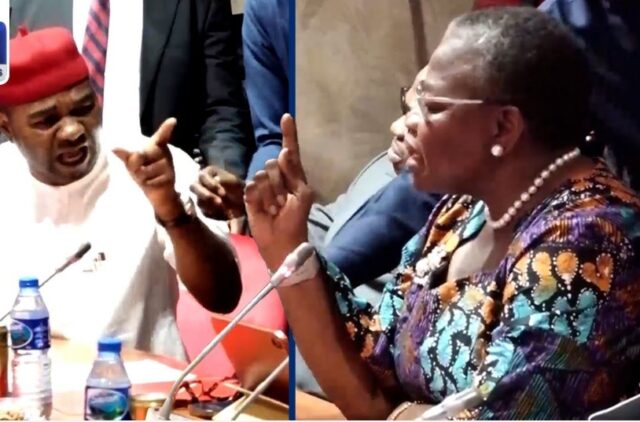
Senator Nwebonyi and Dr. Oby Ezekwesili, 

The Association of Ebonyi Indigenes Socio-Cultural in the Diaspora (AEISCID) has issued a stern warning to Senator Onyekachi Nwebonyi, representing Ebonyi North Senatorial District, over his controversial remarks and actions in the ongoing scandal involving Senate President Godswill Akpabio and Senator Natasha Akpoti-Uduaghan.

In a strongly worded statement released in Abuja on Tuesday, the group’s President (Worldwide), Paschal Oluchukwu, condemned Nwebonyi’s behavior, calling it “un-parliamentary, unwholesome, and unbecoming of a legislator by every known standard.”

Oluchukwu criticized the Senator for his repeated media appearances and verbal attacks on individuals calling for a full investigation into the sexual harassment allegations made by Senator Akpoti-Uduaghan against the Senate President.

He argued that Nwebonyi’s defense of Akpabio reflected a fundamental misunderstanding of his duties as a lawmaker.

“We have watched, read, and listened with deep concern to the heedless outbursts of one of our sons, Senator Onyekachi Nwebonyi,” the statement read.

“It is both shocking and embarrassing that an ordinarily distinguished senator would resort to verbally attacking respected Nigerians, including Dr. Oby Ezekwesili and the character of Senator Natasha Akpoti-Uduaghan, in a desperate bid to shield the Senate President from public scrutiny.”

The group initially considered remaining silent but was prompted to speak out due to Nwebonyi’s ongoing “media umbrages,” which, they said, reflect poorly on Ebonyians as a whole.

“For whatever it is worth, Senator Nwebonyi’s outbursts in defense of the accused—almost crying more than the bereaved—leave much to be desired. He has carried himself in a manner that brings shame to his office and ridicule to Ebonyians as a whole,” the statement continued.

AEISCID further questioned Nwebonyi’s abandonment of his legislative duties, accusing him of reducing himself to a “bag-carrying thug” for a colleague who is “merely ‘first among equals.’”

“What has been promised or offered to Nwebonyi that has made him reduce himself—and by extension the image of Ebonyi—to such an undignified level? His name-calling, limitless defenses, and unprovoked attacks on those lawfully demanding accountability and condemning the suspension of Senator Natasha are disgraceful,” Oluchukwu added.

The group also raised concerns over rumors suggesting a political deal related to the 2027 governorship race in Ebonyi State.

It is believed that Nwebonyi may have been “tipped” by the ruling party to replace the incumbent governor, Francis Ogbonna Nwifuru—a possibility the group firmly rejected.

“Ebonyi cannot continue to be governed by the worst among us, even under the guise of zoning or equity. With his conduct in the 10th National Assembly, Senator Nwebonyi has already disqualified himself from any such consideration,” AEISCID stated.

The group concluded by urging constituents in Ebonyi North to begin a recall process if the senator continues down what they described as a “disgraceful expedition.”

“Enough should be enough,” the statement declared.

Google search engine

Africa’s Economic Renaissance Depends On Trade, Not Aid – Governor Mbah


Governor of Enugu State, Dr. Peter Mbah, has called on Africa to focus on strengthening regional collaboration and trade facilitation, emphasizing that the continent’s economic revival hinges on extensive trade rather than relying on charity.

Mbah, who firmly stated that Africa has all the resources needed to create its own opportunities rather than waiting for invitations, urged the continent to fully harness the potential of intra-Africa trade and the opportunities provided by the African Continental Free Trade Area (AfCFTA).

The governor made these remarks on Tuesday while delivering the closing address at the session titled “The Africa Opportunity: Regional Collaboration and Trade Facilitation,” on the second and final day of the 2025 Commonwealth Enterprises and Investment Summit in London.

The session focused on how Africa can leverage its 1.3 billion population to drive trade and investment growth.

Mbah noted that the need for such integration and trade facilitation has never been more pressing due to the numerous global and existential challenges the continent faces.

“Such a large population, plus Africa’s combined GDP of $3.4 trillion and the fact that the continent has 65 per cent of the world’s uncultivated arable land means Africa should actually be building the table – and not waiting to be invited to the table,” he said.

He went on to highlight that one of the major challenges is translating Africa’s vast potential into tangible economic growth that directly benefits its people.

He identified intra-Africa trade as a solution, emphasizing that this was one of the core purposes of the AfCFTA.

“The World Bank estimates that AfCFTA could lift 30 million people out of extreme poverty, raise incomes for 68 million people, and boost Africa’s income by $450 billion by 2035. That is about 10 years from now,” Mbah explained.

However, he expressed concerns that many of the goals set by AfCFTA, such as the removal of tariffs and non-tariff barriers, remain unfulfilled.

He pointed out the troubling reality of Africa’s annual $40 billion expenditure on food imports and questioned how such spending could be rationalized.

“The dream of a continent-wide common market remains as yet elusive. Despite our frameworks, deep-rooted structural barriers still exist: Only 14.4 per cent of Africa’s trade is intra-African, compared to 69 per cent in Europe and 59 per cent in Asia,” he said.

Mbah also highlighted the logistical challenges hampering trade across Africa. “Just seven per cent of Africa’s trade moves by air, yet we still face the highest intra-continental flight costs in the world.”

“Over 70 per cent of goods are transported by road — but poor road infrastructure and border bottlenecks cost us over $4 billion annually in lost trade,” he added.

“Maritime transport is underutilized. Only one in ten African countries has a major port efficiently connected to inland markets. Rail systems – our most cost-effective bulk trade option — remain disconnected or outdated across most of the continent.”

Despite these challenges, Mbah remained optimistic, pointing out that Europe’s Single Market took over 35 years to materialize, urging Africa to learn from the European Union’s experience.

“It is not all doom and gloom. The EU did not just talk integration. They backed it with laws, infrastructure, and political commitment. Africa can learn from this,” he said.

“We cannot talk about building a common market when we are not yet connected — physically or digitally.”

Mbah stressed the importance of action, stating, “The question is not what is wrong, but what must be done.”

He identified several key areas for improvement, including the need for a unified legal and regulatory framework to harmonize trade rules, streamline procedures, and boost cross-border business confidence.

“Investing in the enablers is critical – transport corridors, smart ports, cross-border rail, digital payments, efficient customs, and unified standards.”

“No nation ever rises above the sheer capacity of its human capital. It will necessarily entail fixing our education system. This is a development imperative,” Mbah said.

He concluded by stressing the importance of Africa uniting its markets, infrastructure, and aspirations for the continent’s economic growth.

“AfCFTA is not a feel-good creation. Let us not allow regionalism to become a barrier to pan-African growth. Let us unite our markets, our ports, our rails, and our ambitions,” Mbah asserted.

“So, the message deductible from the discussions this afternoon is that Africa’s economic renaissance lies in extensive trade – not aid or charity. Let us turn potential into performance. The time is now,” he concluded.

It should be noted that on the first day of the summit, Mbah had chaired the State Governors Roundtable session, where he presented investment opportunities in Enugu State to global leaders and investors.

Google search engine

Gale Of Defection: Enugu Labour Party Faces Mass Exodus After Edeoga’s Departure, Another Lawmaker Joins PDP


Enugu State is witnessing a political earthquake as the Labour Party (LP) continues to lose key figures, further depleting its once stronghold in the state, barely a few days after the party’s governorship candidate in the 2023 general election, Barr. Chijioke Edeoga, dumped the party and returned to the People’s Democratic Party (PDP).

The latest blow to the party came on Tuesday, when Hon. Gabriel Lebechi Eze, member representing Isi-Uzo State Constituency in the Enugu State House of Assembly, announced his resignation from the Labour Party and his defection to the ruling People’s Democratic Party (PDP).

Eze, a long-time ally of Barr. Chijioke Edeoga, followed his leader’s footsteps.

This move unleashed a wave of defections, signaling the unraveling of Labour Party’s influence across the state.

Eze’s defection comes after the party had already lost several members, shrinking their presence in the State House of Assembly from 5 to just 4 members.

The political fallout has been swift.

In the 2023 general elections, the Labour Party had won 14 seats in the Enugu State House of Assembly, but the party’s numbers have steadily dwindled.

DAILY GAZETTE recalls that two seats were lost through the courts, and six more legislators earlier defected to the ruling PDP.

Eze’s exit further compounds the party’s struggles, leaving many wondering if the Labour Party will be left with any representation in the Assembly at all.

In his statement, Eze criticized the internal divisions within the Labour Party, specifically the ongoing leadership struggles between Julius Abure and Nenadi Usman at the national level, and the factions in Enugu State led by figures such as Barr. Casmir Agbo.

Eze called the situation “irreconcilable,” explaining that the party was unable to present a united front, which prompted his decision to leave.

Furthermore, Eze expressed his admiration for Enugu’s Governor, Peter Mbah, praising his transformative efforts and promising his support to the PDP.

According to Eze, his defection would help further the cause of his constituency, suggesting that his alignment with the ruling party would bring more opportunities for development.

Political analysts view the defections as a major setback for the Labour Party in Enugu State, with the possibility of a complete collapse of its legislative presence looming large.

As the dust settles, the question is whether the party can recover from the mass exodus of its members.

For now, the Enugu political arena remains in flux, with the ruling PDP seemingly gaining ground at the expense of the Labour Party.

The coming days could be crucial in determining whether the Labour Party can salvage its position or if it will be relegated to the political sidelines in Enugu State.

Google search engine

MOST COMMENTED

- Advertisement -
Google search engine