Home Blog Page 706

Former Kwara Governor Misappropriated SUBEB’s N5Bn Grant – Witness Tells Court

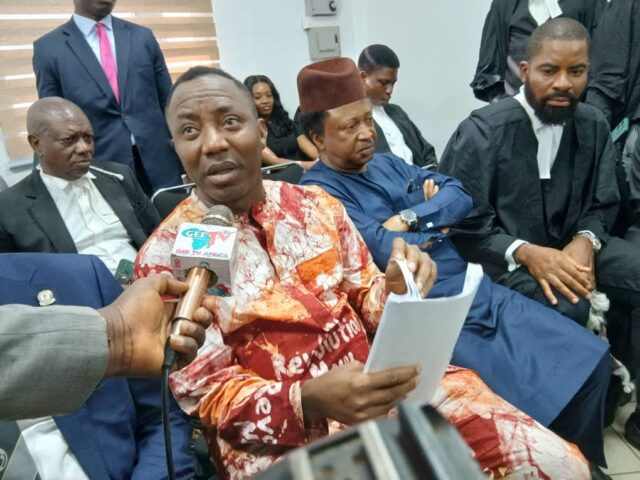
In the ongoing trial of Kwara State’s former governor, Mallam Abdulfatah Ahmed, the Economic and Financial Crimes Commission (EFCC) has presented testimony revealing how the ex-governor allegedly misappropriated the N5 billion grant meant for the state’s Universal Basic Education Commission (UBEC) projects.

The trial, which also involves Ahmed’s Finance Commissioner, Ademola Banu, centers on the alleged theft and mismanagement of public funds amounting to N5.78 billion.

The two men stand accused of conspiring to steal funds allocated for teachers’ salaries, as well as for security and infrastructure projects under the State Universal Basic Education Board (SUBEB).

On Wednesday, the case resumed before Justice Mahmud Abdulgafar of the Kwara State High Court in Ilorin.

While both Ahmed and Banu pleaded not guilty to the charges, they were granted bail, and the case was adjourned for further proceedings.

During the hearing, the EFCC presented its first Principal Witness (PW1), Abubakar Hassan, an Assistant Director of Finance at UBEC.

Hassan testified that the Kwara State Government, under Governor Abdulfatah Ahmed, diverted around N5 billion meant for various educational projects between 2013 and 2015.

Hassan, led in evidence by EFCC counsel Rotimi Jacobs, explained that the matching grant funds from UBEC were designated for the development of primary and junior secondary schools.

“The Matching Grant Funds from UBEC are meant to provide certain infrastructural facilities for students in primary and junior secondary schools. These facilities include the construction of schools, provision of laboratories, construction of toilets, water and sanitation, and cultural education,” Hassan said.

Hassan went on to outline the procedure for obtaining such grants, stating, “UBEC law provides that the Chairman of the State Universal Basic Education Board, its Executive Secretary, and the Director of Finance are signatories to Matching Grant Accounts. The account is opened with any commercial bank or the Central Bank of Nigeria.”

The witness further revealed that the state government received substantial grants for the years 2013 to 2015, totaling about N5 billion.

“The Commission made lodgments for 2013, 2014, and 2015, leading to the state receiving Matching Grants of about N2 billion for 2013, N876 million for 2014, and N982 million for 2015, totaling about N5 billion,” Hassan stated.

However, Hassan’s investigation uncovered significant discrepancies in how the funds were used. “Implementation of the 2013 Action Plan had commenced, and contractors were mobilized to sites.

However, during our project monitoring exercise, we discovered that funds for the 2013 projects had been diverted by SUBEB. About N2 billion was diverted,” Hassan testified.

Upon discovering the diversion, Hassan said that a project monitoring committee report was submitted to Kwara SUBEB with recommendations for corrective action.

However, no response was received. Consequently, UBEC sent formal requests to banks, asking them to return the funds meant for the 2014 and 2015 projects.

Hassan added that no projects were initiated in 2016, 2017, and 2018 because the state government failed to comply with the initial recommendations concerning the diverted funds.

He stressed that UBEC’s law placed the responsibility for the management of the funds solely on SUBEB, with no involvement from the state governor or any other external party.

The court adjourned the hearing until February 17, 2025, for further proceedings in the case.

Google search engine

Gov. Abiodun Presents 2025 Budget Of N1.055 Trillion To Ogun Assembly

Ogun State Governor, Prince Dapo Abiodun, on Wednesday presented the 2025 Appropriation Bill of N1,054,542,020,147.47 to the Ogun State House of Assembly.

The bill, which is set at over N1 trillion, is divided into N453.56 billion for recurrent expenditure and N600.98 billion for capital expenditure.

The Governor made the presentation during a plenary session presided over by Speaker, Rt. Hon. Oludaisi Elemide.

Prior to the presentation, Abiodun had inaugurated the newly refurbished State Assembly Complex, originally built more than 45 years ago.

The 2025 budget is aptly named the “Budget of Hope and Prosperity,” reflecting the governor’s vision for the state’s growth.

In his budget breakdown, Governor Abiodun revealed that N120.14 billion has been allocated for personnel costs, with N37.49 billion set aside for consolidated revenue costs.

Additionally, N76.07 billion will be used to service public debt, while N219.86 billion is earmarked for overhead costs.

The capital expenditure will see the lion’s share with N600.98 billion allocated for infrastructure development.

Abiodun provided a sectoral allocation of the budget, with the education sector receiving the highest allocation of N177.835 billion, which represents 17% of the total budget.

The health sector follows with N134.538 billion, or 13%, while housing and community development gets N66.382 billion (6%).

The agriculture and industry sectors each receive N65.38 billion, also 6%, and infrastructure development is allocated N284.4 billion, or 27% of the budget.

Other allocations include N25.27 billion for recreation, culture, and religion, N39.83 billion for social protection, N46.86 billion for the executive public service, and N42.28 billion for financial and fiscal affairs.

A total of N26.44 billion has been set aside for public order and safety, while economic affairs and the judiciary have been allocated N5.97 billion and N10.54 billion, respectively.

The legislature will receive N21.18 billion, and N104.6 billion has been designated for statewide expenditures.

Governor Abiodun emphasized that the 2025 budget aims to tackle the state’s challenges by aligning with the Ogun State Economic Development Plan and Strategy (2021-2025).

He stated that the budget will focus on fiscal sustainability, human development, food security, a business-friendly environment, energy sufficiency, transport infrastructure, and industrialization with a special focus on Small and Medium Enterprises (SMEs).

“This budget strives to balance fiscal responsibility with improved public service delivery, ensuring resources are used effectively to maximize prosperity for all, by addressing immediate issues like unemployment and poverty while investing in long-term growth. It aims to inspire hope, foster unity, and strengthen public trust in the government’s ability to manage resources responsibly and guide the state toward a more equitable and sustainable future,” Abiodun remarked.

Governor Abiodun also provided an update on the performance of the 2024 budget, noting that the state had achieved 79% of its prorated revenue target and 56% of its expenditure target.

This, he said, highlighted the state’s financial reliability and its growing fiscal base.

The Speaker, Rt. Hon. Oludaisi Elemide commended Governor Abiodun for his administration’s infrastructure projects, particularly the renovation of the State Assembly Complex, which has improved the working conditions of the lawmakers and staff.

He praised the governor for his ongoing legacy projects, including the Agro Cargo International Airport, the Remo Special Agro-industrial Processing Zone, and road infrastructure.

Elemide also highlighted the legislative efforts in the past 18 months, mentioning the passage of 14 bills and 32 motions, as well as conducting oversight functions across Ministries, Departments, and Agencies (MDAs).

He called for financial autonomy for the state legislature to enhance the efficiency of its functions and further acknowledged the improved welfare of the Assembly’s staff.

In closing, Elemide reiterated the importance of the 2025 Appropriation Bill as a roadmap for the state’s socio-economic development.

He assured that the Assembly would continue to work in cooperation with the executive to ensure the successful passage and implementation of the budget.

The budget presentation was attended by several dignitaries, including the Deputy Governor, Engr. Noimot Salako-Oyedele, Secretary to the State Government, Mr. Tokunbo Talabi, former deputy governors, members of the State Executive Council, party stalwarts, and traditional rulers from across the state.

Google search engine

Two Perish In Bauchi Truck Accident

A tragic accident in Bauchi State has claimed the lives of two individuals when a truck transporting cattle to Gadar-Maiwa Market overturned and fell into a stream.

The incident, which occurred on Monday morning, was reportedly caused by the truck hitting a pothole, which led to a burst tyre and subsequently caused the vehicle to flip.

Several cattle were also killed in the crash, while others sustained severe injuries.

The high speed of the truck and its condition at the time of the accident likely contributed to the extent of the damage.

Efforts to reach the spokesperson for the Bauchi State Federal Road Safety Corps (FRSC) for further comments have been unsuccessful, as calls and messages went unanswered.

Google search engine

Borno Governor Approves N730m Scholarship For 26,888 Students

Borno State Governor, Professor Babagana Zulum, has approved N730 million in scholarships for 26,888 indigenous students enrolled in various institutions across the country.

The scholarship funds were officially handed over to the Borno State Scholarship Board in a ceremony at the Ministry of Education’s Conference Hall on Monday by the state’s Commissioner for Education, Science, Technology, and Innovation, Engr. Lawan Abba Wakilbe.

Wakilbe stated that the scholarship scheme will benefit the 26,888 undergraduate students and that payments will begin immediately.

He further highlighted that the Zulum administration has allocated over N8 billion for scholarships in 2024 alone, covering students both within Nigeria and abroad.

The commissioner encouraged the students to work diligently to merit the government’s substantial investment in their education and emphasized the importance of ensuring accurate bank details to avoid payment issues.

He also urged students to take advantage of additional funding opportunities, including the Nigerian Education Loan Fund (NELFUND).

Abdullahi Umara, the National President of the National Union of Borno State Students (NUBOSS), expressed deep appreciation to Governor Zulum for his ongoing commitment to the education sector and for providing crucial financial support to students.

Google search engine

NSCDC Nabs Informant-Turned Kidnapper In Kwara

The Kwara State Command of the Nigeria Security and Civil Defence Corps (NSCDC) has arrested Abu Usman Soja, an informant linked to a recent kidnapping incident in Ajase-Ipo, Irepodun Local Government Area.

The suspected kidnappers abducted a woman and her two children on November 7, 2024, but later released the mother, leaving her two children in captivity.

According to reports, Soja assisted the kidnappers by providing information to facilitate the abduction and was also responsible for contacting the family of the victims using his phone.

The arrest was confirmed by the NSCDC State Commandant, Dr. Umar Muhammed, who stated that Soja’s accomplices, who are still at large, were the ones who physically carried out the kidnapping.

Google search engine

Zimbabwe Court Approves Abortion For Rape Victims, Minors

Zimbabwe’s High Court has ruled that women who are raped by their husbands and girls under 18 should have access to abortion services.

The ruling, delivered on November 22 by Judge Maxwell Takuva, challenges the country’s restrictive abortion laws, which previously prohibited abortion in such cases.

Judge Takuva emphasized that, since Zimbabwe’s laws criminalize marital rape and sex with minors, victims of these crimes should be allowed to terminate pregnancies resulting from such abuse.

He described the situation as “torture, cruel and degrading treatment” for a child to carry a pregnancy, give birth, or be forced to undergo an illegal abortion under distressing circumstances.

While the government did not oppose the case brought by a women’s rights group, the ruling will require approval from the Constitutional Court before it becomes legally binding.

Takuva’s decision underscores the critical issue of teenage pregnancies in Zimbabwe, which often lead to unsafe and illegal abortions, contributing to high maternal mortality rates.

In his judgment, he noted that providing safe, legal abortion services for minors is essential given the widespread problem of teenage pregnancies in the country.

Zimbabwe’s abortion laws are among the most restrictive in the region, permitting abortion only in cases where the mother’s life is at risk, the fetus is severely deformed, or the pregnancy is the result of unlawful sexual acts, such as incest.

However, the laws still deny abortion services to girls under 18, even though the legal age for consensual sex was raised to 18 from 16 in 2021.

Despite these legal restrictions, Zimbabwe sees approximately 77,000 unsafe abortions annually, with many more going unreported.

Cultural norms, poverty, and a lack of access to contraception contribute to a high rate of teenage pregnancies in the country, where nearly one in four girls aged 10 to 19 become pregnant, according to government and UNICEF data.

The ruling is significant in a country where cultural and religious practices often pressure girls into early marriages, with one in three girls marrying before the age of 18.

This situation leaves many girls vulnerable to early pregnancies and, in some cases, coerced marriages with the men responsible for their pregnancies.

Google search engine

SAD: Mother of Late Dowen College Student, Oromoni Dies After Health Complications

Rosemary Oromoni, the mother of Sylvester Oromoni, the 12-year-old Dowen College student who tragically died in 2021 following alleged bullying, has passed away.

She succumbed to complications related to intermittent high blood pressure, according to a source close to the family.

Rosemary died in late November, seven months after a Lagos coroner’s court dismissed the family’s case in April 2024.

Her health had reportedly worsened due to the emotional strain of the prolonged legal battle and the court’s final decision.

Sylvester Oromoni died on November 30, 2021, at Dowen College, Lekki, Lagos.

His family had alleged that five of his schoolmates—Favour Benjamin, Michael Kashamu, Edward Begue, Ansel Temile, and Kenneth Inyang—had physically assaulted him and poisoned him with a toxic substance.

The school, however, denied the accusations, stating that the boy’s injuries were the result of a football accident.

The initial autopsy reported “acute lung injury due to chemical intoxication,” but this was later disputed due to procedural issues.

A second autopsy, conducted by the Lagos Directorate of Public Prosecutions, concluded that Oromoni died of natural causes.

In April 2024, the case was closed, with the coroner ruling that Oromoni’s death was caused by sepsis, a result of an infected ankle injury.

Judge Mikhail Kadiri attributed the tragedy to “parental and medical negligence,” clearing Dowen College and the accused students of any wrongdoing.

The five students were released from juvenile detention in 2022 after being cleared of all charges.

Despite the legal closure, the Oromoni family continued to hold onto their belief that key evidence was ignored during the investigation.

The family even kept Sylvester’s body in a morgue until January 27, 2024, when they buried him as a protest against the findings of the case.

Google search engine

Ekiti Court Remands Dele Farotimi Over Alleged Defamation of Afe Babalola

A Lagos-based human rights lawyer, Dele Farotimi, has been remanded in prison by an Ado-Ekiti Magistrate court following allegations of defamation against Aare Afe Babalola SAN, the founder of Afe Babalola University.

Farotimi was arrested by officers from the Ekiti State Police Command at his Lagos office on Tuesday.

The charges stem from Farotimi’s book, Nigeria and its Criminal Justice System, in which he allegedly accused Aare Babalola of corrupting the judiciary and influencing Supreme Court rulings, thereby causing damage to his reputation and career.

The book, according to the charges, exposed Babalola to public hatred, ridicule, and contempt.

Farotimi pleaded not guilty to the sixteen counts of defamation against him.

Police prosecutor, Samson Osun, requested that Farotimi be remanded in prison custody pending further investigation, citing the need for security maintenance.

However, Farotimi’s defense counsel, Dayo Akeredolu, argued against the remand, urging the court to grant bail on liberal terms, stressing that the case was bailable and that Farotimi, being a well-known figure, posed no flight risk.

He also reminded the court that Farotimi was presumed innocent until proven guilty.

After hearing both sides, Magistrate Abayomi Adeosun ruled to remand Farotimi in custody and adjourned the case for hearing on December 10.

Google search engine

NYSC Withdraws Corps Members From Kwara School After Assault On Female Member

The National Youth Service Corps (NYSC) has withdrawn all Corps members from the Government Day Secondary School in Kulende, Ilorin, Kwara State, following an alleged assault on a female Corps member by some teachers.

The incident occurred when the Corps member was accused of not greeting the teachers properly.

Around 10 Corps members serving in both the junior and senior sections of the school were withdrawn on Monday after the alleged assault, which took place last Thursday.

According to reports, the female Corps member had gone to the school to collect her clearance letter when she was reportedly beaten and stripped by teachers, allegedly because she failed to greet them appropriately.

Eyewitnesses stated that the teachers tore her NYSC white T-shirt and one slapped her.

In response to the incident, the Director-General of NYSC, Brigadier General Y. D. Ahmed, visited the school and ordered the immediate withdrawal of all Corps members to ensure their safety.

The NYSC Public Relations Officer in Kwara, Oladipo Morakinyo, confirmed that the Corps members will remain withdrawn until the investigation into the incident is completed.

The Kwara State government condemned the assault, with the Commissioner for Education and Human Capital Development, Hajia Sa’adatu Modibbo-Kawu, calling it unacceptable.

She assured that appropriate disciplinary actions would be taken against the teacher involved, identified as Mrs. Amuzat Fatima Nike.

“The state government strongly condemns the assault on the Corps member, emphasizing that such actions are not tolerated in Kwara,” the commissioner said.

“Kwara State is known for its peaceful environment, and we will ensure that the peace in our educational institutions is maintained.”

In addition to the condemnation, the state’s Anti-Loitering Team and the Kwara State Teaching Service Commission’s Management Team visited the school to investigate the matter, restoring calm.

An investigation panel has been established to look into the incident, with the state government urging the NYSC and other parties involved to cooperate with the ongoing inquiry.

Google search engine

Tinubu’s Special Adviser, Onanuga Embraces Farming As 33 Million Nigerians Face Hunger Crisis In 2025

As Nigeria grapples with a looming hunger crisis that could affect 33 million people by 2025, Bayo Onanuga, Special Adviser on Information and Strategy to President Bola Tinubu, has taken a personal step to address food insecurity by turning to farming at his home in Lagos.

In a brief 38-second video shared on X, Onanuga is seen tending to vegetables in his makeshift greenhouse, clearing away dry leaves.

He captioned the video, saying, “I am now a farmer-journalist, tending some vegetables planted in my house in Lagos. The vegetables replaced the grass.”

Onanuga’s decision to engage in farming comes at a critical time as the United Nations warns that food insecurity in Nigeria could worsen significantly in the coming year.

A recent report from the United Nations World Food Programme (WFP) predicts that the number of Nigerians at risk of hunger could rise sharply to 33 million in 2025, up from 25 million in 2024.

The factors contributing to this alarming increase include unprecedented inflation, climate-related disasters, and ongoing conflicts in key agricultural regions.

Recent floods have destroyed over 1.6 million hectares of farmland in the northern states, significantly reducing maize, rice, and sorghum production by around 1.1 million tonnes.

In the northeastern states of Borno, Adamawa, and Yobe, five million people are already facing acute food insecurity.

Additionally, the crisis is spreading to other areas, including Zamfara, Katsina, and Sokoto. Inflation, which hit a record high of 32.7% in September, has exacerbated the situation, making food unaffordable for millions of Nigerians.

Chi Lael, a WFP spokesperson, stated, “Record inflation, climate shocks, and ongoing conflicts are projected to push the number of food-insecure Nigerians to 33 million in 2025, a sharp increase from the 25 million who need assistance today. Never before have so many Nigerians gone without food.”

Experts have expressed concern over the growing number of children and pregnant women at risk of malnutrition.

Approximately 5.4 million children and 800,000 pregnant and breastfeeding women are at risk of acute malnutrition, with nearly 1.8 million children suffering from Severe Acute Malnutrition (SAM), requiring immediate intervention.

Onanuga, who has long advocated for individual involvement in food security, drew on historical examples of Nigeria’s agricultural efforts, such as the 1976 “Operation Feed the Nation” initiative by former President Olusegun Obasanjo, and the government’s response to shortages of essential items like rice, milk, and sugar in 1984 during Muhammadu Buhari’s first term.

He noted that this is not the first time Nigeria has faced such a crisis, but emphasized the importance of both government and individual efforts to address the problem.

First Lady Oluremi Tinubu has also supported this call for greater agricultural participation.

Earlier this year, she urged Nigerians to engage more in farming, stating, “we can grow our food. Everybody should grow something.”

During her meeting with Amina Mohammed, the Deputy Secretary-General of the United Nations, at the State House in Abuja, Tinubu reinforced the government’s focus on agriculture as part of the Renewed Hope Initiative, which aims to boost sectors such as agriculture, empowerment, education, health, and social welfare.

Google search engine

MOST COMMENTED

- Advertisement -
Google search engine