Home Blog Page 736

Court Overturns Cybercrime Charge Against Okedele, Orders EFCC To Tender Public Apology
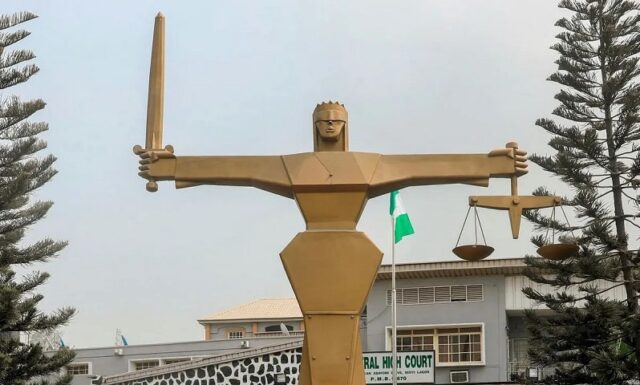
 

A High Court sitting in Warri has ruled in favor of Mr. Julius Oluwafunmisho Okedele, ordering the Economic and Financial Crimes Commission (EFCC) to publicly apologize for wrongfully including his name in a financial fraud case.

In charge No. FHC/WR/110C/2019, filed on December 2, 2019, the EFCC charged Akegor Godbless Omamuyovwi and two others at the Federal High Court in Warri, accusing them of cybercrimes and internet fraud.

The main accused, Akegor Godbless Omamuyovwi, was prosecuted alongside two others, one of whom, Mr. Okedele, was allegedly tried in absentia—without his knowledge or any prior notification from the EFCC.

Mr. Okedele, a bureau de change operator, had conducted legitimate foreign exchange transactions with Omamuyovwi between 2018 and 2019. Following the EFCC’s investigation, he was invited to their Edo State office in Benin on December 5, 2019, where he cooperated fully.

After a second visit on December 10, 2019, the EFCC determined that there was no case against him and released him from further scrutiny.

However, unknown to him, the EFCC proceeded with the cybercrime charges in his absence, listing him as a fugitive on the charge sheet without informing him or granting him an opportunity to defend himself.

Even more concerning was the EFCC’s decision to publish the charge and judgment on its official website and in other media outlets, despite Mr. Okedele never being formally notified or represented in court.

This public disclosure severely damaged his reputation, leading to defamation and serious personal and professional losses.

The case took a shocking turn when Mr. Okedele discovered the allegations against him only through the EFCC’s website, which reported Omamuyovwi’s conviction.

As a result, he faced significant consequences, including visa denials from both the Canadian and United States embassies, as he was falsely labeled a fraudster and fugitive.

On January 31, 2025, in Suit No. FHC/WR/CS/104/2024, the Federal High Court ruled in favor of Mr. Okedele, setting aside its previous judgment in Charge No. FHC/WR/110C/2019 and striking out his name from the charge sheet.

The Court held that his constitutional right to a fair hearing had been violated, constituting a breach of his fundamental human rights under the 1999 Constitution of the Federal Republic of Nigeria (as amended).

Additionally, the Court ordered the EFCC to publish a public apology in a widely circulated national newspaper within 10 days of the ruling and provide proof of compliance.

Despite this directive, uncertainty lingers over whether the EFCC will comply, given its previous actions.

The continued circulation of the erroneous charges has left Mr. Okedele and his family facing ongoing challenges.

A certified true copy of the judgment has been served at the EFCC’s offices in Benin and Abuja, but as at the time of this report, the agency has yet to respond to the Court’s order.

Google search engine

We’ve Restored Meranda’s Security Aides – Lagos Police Commissioner

Lagos Police Commissioner, Moshood Jimoh

The Lagos State Police Command has confirmed that the security details of the Speaker of the State House of Assembly, Hon. Mojisola Meranda, have been reinstated after their earlier withdrawal on Thursday morning.

The removal of her security personnel had sparked controversy, especially as the security aides of impeached Speaker Hon. Mudashiru Obasa were restored shortly before he arrived at the assembly complex, declared himself Speaker, and presided over a plenary session attended by a few lawmakers.

Addressing journalists at a press briefing on Thursday, Lagos State Commissioner of Police, Moshood Jimoh, clarified that the withdrawal was part of a broader security audit.

“The four security personnel attached to the Speaker who were earlier withdrawn have since been restored,” Jimoh stated.

He explained that the move was in line with an ongoing review of police personnel and firearms assigned to Very Important Personalities (VIPs) across the state.

“This is not limited to Lagos; the same audit is being carried out in other state police commands as well,” he added.

Google search engine

Alleged Fraud: Court Grants Former NHIA Boss, Prof. Yusuf Bail


A High Court of the Federal Capital Territory (FCT) has granted bail to the former Executive Secretary of the National Health Insurance Authority (NHIA), Prof. Usman Yusuf, who is facing corruption charges.

Justice Chinyere Nwecheonwu, in a ruling on Thursday, ordered Yusuf’s release from the Nigerian Correctional Service facility in Kuje, provided he meets the bail conditions set by the court.

The Economic and Financial Crimes Commission (EFCC) had arraigned Yusuf on a five-count charge, accusing him of embezzlement and conferring undue advantage upon himself during his tenure at NHIS in 2016.

The anti-graft agency alleged that he approved the purchase of a vehicle for N49,197,750, exceeding the budgeted sum of N30,000,000.

The EFCC also claimed that Yusuf retained a private interest in GK Kanki Foundation and, without due process, awarded a N10.1 million contract to the foundation for training 90 individuals, whereas only 45 trainees were actually involved.

Furthermore, the agency alleged that Yusuf knowingly acquired a personal interest in Lubekh Nigeria Limited, a company linked to his nephew, Khalifa Hassan Yusuf, by awarding it a contract worth N17,500,000 for media and public relations consultancy.

The defendant pleaded not guilty to the charges.

During the bail hearing, Yusuf’s counsel, O.I. Habeeb (SAN), urged the court to grant bail, arguing that the alleged offences were bailable.

However, the prosecution counsel, Francis Usani, opposed the request, stating that Yusuf had previously failed to comply with an administrative bail granted by the EFCC, which required him to report bi-weekly to the commission’s office.

“It took the respondent (EFCC)’s officers’ discreet surveillance and high-powered intelligence to apprehend the defendant to bring him to court,” Usani told the court.

He further claimed that Yusuf had boasted about his political connections and could evade trial if granted bail.

Despite the prosecution’s objections, the court ruled in favor of granting bail, allowing the defendant to regain his freedom pending trial.

Google search engine

2027: Peter Obi Won’t Run For President Under Labour Party – Valentine Ozigbo


Former Anambra governorship candidate, Valentine Ozigbo, has asserted that if Peter Obi chooses to contest the 2027 presidential election, it will not be under the Labour Party (LP).

Ozigbo made this claim during an interview on Politics Today, a Channels Television program, on Thursday.

He suggested that the former LP presidential candidate is unlikely to remain with the party due to internal challenges and political realities.

“I can guarantee that if Peter Obi wishes to run for election as president, it won’t be under the Labour Party,” Ozigbo stated.

Although Peter Obi has not officially commented on his 2027 ambitions or any potential party switch, there have been reports of discussions with other political groups and stakeholders.

Google search engine

BREAKING: Meranda Stepped Down As Lagos Assembly Speaker During Peace Meeting – Obasa


The former Speaker of the Lagos State House of Assembly, Mudashiru Obasa, has claimed that Mojisola Meranda voluntarily stepped down as the Speaker of the House during a recent peace meeting.

Speaking on Politics Today, a Channels Television program, on Thursday, Obasa stated that Meranda resigned at a meeting held at the Lagos House in Marina last weekend.

“At the meeting held in Marina, which saw the attendance of all party leaders, it was made clear, with hopes that all members were present, that Meranda herself declared her resignation. She made it known that she has stepped down,” Obasa said.

He questioned the validity of any ongoing claims to the position, emphasizing that once a resignation is announced, the official privileges tied to the office are relinquished.

“Now, when someone resigns from office, the associated paraphernalia is taken away. So, the question arises: Have you also resigned? Because we understand that part of the arrangement is for you to step down as well. Let them present the resignation letter. And if I were to resign, would I still be here? I’m sure you’d still address me as Speaker, even though we’ve never had a conversation before,” he added.

The situation continues to unfold as questions remain over the leadership structure of the Lagos Assembly.

Detail shortly….

Google search engine

Senator Natasha Demands Live Broadcast Of Senate Probe

Senator Natasha Akpoti-Uduaghan (PDP) Kogi Central

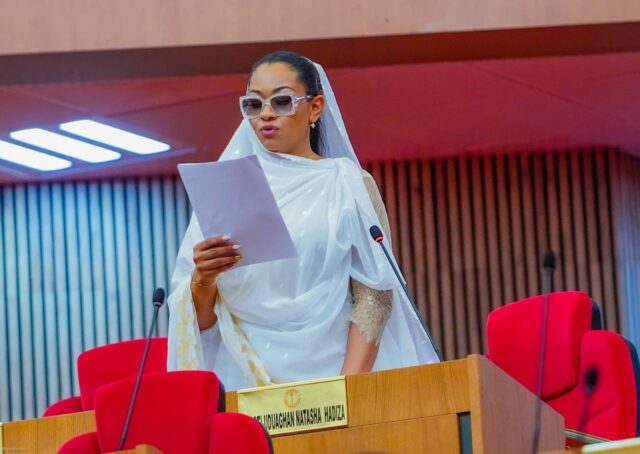
Senator Natasha Akpoti-Uduaghan, representing Kogi Central, has insisted that the Senate Ethics and Disciplinary Committee must conduct its probe of her case in a transparent manner, calling for a live broadcast of the proceedings.

She argued that Nigerians have a right to witness the process firsthand.

The lawmaker was referred to the committee after a recent altercation with Senate President Godswill Akpabio over a seating arrangement.

While expressing her willingness to appear before the panel, she strongly opposed any attempt to handle the matter behind closed doors.

In a statement posted on her Facebook page on Thursday, Akpoti-Uduaghan revealed that she had previously chosen not to speak publicly about the issue and other developments within the Senate under Akpabio’s leadership but had now decided to break her silence.

“This petition came to my notice a few hours ago. In as much as I have refrained from publicly speaking on the matter and other occurrences in the Senate under President Akpabio, it’s time to break my silence,” she wrote.

The senator encouraged Nigerians to stay engaged with the proceedings, reaffirming her stance on transparency.

“Arise News, set a date, and I shall be in your studio in person. Spare no questions,” she added.

“And to Nigerians, please be sure to join the probe, which I shall insist must be covered live. The next few days and weeks shall be interesting but will shape the standard and quality of Nigeria’s leadership.”

Her demand has fueled public interest in the Senate’s internal processes, particularly in cases involving prominent lawmakers.

Many observers believe that a live broadcast would provide Nigerians with an opportunity to assess the fairness and credibility of the probe.

Political analysts suggest that how the Senate handles this case could set a precedent for legislative transparency in Nigeria.

As of now, the Ethics and Disciplinary Committee has not responded to Akpoti-Uduaghan’s request for a public hearing.

The coming days will reveal whether the Senate will grant her demand or uphold its usual closed-door approach.

Google search engine

Jonathan, Jega Slam Politicians, INEC, Judiciary Over Flawed Elections


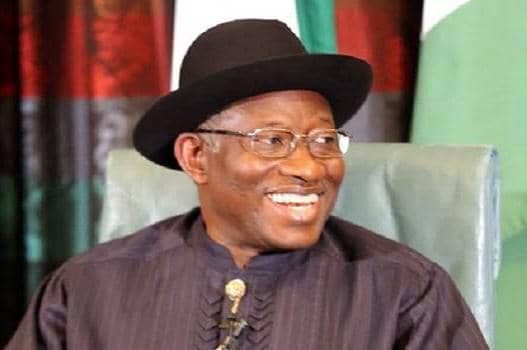
Former President Goodluck Jonathan and ex-INEC Chairman, Prof. Attahiru Jega, have expressed concerns over Nigeria’s electoral system, blaming flawed elections on political actors, the judiciary, and the electoral commission.

Speaking at the Reflection Conference on Democratic Elections in West Africa, organised by Yiaga Africa in Abuja, Jonathan emphasised the need for judicial accountability and electoral reforms, while Jega warned that the desperation of political elites, security threats, and corruption are putting democracy at risk in Nigeria and across West Africa.

Jonathan underscored the judiciary’s crucial role in ensuring credible elections, noting that corruption weakens the system and enables electoral malpractice.

“If elections must be done properly, then the judiciary must always play its role,” Jonathan said. “Every human being has the tendency to cheat. Even if you are born from heaven, as long as you are human, the feeling that you must exploit, you must cheat, is there. But if the environment does not permit it, then you become careful.”

Using a sports analogy, the former president compared governance to football, stressing that election authorities, like referees, shape the conduct of political players.

“Like I always compare the situation to football: if you have a referee and a VAR that tolerate nonsense, the players play anyhow. But if you get the no-nonsense referee, that means the INEC, which plays the role of the referee, and the judiciary look the other way, then the politicians will do whatever they like because they want to win by all means,” he said.

Jonathan shared a story about a judge who stood firm against political pressure.

“Somebody told me about a judge when a very senior politician and tough person called him to say, ‘You must do this,’ and he said, ‘I will not do it, even with a gun to my head.’ That is the kind of people we need right now,” he added.

Reflecting on elections across West Africa, Jonathan noted that while some nations have made progress, others still struggle with electoral violence, fraud, and weak institutions.

He pointed out that despite Nigeria’s peaceful transition of power in the February 2023 elections and the introduction of BVAS and IReV to enhance transparency, the process faced logistical failures, delayed voting, violence, and technical issues.

Narrating his own experience, Jonathan recalled an incident from his time in office.

“When Jega was there, he introduced the card reader, but during the election, the card reader rejected me and almost set the country ablaze. Because the card reader rejected me, rejected my wife, rejected my mother,” he said.

Jonathan highlighted Sierra Leone’s 2023 elections as another example of mixed results, with biometric voter registration failing to prevent allegations of voter suppression and ethnic tensions.

He praised Ghana, Liberia, and Senegal for conducting peaceful elections, particularly acknowledging President George Weah’s concession to opposition candidate Joseph Boakai in Liberia.

He emphasised that while technology plays a role in election transparency, human commitment remains the deciding factor.

“The deployment of technology, no matter how elaborate or sophisticated, may not deliver the desired outcomes without the proven will of the authorities and the citizens to do the right thing,” he said.

Calling on Nigeria to lead by example, Jonathan stressed the need for independent electoral bodies and professional security forces to safeguard democracy.

“The success or failure of any election lies in the hands of two critical agencies, which are the electoral management body and the police,” he stated.

Jega, in his remarks, raised concerns about the independence of Nigeria’s electoral body, urging reforms to protect its integrity.

He cited numerous challenges facing electoral commissions, including interference from desperate politicians, weak legal structures, and external disruptions like insecurity and misuse of technology.

“In West African countries, the modern history of representative elections is as much a tale of authoritarian manipulations as it is a saga of incumbency abuse to suppress opposition and control the media,” Jega said.

He warned that the failure of democracy to curb corruption and elite exploitation has fueled public discontent and created opportunities for coupists to return to power.

“The continuous exploitation of citizens by governing and ruling classes, combined with their exclusion from politics, has hastened democratic reversal, as seen in Mali, Burkina Faso, Guinea, and Niger since 2020,” Jega noted.

Linking these setbacks to growing security threats, Jega pointed to the aftermath of Libya’s civil war as a catalyst for arms proliferation and insurgency in the Sahel region.

He argued that colonial-era “divide and conquer” tactics continue to influence political divisions, fueling sectarian conflicts and exclusionary politics.

Jega described the political elite across West Africa as reckless, accusing them of sidelining voters and leaving governance open to manipulation.

He warned that the region’s democratic gains are at risk unless these challenges are urgently addressed.

“The reversals of democratisation gains, occasioned by these persistent challenges, have provided excuses for coupists to stage a comeback. This dangerous phenomenon could engulf the region unless addressed urgently,” he added.

Google search engine

Army Increases Troops’ Feeding Allowance To N3,000


The Chief of Army Staff (COAS), Lieutenant General Olufemi Oluyede, has announced an upward review of the daily Ration Cash Allowance (RCA) for Nigerian troops from ₦1,500 to ₦3,000, with implementation set to begin at the end of March.

During his visit to the 81 Division at the 9th Brigade Parade Ground in Ikeja, Lagos, Oluyede addressed the troops and expressed dissatisfaction with the previous allowance.

“It is unacceptable that our soldiers are still receiving N1,500 for their daily feeding. This increment is long overdue, and I want to assure you that your welfare remains my priority,” he stated.

Beyond the increase in RCA, the COAS also addressed the housing challenges faced by soldiers, particularly warrant officers nearing retirement.

He revealed plans to expand the Nigerian Army Housing Scheme to provide affordable homeownership opportunities for personnel.

“I understand that many of our senior personnel retire without a personal home. To address this, we are building housing units across several states, including Abuja, Ibadan, Jos, Port Harcourt, Owerri, and Akwa Ibom,” he said.

According to him, the scheme will offer two- and three-bedroom houses at affordable rates, with prices as low as ₦8 million.

“You will all agree that nowhere else in Nigeria can you find a house at this price. This is an investment in your future,” he added.

Oluyede further introduced a low-interest loan scheme, allowing soldiers to access funds at a 3% interest rate.

However, he cautioned personnel against unnecessary borrowing.

“If you don’t truly need it, don’t take it. While the interest rate is low, repayment can be challenging. But the option is there for you should the need arise,” he explained.

On the issue of uniforms, the Army chief announced that 100,000 kits would now be distributed monthly to ensure that all personnel are adequately equipped.

“No soldier should have to buy a uniform with their own money. We are committed to providing you with all necessary kits before the year ends,” he stated.

Oluyede urged soldiers to remain committed to their duties, assuring them that their welfare and operational effectiveness remain top priorities for the Nigerian Army.

Google search engine

‘I Have Resumed, And I Remain Speaker Of Lagos Assembly’ – Obasa Declares


The ongoing leadership crisis in the Lagos State House of Assembly took a dramatic turn on Thursday as former Speaker Mudashiru Obasa forcefully resumed office, despite his removal on January 13, 2025.

Obasa arrived at the Assembly complex around 11:30 AM, accompanied by heavily armed security personnel, creating a tense atmosphere.

His return was unexpected, particularly as the current Speaker, Mojisola Meranda, was absent at the time.

Although the Assembly is currently on an indefinite recess, reports indicate that Obasa gained access to the Speaker’s office by force.

“I’ve resumed, and I remain the Speaker of the Assembly,” Obasa declared, insisting on his position despite his ouster.

His return comes in the wake of the controversial withdrawal of security personnel assigned to Speaker Meranda, reportedly on the orders of the Inspector General of Police (IGP).

An aide to Meranda confirmed the development, stating that police officers and operatives of the State Security Service (SSS) were withdrawn, leaving her “exposed to threats amid the ongoing speakership crisis.”

The aide further called on Governor Babajide Sanwo-Olu, the state’s Chief Security Officer, to intervene and prevent any potential breakdown of law and order.

The crisis deepened on Wednesday when Olalekan Onafeko, the former Clerk of the House who was suspended alongside Obasa, attempted to resume his duties but was denied entry by security personnel.

Onafeko, who arrived with his lawyer and security detail, was turned away amid jeers from Assembly staff.

A viral video captured the moment, while the Assembly management issued a statement condemning his “unauthorised entry.”

The leadership turmoil stems from the January 13 vote that saw 32 out of 40 Assembly members remove Obasa from office, citing “poor leadership style, perpetual lateness to legislative sessions and plenary, high-handedness and disregard for colleague lawmakers and the executive.”

Following his removal, Meranda was elected as Speaker.

Despite interventions from President Bola Tinubu, the Governance Advisory Council (GAC), Governor Sanwo-Olu, and the All Progressives Congress (APC), efforts to resolve the crisis have yielded little success.

High-profile meetings, involving APC stalwarts such as former governors Bisi Akande, Segun Osoba, and Akinwunmi Ambode, were held over the weekend in an attempt to broker peace.

Reports suggest that both Obasa and Meranda may be asked to step aside to allow a new Speaker to emerge, with a member of the Lagos West caucus said to be the frontrunner for the position.

Segun Ajiboye, the Chief Press Secretary (CPS) to Speaker Meranda, confirmed Obasa’s return to the Assembly complex and accused him of “breaking into the office.”

As tensions escalate, calls for immediate action to restore order have intensified.

Chief Muraina Taiwo, a member of the GAC, disclosed that the party is now considering one of the seven lawmakers from Lagos West as a possible consensus candidate for the Speakership.

Google search engine

Card Reader Almost Set Nigeria Ablaze In 2015 – Jonathan

Former President Goodluck Jonathan has reflected on the 2015 general elections, which he lost to ex-President Muhammadu Buhari, stating that the card reader rejected him, his wife, and his mother, nearly igniting a national crisis.

Speaking at the YIAGA Africa’s Reflection Conference on Democratic Elections in West Africa in Abuja on Tuesday, Jonathan emphasized that the success of any election depends largely on the conduct of the electoral management body and the police.

The event, themed “Strengthening Democratic Processes in West Africa: Lessons from the 2024 Elections and Prospects for Future Elections,” was supported by the European Commission, ECOWAS, and GIZ.

Jonathan stressed the importance of strong electoral institutions, stating, “Strengthen Electoral Institutions: Independent and impartial electoral commissions as well as non-partisan security operatives are the cornerstone of credible elections. We must invest in building the capacity of these institutions and safeguarding their independence from political interference.”

He further noted, “I always hold the view that the success or failure of any election lies in the hand of two critical agencies which are the electoral management body and the police. It goes without saying that the stability of a democracy is strongly tied to the way its elections are conducted and policed. If elections are not properly managed by security personnel who must be fair and just, the credibility of the electoral process and, by extension, the legitimacy of governance, could be undermined.”

Jonathan also acknowledged the growing role of youth in elections, describing their participation as one of the most crucial aspects of electoral reforms.

Reflecting on his personal experience in the 2015 election, he humorously recalled how the Independent National Electoral Commission (INEC), under the leadership of Prof. Attahiru Jega, introduced the card reader, which ended up rejecting him and his family at the polls.

“When Jega was there, he introduced the card reader, but during the election, the card reader rejected me and almost set the country ablaze. Because the card reader rejected me, rejected my wife, rejected my mother,” Jonathan said.

Despite this, he underscored the value of technological advancements in elections across West Africa, citing improvements in countries like Liberia, Senegal, and Ghana.

“It must be stated that high voter turnout in Liberia, Senegal, and Ghana, as well as the official transition of power in these countries, demonstrated public enthusiasm for democratic participation and consolidation. And I must commend the elections in Senegal. To me, it was one of the best elections I have observed in Africa and a few outside Africa,” he added.

Former INEC chairman, Prof. Jega, who delivered the keynote address, acknowledged concerns about democratic setbacks in the region but maintained that citizens still have a strong desire for accountable and representative governance.

“In spite of the worrisome evidence of backsliding of democratic progress in the West African region, there remains a substantial appetite among citizens for representative and accountable democratic government,” Jega said.

He emphasized the need for citizens, civil society organizations, and democratic actors to mobilize for credible and sustainable democratic development.

“Electing good representatives in governance and holding them to account would make government more responsible and responsive to the needs and aspirations of citizens for societal progress and socio-economic development,” he stated.

Jega acknowledged progress in strengthening independent election management bodies (EMBs) across West Africa but noted that there is still much work to be done.

Yiaga Africa’s Executive Director, Samson Itodo, highlighted that the conference provided a platform for stakeholders to reflect on electoral reforms in West Africa, focusing on both challenges and progress.

He explained, “The discussions were aimed at providing a comprehensive analysis of the 2024 elections, shedding light on key challen ges and opportunities for improvement.”

Google search engine

- Advertisement -
Google search engine

Google search engine

MOST COMMENTED