Home Blog Page 787

“It’s Purely A Southern Agenda”, Northern Youths Reject Tinubu’s Controversial Tax Reform Bill
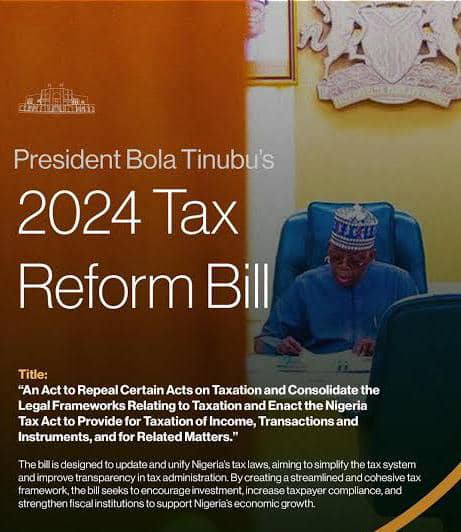
The Coalition of Northern Groups (CNG) in Taraba State has strongly criticized the proposed Tax Reform Bill under President Bola Ahmed Tinubu’s administration, alleging that it is strategically designed to benefit the South at the expense of the North.

In a statement released during a press conference in Jalingo, Taraba State’s capital, the group voiced concerns over the economic hardships faced by Northern Nigerians, attributing them to recent federal policies, including the tax reforms, land-border closures, and the removal of petroleum subsidies.

The group’s coordinator, Comrade Idris Ayuba, expressed that the impacts of these policies are disproportionately felt in the North.

He argued that the new Tax Reform Bill would worsen regional inequalities, particularly by reducing the North’s share of revenue, which would further hinder its development and worsen poverty.

“We believe the Tax Reform Bill, along with other policies like the land-border closure, unfairly favors the South while exacerbating the challenges faced by the North,” Ayuba remarked.

“The subsidy removal, for example, has only led to a decline in economic activities, with fewer people affording petroleum products.”

The group also took issue with the federal government’s land-border closure, which they claim has had a more negative economic impact on the North, which traditionally relies on cross-border trade.

Ayuba argued that the policy disproportionately boosts the Southern economy by increasing the demand for locally produced goods and customs revenues, while also skewing economic opportunities toward Southern Nigeria.

“By closing the land borders, the South has gained significantly, while the North, which is more dependent on cross-border trade, has faced huge losses,” he said.

“The closure has led to increased customs duties and taxes in the South, further consolidating their economic advantage.”

The CNG warned that the proposed tax reforms, including changes to the revenue-sharing formula, would reduce Northern Nigeria’s revenue allocation.

This, the group believes, would exacerbate the region’s developmental challenges, including poverty, inadequate infrastructure, and limited access to quality education and healthcare.

“The North already faces significant challenges, and these reforms would only increase the gap between the North and South,” Ayuba added.

“A more favorable revenue-sharing formula for the South would lead to more investments and opportunities in the South, while the North risks further economic decline.”

The group also highlighted the North’s contributions to Nigeria’s economy, especially through agriculture, which they feel has been overlooked in the proposed reforms.

They called for a fairer allocation that takes into account the North’s unique economic and developmental challenges.

“Instead of addressing the long-standing disparities between the North and South, the Tax Reform Bill seems to deepen them,” said the group’s statement.

“We call on policymakers to take into account the North’s significant role in national food production and agriculture, which has often been neglected.”

The group also criticized the federal government for failing to complete critical infrastructure projects in the North, citing delays of over 40 years in the Mambilla Hydroelectric Project, which could generate 3,050 megawatts of electricity, and the Jalingo-Numan Road project, which has been stalled for more than 15 years.

“These uncompleted projects only deepen the development gap between the North and South. Without the completion of these vital projects, the North will continue to lag behind in terms of business opportunities, job creation, and overall economic growth,” Ayuba concluded.

Google search engine

APC Crumbles Opposition As LP Loses 18 Rep Members, PDP In Disarray, NNPP Loses Ground

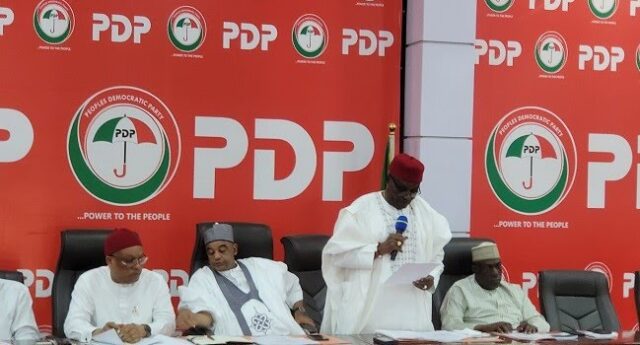
The race for Nigeria’s 2027 presidential elections has already begun, and both the Labour Party (LP) and the Peoples Democratic Party (PDP) are facing internal challenges that are diminishing their political strength.

While the PDP is embroiled in a leadership crisis, with key members resigning, the LP has been particularly hard-hit by a mass exodus of elected representatives from the House of Representatives, who are abandoning the party in favor of other platforms, particularly the ruling All Progressives Congress (APC).

The LP, which had made significant strides in the 2023 elections with 35 seats in the House of Representatives, has seen a dramatic drop in its parliamentary presence.

The defections started soon after the 10th National Assembly convened, with many LP lawmakers leaving the party citing internal instability.

Among those who recently defected are Tochukwu Okere (Imo), Donatus Mathew (Kaduna), Bassey Akiba (Cross River), Iyawe Esosa (Edo), and Daulyop Fom (Plateau).

These defections have left the party with just 17 seats in the House, down from its initial 35, a significant blow to its influence in the National Assembly.

Senator Francis Onyewuchi from Imo East also joined the APC, reportedly with the influence of Governor Hope Uzodinma.

Analysts believe the internal divisions and alleged APC infiltration within the LP are key factors driving the defections.

In response to these challenges, LP leaders, including presidential candidate, Peter Obi and Abia State Governor, Dr. Alex Otti, attempted to restructure the party.

A 22-member caretaker committee led by Senator Nenadi Usman was appointed, but this move faced resistance from the party’s National Chairman, Julius Abure, who is seeking to legally validate his position.

The restructuring is currently under legal scrutiny, with the dispute unresolved.

The defections have also sparked tensions within the LP, with party leaders such as National Publicity Secretary Obiora Ifoh claiming the party remains united under Abure’s leadership.

However, critics, including LP chieftain Chief Peter Ameh, argue that the defections show a lack of respect for the party’s constitution and its voters, suggesting that the party’s ability to address internal crises is in question.

The PDP, on its part, is also struggling with leadership issues that are undermining its unity and effectiveness.

In Delta State, the defection of Hon. Erhiatake Ibori-Suenu to the APC is a significant blow to the party’s standing in the Niger Delta, a region that has been a stronghold for the PDP since 1998.

At the national level, the PDP is in the midst of a leadership power struggle between factions loyal to former Vice President Atiku Abubakar and those aligned with the party’s acting National Chairman, Ambassador Umar Damagum.

The crisis has intensified since the resignation of former National Chairman Iyorchia Ayu, and factions are working to control the party’s direction ahead of the 2027 elections.

The defections and internal strife are casting a shadow over the opposition’s ability to challenge the ruling APC in the upcoming elections.

With the APC benefiting from these defections, experts warn that Nigeria’s democracy may suffer if opposition parties continue to weaken, especially as the 2027 presidential race draws closer.

Some party members, such as Chief Peter Ameh, argue that the current political environment undermines the essence of democracy, which requires a strong opposition to hold the government accountable.

He suggests that constitutional reforms should be made to prevent lawmakers from defecting without losing their seats, as this undermines the trust of voters.

Meanwhile, the PDP’s internal conflict is far from over.

Despite attempts to resolve the crisis, the party remains divided, with some members calling for a return to its founding principles of justice, fairness, and equity.

The current leadership, including acting Chairman Damagum, faces intense pressure from rival factions, particularly those sympathetic to Nyesom Wike, a key figure in the G-5 Governors’ group.

Wike’s faction is reportedly working to extend Damagum’s tenure until 2025, potentially allowing the PDP to shift its focus towards rebuilding the party’s base.

However, critics argue that Atiku’s ongoing presidential ambition is exacerbating divisions within the party and distracting it from addressing its internal issues.

Some PDP leaders believe that the party can only regain its strength if it reunites around a common goal, one that respects the party’s constitution and fosters fairness across all regions.

They warn that without such efforts, the APC will continue to dominate, and the opposition will remain fragmented.

As political strategies unfold, both the LP and PDP must address their internal crises to remain viable contenders in the 2027 presidential race.

However, with defections, power struggles, and a divided opposition, the path to victory for these parties appears increasingly challenging.

Google search engine

2027: PDP Must Not Collapse, Bode George Warns Atiku, Damagun

Chief Olabode George, former Deputy National Chairman of the Peoples Democratic Party (PDP), has called on both the party’s Acting National Chairman, Ambassador Umar Damagun, and presidential candidate, Alhaji Atiku Abubakar, to take decisive steps to address the ongoing crisis within the party.

In a recent interview on Arise TV, George expressed concern over the internal divisions threatening the PDP, emphasizing that the party risks undermining its prospects for the 2027 presidential election if the crisis remains unresolved.

The dispute stems from issues surrounding Damagun’s tenure and the battle for the PDP’s presidential ticket in the upcoming election.

George dismissed rumors circulating that the PDP is dead, reassuring stakeholders and supporters that the party still has a future.

He stated that the party will recover and regain its political strength despite the ongoing strife.

“You hear a lot of comments, with some even saying that our party is dead, but that is not true. Our party is not dead. There are ongoing discussions, and yes, we have three major factions now: the Damagun group, the Atiku group, and some other factions,” George said.

As a life member of the PDP’s Board of Trustees (BoT), George stressed the Board’s critical role in resolving internal crises, serving as the custodian of the party’s assets and liabilities and mediating conflicts.

He advocated for unity, emphasizing that the party could still resolve its issues if handled effectively.

“We can disagree without being disagreeable. This situation is not beyond control. If we manage ourselves properly, we can convince the electorate in 2027. And once we come to power, we will be able to handle any future crises,” he explained.

While George made it clear that he was not taking sides with either Damagun or Atiku, he urged all factions to come together to prevent repeating the mistakes that affected the party in previous elections.

“There were reasons why we allowed every zone to contest. People seem to have forgotten the events of the convention floor. We must not let those mistakes happen again. There were valid reasons for those decisions, but now, it feels like those reasons no longer matter, including Damagun’s actions. We need to be honest with ourselves,” he said.

George reiterated that his only concern was ensuring the PDP does not collapse, stressing the importance of preserving the party’s legacy.

“The Founding Fathers worked hard to bring us to where we are today. Let’s look at this issue holistically, so we don’t repeat the errors of the past,” he concluded.

Google search engine

2027: Kwankwaso, Donald Duke, Obasanjo Meet To Discuss Nigeria’s Political Future

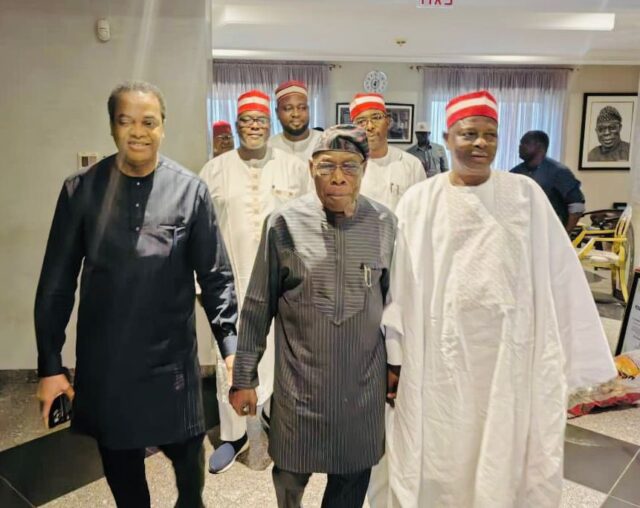
Rabiu Kwankwaso, the presidential candidate for the New Nigeria People’s Party (NNPP) in the 2023 elections, on Saturday, visited former Nigerian President Olusegun Obasanjo in Abeokuta, Ogun State.

The meeting, held at the Olusegun Obasanjo Presidential Library (OOPL), also included former Cross River State Governor Donald Duke.

Kwankwaso shared details of the meeting on his X (formerly Twitter) account, revealing that the discussions focused on pressing national matters, particularly the future of Nigerian politics and governance.

“I was honored to be in the company of my friend, HE Donald Duke, and other associates during our courtesy visit to President Olusegun Obasanjo at his residence in Abeokuta. Our conversation revolved around significant national issues, with a special emphasis on the future of politics and governance in Nigeria,” Kwankwaso wrote.

“We are grateful to Baba for his warm support and hospitality. – RMK,” he added.

The meeting comes after Obasanjo attended Kwankwaso’s daughter’s wedding in November 2024, where he was seen wearing a red cap, a symbol of the Kwankwasiyya movement.

The former president was warmly welcomed by Kwankwaso and Kano State Governor Abba Kabir Yusuf at the wedding, which was attended by numerous prominent political and business figures.

Google search engine

2027 Presidency: PDP Makes U-turn, Denies Inviting Jonathan To Contest

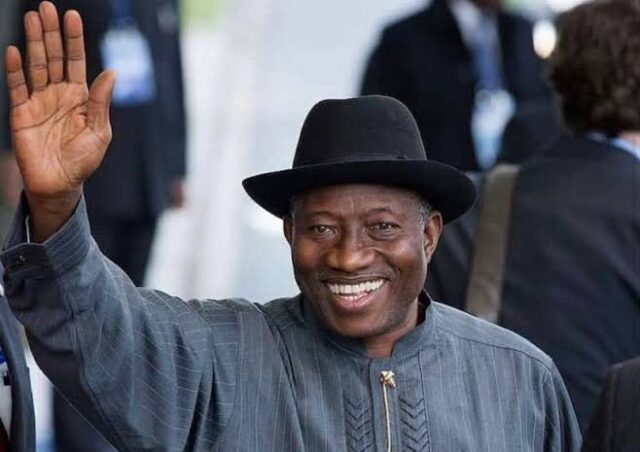
The People’s Democratic Party (PDP) has refuted claims that it invited former President Goodluck Jonathan to run for the presidency in the 2027 election under its banner.

In an interview with BBC Hausa, PDP’s Deputy National Publicity Secretary, Ibrahim Abdullahi, dismissed the rumors, clarifying that the party had not extended its presidential ticket to Jonathan.

He explained, “The reports claiming that PDP has given its presidential ticket to former President Goodluck Jonathan or invited him to contest are false. What happened was that I was interviewed by a journalist who asked about our view on Jonathan, as there were speculations about his potential candidacy. I replied by stating that Jonathan is eligible to run for the presidency, as he is a Nigerian and has the legal right to do so, with one more term available to him.”

Abdullahi emphasized that PDP had already contributed significantly to Jonathan’s political career, and as a member of the party, there was no need to actively court him for another run.

He further noted that the party had other qualified individuals, including 12 governors, who could contest in the upcoming election.

He also pointed to a recent statement from Jonathan’s wife, who had declared that the former president had no intention of seeking another term, saying he had “nothing left behind in the Villa” that would prompt him to return to power.

Abdullahi said PDP would only offer its ticket to someone who has shown a clear interest in running.

Google search engine

2027: Ohanaeze Ndigbo Rejects Atiku’s Northern Presidency Proposal

Ohanaeze Ndigbo, the apex Igbo group, has distanced itself from former Vice President Alhaji Atiku Abubakar following his endorsement of a Northern presidency in the upcoming 2027 general elections.

In a statement released on Wednesday in Abakaliki, Mazi Okechukwu Isiguzoro, the Secretary-General of the Chidi Ibeh-led faction of Ohanaeze Ndigbo, expressed that Atiku’s comments have severed any potential alliance between the Peoples Democratic Party (PDP) leader and the Igbo people.

Isiguzoro argued that Atiku’s remarks have fueled longstanding concerns within the Nigerian political landscape, particularly among the Igbo, regarding the critical principle of rotational presidency.

He condemned Atiku’s pursuit of Northern political dominance, stating it had irreparably damaged his relationship with the Igbo, signaling an affront to their calls for political inclusion and fair representation.

Ohanaeze Ndigbo believes Atiku’s statements reflect an exclusionary agenda that disregards Southern candidates, especially Mr. Peter Obi of the Labour Party (LP), as legitimate contenders for leadership in 2027.

Isiguzoro pointed out that Atiku’s rhetoric undermines Obi’s status as a capable opposition leader and implies that he should only be considered as a running mate, further marginalizing the Igbo people.

The Igbo group strongly rejected any political partnership with Atiku, asserting that it would be inappropriate to align with someone who dismisses the principle of power rotation.

Ohanaeze emphasized that the completion of President Muhammadu Buhari’s two-term Northern presidency (2015–2023) marked the necessary shift of leadership to Southern Nigeria, specifically from 2023 to 2031, and that Atiku’s push for a Northern presidency in 2027 contradicted this consensus.

Isiguzoro further stated, “Ohanaeze Ndigbo unequivocally rejects any suggestion of an alliance with Atiku Abubakar, who continues to ignore the established agreement for a rotational presidency. We firmly believe that the time has come for leadership to move to the South, as agreed after President Buhari’s tenure.”

Beyond the issue of the presidency, Ohanaeze Ndigbo focused on the ongoing infrastructural developments in the Southeastern region, which they credited to the current administration under President Bola Tinubu.

Isiguzoro noted that, under the leadership of Senator Dave Umahi, significant federal road projects were underway, including the Lagos-Calabar Coastal Superhighway, the Calabar-Abakaliki-Benue-Abuja Road, and the Sokoto-Lagos Superhighway, all contributing to the region’s growth and development.

The statement also reaffirmed Ohanaeze’s commitment to advancing the interests of the Igbo people and ensuring their rightful place in Nigeria’s political and economic landscape.

Isiguzoro made it clear that the Igbo would not support any agenda that seeks to diminish their aspirations, adding, “We stand firm in our resolve to mobilize and support those who genuinely represent our interests and ensure that our dignity is respected.”

Isiguzoro underscored that Atiku’s insistence on a Northern presidency in 2027 had alienated him from the Igbo community and further distanced him from the political realities and needs of the people.


Google search engine

Ohanaeze Ndigbo Elects New President-General

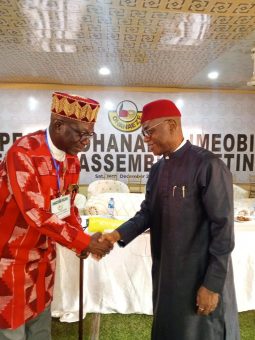
Nze Fidelis Ozichukwu Chukwu, a former National Vice Chairman (South East) of the Peoples Democratic Party (PDP), has been appointed as the new President-General of Ohanaeze Ndigbo.

He succeeds Chief Emmanuel Iwuanyanwu, who passed away on Thursday, July 25, 2024, after a brief illness.

Chukwu’s election took place during the Ime-Obi meeting in Enugu on Saturday.

The announcement was made by Dr. Alex Ogbonnia, the National Publicity Secretary of Ohanaeze Ndigbo Worldwide, in a statement released later that evening.

The statement explained that Chukwu would complete the remaining 27 days of the Imo State tenure, which expires on January 10, 2025.

The process of Chukwu’s emergence followed a series of unfortunate events, beginning with the death of Ambassador Professor George Obiozor, CON, in 2022.

Subsequently, Chief Iwuanyanwu was appointed to complete Obiozor’s term, but he, too, passed away in July 2024.

Following Iwuanyanwu’s death, the Imo State Chapter of Ohanaeze, led by Barrister C.J. Ihemedu, nominated Nze Ozichukwu Chukwu to complete the remainder of the term.

The motion to adopt Chukwu was moved by Eze Cletus Ilomuanya, Chairman of the Imo Council of Elders, and seconded by Chief Simon Okeke (Ochendo).

In his speech, Eze Ilomuanya praised Chukwu as a brilliant thinker with outstanding leadership qualities.

Chukwu, who has an extensive academic background, attended prestigious institutions such as Templeton College (Oxford University), Harvard University, University of Bristol, and several others. He holds multiple degrees, including an MSc and an MBA.

Chukwu has held various high-profile roles, including director at Inland Bank Plc, Managing Director of Nigeria Merchant Bank, and member of the Technical Committee for Privatization and Commercialization (TCPC).

His numerous contributions to both public service and the Catholic Church have earned him knighthood titles such as the Worthy Knighthood of St Mulumba (KSM) and the Papal Knighthood of Saint Sylvester (KSS).

Chukwu is also recognized for his involvement in key development initiatives, including the South East Development Council (SEDC) and the South East Development Initiative (SEDI).

His leadership in various public and private sector organizations has solidified his reputation as a dedicated and forward-thinking leader.

Many dignitaries present at the Imeobi meeting, including Governor Peter Mbah of Enugu State, Rear Admiral Allison Madueke, Senator Eyinnaya Abaribe, and numerous other leaders, expressed support for Chukwu’s election.

Notably, Dr. Lucky Ekeji, the President of the Rivers State Chapter of Ohanaeze, expressed his joy that the next President-General of Ohanaeze would hail from Rivers State.

Ambassador Okey Emuchay MFR, Secretary-General of Ohanaeze Ndigbo, described the event as a historic moment for the Igbo nation, thanking the people for their unwavering support during difficult times.

Imeobi members commended Chukwu for his integrity, courage, and unwavering commitment to principle, citing his exceptional organizational skills and his reputation for honesty and transparency.

Google search engine

VIDEO: Traders Count Losses As Fire Engulfs Enugu Timber Market

VIDEO: Traders Count Losses As Fire Engulfs Enugu Timber Market

The video

Google search engine

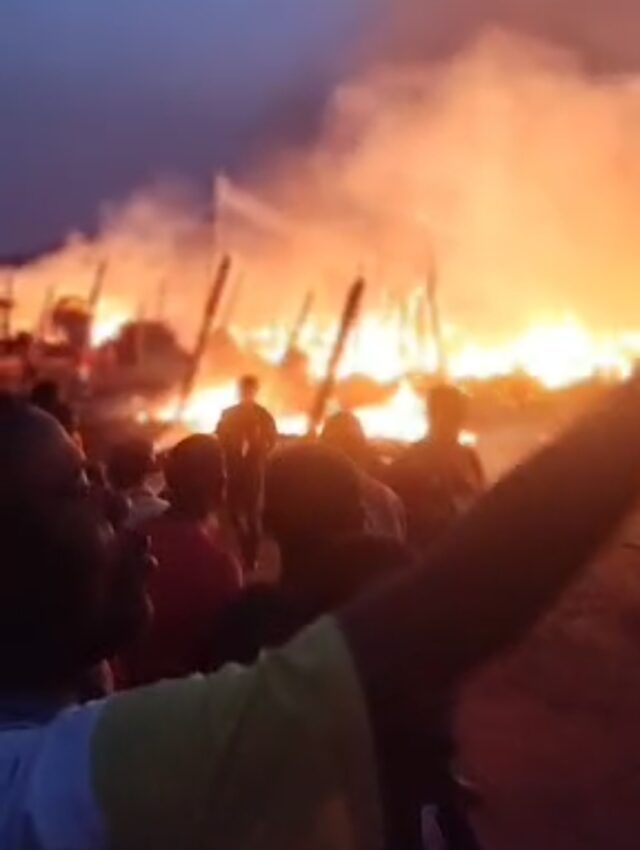
BREAKING: Enugu Timber Market On Fire

A massive fire has gutted the Enugu Timber shade Market at Uwani, Enugu South LGA, causing extensive damage to property and goods.

The blaze, which broke out in the late hours of Saturday, left several traders devastated as large quantities of timber and other building materials were destroyed.

Eyewitnesses told DAILY GAZETTE  correspondent that thick smoke billowed from the market and spread rapidly, consuming shops and warehouses in its path.

The cause of the fire is still unknown, but officials believe it could have been sparked by electrical faults or an accident.

The Enugu State Fire Service responded promptly to the scene, deploying several fire trucks to contain the blaze.

However, the scale of the inferno made it difficult for the firefighters to prevent further damage.

It took several hours before the fire was brought under control, and by then, many of the market stalls had been completely destroyed.

Market traders expressed frustration and concern as they counted their losses.

Many said they had lost their entire stock, which was meant for sale during the yuletide season.

Google search engine

Kogi Assembly Loses Deputy Speaker

Hon. Enema Paul, the Deputy Speaker of the Kogi State House of Assembly and representative for the Dekina 11 constituency, has passed away.

He died on Saturday at an undisclosed hospital in Abuja.

Reacting to the news, the Speaker of the Kogi State House of Assembly, Rt. Hon. Aliyu Umar Yusuf, expressed his condolences to the family of the deceased.

In a statement issued by his Chief Press Secretary, Mohammed Yabagi, the Speaker described Paul as a humble, dedicated, and collaborative lawmaker who served his people and the state with commitment.

“The late Hon. Enema Paul was an embodiment of unity and progress, consistently working for the betterment of his constituency and the state,” said the Speaker.

“He was not just a politician but a devout Christian, a man of integrity, and a family man who held strong moral values.”

The Speaker also prayed for strength and courage for Paul’s family during this difficult time.

Hon. Enema Paul, who hailed from Egume in Dekina Local Government Area, was married and a father of three children.

He had previously served as a commissioner in the first tenure of former Governor Yahaya Bello.

At the time of his passing, he was serving his second term in the Kogi State House of Assembly.

Google search engine

MOST COMMENTED

- Advertisement -
Google search engine