Home Blog Page 797

NAFDAC Cautions Bakeries Against Using Saccharin, Bromate In Bread Production

The National Agency for Food and Drug Administration and Control (NAFDAC) has issued a stern warning to bakeries across Nigeria, urging them to stop using saccharin and bromate in bread production.

Speaking during a News Forum appearance, NAFDAC Director-General Prof. Mojisola Adeyeye emphasized that bakeries found using these harmful substances would face severe penalties.

“Our post-marketing surveillance is key to monitoring this. We regularly inspect bakeries and other food production facilities, sometimes in response to complaints submitted through our reform office.”

She revealed that several bakeries have been shut down for using bromate in their bread-making process, stating, “If we discover that bromate has been used, or it’s suspected in the product, we will close down the bakery.”

Adeyeye further pointed out that NAFDAC has also closed down numerous water factories that failed to meet health and safety standards or operated in unsanitary conditions.

She highlighted the importance of the agency’s Regulatory Inspection Directorate, which ensures that the products submitted for registration remain compliant with standards.

“When a product is initially registered, we conduct tests and inspections. However, some manufacturers may change their processes or formulas afterward, which is why ongoing post-marketing surveillance is essential. This helps us ensure that what was originally approved is still what is being sold in the market,” she explained.

NAFDAC’s market control efforts are designed to safeguard the public by maintaining consistent quality and preventing substandard products from reaching consumers.

Google search engine

ECOWAS Court Orders Nigeria To Compensate Torture Victim With N5 Million

On December 3, 2024, the ECOWAS Court of Justice ruled in favor of Oluwatimilehin Adebayo, ordering the Nigerian government to pay N5 million as compensation for the violation of his right to be free from torture.

The case, titled Oluwatimilehin Adebayo vs Federal Republic of Nigeria (ECW/CCJ/APP/47/23), stemmed from Adebayo’s brutal treatment by police officers in Ogun State.

Adebayo was subjected to severe abuse, including being beaten with the handle of an axe and having his limbs bound with chains to a pole.

The torture caused physical injuries, including trauma to his scrotum, and left Adebayo with lasting psychological distress.

The Nigerian government contested the case, arguing that it was filed beyond the three-year limitation period and that the court lacked jurisdiction.

The government also claimed that the case involved issues already handled by a domestic court.

However, in her judgment, Justice Dupe Atoki, the judge rapporteur, stated that the actions of the police officers amounted to torture, violating Article 5 of the African Charter on Human and Peoples’ Rights, to which Nigeria is a signatory.

The court ruled that the torture was intentional and aimed at coercing Adebayo into signing a false statement.

As a result, the court ordered the Nigerian government to pay N5 million to Adebayo as compensation and mandated that an impartial investigation be conducted into the torture, with those responsible to be prosecuted.

The court, however, rejected the claim that Adebayo’s right to remedy had been violated, as there was no evidence to suggest that he had formally reported the incident to the appropriate authorities.

Google search engine

Turkey, Iran, Russia Disagree On Syria’s Future As Assad’s Presidency Crumbles

As President Bashar al-Assad’s grip on Syria begins to weaken, the three major external actors involved in the conflict—Turkey, Iran, and Russia—have failed to align on a unified approach to resolve the ongoing crisis.

In a meeting on the sidelines of the Doha Forum in Qatar on Saturday, the three nations called for renewed direct talks between Assad and opposition groups.

They also stressed that it was “inadmissible” to rely on terrorist groups to gain control of the country.

Russia, Turkey, and Iran urged the Syrian opposition to end the fighting and preserve the territorial integrity and unity of Syria.

However, the situation has become increasingly complicated, as reports emerged of Russian diplomats fleeing Damascus in the face of rapid opposition advances.

Russian Foreign Minister Sergei Lavrov acknowledged the difficulty of the situation but emphasized that Russia was determined to prevent the victory of what it deemed as “terrorist” forces.

Lavrov also indicated that Russia would push Assad to normalize relations with Turkey, particularly over Ankara’s demands to address Kurdish forces using northern Syria to launch attacks into Turkey.

Despite Assad’s previous refusal to engage with Turkey while Turkish forces remained in Syria, the Syrian president may now have little choice but to make concessions, particularly on the Kurdish issue.

Turkey considers the Syrian Democratic Forces (SDF), aligned with the Kurdish YPG, to be an extension of the Kurdish PKK, which Ankara views as a terrorist organization.

However, there are growing concerns that Turkey may struggle to control the increasingly powerful Hayat Tahrir al-Sham (HTS), an Islamist militant group that has made significant gains in recent weeks.

Lavrov has repeatedly stressed that HTS is classified as a terrorist organization by both the UN and the US. While HTS claims to have moderated, Russia and others question whether this is truly the case.

Lavrov also suggested that opposition groups were being used for geopolitical purposes, asserting that the offensive led by HTS was undermining diplomatic efforts.

He warned that if a political vacuum were to emerge, the result could be chaos similar to that seen in Iraq in 2003 and Libya in 2011.

While the US had initially hoped Assad would remain part of the political solution, the situation on the ground has shifted dramatically.

The rapid advances of opposition forces and Assad’s struggle to maintain control, particularly in Homs, have left international diplomats scrambling to adjust their strategies.

Syrian civil society at the Doha Forum also called for the dismantling of Assad’s intelligence apparatus and the establishment of a transitional government, ultimately leading to national elections—something Assad has long blocked.

The peace talks initiated by Turkey, Russia, and Iran through the Astana Process in 2017 have largely failed to yield significant results.

The country remains divided, with different factions controlling various regions.

While expectations for the Doha meeting were low, the divisions between Turkey, Russia, and Iran have only deepened.

Turkey has shown support for the advance of rebel, Islamist, and pro-Turkish groups toward Damascus, while Iran and Russia consider HTS to be a terrorist threat.

Iran’s foreign minister, Abbas Araghchi, has tried to convince Turkey that its actions are contributing to a dangerous power vacuum, but to no avail.

Iran also perceives the US and Israel’s involvement in Syria as part of an effort to undermine its influence, especially as the situation in the region becomes more volatile.

Charles Lister of the Middle East Institute stated that the rebranding of HTS away from jihadism has been ongoing for years, but the group still remains politically dictatorial.

Lister predicted that Assad’s downfall is inevitable, and if Homs were to fall, Damascus could be isolated from its coastal Alawite heartland, further weakening Assad’s position.

While Russia is trying to hold the line in Homs, both Iran and Hezbollah have struggled to maintain a significant presence on the ground.

The Syrian military, increasingly fragmented and weakened from within, is facing mounting pressure as opposition forces continue to make headway.

In the face of this growing crisis, Turkey is under pressure to clarify its strategy for Syria and its stance on HTS.

Turkey’s involvement in the Syrian conflict has largely been driven by its desire to prevent Kurdish forces from gaining more control in northern Syria, while also managing the 3 million Syrian refugees currently residing in Turkey.

However, with Assad’s regime faltering, Turkey may be forced to navigate a much more complex political landscape in Syria.

The future of Syria remains uncertain, and the geopolitical divide between the key foreign powers involved only deepens.

Google search engine

Enugu Rep Member Advocates For Creation Of Adada State As Constituents Laud Exemplary Representation

Hon. Chidi Obetta, the House of Reps member for Nsukka/Igbo-Eze South Federal Constituency, has called for Adada State to be the first state to be created from the South East region.

Addressing attendees at his second hybrid Town Hall Meeting at the Princess Alexandra Auditorium, University of Nigeria, Nsukka, Obetta emphasized that Nsukka Province remains the only former province yet to achieve statehood, despite its large population and significant land area.

He revealed that he co-sponsored a bill to amend the 1999 Constitution to facilitate the creation of Adada State, stressing that the demand has been backed by the South East since 1979.

“Adada State should be the first state to be created from the South East. Since 1979, the people of the region have supported this cause. Nsukka is the only old province that has not yet been made a state,” Obetta said.

The town hall meeting also provided an opportunity for Obetta’s constituents to review his legislative performance over the past year and discuss future goals.

The lawmaker reiterated his commitment to advancing initiatives focused on economic development, job creation, poverty alleviation, and infrastructure projects for his constituency.

Among the key initiatives he highlighted were:

A bill to establish a Federal Medical Centre at Obukpa, which is now at the final passage consideration stage.

A bill to create a Federal Vocational and Skill Acquisition College in Ibagwa-Aka, Enugu State.

A bill to establish a Swine Research Institute in Okpuje-Nsukka.

Amendments to the Medical and Dental Practitioners Act.

A bill co-sponsored with other Enugu State lawmakers to amend the 1999 Constitution and create Adada State.

The Town Hall was attended by traditional rulers, religious leaders, political figures, and student representatives, all of whom praised Obetta’s contributions.

HRH Igwe Patrick Okoro, the traditional ruler of Mkpunano community, expressed his approval of Obetta’s performance, while Ven. Dr. Nnamdi Ijeudo of the Anglican Diocese of Nsukka called for greater efforts toward achieving the creation of Adada State.

Augustine Alumona, Vice Chairman of the APC in Enugu State, also commended Obetta’s outstanding service, urging other political leaders to follow his example of dedication and commitment to public service.

Google search engine

NUC’s Closure Of Abia Varsity Unlawful – Appeal Court Rules

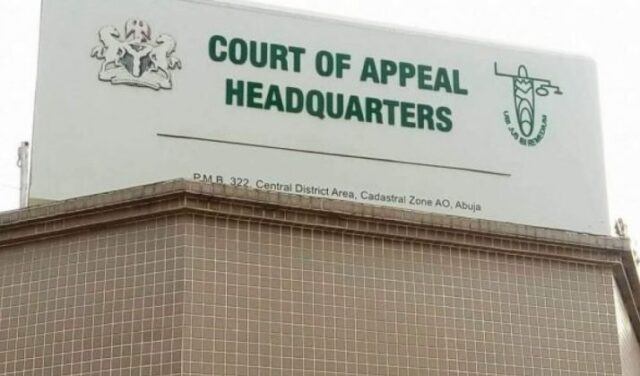
The Court of Appeal in Enugu has upheld the judgment of the Federal High Court, which ruled that the National Universities Commission (NUC) and its former Executive Secretary, Professor Peter Okebukola, acted unlawfully when they closed down Richmond Open University in Arochukwu, Abia State, in 2006.

In a unanimous decision delivered by a three-member panel of justices on December 6, the Appeal Court dismissed the NUC’s appeal, stating that it lacked merit.

The case concerned a lawsuit filed by Dr. Ifeanyichukwu Okonkwo, a representative of Richmond Open University, challenging the NUC’s closure of the institution.

The other respondents in the appeal were the Federal Government of Nigeria and the Inspector General of Police.

Justice Olasumbo Goodluck, delivering the lead judgment, rejected the appellant’s argument that the lower court’s judgment was a nullity, emphasizing that the Federal High Court had rightly dismissed the NUC’s application to set aside its judgment.

The appellate court supported the trial court’s decision to decline the NUC’s request, finding that there were no grounds to alter the previous ruling.

Justice Goodluck further dismissed the NUC’s claim that the originating summons, filed by Okonkwo, a layman, invalidated the entire process.

She referred to the trial court’s reasoning, which noted that the matter was best addressed at the appellate level and that any attempt to review the decision at the trial court would amount to the court overstepping its role.

The Appeal Court judges, Justice R. Maiwada Abdulahi and Justice Joseph Eyo Ekanem, concurred with the lead judgment, affirming the decision of the lower court.

The dispute began in 2006 when Richmond Open University, founded by Okonkwo, was closed by the NUC, which declared it an illegal institution.

Okonkwo, who represented the university in court, argued that the closure was unconstitutional and violated the right to establish a private university in Nigeria.

In a landmark judgment delivered on July 14, 2006, Justice A.L. Allagoa of the Federal High Court ruled in favor of Richmond Open University.

The court held that, under the Nigerian Constitution, the NUC had no legal basis to shut down the university.

Justice Allagoa further declared that the NUC’s actions were unconstitutional, arbitrary, and void, emphasizing that there was no provision in the NUC Act that could restrict private individuals from establishing a university.

In addition, the court awarded N5 million in exemplary damages against the NUC and other defendants, which was subsequently paid to the plaintiffs.

A perpetual injunction was also issued, preventing the defendants from further interfering with the operations of Richmond Open University.

Google search engine

BREAKING: Mahama Wins Ghana’s Presidential Election, Bawumia Concedes Defeat

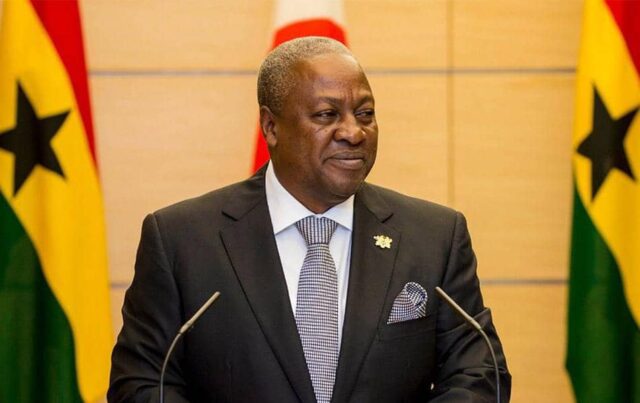
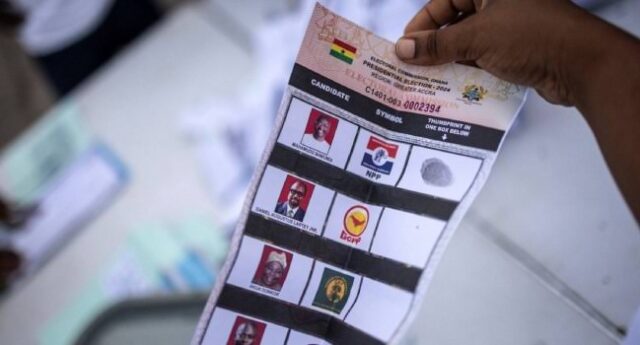
Mahamudu Bawumia, Ghana’s vice president, has conceded defeat in the country’s presidential election, acknowledging that John Mahama has secured victory.

Bawumia, the candidate for the ruling New Patriotic Party (NPP), made the announcement following the release of partial election results, which indicate that Mahama of the National Democratic Congress (NDC) is on track to win.

With votes still being counted, Mahama has accumulated 976,644 votes, or 56.39 percent, while Bawumia has garnered 738,493 votes, amounting to 42.64 percent.

In a press conference held at his residence on Sunday, Bawumia, acknowledging the results, stated that the outcome was in the best interest of Ghana. He also confirmed that he had called Mahama to offer his congratulations.

“From our internal tally, it is clear that former President John Dramani Mahama has decisively won the election,” Bawumia remarked.

“Additionally, the NDC has also secured victory in the parliamentary elections, and while some seats are still being finalized, I believe the results will not alter the overall outcome.”

Bawumia emphasized that his decision to concede before the official announcement by the Electoral Commission was meant to avoid further tension and maintain peace in the country.

He also highlighted the importance of preserving Ghana’s reputation as a peaceful and democratic nation in the eyes of the international community.

“I accept the will of the Ghanaian people with humility,” Bawumia concluded.

Google search engine

Jubilation In Syria As President Assad’s Regime Collapses

On Sunday, 8 December 2024, Syrian President Bashar al-Assad’s regime appeared to have collapsed after a swift offensive by rebel forces.

Assad was reportedly seen fleeing Damascus aboard a plane, according to multiple sources, including two senior Syrian military officers and the Syrian Observatory for Human Rights.

The Syrian army has confirmed the end of Assad’s 24-year rule.

The fall of the Syrian capital comes after intense fighting in Homs, where rebels declared complete control of the city in just one day.

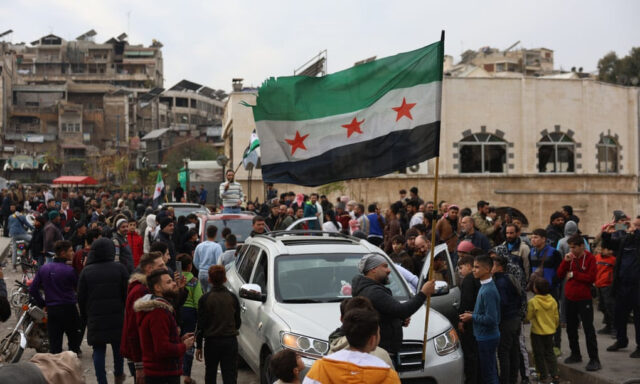
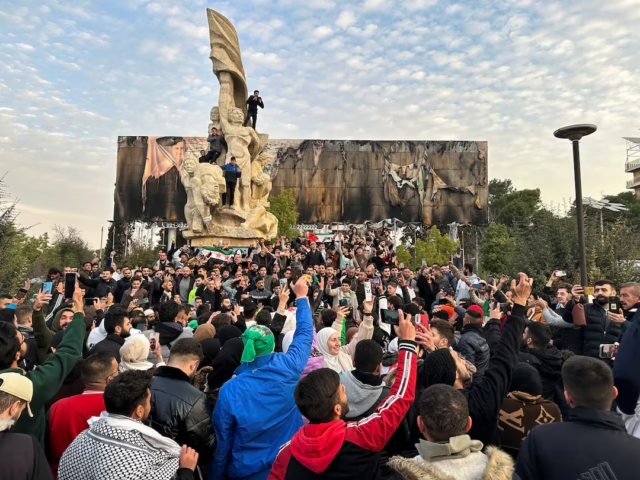
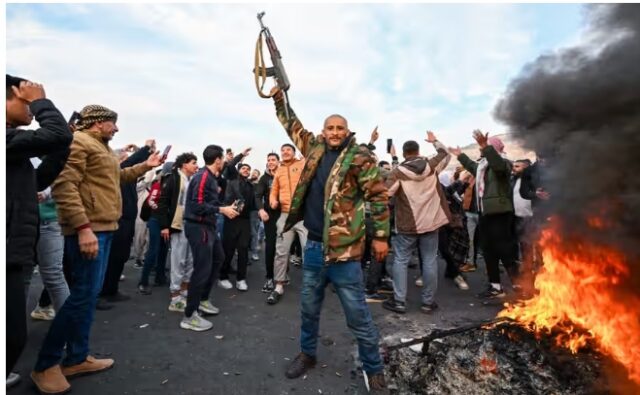
Thousands of Syrians poured into the streets to celebrate, chanting for freedom and the end of Assad’s rule.

In Damascus, crowds gathered in a central square, while in Homs, celebrations erupted with chants of “Assad is gone, Homs is free.”

In an announcement, the rebels stated they were continuing efforts to establish a transitional government in Syria, marking the shift from opposition to state-building.

“The great Syrian revolution has moved from the stage of struggle to overthrow the Assad regime to the struggle to build a Syria together that befits the sacrifices of its people,” a statement from the rebel coalition declared.

Earlier, Syria’s prime minister, Mohammad Ghazi al Jalali, who remained in Damascus, stated his readiness for a peaceful transition of power but refrained from commenting on Assad’s reported flight.

The conflict, which has raged for years, has caused profound divisions within Syria. As Assad’s forces lost control of key areas, including the capital, reports emerged of looting and widespread celebrations in former government strongholds.

In addition to the fall of Homs and Damascus, rebels also claimed victory in other cities like Deir el-Zor and Deraa.

Celebrations were marred by signs of instability. Gunfire was heard in central Damascus, though the source was unclear, and some protests in the capital targeted statues of Assad’s father, Hafez al-Assad.

The situation has raised concerns about what comes next for Syria, with various rebel factions vying for power and the risk of further fragmentation.

Rebel forces, led by Hayat Tahrir al-Sham (HTS), the main opposition group that has been instrumental in the recent offensive, have pledged to respect those who surrender, offering assurances that those laying down arms would not be harmed.

However, the path forward remains uncertain, with fear of further civil conflict and the difficulty of transitioning power in a deeply divided nation.

International reactions to Assad’s fall have varied. U.S. President Joe Biden’s administration has expressed concern but reaffirmed its commitment to countering ISIS in the region.

President-elect Donald Trump, on social media, described Syria as a “mess” and distanced the U.S. from further involvement.

Meanwhile, Russia and Iran, Assad’s key allies, have signaled their diminished support as they face pressures from other global conflicts.

Despite the celebrations, the future of Syria remains precarious.

As the country emerges from decades of brutal authoritarian rule, questions remain about the rebuilding process and the role of various rebel factions in establishing a stable government.

The international community, including the United Nations, is calling for dialogue and respect for human rights as Syria enters a critical phase of its history.

Google search engine

Syria: 53 Years of President Assad’s Dynasty Overthrown, Trump Reacts

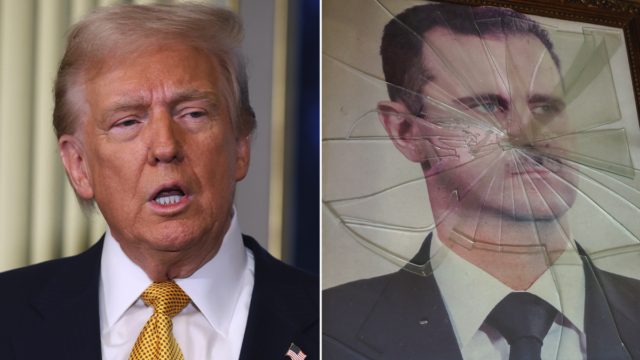
US President-elect, Donald Trump reacted to the breaking news on Sunday morning that Syrian leader Bashar al-Assad had fled the country after rebels stormed the capital, Damascus.

Trump, expressing his thoughts on the development through a post on his social media platform, Truth Social, declared: “Assad is gone. He has fled his country.”

In his statement, Trump continued to criticize Russia’s involvement in Syria, writing, “Russia, Russia, Russia, led by Vladimir Putin, was no longer interested in protecting Assad.”

He suggested that Russia’s focus had shifted to the ongoing war in Ukraine, where the toll has been severe, with “close to 600,000 Russian soldiers wounded or dead.”

Trump emphasized the unnecessary nature of the war in Ukraine and called for a ceasefire and negotiations, arguing that the ongoing violence in both Ukraine and Syria had resulted in excessive loss of life.

“Russia and Iran are in a weakened state right now, one because of Ukraine and a bad economy, and the other due to Israel’s success in its fighting efforts,” Trump continued.

“Zelenskyy and Ukraine are ready to make a deal and stop the madness. They’ve lost 400,000 soldiers and many civilians. A ceasefire and negotiations must begin immediately.”

As news of Assad’s escape spread, Syrian state television reported that the dictator had fled with his wife, Asma al-Assad, and their three children, but their exact whereabouts were unknown.

A group of men appeared in a video statement on Syrian state TV declaring that Assad had been overthrown and that all prisoners had been released.

The statement urged opposition fighters and citizens to preserve the institutions of a “free Syrian state” and called for unity among the country’s various ethnic and sectarian groups.

In his post, Trump reiterated the gravity of the situation: “Too many lives are being wasted, too many families destroyed,” adding that the situation could spiral into something far worse if not addressed.

He also called on Russia and China to take action to help end the ongoing violence.

Syrian Prime Minister Mohammad Ghazi al-Jalali, speaking earlier on Sunday, confirmed he did not know the location of Assad, deepening the uncertainty surrounding the fate of the Syrian leader.

The situation in Syria remains tense as the country grapples with a new phase in its long-running conflict.

Google search engine

#GhanaDecides: Ministers, Incumbents Lose Parliamentary Seats

Several high-profile ministers and incumbents in Ghana have lost their parliamentary seats in the recent election, signaling a shift in political power.

Communications Minister Ursula Owusu-Ekuful, who had held the Ablekuma West seat since 2012, was defeated by Reverend Kweku Addo of the National Democratic Congress (NDC). Owusu-Ekuful received 26,575 votes, while Addo triumphed with 31,866 votes.

The result was confirmed by the Electoral Commission of Ghana (EC), with a total of 58,441 valid votes cast.

Tourism Minister Andrew Egyapa Mercer, a key member of the New Patriotic Party (NPP), also lost his seat in Sekondi to Blay Nyameke Armah of the NDC.

Mercer, who had represented Sekondi since 2016, secured 11,084 votes, while Armah won with 14,558 votes. Armah, in his victory speech, expressed his gratitude to his supporters, promising to work towards rebuilding the constituency.

Interior Minister Henry Quartey faced defeat in the Ayawaso Central constituency, losing to Abdul Rauf Tubazu of the NDC.

Quartey garnered 23,345 votes, while Tubazu secured 29,755 votes. Tubazu, in his statement, assured voters of his commitment to work for the people’s benefit.

In a surprising turn of events, independent candidate Ohene Kwame Frimpong emerged victorious in the Asante Akim North constituency.

Frimpong secured over 18,000 votes, beating the incumbent NPP candidate Andy Appiah Kubi, who received just 8,933 votes.

The election process saw some challenges, including power outages at two collation centers—Ayawaso North and Madina—leading to delays and heightened tension among supporters.

The Electoral Commission assured that efforts were being made to restore power to the affected centers.

Additionally, there were incidents of electoral misconduct, with one person arrested in the Western region for double voting at the Wassa Akropong-Appiahkrom polling station.

In Okaikwei South, another individual was detained for carrying a weapon at the St. Theresa school polling station.

The EC also confirmed the arrest of an official in the Bono East region.

Google search engine

President Assad Flees Syria As Rebels Take Over Capital

Syrian President, Bashar al-Assad has reportedly fled the country, with opposition fighters claiming control of Damascus following a rapid two-week offensive. Senior Syrian military officials have confirmed Assad’s departure, though independent confirmation is still awaited.

The United Arab Emirates, where rumors suggest Assad may have sought refuge, declined to comment on the matter.

Rebels celebrated the collapse of Assad’s 24-year rule on Syrian state television, calling for national unity and the restoration of Syria’s sovereignty.

Celebrations broke out across Damascus as residents tore down posters of Assad and his late father, Hafez al-Assad, while also removing statues that symbolized the regime.

Prisoners, including those from the infamous Sednaya prison, were freed as the opposition forces took control.

Videos emerging from the capital showed Syrians joyfully destroying portraits of the Assad family and trampling on statues that had long been symbols of the regime.

Assad, who succeeded his father in 2000 after his father’s nearly 30-year reign, had ruled with an iron fist.

His brutal crackdown on the 2011 uprising led to a civil war that has claimed over 300,000 lives over the past decade.

The rebel offensive, primarily led by Hayat Tahrir al-Sham, successfully breached Assad’s defenses, with video footage showing government soldiers abandoning their posts as the opposition closed in on the capital from multiple directions.

While many Syrians hailed the fall of the regime as a historic moment akin to the fall of the Berlin Wall, a sense of mourning persisted for the thousands of people who disappeared under Assad’s rule.

Human rights activists are calling for justice and accountability for the disappeared, as the country enters a new chapter in its tumultuous history.

Google search engine

MOST COMMENTED

- Advertisement -
Google search engine