Home Blog Page 798

10 Presidential Elections Annulled Globally
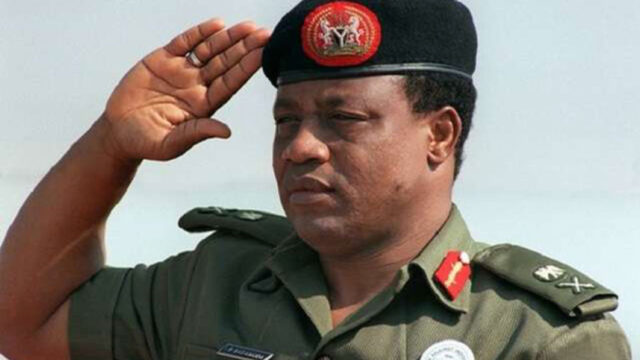
Babangida, 

Romania’s top court recently annulled its ongoing presidential election over alleged irregularities, following a trend of similar decisions in recent years.

Here are some notable instances from around the world:

1. Gabon: Military Coup
After Ali Bongo Ondimba was declared victorious in the August 30, 2023, presidential election, a military coup led by General Brice Oligui Nguema ousted him, accusing the election of being rigged.

The coup ended the Bongo family’s 55-year rule, with a new presidential election set for 2025 following a promised transition back to civilian leadership.

2. Malawi: Violent Protests
In 2020, Malawi’s constitutional court annulled the re-election of President Peter Mutharika, citing irregularities.

Following months of protests led by opposition leader Lazarus Chakwera, Chakwera won a fresh election in June 2020.

3. Bolivia: Political Crisis
In October 2019, Bolivia’s election results, which initially showed Evo Morales winning a fourth term, were delayed amid widespread protests.

Morales later resigned, and his challenger, Carlos Mesa, disputed the results. Morales was later exiled, and the interim government annulled the election results.

4. Kenya: Controversial Vote
Kenya’s 2017 presidential election, where President Uhuru Kenyatta was declared the winner over Raila Odinga, was annulled by the Supreme Court on September 1, 2017, citing irregularities.

A rerun was ordered, but Odinga boycotted the new election, leaving Kenyatta to claim victory.

5. Austria: Lengthy Election Process
In 2016, Alexander Van der Bellen won Austria’s presidential election in a contentious race.

A May 2016 runoff against Norbert Hofer was annulled due to irregularities, and a re-run was delayed due to issues with postal votes.

Van der Bellen was ultimately elected in December 2016 after a prolonged process.

6. Haiti: Electoral Crisis
Jovenel Moise’s 2015 election victory in Haiti was annulled by the court due to fraud allegations.

A re-election in 2016 was marred by low turnout and a power vacuum, though Moise was eventually re-elected in November 2016.

7. Maldives: Electoral Disputes
The Maldives’ 2013 presidential election was annulled by the Supreme Court due to discrepancies in the voter roll.

Mohamed Nasheed, initially declared the winner, went on to contest a re-run of the first round in November 2013 but was defeated by Abdulla Yameen in the second round.

8. Ukraine: Orange Revolution
In 2004, the presidential election in Ukraine, which saw Viktor Yanukovych declared the winner, was annulled after allegations of election rigging.

The decision led to the “Orange Revolution,” and Viktor Yushchenko, despite being poisoned during the campaign, won the subsequent re-run.

9. Serbia: Invalid Elections
Between 2002 and 2003, Serbia saw three presidential elections ruled invalid due to voter turnout falling below the required 50%.

A fourth election in 2004 saw Boris Tadic, a reformist candidate, defeating ultra-nationalist Tomislav Nikolic.

10. Nigeria’s 1993 Presidential Election
Nigeria’s 1993 presidential election, widely regarded as one of the fairest in the country’s history, was annulled by then-military leader General Ibrahim Babangida on June 23, 1993, just days after Moshood Kashimawo Olawale Abiola was believed to have won.

The annulment sparked widespread protests and condemnation both domestically and internationally.

Google search engine

Ghana’s Ballot Counting Continues After Tight Presidential Race

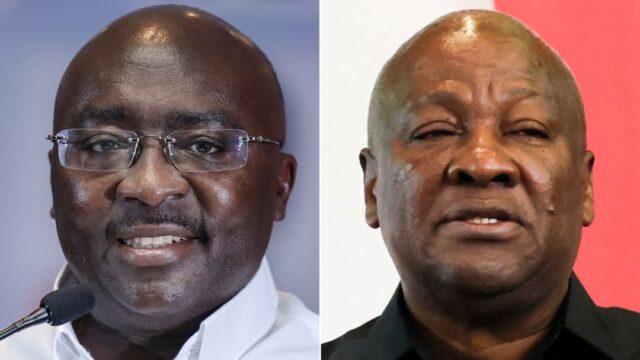
Ghana has begun tallying votes following a tightly contested presidential election on Saturday, where Vice President Mahamudu Bawumia faced off against former President John Mahama.

The election was heavily influenced by widespread voter frustration over economic difficulties.

Although the voting process was mostly peaceful, the police reported two deaths in separate incidents, casting a dark shadow over the proceedings.

The election was held to choose a successor to President Nana Akufo-Addo, who is stepping down after completing two terms.

Polls closed at 1700 GMT, with preliminary results expected by early Sunday, and the final official counts anticipated by Tuesday.

Economic issues were central to the election, as Ghana, once hailed as one of Africa’s most stable economies, has struggled with rising inflation, a weakened currency, and a $3 billion IMF bailout following a debt default.

Ballot counting is still in progress as election officials work to tally the votes in Accra.

Bawumia, a trained economist, campaigned on promises to stabilize the economy and further digitize services.

In contrast, Mahama focused on rebuilding the nation, including renegotiating the IMF deal and establishing a 24-hour economy.

Both candidates hail from northern Ghana, a crucial area that traditionally supports Mahama’s National Democratic Congress (NDC). Mahama, who served as president from 2012 to 2017, is seeking a political comeback after losing twice to Akufo-Addo.

Despite some signs of economic improvement, many Ghanaians remain dissatisfied.

While inflation has decreased from over 50% to 23%, challenges such as the high cost of living, job scarcity, and illegal gold mining continue to fuel frustration.

The ruling New Patriotic Party (NPP) is seeking an unprecedented third term, campaigning under the “Break the 8” slogan, but it faces mounting criticism over its handling of the economy.

Additionally, northern Ghana has seen increasing threats from conflict spillovers from neighboring Burkina Faso and Niger, raising the stakes for this election.

Google search engine

Zion Prayer Movement Announces Dates For 2024 ‘Odeshi Programme’ In Lagos

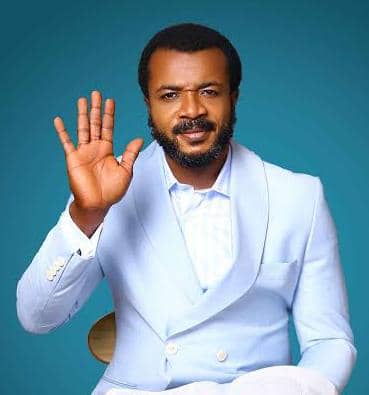
The Zion Prayer Movement Outreach (ZPMOM) has revealed that its highly anticipated annual event, “Odeshi,” will take place in Lagos from Friday, December 13, to Sunday, December 15, 2024.

Evangelist Chukwuebuka Anozie Obi, the Spiritual Director of ZPMOM, made the announcement over the weekend, confirming that the event will be held at Zion Ground, Agor, Okota, Lagos, starting at 10 a.m. each day.

The “Odeshi” programme, which translates to “Does not leak or penetrate,” is a spiritual prayer and fasting session aimed at fortifying participants spiritually.

It marks the conclusion of the ministry’s year-long activities.

Evangelist Ebuka explained that the primary purpose of Odeshi is to seek divine protection for those traveling during the busy Christmas and New Year period, as well as to prepare the congregation for God’s blessings and favour in the year 2025.

Given the increase in accidents and crime during the festive season, he emphasized the importance of seeking divine safeguarding for those traveling locally and internationally to reunite with family and friends.

Looking ahead to this year’s programme, Evangelist Ebuka expressed high hopes that the 2024 edition of Odeshi would witness significant spiritual breakthroughs.

He anticipates thousands of attendees giving their lives to Christ, as well as powerful miracles, healings, deliverances, and salvation.

“We’ve experienced similar remarkable events in the past, and we expect even more this year,” he shared.

In addition to the profound testimonies and accurate prophecies that have become synonymous with Zion, Evangelist Ebuka is gaining recognition for his transformative work in society, including converting native doctors, cultists, and prostitutes, saving troubled marriages, and providing charitable services through his Seraphic Foundation.

His efforts include free medical treatment at Seraphic Hospital and financial assistance to converted individuals and reconciled couples to help them establish new, stable livelihoods.

Google search engine

After Much Delay, Date For 2025 National Youth Conference Is Finally Announced

The Federal Government has announced that the long-awaited National Youth Conference will take place in February 2025, following several months of delays.

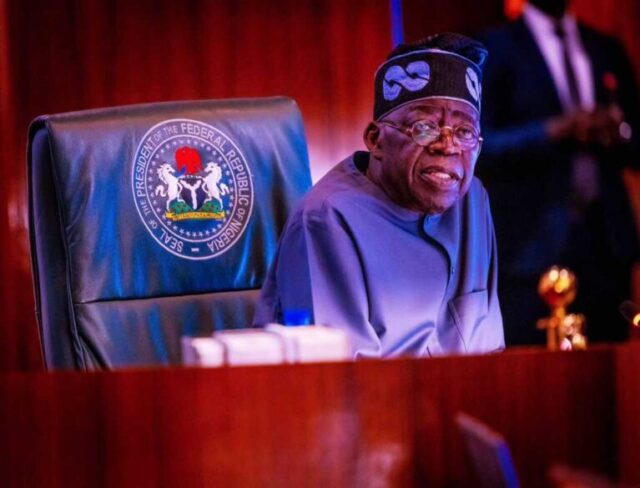
President Bola Tinubu initially proposed the conference during his Independence Day speech, aiming to address critical issues affecting Nigeria’s youth, such as unemployment, education, and political participation.

The conference, which was intended to engage young Nigerians in meaningful dialogue and encourage their involvement in national development, was originally scheduled for much earlier.

However, its postponement has led to frustration among various youth groups, including the Arewa Youth Consultative Forum, Yoruba Youths Council, Ohanaeze Ndigbo Worldwide, and the Ijaw National Congress.

These groups have expressed their disappointment over the lack of progress in organizing the event.

Zaid Ayuba, the National President of the Arewa Youth Consultative Forum, criticized the government’s delay, calling it a sign of neglect and lack of interest in addressing the challenges facing Nigerian youth.

“The President’s announcement should have immediately led to action, but this has not been the case,” he said.

“We remain hopeful, but we urge the government to prioritize the conference in early 2025.”

Similarly, Eric Oluwole, President of the Yoruba Youths Council, expressed frustration over the government’s inaction.

He emphasized that youth inclusion in governance is a critical demand, as young people make up 70% of the country’s population.

He called on the government to act swiftly and ensure that the conference delivers concrete solutions.

Dr. Alex Ogbonnia, spokesperson for Ohanaeze Ndigbo Worldwide, highlighted the importance of the youth conference for the President’s credibility, stating that it would provide valuable insights into the concerns of Nigeria’s youth.

He stressed that the conference should not be delayed further, as it would help address pressing issues such as unemployment and social unrest.

In contrast, Peluola Adewale of the Democratic Socialist Movement criticized the conference as a “diversionary tactic” by the Tinubu administration, arguing that it was an attempt to placate young people amid rising public discontent.

Responding to concerns, Minister of Youth Development, Mr. Ayodele Olawande, confirmed that the event would begin in February 2025, lasting for one month.

The conference will involve extensive grassroots engagement, with three weeks dedicated to interacting with youth at the local level across Nigeria, followed by one week in the Federal Capital Territory (FCT), Abuja, to discuss findings and formulate actionable steps.

Olawande noted that the approach would be different from previous conferences, with a focus on actionable outcomes rather than lengthy discussions.

He revealed that the President had approved the new format, which includes nominating representatives from various ministries and agencies to collaborate with delegates.

The minister emphasized the importance of ensuring the conference leads to real change, mentioning that a task force would be set up to help implement the recommendations.

He also acknowledged that the President had expanded the duration of the conference to a month after reviewing the original proposal.

National Association of Nigerian Students (NANS) President, Lucky Emonefe, also called for urgent action, stressing the need for increased youth participation in government.

He said NANS would demand that at least 50% of public leadership positions be filled by young people, and urged the government to act swiftly to hold the conference as soon as possible.

Google search engine

Reduce Number Of Ministers To 37 – Rep Tells Tinubu In Constitutional Amendment Bill

The House of Representatives Committee on Constitutional Review is currently deliberating a bill aimed at amending the 1999 Constitution to limit the number of ministers appointed by the president to a maximum of 37.

The bill, titled “A Bill for an Act to Amend the Constitution of the Federal Republic of Nigeria, 1999, to Streamline the Number of Ministers to be Appointed to the Federal Executive Council,” is being reviewed by the committee headed by Deputy Speaker Benjamin Kalu.

Sponsored by Mansur Soro, representing Darazo/Ganjuwa in Bauchi State, and Zanna Mustapha, representing Kaga/Gubio/Magumeri in Borno State, the proposed amendment seeks to alter Section 147(1) of the Constitution.

The change would read, “There shall be such offices of Ministers of the Government of the Federation, not exceeding 37, as may be established by the President.”

Currently, under President Bola Tinubu, the Federal Executive Council includes 45 ministers, comprising both substantive ministers and Ministers of State.

Traditionally, the Nigerian president appoints a minister from each of the 36 states, with additional appointments made based on other considerations.

Soro explained the rationale behind the bill, emphasizing the need to reduce government spending and enhance the efficiency of governance.

“The bill seeks to limit the number of ministers in the Federal Executive Council to address issues like duplication of duties, excessive government expenditure, and inefficiencies in service delivery at the federal level,” he said.

“We need to streamline the cost of governance and ensure fairer distribution of ministers across states.”

Soro also pointed out the imbalance in ministerial appointments, particularly the disproportionate number of ministers from states like Ogun, which currently has four ministers compared to states with only one.

He suggested that appointing one minister per state, while considering the Federal Capital Territory, would be sufficient.

The bill also responds to concerns about the inclusion of technocrats in government.

Soro argued that technocrats and politicians can be accommodated in other government agencies and parastatals, reducing the need for an overinflated cabinet.

In addition to the bill on ministers, the committee is reviewing another bill proposing amendments to Section 62 of the Constitution.

This amendment would ensure the observance of the federal character principle in the composition of principal officers in the National Assembly.

These proposed changes are part of ongoing efforts to reform Nigeria’s governance system, improve efficiency, and reduce costs.

Google search engine

Ohanaeze Calls For Immediate Release of Lagos Eze Ndigbo Detained Since 2023

Ohanaeze Ndigbo Worldwide has strongly appealed for the release of Chief Frederick Nwajagu, the Eze Ndigbo of Ajao Estate, Lagos, who has been in detention since 2023.

Nwajagu is facing trial over allegations that he threatened to invite members of the Indigenous People of Biafra (IPOB) to protect Igbo lives and property, should the Federal Government fail to safeguard them during the 2023 general elections.

On April 5, 2023, a Lagos State Magistrates Court in Yaba ordered Nwajagu’s detention at the Ikoyi Custodial Centre, and subsequent bail applications were denied by the Lagos State High Court.

Despite concerns over his health and assurances that he would not flee, his bail request was rejected on July 28, 2023, by Justice Yetunde Adesanya, who cited the seriousness of the charges and the potential punishment as reasons for denying bail.

In an interview with DAILY GAZETTE, Dr. Alex Ogbonnia, the National Publicity Secretary of Ohanaeze Ndigbo Worldwide, expressed frustration over Nwajagu’s prolonged detention.

He emphasized that the group, along with the Ohanaeze Lagos chapter, strongly condemned the situation and called on the Lagos State Government to intervene and secure his release.

Ogbonnia also urged for broader governmental action, suggesting that the involvement of President Bola Tinubu would be helpful in ensuring justice.

“We are not happy about it. The Lagos State Government must intervene and ensure his release. Government at all levels should ensure that he is set free,” he stated.

Chief Omenazu Jackson, Chairman of the Ohanaeze Ndigbo Elders Council for Rivers and Bayelsa States, also weighed in, asserting that Nwajagu should be released unconditionally.

Jackson pointed out that the 2023 elections had passed, and although some winners had emerged, the period also witnessed a rise in tribal tensions, especially in Lagos, where attacks on Igbo property and individuals were reported.

Jackson explained that in the face of such attacks, Nwajagu, as a leader, had acted to protect his people and deter further violence.

“His actions were not out of malice. As a leader, he had a responsibility to defend his people,” he said.

Google search engine

Activists Announces Date For Global Protests Over Farotimi’s Detention Amid Police Resistance

Activists are increasingly defiant against the police’s efforts to halt protests over the continued detention of human rights lawyer, Dele Farotimi.

Despite claims from the Ekiti State Police Command that banning the protest was necessary to ensure public safety, activists have announced plans to demonstrate on Tuesday, December 10, 2024, and are prepared to extend the protests to Lagos, Abuja, and even the United Kingdom.

The protests stem from the arrest of Farotimi by Ekiti police following a defamation complaint lodged by prominent lawyer Chief Afe Babalola, SAN.

The Nigerian Bar Association (NBA) has expressed outrage over the arrest, noting that defamation as a criminal offense was decriminalized in Lagos State under the Criminal Law of 2011 and was further nullified by the Supreme Court in the 2021 case Aviomoh v. Commissioner of Police.

Farotimi’s arrest relates to allegations he made in his book Nigeria and its Criminal Justice System, where he accused Babalola of manipulating the Supreme Court to secure fraudulent judgments for his clients.

The arrest has sparked widespread condemnation from activists and civil society groups.

In response to the ongoing detention, Omoyele Sowore, presidential candidate for the African Action Congress (AAC) in the 2023 elections, has led the charge for protests, with demonstrations scheduled in multiple cities.

Sowore and other rights activists in London have vowed to hold a global protest on December 10, coinciding with a court hearing for Farotimi’s bail application.

Despite a warning from the Police Public Relations Officer of Ekiti State, DSP Sunday Abutu, who raised concerns about potential violence, Sowore and his supporters remain undeterred.

Abutu’s statement cited intelligence reports that suggested some individuals might use the protest to cause unrest.

Nonetheless, Sowore has urged Nigerians to participate in the protest to demand Farotimi’s release.

Sowore, through his X (formerly Twitter) account, shared the details of the planned protests: in Abuja, the point of convergence will be the Ministry of Justice and the Federal High Court; in Ekiti, protesters will gather at the Police Headquarters in Ado-Ekiti; in Lagos, the protest will meet at Afe Babalola Chambers in Magodo; and in the UK, activists will assemble at King’s College London.

Sowore emphasized, “The @PoliceNG can’t ban protests anywhere; we are getting loads of Nigerian citizens to shut down Ado-Ekiti on December 10, 2024, from 7 am. Buses are ready for those coming from out of state.”

The protest will demand the release of Farotimi under the hashtag #FreeDeleFarotimiNow, signaling a global movement against what they call an unjust judicial system in Nigeria.

Google search engine

PDP Crisis: Fresh Plot To Remove Damagum Intensifies

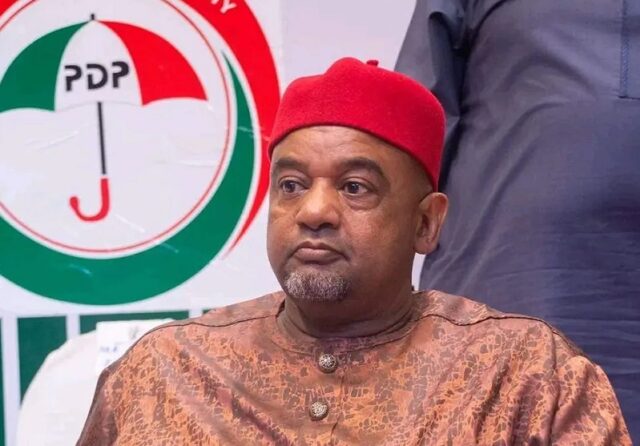
Despite multiple meetings and consultations, the Peoples Democratic Party (PDP) continues to grapple with how to address the situation surrounding its embattled acting national chairman, Ambassador Umar Damagum.

The latest developments came after a Board of Trustees (BoT) meeting in Abuja on Thursday, where members expressed growing frustration with the state of affairs within the party, particularly under the current leadership.

The BoT members reiterated their dissatisfaction with the failure of the National Working Committee (NWC) to convene a National Executive Committee (NEC) meeting, accusing the delay of eroding the trust and confidence of party members.

They also expressed concerns that the party appeared to be under the control of certain interests, weakening its overall position.

During the meeting, news broke that Eriethake Ibori-Suenu, a PDP House of Representatives member from Ethiope, Delta State, had defected to the ruling All Progressives Congress (APC).

Ibori-Suenu, the daughter of former Delta State Governor James Ibori, was seen as a significant loss for the party, and many in the BoT attributed the defection to the alleged ineptitude of the current NEC, particularly Damagum’s leadership.

This triggered further calls for Damagum’s removal.

Senator Ahmed Makarfi, a former acting PDP national chairman and current BoT Secretary, played a key role in de-escalating tensions during the meeting, which became heated as the discussion progressed.

Many BoT members voiced a lack of confidence in Damagum, demanding that the NWC take immediate steps to restore internal unity and adhere to the party’s constitutional provisions, including the zoning of NWC positions.

In a statement issued after the meeting, the BoT called on the NWC to honor its commitment and convene the NEC meeting as scheduled for February 2025.

They emphasized the urgency of resolving the internal conflicts to ensure the party’s future stability, warning that further delays could worsen the party’s already precarious situation.

Additionally, the BoT recommended that the leaders of the North Central Zone convene a meeting to nominate a successor for former national chairman, Senator Iyorchia Ayu.

Despite the growing pressure, Damagum’s supporters remain confident that he will complete his term, which is set to end in December 2025, as confirmed by a recent court injunction.

One of his backers, speaking anonymously, insisted that Damagum is not afraid of a potential NEC meeting in February, as some believe.

The supporter further stated that even if Damagum is no longer acting national chairman, he is prepared to continue in his role as Deputy National Chairman (North).

Damagum assumed the acting chairmanship after Senator Iyorchia Ayu’s departure, in accordance with the PDP Constitution.

However, his leadership has faced opposition, particularly from supporters of former Vice President Atiku Abubakar, who see Damagum as aligning with the interests of Federal Capital Territory (FCT) Minister Nyesom Wike.

Wike, who remains at odds with Atiku and his camp, is blamed by many for the party’s loss in the 2023 presidential election, further complicating the leadership crisis within the PDP.

Google search engine

Gov. Alia Awards Scholarships To All First-Class Graduates Of Benue State University

Governor Hyacinth Alia of Benue State has awarded scholarships to 44 first-class graduates from Benue State University (BSU), Makurdi, as part of the institution’s 22nd, 23rd, and 24th combined convocation ceremony, held on Saturday in Makurdi.

Each of the 44 graduates received an automatic scholarship for a master’s degree in their respective fields at BSU.

In his address, Governor Alia encouraged the graduates to make their mark on the world, striving for success in their future endeavors.

The governor also revealed that he had submitted an executive bill to the Benue State House of Assembly to rename the university in honor of its founder, the late Rev. Fr. Moses Adasu.

Additionally, Alia pledged to donate 500 sets of computers to BSU to enhance the university’s computer hall and improve its technological infrastructure.

As part of his vision to make education more accessible, Alia also announced plans to establish two new campuses: one in Adikpo, Kwande Local Government Area, and another in the Benue South Senatorial District.

In his address, the Vice Chancellor, Prof. Tor Iorapuu, shared updates on ongoing developments at the university, including the construction of a new 144-bed student hostel.

Iorapuu also noted that the Faculty of Technology and Industrial Studies would soon be relocated to Adikpo as part of the university’s expansion.

The Chancellor of BSU, Dr. Najib Adamu, who is the Emir of Kazaure, urged graduates to contribute positively to society and uphold the university’s reputation.

He expressed his continued support for the institution’s growth.

The Pro-Chancellor and Chairman of the Governing Council, Mr. Paul Chukwuma, highlighted the expansion of BSU’s academic offerings, which now include Architecture and Pharmacy.

Chukwuma reassured staff and students that their welfare was his top priority and called for unity among BSU alumni to support the university’s progress.

Google search engine

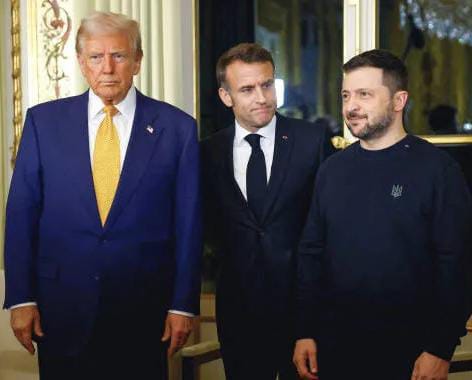
Peace Talk: Ukrainian President, Zelensky Shares Positive Outlook After Tri-Nation Meeting With Trump, Macron

Ukrainian President, Volodymyr Zelensky has described his Saturday meeting with U.S. President-elect Donald Trump and French President Emmanuel Macron as “good and productive,” emphasizing that all parties are committed to ending the war with Russia swiftly and justly.

The trilateral meeting took place at the Elysee Palace in Paris, nearly three years after Russia’s invasion of Ukraine, and just months before Trump’s inauguration in January.

Zelensky shared his thoughts on social media, saying, “We all want this war to end as soon as possible and in a just way.”

He also thanked Macron for facilitating the meeting and expressed his appreciation for Trump’s resolute stance.

“President Trump is, as always, resolute. I thank him,” Zelensky said.

The leaders agreed to continue working closely together, with Zelensky’s office releasing photos of him shaking hands with both Macron and Trump inside the Elysee office.

Earlier, in September, Trump had been highly critical of Zelensky, accusing him of refusing to negotiate a peace deal to end the war with Russia.

The former U.S. president had claimed that Ukraine’s leader walked away with billions in aid while not making efforts to reach a resolution.

Details of the discussions between the leaders on Saturday remain undisclosed.

Google search engine

MOST COMMENTED

- Advertisement -
Google search engine