Home Blog Page 810

CBN Reaffirms Validity of Old N1000, N500, N200 Notes

The Central Bank of Nigeria (CBN) has reaffirmed that both the old and new designs of the ₦1000, ₦500, and ₦200 notes, as well as the previous and commemorative ₦100 banknotes, remain valid and continue to be legal tender indefinitely.

In a statement issued by Mrs. Sidi Ali Hakama, the CBN’s Acting Director of Corporate Communications, the bank addressed circulating misinformation regarding the continued acceptance of the old banknotes.

The CBN clarified that these notes will not lose their legal tender status on December 31, 2024, as some claims have suggested.

“The Central Bank of Nigeria has observed the recent misinformation about the validity of the old ₦1000, ₦500, and ₦200 banknotes in circulation.

As per the Supreme Court ruling on November 29, 2023, all versions of these banknotes remain legal tender without a set deadline,” the statement explained.

The CBN reiterated that both the old and new designs of the ₦1000, ₦500, and ₦200 notes, along with the commemorative and previous ₦100 notes, should continue to be accepted for transactions across the country.

The public was urged to disregard any false information suggesting otherwise.

In addition, the CBN encouraged Nigerians to consider alternative payment methods, such as electronic channels, to reduce reliance on physical cash and ease the pressure on currency usage.

Google search engine

HURIWA Extols Appeal Court For Nullifying The Seizure Of Rivers Allocation

The Human Rights Association of Nigeria (HURIWA) has lauded the Court of Appeal’s recent decision to nullify the Federal High Court’s order to seize Rivers State’s statutory allocation, calling it a vital win for Nigeria’s democracy and the rule of law.

In a statement released after the ruling, HURIWA emphasized the Appeal Court’s upholding of federalism and its resistance to political interference in the judiciary.

The association highlighted the importance of judicial independence in protecting democracy, noting that the decision marks a significant step toward safeguarding the integrity of the nation’s legal system.

Delivered on December 13, 2024, by Justice Barka, the ruling stated that the Federal High Court lacked jurisdiction over the case, which sought the seizure of Rivers State’s revenue.

Justice Barka further stated that the inclusion of federal agencies in the case did not automatically grant the Federal High Court jurisdiction.

The case, he asserted, pertained to the appropriation of state resources, which falls within the jurisdiction of state high courts.

HURIWA, along with other legal experts and advocacy groups, praised the judgment, considering it a victory for the Nigerian people and a reinforcement of the independence of the judiciary.

National Coordinator, Comrade Emmanuel Onwubiko, stated that the Appeal Court’s decision was a clear message against the misuse of the court system for political vendettas.

“This ruling is a major triumph for Rivers State and, by extension, for Nigerian democracy. The Appeal Court has reinforced the idea that the judiciary must serve as the last line of defense for the people, free from political pressures or malice,” Onwubiko said.

HURIWA also condemned the actions of the pro-Wike group, accusing them of attempting to destabilize Rivers State with baseless legal challenges.

The association pointed out that the Federal High Court’s order, if left intact, would have led to significant hardship for the people of Rivers State, potentially creating a political and economic crisis.

“This was a calculated attempt to damage Rivers State’s finances and governance. Such actions could have set a dangerous precedent, undermining Nigeria’s federal structure and democratic principles,” Onwubiko added.

The association further applauded the efforts of the Opposition Lawmakers Coalition and civil society groups who stood firm in defense of democracy and the rule of law.

HURIWA noted that the Appeal Court’s ruling had averted what could have been a constitutional crisis that might have escalated into chaos.

Justice Barka’s ruling clarified key legal principles concerning the jurisdiction of courts in matters of state governance.

He reiterated that the Federal High Court was wrong to entertain a matter that fell squarely under the jurisdiction of state high courts, reaffirming that issues related to the appropriation of state resources should be handled by state institutions.

HURIWA also highlighted the ruling as a reaffirmation of Nigeria’s constitutional democracy, emphasizing the importance of respecting the separation of powers and the autonomy of states.

The judgment serves as an endorsement of Nigeria’s legal system and its ability to interpret and enforce constitutional principles.

In addition, HURIWA called for greater transparency and accountability in the judiciary, urging judges to remain immune from political manipulation.

The association stressed that the judiciary’s primary role is to uphold justice and protect the rights of all Nigerians, irrespective of political allegiances.

“We commend the Appeal Court for delivering a ruling that restores public confidence in the judiciary. We also urge judges at all levels to continue resisting any attempt to compromise their integrity. The judiciary must remain a beacon of justice and a defender of democratic values,” Onwubiko stated.

As celebrations spread across Rivers State following the ruling, HURIWA joined in commending the decision, urging all stakeholders to respect the court’s judgment and work toward fostering peace and development in the state.

HURIWA also issued a strong rebuke of the pro-Wike group, accusing them of attempting to undermine democracy through malicious legal tactics.

The association urged the group to stop using the judiciary for political agendas and prioritize the welfare of the people above personal interests.

“It is shameful that certain individuals would use the judiciary as a battleground for personal grievances. We call on the pro-Wike group to reconsider their actions and focus on what truly matters: the well-being of the people of Rivers State,” HURIWA stated.

The association concluded by reaffirming its commitment to defending democracy and the rule of law in Nigeria, calling on all Nigerians to continue supporting the judiciary in its role as the protector of justice and fairness.

“This judgment is a wake-up call for all Nigerians to remain vigilant in defending our democracy. We must hold our leaders and institutions accountable to ensure that justice always prevails,” Onwubiko concluded.

Google search engine

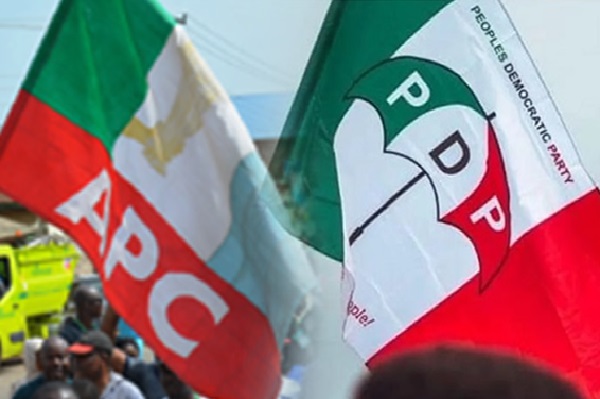
2027 Presidency: Jonathan Not A Threat, He Will Be Defeated Again – APC Reacts To PDP’s Invitation

Reacting to the PDP’s invitation for Jonathan to run, the APC dismissed the idea, asserting that the former president would face another defeat if he returned to the race.

In 2015, Jonathan lost to APC candidate Muhammadu Buhari, marking the first time in Nigerian history that an incumbent president lost re-election.

Bala Ibrahim, the APC’s National Director of Publicity, stated that defeating Jonathan in 2027 would be easy, regardless of his political platform.

Ibrahim added that the APC was not concerned about the potential candidacy of Jonathan, dismissing it as an empty threat.

He pointed out that the APC’s victory over Jonathan in 2015 occurred while he was still in power, and predicted that they would defeat him again now that Bola Tinubu is the president and leader of the APC.

According to Ibrahim, it is the party structure, not the cult of personality surrounding former leaders, that will ensure the APC’s continued dominance in the 2027 election.

Ibrahim also noted that it was too early to be discussing the 2027 election, as less than 40 percent of President Tinubu’s mandate has been completed.

He emphasized that the APC was focused on the present, not the distant future, and that any political permutations around Jonathan’s return were premature.

He concluded that even if multiple versions of Jonathan emerged, they would still not pose a threat to the APC’s position in 2027.

Google search engine

2027: PDP Invites Jonathan To Run Under Its Platform

The Peoples Democratic Party (PDP) has urged former President Goodluck Jonathan to consider running for the presidency in the 2027 elections under its platform.

Ibrahim Abdullahi, the PDP’s Deputy National Publicity Secretary, expressed regret over the possibility of Jonathan choosing a different party for his presidential run.

He emphasized that Jonathan’s return would be pivotal for the party, given his historical ties to its leadership.

Abdullahi highlighted the PDP’s crucial role in shaping Nigeria’s political landscape, citing prominent figures who have emerged from the party.

He also noted the party’s ongoing connection to Jonathan’s political rise, urging him to “complete the term he began” within the PDP.

Abdullahi further criticized the ruling All Progressives Congress (APC) for its perceived hypocrisy, particularly regarding Jonathan’s legacy, and warned the former president to be cautious of sudden support from those who once criticized him.

This call comes after the sighting of Jonathan’s presidential campaign posters across major streets in Kano, leading to speculations about his possible return to politics.

The posters, promoting a movement called ‘Team New Nigeria,’ echo a similar scenario from the 2023 elections, when Jonathan’s supporters purchased nomination forms under the APC, a move he distanced himself from.

Some northern political figures are reportedly attempting to draft Jonathan into the 2027 race, arguing that he is eligible for another term after serving as president from 2011 to 2015.

Meanwhile, the PDP is facing internal turbulence, with party leadership struggling to reconcile differing factions.

Sources within the party predict that its upcoming National Executive Committee (NEC) meeting, scheduled for February 2025, will be crucial in determining the party’s direction.

The meeting is expected to address leadership issues and the ongoing criticisms of acting National Chairman, Umar Damagum.

A source close to the party emphasized that the NEC meeting’s agenda will have lasting implications for the PDP, with delays in convening the meeting potentially harming the party’s future.

Some party members, however, have argued that Damagum, a shrewd politician, will do everything in his power to delay the meeting, as it may lead to his removal.

Google search engine

Just In: South Korean President Impeached By Lawmakers

South Korea’s National Assembly has voted to impeach President Yoon Suk Yeol following his failed attempt to impose martial law on December 3, 2024.

The impeachment vote, which took place on Saturday, was met with massive protests across Seoul, with hundreds of thousands of citizens rallying both for and against the president’s removal.

A total of 204 lawmakers voted in favor of the impeachment, accusing Yoon of insurrection, while 85 lawmakers voted against it.

Three lawmakers abstained from the vote, and eight votes were declared invalid.

As a result of the vote, Yoon has been suspended from office while South Korea’s Constitutional Court reviews the case.

The court has up to 180 days to make its ruling on his fate.

If the court upholds the impeachment, Yoon would become the second South Korean president in history to be successfully impeached.

Prime Minister Han Duck-soo, who is now acting as interim president, assured the public that he would work to ensure stable governance during the ongoing crisis.

The impeachment motion required a minimum of 200 votes to pass, and the opposition needed to win over some members of Yoon’s own conservative People Power Party (PPP).

Following the vote, opposition Democratic Party floor leader Park Chan-dae declared the outcome a “great victory for the people.”

Outside the National Assembly, large groups of protesters gathered in support of the impeachment, with some chanting slogans and waving banners.

Police estimated at least 200,000 people participated in the protests. “This is an incredible moment,” said Choi Jung-ha, 52, a demonstrator who was seen dancing in the streets after the vote.

“We, the people, have made this happen.”

Meanwhile, a smaller group of around 30,000 people rallied in support of Yoon near Gwanghwamun Square.

Many of his supporters insisted that his decision to attempt martial law was justified, with one supporter, Choi Hee-sun, 62, stating, “Yoon had no choice but to declare martial law.”

The Democratic Party had long argued that impeachment was necessary to “protect the Constitution” and safeguard democracy in South Korea.

“We can no longer tolerate Yoon’s reckless actions,” said spokeswoman Hwang Jung-a.

The protest atmosphere was charged with energy, as volunteers handed out hot drinks, food, and hand warmers to counter the freezing temperatures.

K-pop singer Yuri of Girls’ Generation also voiced her support for the protestors, offering prepaid meals to fans attending the demonstrations.

Although the Constitutional Court could block the impeachment, there is precedent for a president’s reinstatement.

In 2004, then-President Roh Moo-hyun was impeached by the National Assembly but later reinstated by the court.

The court, which currently has only six judges, must make a unanimous decision on the impeachment.

National Assembly Speaker Woo Won-shik stated that the assembly would work to nominate three additional judges to the Constitutional Court to ensure a full panel.

“The future of South Korea lies in the hands of its people,” he said after the vote.

Yoon’s popularity has plummeted in the wake of the martial law attempt, with a recent Gallup Korea poll showing his approval rating at just 11 percent.

A staggering 75 percent of South Koreans supported his impeachment in the same poll, further reflecting the growing discontent with his presidency.

Google search engine

Lecturer Arrested Over Kidnap Of Colleague’s Wife

Dr. Ichor Tersagh, a lecturer at Joseph Sarwuan Tarka University of Agriculture, Makurdi, has been arrested by the police in Benue State on suspicion of masterminding the kidnapping of the wife of one of his colleagues, Mrs. Susan Anyagh.

Mrs. Anyagh’s husband, Paul Anyagh, serves as the chairman of the Academic Staff Union of Universities (JOSTUM) chapter at the university. According to reports, Mrs. Anyagh was ambushed and abducted by a group of men along Otukpo Road in Makurdi last Saturday.

The kidnappers reportedly stole N1.3 million from her car, severely beat her, and left her unconscious on a secluded bush path.

She was later discovered on Yandev-Ugbema Road and rushed to the Primary Healthcare Clinic in Ameladu for medical treatment.

Police Public Relations Officer Catherine Anene shared details of the incident, saying that after regaining consciousness, Mrs. Anyagh told police she had seen Dr. Tersagh near the scene of her abduction.

She claimed to have beckoned him for help, but the lecturer turned away without offering assistance.

In her account, Mrs. Anyagh explained that while driving from the NNPC mega fuel station in Kanshio, where she had picked up money from a customer, she was flagged down by people who claimed to need help.

After she stopped her car, the abductors forced their way in, held her at gunpoint, and ordered her to drive toward the Wurukum area.

As they drove, she noticed Dr. Tersagh standing by the car and attempted to get his attention, but he ignored her and walked away.

Soon after, the kidnappers received a phone call from Dr. Tersagh, who allegedly ordered them to kill Mrs. Anyagh.

This caused her to panic, and the abductors decided to reverse the car after spotting a police checkpoint ahead.

The kidnappers parked the car in a hidden area, took the N1.3 million from her car, and then used a vehicle jack to strike her on the back of her neck, knocking her unconscious.

They abandoned her before fleeing the scene.

Dr. Tersagh has been arrested in connection with the crime, and an ongoing investigation is underway.

Google search engine

South Korean Lawmakers Vote To Impeach President Yoon Suk Yeol

In a dramatic political turn, South Korean lawmakers voted on Saturday to impeach President Yoon Suk Yeol over his failed attempt to declare martial law on December 3.

The vote, which passed with 204 lawmakers in favor and 85 against, marks a significant moment in South Korea’s political landscape, with opposition leaders hailing it as a “victory for the people.”

The impeachment motion accused Yoon of insurrection, resulting in his immediate suspension from office.

Prime Minister Han Duck-soo has stepped in as interim president while the Constitutional Court deliberates on Yoon’s future. The court now has 180 days to issue its ruling.

The vote was closely watched, as the opposition needed at least 200 votes to succeed, with key support from members of Yoon’s conservative People Power Party (PPP). At least eight PPP lawmakers broke ranks to support the impeachment.

Meanwhile, mass protests erupted across Seoul, with roughly 200,000 demonstrators gathering in support of Yoon’s removal, according to police estimates.

On the other side of the city, around 30,000 rallied in support of the president, waving South Korean and American flags and chanting patriotic songs.

“Yoon had no choice but to declare martial law. I support every decision he made as president,” said Choi Hee-sun, 62, one of Yoon’s supporters.

The main opposition Democratic Party, which spearheaded the impeachment effort, argued that removing Yoon was necessary to “safeguard the Constitution, democracy, and the rule of law.”

“We can no longer tolerate Yoon’s actions,” said party spokesperson Hwang Jung-a.

In the heart of the impeachment rally, protestors braved freezing temperatures, with volunteers handing out free warmers, coffee, and food.

K-pop star Yuri from Girls’ Generation, whose song “Into the New World” has become a symbol of protest, supported the demonstration by covering food expenses for attendees. Some protestors even rented a bus for parents to change diapers and feed their babies.

Despite the impeachment victory in parliament, Yoon’s legal troubles are far from over. If the Constitutional Court upholds the decision, Yoon would become only the second South Korean president in history to be successfully impeached.

However, there is a precedent for the court overturning such a move. In 2004, President Roh Moo-hyun was impeached by parliament but later reinstated by the Constitutional Court.

With only six judges on the court, any ruling would require unanimous agreement. Should the impeachment vote fail, legal experts warn that Yoon could still face consequences for his actions.

“This is clearly an act of insurrection,” said Kim Hyun-jung, a researcher at Korea University’s Institute of Law. “Even if the impeachment fails, Yoon’s legal responsibilities cannot be avoided.”

Yoon’s approval rating has sharply declined amid the martial law controversy, with a recent Gallup Korea poll showing his support at a record low of just 11%.

The same poll indicated that 75% of the population now supports his impeachment.

Google search engine

Defected Lawmakers Are Liabilities To Our Party, Their Absence Won’t Be Felt – Labour Party

The leadership of the Labour Party (LP) has expressed its disappointment with the recent defection of six of its lawmakers to the All Progressives Congress (APC), calling them a liability and insisting their absence would not be felt.

According to the party, the defectors had not contributed meaningfully to the party’s development and would not be missed.

In separate statements on Friday, Umar Farouk, the LP National Secretary, and Kehinde Edun, the party’s National Legal Adviser, both rejected the defectors’ significance to the party.

Farouk also confirmed that the LP had initiated legal action to have the lawmakers’ seats declared vacant and demand the refund of all salaries and allowances they had received since assuming office.

The defection was triggered when Ajang Iliya, the lawmaker representing Jos South/Jos East Federal Constituency in Plateau State, announced he was joining the APC.

This brought the total number of LP lawmakers to defect to the ruling party to six.

The other defectors are Tochukwu Okere (Imo), Donatus Mathew (Kaduna), Bassey Akiba (Cross River), Iyawe Esosa (Edo), and Daulyop Fom (Plateau).

Farouk, speaking on the matter, described the defectors as “paper-weight politicians” who had ridden to office on the LP’s platform, which offered them a chance at leadership but did not prepare them for true political responsibility.

He further stated, “They have never contributed a kobo to the party’s growth. Why should I care if they leave? We will pursue legal action to have them removed from their positions, and I’m confident the Speaker will take the appropriate action once the court rules.”

Farouk also expressed frustration that the lawmakers had defected despite the party’s efforts to reconcile with them and had extended an olive branch to any aggrieved members.

He suggested their move was motivated by personal gains rather than ideological differences.

“They’re after the benefits of being in the majority party, like access to powerful committees and positions,” he said. “Their actions are driven by self-interest, not the welfare of their constituents or the party.”

The LP National Secretary also lamented that the party had been lenient in addressing the misconduct of some members, which led to factions within the party.

He accused the defectors of being the architects of the crisis they blamed for their exit, emphasizing that their defection was about personal gain.

Kehinde Edun, the party’s National Legal Adviser, echoed Farouk’s sentiments, calling the defectors traitors.

Be further argued that the APC would likely not grant them tickets for the next election, stating, “These lawmakers owe their positions to the LP’s movement, which helped them secure victory. They weren’t capable of winning on their own. Their decision to join the APC is about avoiding accountability to their constituents due to their poor performance.”

Edun also predicted that the defectors would not succeed in the APC’s primaries, where stronger candidates would challenge them.

Meanwhile, the APC has called for caution regarding the defection trend.

Nze Duru, the APC Deputy National Organising Secretary, warned that encouraging mass defections could weaken the opposition and undermine the political system.

Duru emphasized that politicians should remain in their parties to strengthen their ideological positions rather than abandoning them at the first sign of internal challenges.

He stated, “Opposition must be nurtured and allowed to grow. Encouraging defections weakens the political landscape and undermines the development of party ideologies, which is essential for a healthy democracy.”

Duru suggested that any politician wishing to switch parties should resign their seat and seek a mandate from voters based on their new affiliation.

Google search engine

Former Kogi Governor, Yahaya Bello To Remain In Custody Pending Bail Perfection

Justice Emeka Nwite of the Federal High Court in Abuja has ordered the remand of Yahaya Bello, former governor of Kogi State, at the Kuje correctional center, pending the perfection of his bail conditions.

Bello was granted bail in the sum of N500 million, with two sureties who must each provide a similar amount in landed property within the court’s jurisdiction.

Delivering the ruling, Justice Nwite emphasized that granting bail is at the court’s discretion, regardless of whether the application is contested.

The judge noted the defendant’s previous conduct, which led to the court’s decision to grant bail under strict conditions.

The terms include the verification of property documents by the chief deputy registrar and the submission of both the defendant’s and sureties’ passports and recent passport photographs to the court.

Bello will only be released once these conditions are met. The case was adjourned for trial to February 24, 28, and March 6-7, 2025.

Bello is facing 19 charges related to money laundering, breach of trust, and misappropriation of public funds totaling N80.2 billion, as filed by the Economic and Financial Crimes Commission (EFCC). He pleaded not guilty to all charges.

His legal counsel, J.B. Daudu, apologized for previous legal challenges and assured the court that Bello, who served two terms as governor, would attend all trial sessions and not pose a flight risk.

EFCC counsel Kemi Pinheiro informed the court that the prosecution would withdraw a previous application seeking to shorten the arraignment date, which was no longer necessary.

Pinheiro did not oppose the bail request, despite having previously filed a counter.

In addition to this case, Bello faces another fraud charge of N110.4 billion before Justice MaryAnne Anenih at the Federal Capital Territory High Court in Maitama, Abuja.

Following a procedural error, Anenih rejected his bail application in that case and ordered his remand at the Kuje correctional facility until the hearing of his bail application.

Google search engine

Macron Appoints Francois Bayrou As New French Prime Minister

President Emmanuel Macron has appointed Francois Bayrou, the 73-year-old leader of the centrist MoDem party, as France’s new prime minister, following the ousting of Michel Barnier’s government in a historic no-confidence vote.

Bayrou, who has been a key ally of Macron, takes on the challenge of leading France through a turbulent political landscape after months of deadlock and a divided parliament.

Bayrou’s appointment comes just nine days after Barnier, who served as prime minister for only three months, was ousted over disagreements surrounding an austerity budget.

Bayrou is now tasked with forming a new government and navigating a no-confidence vote in the National Assembly, where no party or alliance holds a clear majority.

He also faces the critical task of negotiating the 2025 budget to prevent further economic instability.

Macron made the announcement after meeting with Bayrou for nearly two hours on Friday.

Although the talks were described as “tense,” the French presidency confirmed Bayrou’s appointment in a brief statement, without offering additional details.

Bayrou will become Macron’s sixth prime minister and his fourth in 2024.

The new prime minister faces several challenges, including securing enough support in parliament to avoid further instability and addressing the deepening political division that emerged following the summer’s snap parliamentary elections.

The left-wing New Popular Front (NFP), which became the largest bloc in the National Assembly, had called for the appointment of a prime minister from their ranks.

However, Macron’s choice of Bayrou has sparked opposition from both the left, which opposes continuing Macron’s policies, and the right, where he remains unpopular due to his ties with former president Nicolas Sarkozy.

Bayrou’s candidacy was also seen as a contentious move for some of the other prime ministerial hopefuls, including former Socialist prime minister Bernard Cazeneuve, Defence Minister Sebastien Lecornu, and former foreign minister Jean-Yves Le Drian, who declined the position.

While Bayrou’s appointment signals a potential resolution to the political crisis, the public remains skeptical, with recent polls showing widespread frustration.

Over two-thirds of respondents have expressed a desire for politicians to reach a deal to stabilize the government.

In the backdrop of this crisis, the far-right leader Marine Le Pen, who played a role in Barnier’s ouster, remains a powerful figure.

With the 2027 presidential elections approaching, Le Pen’s support continues to grow, posing a significant challenge to Macron’s party.

However, she is currently facing an embezzlement trial in March 2025, which could impact her political future.

Google search engine

MOST COMMENTED

- Advertisement -
Google search engine