Home Blog Page 811

2027: Defections, Divisions Plague Opposition Parties

In the past week, the opposition parties in Nigeria faced significant setbacks as five members of the House of Representatives, including four from the Labour Party (LP) and one from the Peoples Democratic Party (PDP), defected to the ruling All Progressives Congress (APC).

This was followed by two more members from Plateau State also joining the APC, intensifying concerns about the weakening opposition in the country.

These defections, which the LP has contested, have compounded the challenges faced by the opposition, further diminishing their representation in parliament and limiting their ability to voice dissent.

Prior to these events, the opposition had already suffered several high-profile defections, including that of former Secretary to the Government of the Federation, Anyim Pius Anyim, and former PDP gubernatorial candidate in Ebonyi State, Obinna Ogba.

Additionally, Labour Party member, Edward Nkwegu and Imo-East Senator Francis Ezenwa had also joined the ruling APC.

The opposition has also seen the departure of former Deputy Speaker of the House of Representatives, Emeka Ihedioha, and former spokesperson for a PDP presidential candidate, Daniel Bwala.

This influx of defections has dealt a severe blow to the leading opposition parties—PDP, LP, and the New Nigeria Peoples Party (NNPP)—which are already grappling with internal crises.

Political analysts suggest that the opposition in Nigeria is experiencing one of its weakest periods, marked by a lack of unity and diminished presence in national discourse.

Despite widespread dissatisfaction with the current administration, critics argue that the opposition has failed to effectively challenge the government.

The absence of a strong, organized opposition is particularly notable in the legislature, where the ruling party is increasingly playing the role of holding the government accountable, a function traditionally reserved for opposition lawmakers in a democracy.

Following the inauguration of the current administration, the APC held 63 Senate seats, while the PDP had 34, LP had 5, and the NNPP had 2.

In the House of Representatives, opposition parties secured 181 seats, with the PDP winning 117, LP 35, NNPP 19, and other smaller parties claiming the remaining seats.

Despite their numbers, the opposition’s influence in both chambers of the National Assembly has been limited.

The challenges facing opposition parties are not only political but also financial, with most of these parties struggling to maintain strong internal structures.

Critics argue that many Nigerian political parties, especially opposition ones, operate more as vehicles for securing power rather than as platforms with clear ideologies and visions for governance.

This lack of a coherent ideological foundation has made it difficult for them to offer viable alternatives to the ruling party, and when they do gain power, they are often driven by patronage rather than a commitment to democratic principles.

Civil society organizations (CSOs) have pointed out that the weakness of opposition parties in Nigeria is a result of several factors.

Mark Amaza, Senior Communications Officer at Yiaga Africa, attributed this weakness to the way political parties are structured, often focusing on access to power and patronage rather than policy-driven agendas.

Comrade Ibrahim Zikirullahi, Executive Director of the Resource Centre for Human Rights and Civic Education (CHRICED), noted that many politicians see themselves as relevant only when they are in power, which weakens the opposition’s resolve and contributes to its dysfunction.

Dr. Mufuliat Fijabi, Executive Director of the Sustainable Gender Action Initiative (SGAI), emphasized that self-interest within both politicians and parties is stifling the development of strong opposition movements.

Without a genuine commitment to good governance and nation-building, opposition parties remain ineffective in holding the ruling government accountable.

At the party level, the PDP has struggled to recover from the shock of its 2015 loss and the subsequent internal divisions following the 2023 elections.

The Labour Party, too, has been plagued by leadership disputes and factionalism, while the NNPP faces similar challenges regarding its leadership.

The Social Democratic Party (SDP), though less divided, still lacks the organizational strength to challenge the APC effectively.

Historically, Nigeria’s opposition was much stronger, especially during the Second Republic, when parties like the UPN, GNPP, PRP, and NPP formed coalitions to challenge the dominance of the ruling NPN.

The APC, during its formation, also posed a strong challenge to the PDP, organizing protests and pushing for change until it eventually unseated the PDP from power.

Despite the ongoing crises, the leadership of the PDP, LP, and other opposition parties insists they are fulfilling their roles.

Timothy Osadolor, a member of the PDP’s National Executive Committee, blamed the APC’s dominance and the government’s use of poverty as a political tool for the weakening of the opposition.

Labour Party spokesperson, Obiora Ifoh, argued that the LP has been active in offering constructive criticism, particularly on issues like the subsidy removal.

Similarly, SDP National Chairman Alhaji Shehu Gabam defended his party’s opposition role, emphasizing its vocal stance on government policies.

In contrast, the APC has denied any involvement in destabilizing opposition parties.

Alhaji Bala Ibrahim, APC National Director of Media and Publicity, dismissed allegations that the ruling party is behind the crises in opposition parties, claiming that the opposition simply lacks the understanding of how to effectively challenge the ruling government.

The former presidential candidates from the opposition parties, Atiku Abubakar, Peter Obi, and Rabiu Musa Kwankwaso, have attempted to sustain the opposition’s fight, voicing their concerns over government policies.

However, their inability to unite their factions has often diluted their effectiveness.

Political analysts fear that, given the current state of affairs, Nigeria could soon experience the reality of a one-party state.

Google search engine

No One In Their Right Mind Would Quarrel With Wike – Akpabio

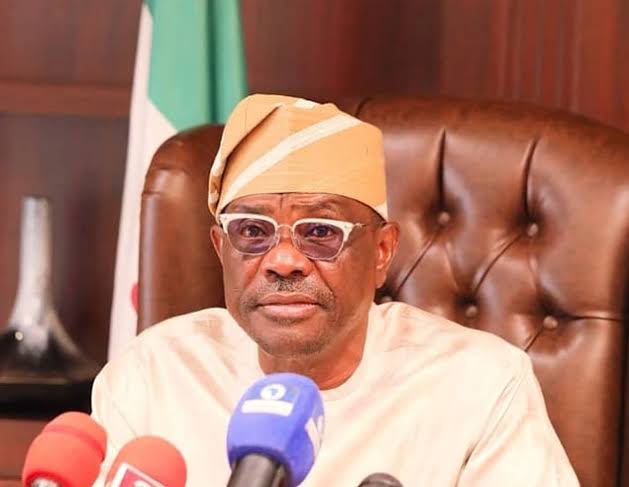
Senate President Godswill Akpabio has come to the defense of the Minister of the Federal Capital Territory (FCT), Nyesom Wike, describing him as a man of peace, despite the criticism surrounding his recent actions, including the demolition of structures in Abuja.

Speaking at a Public Lecture and Book Launch to celebrate Wike’s birthday in Port Harcourt, Rivers State, Akpabio expressed disbelief that anyone would quarrel with the FCT minister, emphasizing Wike’s peaceful nature.

He recounted a conversation with a colleague, where he humorously remarked that Wike’s ability to quickly move past disagreements made him hard to stay mad at.

Akpabio joked that even if Wike raised his voice in frustration, he would forget it moments later and invite him over for lunch, highlighting the minister’s forgiving and amicable nature.

Wike, in his response, shrugged off the ongoing criticisms. He stated that as long as he knew what he was doing and had a clear plan, the opinions of critics did not bother him.

He reassured his supporters that he remained focused on achieving results for the public good, affirming his commitment to the administration of President Bola Tinubu.

He further added that while he was aware of the criticisms, he didn’t let them distract him, as he didn’t focus on what people said behind his back.

The former governor of Rivers State expressed his gratitude for the overwhelming support he had received from the crowd, dismissing the attacks as being orchestrated by his detractors.

Wike stressed that the best way to silence critics was to deliver results for the people and to prove that the president’s intentions were genuine.

Google search engine

Reps Query NUPRC Over N120 Billion Annual Spending On Personnel, Overhead

The House of Representatives’ joint Committees on Finance and National Planning have raised concerns about the Nigeria Upstream Petroleum Regulatory Commission’s (NUPRC) annual expenditure of over N120 billion on personnel and overhead costs.

The Committees are seeking further clarification on the agency’s spending, which they consider excessive.

During an interactive session on the 2025-2027 Medium Term Expenditure Framework (MTEF) and Fiscal Strategy Paper (FSP), the Chairman of the House Committee on Finance, James Abiodun Faleke (APC, Lagos), demanded detailed information from NUPRC on oil production, crude sales, and other operations within the upstream petroleum sector.

Faleke questioned how the NUPRC could justify spending N88 billion on personnel, asking how many staff the organization employed.

He compared this to the National Assembly’s budget, noting that the total cost for all parliamentary activities is just N150 billion annually.

Faleke further expressed frustration over the 4% cost of revenue collection, arguing that the figure was disproportionately high given the agency’s spending levels.

“You are spending N88 billion on salaries and over N40 billion on overhead,” he remarked, demanding a comprehensive report on NUPRC’s revenues, expenditures, and operations, particularly those related to exploration activities in the country’s Frontier Basins.

Babajide Oluwole Fasina, NUPRC’s Executive Commissioner for Economic Regulation and Strategic Planning, who represented CEO Gbenga Olu Komolafe, had earlier presented the Commission’s revenue and expenditure figures.

He explained that NUPRC generates its revenue through oil and gas royalties, gas penalties, fines, levies, signature bonuses, and the renewal of licenses.

Fasina also disclosed that the 4% cost of revenue collection amounted to N114.84 billion in 2023, a slight increase over the previous year.

Despite the explanation, the committee remained unsatisfied with the figures and demanded further records, including detailed information on oil production and crude sales.

They specifically asked for data on the daily oil production per well, as well as weekly or daily shipment details and the corresponding revenue.

The committee also inquired about NUPRC’s Frontier Exploration activities and how these initiatives align with the agency’s financial reports.

Faleke instructed the agency to return with detailed records on the Frontier activities, including expenses and oil sales, by the scheduled meeting on the 18th of the month.

Fasina also acknowledged that personnel costs, which accounted for 70.19% of NUPRC’s total expenditure, had increased significantly by N11.46 billion, or 10.83%, in 2023.

He also noted a decrease in the Commission’s non-tax remittance, which fell from N3.67 billion in 2022 to N1.77 billion in 2023.

In addition to addressing NUPRC’s concerns, the committee directed the Nigeria Bulk Electricity Trading (NBET) agency to clarify discrepancies in invoicing between Generation Companies (Gencos) and Distribution Companies (DisCos).

NBET had explained that discrepancies arose due to timing differences in invoicing, which led to the inclusion of additional components like interest and True-Up charges in GenCo invoices.

The inclusion of off-takers, such as Ajaokuta Steel Company, further complicated the invoicing process.

Google search engine

Impeachment Plot Against Abia Speaker Gains Momentum

The position of Rt. Hon. Emmanuel Emereuwa, Speaker of the Abia State House of Assembly, is under serious threat, with reports indicating a growing move to impeach him in the next sitting.

The Speaker’s tenure is facing significant challenges, and unconfirmed reports suggest that tensions between Emereuwa, the state governor Dr. Alex Otti, and some members of the House of Assembly have contributed to the unfolding crisis.

Sources say that as of Wednesday night, at least 21 signatures from Assembly members had been gathered in support of the Speaker’s impeachment, signaling a serious threat to his leadership.

The reasons behind the alleged discontent within the House remain unclear, but insiders suggest there is a lack of harmony between the Speaker and both his colleagues and the state executive.

A critical meeting between the members of the Abia State House of Assembly and Governor Alex Otti is scheduled for Sunday to attempt to resolve the issues threatening to destabilize the Assembly and Emereuwa’s position as Speaker.

One of the points of contention is the identity of a potential successor to Emereuwa, with two Labour Party members representing Aba Central and Umuahia East State Constituencies emerging as possible candidates.

Despite the swirling rumors, there has been no official confirmation from the Abia State House of Assembly regarding the impeachment plot.

However, Hon. Lucky Nweke Johnson, the representative of Isuikwuato State Constituency and a member of the People’s Democratic Party (PDP), has dismissed the claims as false.

Johnson, in a statement, categorically rejected the notion of an impeachment move, labeling the reports as “unfounded lies.”

He reassured the public that there were no plans to remove Emereuwa from office, urging Abians to focus on issues that foster unity and progress in the state rather than giving attention to what he described as “misinformation.”

Google search engine

Jubilation As Governor Nwifuru Announces N150,000 Christmas Bonus For Ebonyi Workers

Ebonyi State Governor, Francis Nwifuru, has declared a N150,000 Christmas bonus for all state civil servants in 2024.

This announcement was made during a state banquet held at the Government House in Abakaliki in honor of the visiting British Deputy High Commissioner to Nigeria, Gill Lever.

The 2024 Christmas bonus represents a N50,000 increase from the previous year’s bonus. Governor Nwifuru expressed his gratitude to the state’s workers for their dedication and understanding, especially during the recent strike action.

He praised their commitment to their duties and their response to the government’s appeals during the industrial action.

The governor emphasized that the bonus would be paid out to all workers before the end of business on Tuesday next week.

In an earlier meeting with the British Deputy High Commissioner at the Ochoudo Centenary City in Abakaliki, Governor Nwifuru sought the British Government’s support in key sectors such as water, health, education, power, and agriculture.

He highlighted the state’s ongoing efforts to boost industrialization, including progress in projects like the Ebonyi Pipe Production Company, the Ebonyi State Fertilizer and Chemicals Company, and the Ebonyi State Hatchery in Nkaliki.

The governor also mentioned the state’s rice production and its goal to increase exports, while urging further collaboration with the UK.

Governor Nwifuru also noted the state’s advancements in water and sanitation, citing the revival of the Oferekpe Water Scheme, which now has the capacity to produce 100 million cubic liters of water daily.

He acknowledged the continued support of the UK Foreign Office and other development partners in Nigeria’s growth.

Google search engine

Two Varsity Students Crushed To Death In Trailer Accident

Two female students have tragically lost their lives in a fatal accident on the Felele stretch of the Abuja-Lokoja highway in Kogi State.

Several others were injured in the incident, which occurred around 7 am on Friday near the Kogi State Polytechnic, Lokoja Staff Quarters.

The accident was caused when a heavily loaded trailer, reportedly having brake failure, collided with a Keke NAPEP, resulting in the immediate deaths of two passengers.

One of the deceased victims was identified as Covenant Omolola Isaac, a student from the Department of Geology at the Federal University Lokoja.

The other victim, Abu Taiwo Abimbola, was from the Department of Science Laboratory Technology at Kogi State Polytechnic, Lokoja.

Abimbola, an HND II student, was said to have been on her way to complete her final paper for the ongoing first-semester examination at the polytechnic.

According to a classmate, she had mentioned earlier that she planned to go home for the Christmas holidays after finishing her exams.

Witnesses said the collision between the Keke NAPEP and the trailer was violent, with both students being ejected from the vehicle and crushed by the speeding truck.

The Keke driver survived, though he sustained injuries.

The death of Abimbola was confirmed by Comrade Akor Caleb Kelvin, the president of the National Association of Science Laboratory and Technology Students, Kogi State Polytechnic.

He expressed his grief in a statement, mourning the loss of their “cherished member” and expressing deep sorrow over the tragedy.

Kogi State Police Public Relations Officer, SP Williams Aya, confirmed the incident and stated that the bodies of the two students had been retrieved and taken to a Lokoja hospital for further processing.

The police also verified the identities of the deceased, confirming that one was a student from the Federal University Lokoja and the other from Kogi State Polytechnic.

Google search engine

Ngozi Okonjo-Iweala Among Forbes’ 100 Most Powerful Women For 2024

Ngozi Okonjo-Iweala, Director-General of the World Trade Organization, and media mogul, Mo Abudu have once again been named to Forbes’ list of the 100 Most Powerful Women in the World for 2024.

Okonjo-Iweala, who ranks 89th, has now appeared on the prestigious list eight times, having previously been recognized in 2011, 2012, 2013, 2014, 2015, 2022, and 2023.

Abudu, ranked 97th, makes her fourth consecutive appearance on the list.

The founder of EbonyLife Media expressed her gratitude and humility at being included once again.

Google search engine

Couple Dies In Kano Midnight Fire

A husband and wife have tragically died in a fire that occurred late Thursday night in Rangaza (Inken) Layin AU, located in the Ungogo Local Government Area of Kano State.

The victims have been identified as 67-year-old Muhammed Uba and his 52-year-old wife, Fatima.

Hassan Muhammad, the Director of the Kano State Fire Service, confirmed the incident in a statement released by the Service’s Public Relations Officer, Saminu Abdullahi, on Friday.

Muhammad explained that the fire broke out around midnight on Thursday, December 12, and emergency services were alerted at approximately 01:45am.

The fire service team was dispatched immediately and arrived at the scene at 01:51 a.m.

The fire engulfed a bungalow measuring 50 by 25 feet, which contained two rooms.

The couple was reportedly trapped by thick smoke and was found unconscious with burns on parts of their bodies. They were rescued but unfortunately died before they could receive medical assistance.

The victims’ remains were handed over to the ward head of Rangaza, Muhammad Rayyanu.

Authorities have launched an investigation into the cause of the fire.

The Fire Service urged the public to adhere to safety protocols to prevent such incidents in the future.

Google search engine

Rail Services Generate N1.7 Billion In Q3 2024, NBS Reports

The Nigerian Railway Corporation (NRC) generated N1.7 billion in revenue from passenger and cargo services during the third quarter (Q3) of 2024, marking a 13.83% increase from the N1.49 billion recorded in the same period in 2023.

This data was released by the National Bureau of Statistics (NBS) in a report on Friday.

According to the NBS, the NRC’s earnings from goods and cargo amounted to N412.57 million in Q3 2024, a significant rise from the N217.6 million recorded in Q3 2023.

The report also indicated that other receipts for the first nine months of 2024 totaled N34.7 million.

Passenger traffic saw a notable increase, with the NRC transporting 743,205 passengers in Q3 2024, up 25.05% from 594,348 passengers in Q3 2023.

Additionally, the volume of goods and cargo transported by rail reached 96,401 tons in Q3 2024, a substantial increase from 69,003 tons in the same quarter of the previous year.

The NBS also reported that the NRC transported 7,320 tons of goods and cargo via pipeline in Q3 2024, a decrease from the 12,960 tons transported in Q3 2023.

Revenue from cargo movement via pipeline stood at N51.85 million, down from N69.18 million in the same period last year.

Other receipts, however, saw a sharp decline of 70.84%, with a total of N34.77 million in Q3 2024 compared to N119.22 million in Q3 2023.

Google search engine

Declaration Of Tinubu’s 2027 Intentions Premature – CUPP

The Conference of United Political Parties (CUPP) has sharply criticized the presidency for what it describes as an insensitive and premature declaration regarding President Bola Tinubu’s intention to run for re-election in 2027.

The group argues that the timing of the statement is out of touch with the current realities facing Nigerians, especially amid ongoing economic hardships.

Chief Peter Ameh, National Secretary of the CUPP, expressed concern over recent comments made by the Secretary to the Government of the Federation (SGF), Sen. George Akume, who boldly stated that President Tinubu would contest and win the 2027 presidential election.

Ameh labeled the declaration as boastful and disconnected from the struggles of the Nigerian populace, who are grappling with poverty, inflation, and high unemployment rates.

Ameh commented, “The declaration made by the SGF has sparked a lot of controversy and raised serious concerns about the priorities of this administration. At a time when millions of Nigerians are battling economic hardships, the notion of Tinubu’s victory in 2027 seems far-fetched.”

He further criticized the administration for policies that, in his view, have exacerbated the nation’s economic and social challenges, further eroding public trust in the government.

The CUPP official also suggested that the premature announcement could be a diversionary tactic, aimed at shifting attention from the pressing issues Nigerians are currently facing.

Ameh emphasized that the government should focus on resolving critical problems like poverty, insecurity, and infrastructure decay, rather than prematurely declaring an electoral victory.

Additionally, Ameh raised concerns over the administration’s understanding of democratic governance, emphasizing that democracy is fundamentally about responding to the needs and aspirations of the people. H

He stressed that the focus should be on good governance, not political victories, and warned that such premature declarations undermine the democratic process and dismiss the possibility of a change in leadership come 2027.

Concluding his remarks, Ameh stated, “What Nigeria needs now is an inclusive government that truly listens to the people, prioritizing their needs and aspirations, rather than pushing forward political ambitions without considering the reality on the ground.”

Google search engine

MOST COMMENTED

- Advertisement -
Google search engine