Home Blog Page 86

Ghana Recalls Envoy To Nigeria Over Election Rigging

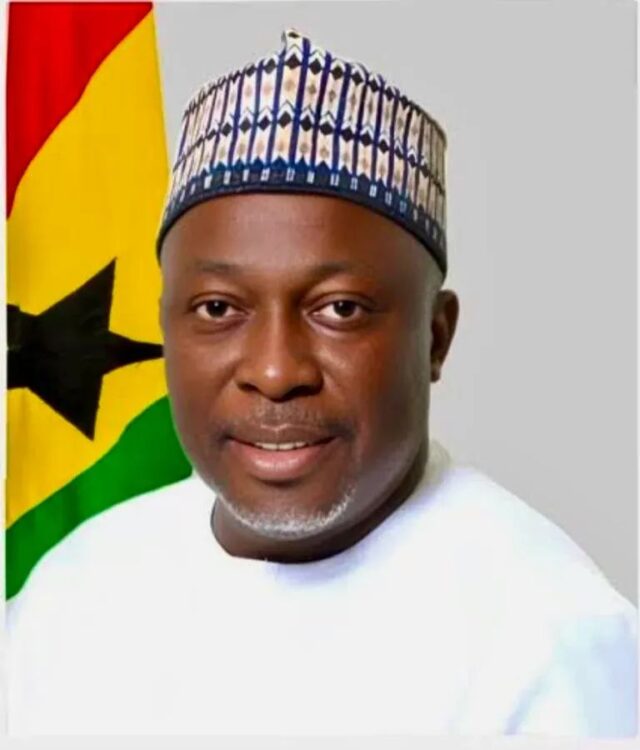
Ghana’s President, John Mahama, has ordered the immediate recall of the country’s High Commissioner to Nigeria, Baba Ahmed, over alleged involvement in electoral malpractice during the National Democratic Congress parliamentary primaries in the Ayawaso East Constituency.

In a statement issued by the Ghanaian Presidency in Accra, Ahmed—who reportedly participated as an aspirant in the primaries—was recalled following accusations of voter inducement and other irregularities linked to the exercise.

The government said the decision was taken to avoid any perception of impropriety and to uphold the Code of Conduct guiding political appointees.

It added that Ahmed’s continued stay in office had become untenable in light of the allegations.

Authorities noted that claims of vote-buying were made against several aspirants who contested in the primaries, prompting further scrutiny of the process.

The presidency also confirmed that the Minister of Foreign Affairs had been directed to initiate the necessary diplomatic and administrative steps to implement the recall with immediate effect.

The move followed an announcement by the NDC’s General Secretary that the party had launched an internal investigation into the alleged malpractice.

Government officials stressed that the action was taken without prejudice to ongoing party processes, but in line with the need to protect the credibility and integrity of public office.

Google search engine

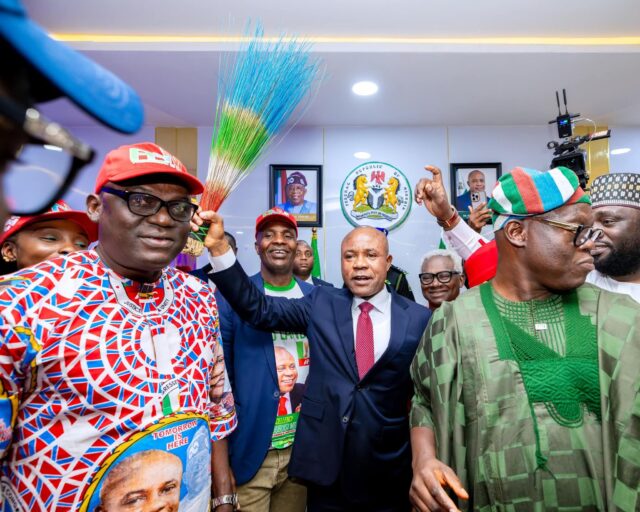
The State That Works: Citizens’ Experience Under Governor Mbah

By Dr. Malachy Chuma Ochie,

For many Nigerians, governance has long felt distant; something debated during elections but rarely experienced in daily life. In too many places, the state exists as an authority that taxes and regulates, yet struggles to deliver. That is why a quiet but notable shift is emerging in Enugu State.

Increasingly, citizens are speaking less about political promises and more about lived experiences; about whether the state is beginning, in practical ways, to work.

This observation is not partisan; it is civic. Across markets, offices, schools, and neighborhoods, ordinary people are describing changes that suggest a renewed seriousness of purpose under Governor Peter Mbah’s administration.

I first encountered this sentiment in an unplanned conversation with a commercial bus driver along Agbani Road. As we drove over a stretch once infamous for potholes and gridlock, he remarked simply, “At least now, government dey do something wey we fit see.” That brief comment captures a growing feeling among residents: the visibility of governance.

For years, infrastructure decay symbolized neglect in Enugu. Roads deteriorated quietly, drainage systems collapsed, and public spaces shrank into disrepair. While challenges remain, the citizen experience is changing. Rehabilitated roads are reducing travel time and easing commercial activity.

Traders at Ogbete Main Market speak of improved access for suppliers and customers. One trader noted that flooding, once routine during rainfall, is no longer an automatic fear. These may seem modest gains, but they directly shape everyday life.

Beyond infrastructure, many citizens point to a shift in administrative culture. A civil servant at the state secretariat described a new emphasis on timelines and responsibility. “File no longer sleep for days on people’s table,” he said. “If you delay work now, question will come.” In a public service long criticized for inertia, even incremental accountability signals meaningful reform.

Security remains one of the most sensitive issues in the South-East. While Enugu has not been immune to broader regional tensions, residents increasingly speak of a gradual return of public confidence.

A school proprietor in Independence Layout explained that parents are once again allowing extra-curricular activities that had been suspended due to fear. “We’re still careful,” she said, “but we no longer feel abandoned.” That sense of presence, of a government that is alert and engaged, matters deeply.

Healthcare workers also describe improvements that restore professional dignity. In a primary healthcare centre on the outskirts of the metropolis, a nurse explained that basic equipment long lacking had finally been supplied. “We used to improvise too much,” she said. “Now, we can do our work properly.” When public institutions function, they dignify both users and providers.

Education forms another part of this emerging narrative. Parents and community leaders speak cautiously but hopefully about improvements in school facilities and planning. A parent-teacher association member in Nsukka observed that while problems persist, “there is now a direction we can point to.” In a country where policy inconsistency often undermines progress, clarity of purpose is itself a public good.
Governor Peter Mbah’s leadership style has influenced these perceptions. Not known for flamboyance or constant media presence, his approach initially struck some as distant. Over time, many citizens have reinterpreted this as a focus on execution rather than spectacle.

As one youth leader put it, “We may not see him everywhere, but we see what government is doing.” Enugu is not without its struggles. Economic pressures, unemployment, and rising living costs remain real concerns.

Yet what is changing is the tone of public complaint. Increasingly, criticism is tempered by the recognition that the state appears to be taking its responsibilities seriously.

Trust is built not by slogans, but by functioning roads, working schools, responsive hospitals, and a sense of security. These are basic expectations, but in Nigeria they are transformative.

If this trajectory is sustained, Enugu may offer a quiet lesson: even within a troubled federation, a state can choose to work; and when it does, citizens notice.

Google search engine

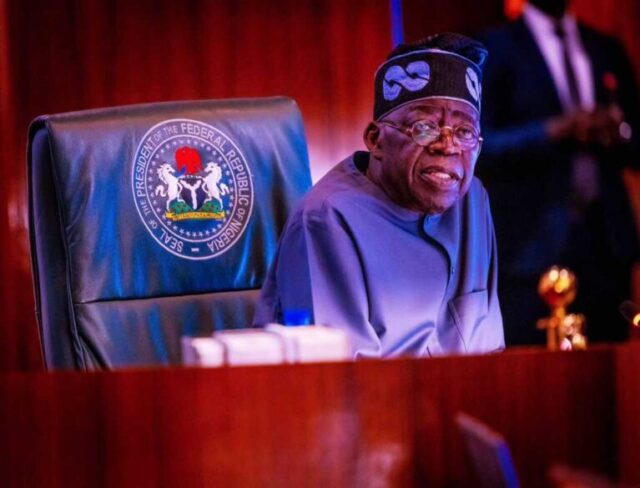
President Tinubu To Embark On Two-Day UK State Visit March 18

President Bola Tinubu is scheduled to undertake a two-day state visit to the United Kingdom from March 18 to 19, 2026, following an official invitation from King Charles III.

The visit was announced through a statement shared on the British royal family’s official X account, confirming that the Nigerian leader will be received by King Charles and Queen Camilla at Windsor Castle.

Tinubu will be accompanied by the First Lady, Senator Oluremi Tinubu.

Presidential spokesman Bayo Onanuga described the trip as historic, noting that it would mark the first state visit by a Nigerian leader to the UK in 37 years.

The last such visit occurred in 1989 when former military president Ibrahim Babangida was hosted by Queen Elizabeth II.

State visits are widely regarded as instruments of diplomatic engagement, combining ceremonial activities with high-level discussions to reinforce strategic partnerships between countries.

Tinubu and King Charles have interacted on several occasions since assuming office in May 2023.

The Nigerian president met the monarch in Dubai during the COP28 summit in November 2023 and again at Buckingham Palace in September 2024, where both leaders discussed areas of mutual cooperation.

King Charles has longstanding ties with Nigeria, having visited the country multiple times before ascending the throne, and has often expressed admiration for Nigerian culture, including Afrobeats and Pidgin English.

The visit is expected to further strengthen bilateral relations between Nigeria and the United Kingdom, particularly in areas of economic cooperation, youth development, and diplomatic engagement.

Google search engine

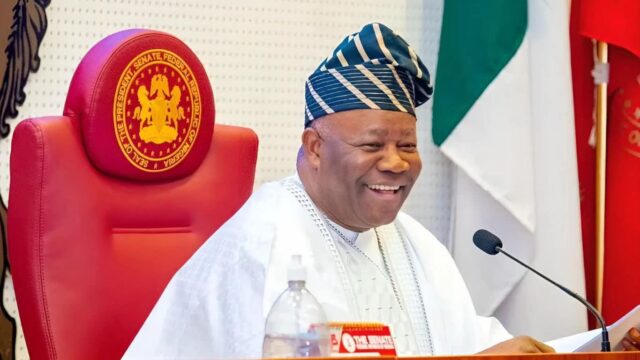
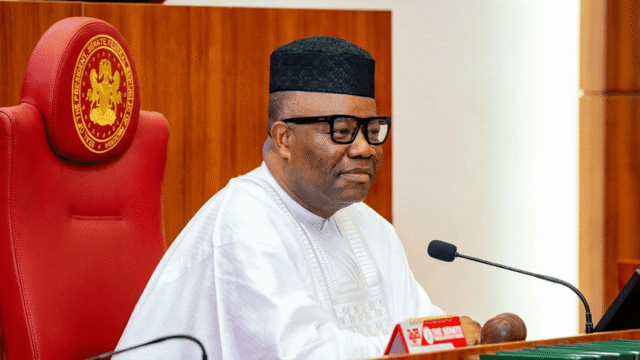
Withdraw Your Son From State Assembly If You Hate Godfatherism – Akpabio Fires Ex-Senator Effiong

Senate President Godswill Akpabio has called on political leaders who denounce godfatherism publicly to demonstrate their opposition through personal conduct, insisting that credibility in tackling the practice must be matched with action.

Akpabio made the remarks on Saturday in Abuja during the launch of The Burdens of Legislators in Nigeria, a book authored by former Senator Effiong Bob, held at the Nigerian Air Force Conference Centre in Kado.

The event was chaired by former Senate President David Mark.

Responding to conversations around godfatherism at the gathering, the Senate President highlighted what he described as inconsistencies among some political figures.

“And then, of course, members of the House of Assembly also include the son of a distinguished senator. So when I heard that he was against godfatherism, I said, okay,” Akpabio said.

He continued, “Since you’re against godfatherism, maybe you’ll withdraw your son from the House of Assembly as a starting point of showing that you’re against godfatherism.”

Akpabio argued that it is contradictory for individuals to criticise godfatherism while appearing to benefit from it.

“You cannot be saying something on the left-hand side and practising it on the right. Otherwise, that will amount to approbating and reprobating,” he stated.

Despite the criticism, the Senate President acknowledged the performance of the lawmaker involved.

“But let the boy remain. He’s even doing his second term in the House. He’s on his second term, and he’s one of the leaders of the House of Assembly in himself,” he said.

Google search engine

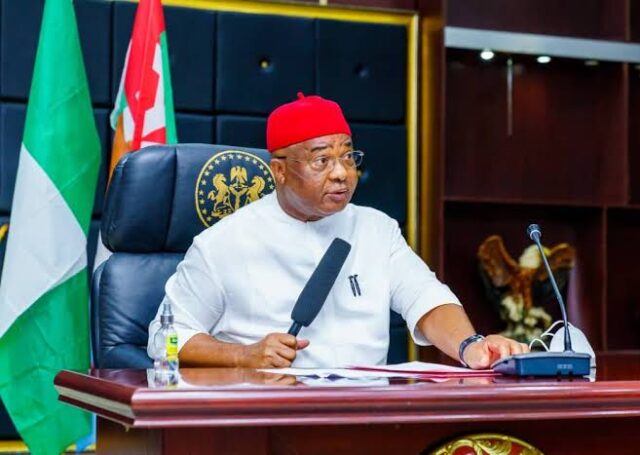
Why APC Removed Uzodimma As Convention Chair

New details have emerged on why the All Progressives Congress (APC) replaced Imo State Governor Hope Uzodimma as Chairman of the National Convention Central Coordination Committee, appointing former Katsina State governor Aminu Masari in his place.

According to senior party officials, the change was driven by the need to accommodate and show respect to the party’s senior leaders ahead of the convention scheduled for March 27–28, 2026.

In a statement, APC National Secretary Ajibola Basiru announced Masari as the new chairman and former Senate President Pius Anyim as Vice Chairman I. Uzodimma, previously named chairman of the 73-member committee, was reassigned as treasurer.

A party source explained, “The leadership felt that old leaders should be accorded the respect of holding the chairmanship. Masari and Anyim are experienced hands and not currently seeking political office, making them suitable to bring even-handed leadership to the convention committee.”

The source added that the reshuffle had nothing to do with personal issues against Uzodimma, who remains influential as the chairman of the Progressive Governors Forum and will play a key role in the convention.

Another APC leader noted that zoning considerations also influenced the decision, pointing out that with President Tinubu from the South, it was appropriate to have a northern leader as convention chairman.

He further explained that the committee is all-encompassing, including governors, principal officers of the National Assembly, former presiding officers, and former national chairmen, alongside key ministers such as Defence, Interior, and Works.

“The convention is expected to be built around consensus for the emergence of the National Working Committee. The process is already underway, and we expect a rancour-free convention,” he said.

When contacted, Basiru declined to comment on the committee’s reconstitution.

Google search engine

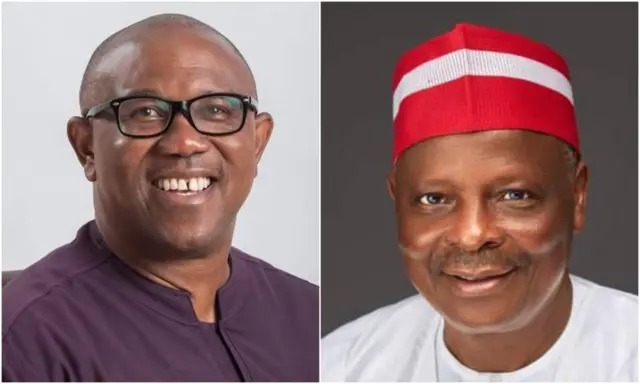
Kwankwaso Supporters Push Obi–Kwankwaso Presidential Ticket To Rescue Nigeria

Supporters of Rabiu Musa Kwankwaso, National Leader of the New Nigeria Peoples Party (NNPP), have called for a joint presidential ticket pairing Peter Obi with Kwankwaso ahead of the 2027 general election.

Speaking in Kano on Friday, Abba Sadauki Gwale, representing Kwankwaso loyalists, said the proposal reflects the desire to forge an alliance capable of rescuing Nigeria from insecurity, hunger, and economic hardship.

Gwale stressed that the Obi–Kwankwaso ticket could emerge under any political platform, noting that current public sentiment is shifting toward a broad-based coalition.

“If the duo gets a chance in the upcoming election, Nigeria will be a better place. We are tired of insecurity, hunger, and starvation,” he said.

According to Gwale, the proposed partnership aims to unite Obi’s strong following in the South with Kwankwaso’s formidable base in the North, creating a national coalition poised to challenge the ruling All Progressives Congress (APC) and President Bola Tinubu.

He emphasised that both Obi and Kwankwaso share a commitment to policies focused on improving the welfare of ordinary Nigerians, and that their message of hope and reform is resonating widely.

“As 2027 approaches, all eyes are on the Obi–Kwankwaso alliance to see how it will translate this momentum into votes,” Gwale added.

Addressing rumours that Kwankwaso had made demands to join the APC, Gwale dismissed the claims, insisting that the NNPP leader’s decisions are guided solely by the interests of his supporters nationwide.

He also highlighted Kwankwaso’s continued grassroots strength in Kano and beyond, despite recent political realignments.

Google search engine

Atiku Courts ADP, Plots Opposition Plan B Ahead Of 2027

Leaders of the Action Democratic Party (ADP) have disclosed that their recent meeting with former Vice President Atiku Abubakar was focused on exploring collaboration to strengthen Nigeria’s democracy and opposition alternatives ahead of the 2027 elections.

The ADP National Chairman, Yabagi Sani, along with another party official who spoke on condition of anonymity, revealed that the engagement with Atiku in Abuja on February 1 was part of broader consultations to ensure a credible multi-party system and to safeguard democratic pluralism.

“The meeting was largely about strengthening democracy and protecting democratic pluralism, ensuring that Nigeria’s multi-party system is sustained and that opposition parties have the stability needed to function effectively,” Sani said.

“The focus is on creating an environment where opposition groups feel reinforced and encouraged, especially amid concerns that the ruling APC is attempting to weaken and discourage opposition participation.”

The ADP officials noted that the discussions are not limited to Atiku alone but extend to other opposition stakeholders, youth organisations, and civic platforms such as the National Youth Alliance.

“Part of the strategy under discussion includes developing a ‘Plan B’ — ensuring that if one platform faces disqualification, litigation, or technical challenges, alternative platforms remain viable so the broader opposition movement is not derailed,” Sani added.

The party emphasised that the goal is to provide meaningful alternatives to APC, strengthen democratic competition, and offer opposition leaders viable platforms to challenge the ruling party effectively.

“We are engaging with leaders beyond Atiku to see how we can create more options for opposition leaders and like-minded individuals who are willing to come together to rescue the country from the All Progressives Congress,” another ADP official said.

“The conversation is centred on democracy, how to sustain it, how to develop the country, and how to address the issues affecting our nation. That is simply the essence of it,” he concluded.

Google search engine

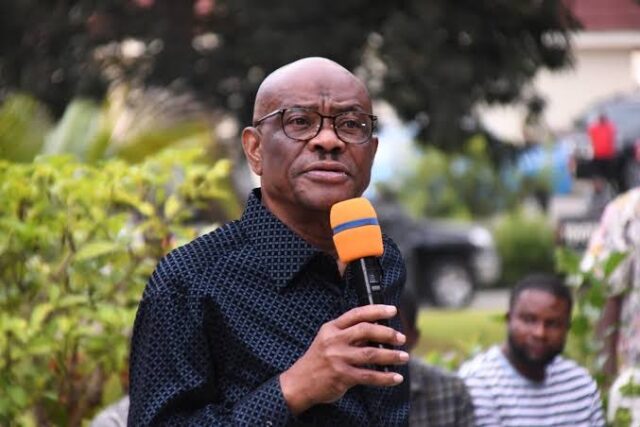
2027: We’ll Deliver Tinubu Without Governor’s Help – Wike

The Minister of the Federal Capital Territory, Nyesom Wike, has declared that President Bola Tinubu’s re-election in 2027 will not depend on the support of any sitting governor in Rivers State, insisting that the political machinery required for victory is already firmly in place.

Wike made the assertion on Saturday in Port Harcourt during the commissioning of the Rivers State Renewed Hope Ambassadors’ headquarters, a facility that includes Majority FM 89.5, a situation room, office spaces, and operational vehicles.

According to him, the structure backing Tinubu cuts across party lines and includes lawmakers at the national and state levels, local government chairmen, and influential political leaders from both the APC and PDP.

“We don’t need a governor to mobilise for Mr President. We have all it takes to stand on our own. Senators, National Assembly members, assembly members, council chairmen, and party leaders are already aligned,” Wike said.

Reflecting on the 2023 elections, the former Rivers State governor noted that his political camp acted independently and remained satisfied with the outcome, stressing that continued support for Tinubu in 2027 was non-negotiable.

He reiterated his long-standing stance on Rivers’ political direction, describing the state as firmly committed to the President’s second-term ambition and asserting that mobilisation structures had been established across all 23 local government areas.

Wike also commended the Coordinator of the Renewed Hope Ambassadors in Rivers State, Desmond Akawor, for what he described as effective grassroots mobilisation and organisational strength.

He urged members of the group to deepen their presence at the community level and maintain the momentum ahead of the next general election, emphasising that their commitment must be demonstrated through action rather than rhetoric.

In his remarks, Akawor praised Wike’s leadership and disclosed that coordinators had been appointed in every local government area of the state.

He described the minister’s political strategy as a distinctive model, which he termed AI politics, driven by structure, coordination, and grassroots engagement.

Google search engine

NBA Presses NASS To Make Electronic Transmission Of Election Results Mandatory

The Nigerian Bar Association has called on the National Assembly to revisit and approve an amendment to the Electoral Act that would make the electronic transmission of election results from polling units compulsory.

The appeal followed the adoption of a report presented by NBA President Afam Osigwe, SAN, during the association’s National Executive Council meeting held in Maiduguri, Borno State, on February 5, 2026.

The report raised concerns over the Senate’s rejection of a proposed amendment to Clause 60(3), which sought to require presiding officers of the Independent National Electoral Commission to transmit polling unit results in real time to the INEC Result Viewing portal after due certification of Form EC8A.

According to the NEC, the existing provision in the Electoral Act, which allows presiding officers to transfer results “in a manner as prescribed by the Commission,” leaves room for ambiguity and weakens the legal basis for transparent, real-time reporting.

The council warned that such discretion could create opportunities for manipulation, misinterpretation, and post-election disputes.

In adopting Osigwe’s report, the NEC urged lawmakers to urgently pass the amendment to clearly compel electronic transmission of results, stressing that firm statutory backing is necessary to safeguard electoral transparency, protect the integrity of votes, and rebuild public trust in the electoral process.

The NBA emphasised that credible elections remain fundamental to democratic stability, adding that resistance to enforceable electronic transmission measures undermines accountability.

“Technology-backed transparency is no longer optional in a modern democracy,” the NEC stated, urging Nigeria to align its electoral framework with global standards.

The association also called on the National Assembly to demonstrate legislative responsibility by supporting the amendment and reaffirmed its commitment to continued advocacy to ensure electoral laws reflect the true will of the electorate.

Google search engine

Akpabio Explains Senate’s Stance On Electronic Transmission Of Results

Senate President Godswill Akpabio has clarified that the National Assembly did not reject the electronic transmission of election results but retained the existing provision in the 2022 Electoral Act.

Akpabio made the clarification on Saturday in Abuja at a book presentation on the challenges faced by lawmakers, noting that the controversy stemmed from the removal of the phrase “real-time” from the proposed amendment.

He said, “All we said during discussion was that we should remove the word ‘real-time’ because if you say real-time, then there is a network or grid failure and the network is not working. When you go to court, somebody will say it ought to have been real-time. That was all we said.”

According to him, the decision was intended to give the Independent National Electoral Commission flexibility to determine how and when election results should be transmitted, taking into account technological limitations and security concerns.

The Senate President added that the upper chamber would continue to enact laws that align with the aspirations and expectations of Nigerians.

Reacting to the development, former Senate President David Mark maintained that INEC should be allowed to decide whether or not to transmit election results electronically.

He also disclosed that the African Democratic Congress supports the electronic transmission of results.

The clarification comes amid public outrage that followed the Senate’s passage of the Electoral Act 2022 (Repeal and Reenactment) Amendment Bill 2026 through a third reading last week.

While passing the bill, lawmakers declined to approve a proposal that would have made electronic transmission of results mandatory, particularly the clause requiring presiding officers to upload polling unit results to the IREV portal in real time after due documentation.

Instead, the Senate retained the existing provision in the Electoral Act, which states that presiding officers are to transfer election results “in a manner as prescribed by the Commission.”

Google search engine

MOST COMMENTED

- Advertisement -
Google search engine