Home Blog Page 89

Flights Resume At Enugu Airport After Workers’ Protest Disrupts Operations

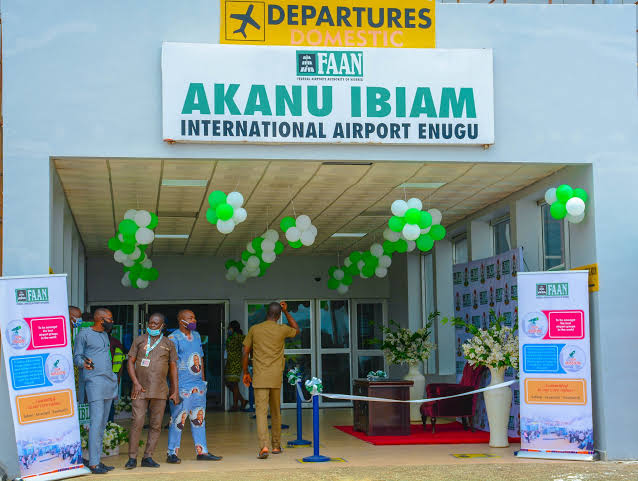
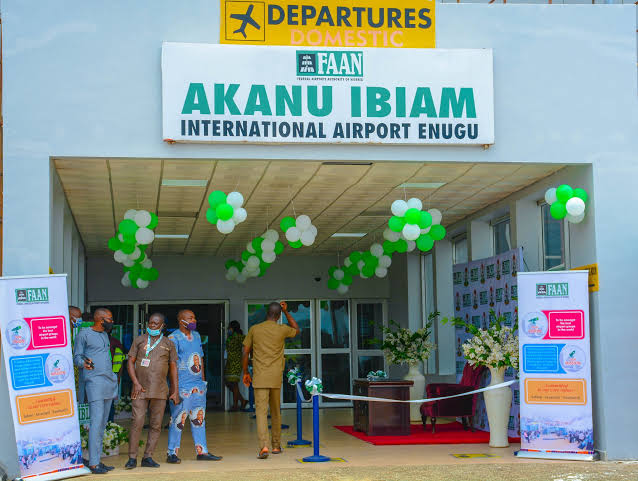
Flight activities have resumed at the Akanu Ibiam International Airport, Enugu, after aviation workers temporarily shut down operations on Friday in protest against the Federal Government’s plan to concession the facility.

The protest, led by aviation unions, followed concerns that the concession process initiated by the Minister of Aviation and Aerospace Development, Festus Keyamo, was carried out without adequate consultation with key stakeholders.

The action restricted access to the airport and disrupted several scheduled flights, leaving passengers stranded.

Earlier reports indicated that the minister signed a concession agreement in mid-January, a move that drew strong opposition from unions, including the Air Transport Services Senior Staff Association of Nigeria, the National Union of Air Transport Employees, and the Association of Nigeria Aviation Professionals.

The unions had described the process as opaque and exclusionary, warning that industrial action could follow if their concerns were ignored.

Days later, workers reportedly halted activities at the airport, grounding flights and preventing passengers and vehicles from entering the terminal.

In an update to travellers on Friday, Enugu Air confirmed that normal operations had been restored, although some flights were affected by the disruption.

The airline advised passengers to verify their schedules due to possible rescheduling.

“We would like to inform you that normalcy has been restored at the Akanu Ibiam International Airport. However, our morning flights were impacted by the protest, and passengers may experience changes to their schedules,” the airline said, apologising for the inconvenience.

Efforts to reach the spokesperson for the Federal Airports Authority of Nigeria for official comments were unsuccessful as of press time.

Google search engine

Kwara Massacre: Tinubu Holds Emergency Meeting Following Death Of 160 Residents

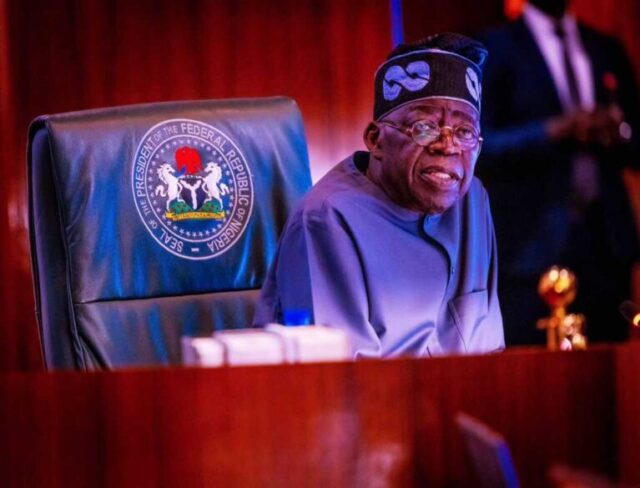
President Bola Ahmed Tinubu held a high-level meeting yesterday with Kwara State Governor AbdulRahman AbdulRazaq at the State House in Abuja, following the deadly assault on Woro community in Kaiama Local Government Area, which claimed at least 160 lives.

Authorities have linked the attack to suspected jihadist fighters, sparking nationwide concern over security in the North-Central region.

Sources close to the presidency said the discussions focused on immediate federal interventions, including humanitarian and security measures to protect residents and bring the perpetrators to justice.

Meanwhile, in the United States, former President Donald Trump addressed concerns over religious freedom, vowing to confront what he described as a militant campaign against religious believers in public life.

Trump stressed the protection of religious liberty as a priority for his administration but offered no specific policy details.

Following the attack, President Tinubu approved the deployment of a battalion to Kaiama and the creation of a new military command structure to coordinate Operation Savannah Shield, aimed at dislodging armed groups and safeguarding vulnerable communities.

The President condemned the killings as “cowardly and inhumane” and directed stronger collaboration between federal and state agencies to track down the attackers.

The Northern States Governors’ Forum also condemned the spate of attacks across Kwara, Katsina, and Benue, calling the killings “barbaric and senseless.”

Chairman and Gombe State Governor Inuwa Yahaya extended condolences to victims’ families and urged security agencies to intensify intelligence gathering, surveillance, and coordinated operations to bring perpetrators to justice.

“These crimes must not go unpunished,” Yahaya said, commending affected state governments for supporting victims and collaborating with federal authorities.

The Defence Headquarters (DHQ) in Abuja described the Woro massacre as a “cowardly terrorist attack” carried out by extremists angered by villagers’ refusal to accept ideological indoctrination.

According to the military, the attackers had initially sought permission to conduct preaching sessions, which the villagers rejected.

The DHQ praised residents for their resilience, urged Nigerians to remain steadfast in constitutional loyalty, and called for stronger cooperation between communities and security forces to prevent future attacks.

Governor AbdulRahman AbdulRazaq directed the State Emergency Management Agency to provide urgent relief to victims of the Woro and Nuku attacks.

Visiting affected communities with state officials, he assured residents that federal troops deployed under Operation Savannah Shield would reinforce security.

“These victims were massacred because they refused to succumb to a strange doctrine,” AbdulRazaq said, praying for the repose of the deceased and praising President Tinubu for immediate action.

Obi, Gani Adams, and Civil Society Speak Out
Former presidential candidate Peter Obi condemned the killings as a tragic reflection of Nigeria’s worsening security crisis, calling for decisive nationwide action against insecurity.

Gani Adams, Aare Ona Kakanfo of Yorubaland, demanded urgent establishment of state police, arguing that decentralized security could have prevented the tragedy.

The Yoruba Youth Socio-Cultural Association warned that insecurity is spreading to the South-West and urged intelligence-led strategies and coordinated security measures.

Amnesty International also decried the surge in killings and abductions, labeling February 3, 2026, a “Bloody Tuesday” and criticizing authorities for failing to protect citizens across Kwara, Katsina, and Benue states.

Google search engine

Senate’s Rejection Of Mandatory E-Transmission Sparks Outrage Ahead Of 2027

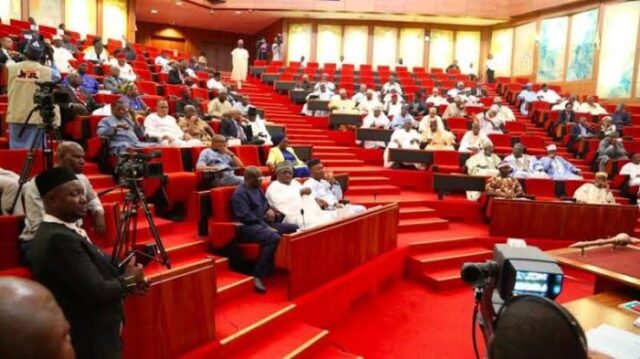
Nigerians have expressed strong disapproval following the 10th Senate’s handling of the Electoral Act (Amendment) Bill 2026, with civil society groups, election monitors, political activists, and opposition parties warning that the move could undermine transparency and credibility in the 2027 general elections.

The controversy centers on the Senate’s decision to reject mandatory real-time electronic transmission of polling unit results, a provision widely seen as crucial for ensuring transparent and trustworthy elections.

Critics argue that the rejection erodes public confidence and leaves the electoral process vulnerable to manipulation.

The African Democratic Congress (ADC) condemned the Senate, describing the decision as a deliberate attempt to weaken electoral safeguards.

“Foremost among these is the rejection of electronic transmission of election results, a move that clearly signals yet another attempt by the APC to undermine the will of the Nigerian people and manipulate future elections,” the party stated.

The debate intensified after reports circulated that the Senate had rejected Section 60(3) of the Electoral Bill 2026, which mandates the presiding officer to electronically transmit polling unit results to the Independent National Electoral Commission’s (INEC) IREV portal in real time.

Some senators later clarified that the provision had not been rejected, but public confidence was already shaken.

Senator Enyinnaya Abaribe (PDP, Abia South) insisted: “We came out to correct the wrong impression. The Senate did not, I repeat, did not reject electronic transmission of results.”

He added that the provision would be monitored closely through to presidential assent.

Concerns over the Senate’s amendments have also been raised by civil society organisations.

Kimpact Development Initiative (KDI) highlighted that the removal of mandatory e-transmission, shortening of election notice periods, and weakening of sanctions for vote buying could all weaken Nigeria’s electoral integrity ahead of 2027.

Yiaga Africa labelled the Senate’s decision “a betrayal of public trust,” warning that compressed election timelines would heighten logistical risks and undermine election credibility.

Samson Itodo, Executive Director of Yiaga Africa, said: “The Senate’s position sharply contrasts with the progressive stance taken by the House of Reps. We hope the conference committee will reject the Senate’s position and restore the progressive provisions that will make votes count in 2027.”

Former PDP Deputy National Chairman, Bode George, urged President Tinubu to withhold assent to the bill until electronic transmission is reinstated, calling the Senate’s action “an aberration that Nigerians must collectively reject.”

Other prominent voices, including Afenifere chieftain Femi Okurounmu, PDP South-West Vice Chairman Ajisafe Toyese, and the Yoruba Ronu Leadership Forum President Akin Malaolu, condemned the Senate for undermining transparency and warned that the stance could compromise the 2027 elections and threaten democratic stability.

Connected Development (CODE) also criticised the amendments, highlighting that leaving electronic transmission discretionary and compressing timelines without safeguards could perpetuate manipulation and post-election disputes.

The African Democratic Congress (ADC) accused the Senate of plotting to rig future elections, calling for Nigerians to reject the move and urging the Conference Committee to restore reforms aligned with democratic principles.

Similarly, Advocacy for Knowledge and Civic Engagement Foundation (AdvoKC) described the bill as a major setback to Nigeria’s democracy and a betrayal of public trust.

As the bill moves to the Conference Committee for harmonisation between the Senate and House versions, civil society groups are calling for transparency, proper safeguards, and measures that will strengthen public confidence in Nigeria’s electoral process.

Google search engine

UNN Students, Parents Protest Fee Hike; Council Reduces Increment To 60% After Negotiations

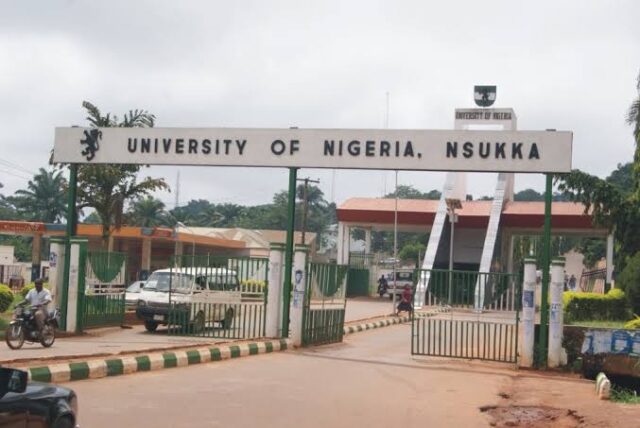
The proposed 100 per cent tuition fee hike at the University of Nigeria, Nsukka (UNN) has sparked outrage among students and parents, raising concerns about potential mass dropouts amid Nigeria’s economic challenges.

After weeks of protests and negotiations, the university reduced the increase to 60 per cent, but many stakeholders still consider it excessive for a public institution.

The initial proposal would have seen students paying double their current fees, with new students particularly affected.

Reports indicate that the acceptance fee for new students would rise from N30,000 to N50,000, a steep jump that has drawn widespread criticism.

Students and parents have taken to social media and other platforms to voice their opposition.

Nwabunwanne Chigozie, a final-year student in Mass Communication, described the hike as “outrageous” and “a decision made out of shallow thoughts.”

He added, “Most of us came to University of Nigeria, not because of its name, but also how affordable its education was. I want cheap, not free education.”

“Now, without proper communication and prior notice, I’m slammed with a 104 per cent increase. As a young man who has been paying his fees, I want to personally ask the management of University of Nigeria, Nsukka if education is now meant for the rich. If so, I shall make way for their children by dropping out. If not, if education is a right not a privilege, then the hike is to me, totally unacceptable.”

Cosmos Kenechukwu, a Political Science finalist, emphasized that tuition should not be the top priority given students’ financial constraints.

“While we understand the university’s need to maintain high academic standards and infrastructure, a tuition hike at this time would be devastating for a significant portion of the student body.”

“Many of our colleagues come from humble backgrounds and are already stretched to their limits. Education costs are not just about tuition; students must still cover rising costs of textbooks, off-campus lodges and hostels, daily feeding, and basic survival expenses.”

“Increasing fees risks forcing brilliant students out of school, not for lack of intellect, but for lack of means. We urge the administration to explore alternative funding models that do not place the entire burden on students and their struggling families.”

Cynthia Ngwu from the Faculty of Pharmaceutical Sciences added, “I feel the tuition fee increment is utterly outrageous and too sudden.”

“If at all any adjustments must be made, the management should consider students’ welfare and the fact that some families struggle to pay these fees.”

“Moreover, UNN is a public university, I see no reason why tuition should be made high. Appropriate and early announcement should be made to alert students on time so that necessary adjustments can be made.”

Favour Azubuike, a self-sponsored student, warned of the impact on financially constrained families.

“Considering students who sponsor themselves in school and parents who aren’t that financially buoyant, this hike in school fees can result in a lot of students dropping out.”

Another student, who requested anonymity, argued that the increase reflects a lack of consultation.

“So about this fee hike, in my opinion this is just proof that the school runs like a dictatorship because increasing fees without prior discussion shows that we students have been sidelined.”

“Even if there’s need for more funds, it should have been increased gradually, let’s say by 10 to 20 per cent. Increasing fees by a 100+ per cent is just outrageous.”

Parents also expressed their frustration. Mr. Ikechukwu Aloysius said, “I am an artisan and I have three children who are all going to public universities because it’s considered cheaper and now that hope seems to be dashed? The school management should have a rethink and look into the issue because I may have no other option than to withdraw my wards if this increment sees the light of day.”

Mrs. Evelyn Anyim added, “My son just got admission and I have to pay his fees as well as provide him with other necessary provisions. I understand that to fund education needs money but the unnecessary increase in acceptance fee is a burden to families who already budgeted a different amount earlier, this is very unfair.”

“We should consider the economic situation of the country and understand that to make money right now is very difficult. Something needs to be done about this, it’s unfair.”

Some lecturers also weighed in. A political science lecturer who requested anonymity noted, “With my interaction with seven different parents who called me regarding school fees hike, lamented that some of their children will be withdrawn from the universities over the development.”

“They could not afford presently to finance the school fees of all of them with expenses of hostel accommodations, getting food materials, and other unaccounted expenses to their children… Though from the direct source that the VC and SUG administration are deliberating to reduce the fees, let it be effective so that parents and guardians can afford the payment of the school fees of the children.”

Another lecturer from the Arts faculty added, “I do know that lecturers are the worst hit. How can you pay tuition for 3 or 4 children considering our meagre earnings? Professors earn between 450k and 500k.”

“How can a prof pay for more than a child when it’s obviously higher than his salary? What about the junior lecturers? That’s our reality. I’m typing without glasses because I can’t even afford it for now. So you see how complicated the issue is.”

Students also shared their concerns. Rosemary, a final-year Mass Communication student, said, “The average ones who are willing to learn from the little they have won’t be able to afford the school fees anymore. Imagine paying double of what you paid as a first-year student.”

“They also have to consider parents because some parents sponsor up to three or five children. Imagine paying that whole amount on school fees only, what about the house rent, feeding and other expenses?”

Juliet Ugwuoke, a Philosophy student, added, “I was so heartbroken when I heard of the school fees increment and when I told my dad about it he also complained because the fees now are like double of what we were paying before.”

“I know some students who might drop out of school if the outrageous school fees increment continues.”

“The school fees hike will affect my feeding and my final year project. The only option now is to pay for my fees in instalments.”

Chidera, a 400-level Social Work student, said, “Increasing school fees to that much is not plausible at all.”

Chris Ozowara, Students Union Government Director of Information, urged students to remain calm, noting that the union continues dialogue with the university management to resolve the issue.

Following weeks of negotiation, UNN management and SUG representatives reached a consensus to reduce the proposed 100 per cent sundry charges for the 2025/2026 session to 60 per cent.

Acting Public Relations Officer, Inya Agha Egwu, explained that the agreement applies to both new and returning students and represents a 40 per cent reduction from the initial proposal.

The new fee can also be paid in two instalments, with no change in accommodation fees.

“The agreement was reached at a meeting between the University Management, acting on behalf of the Governing Council, and the SUG representatives, including the SUG Presidents of Nsukka and Enugu Campuses, Speakers of the Legislative Arms, and the Senate President of the SUG.”

“The resolution is the outcome of weeks of sustained negotiations that commenced in December 2025. During the discussions, student representatives explained that they adjusted their earlier position of a 30 per cent increment in recognition of prevailing fees in comparable universities and the urgent need to upgrade infrastructure in UNN.”

“The University Council, through management, had earlier shifted its stance from 100 per cent increment to 90 per cent before agreeing to the students’ plea for 60 per cent on Friday.”

“Following the council’s conclusion, both parties formally signed an agreement outlining key terms, including provision for payment of the new fees in two instalments across the two semesters to ease the financial burden on parents and guardians, and no increment in students’ accommodation fees for the 2025/2026 academic session. At the end of the deliberations, the SUG leadership expressed appreciation to the University Governing Council for its understanding and responsiveness.”

Despite the agreement, general sentiment among students remains strongly against any fee increment at the institution.

Google search engine

JUST IN: Aviation Workers Shut Down Enugu Airport Over Concession Dispute, Passengers Stranded

Flight operations at the Akanu Ibiam International Airport, Enugu, were abruptly halted on Friday as aviation workers embarked on an industrial protest against the Federal Government’s concessioning plan.

Sources said the shutdown followed a directive from the national leadership of aviation unions amid growing concerns over how the concession process could affect workers’ welfare and job security.

According to insiders, the workers were particularly angered by reports that the airport had been concessioned to a South-East governor and a prominent Anambra-based businessman without clear assurances regarding the future of existing staff.

“The concession arrangement did not take the welfare of workers into account,” a source disclosed.

“We were only told that full concessioning would take effect in about two years, but nothing was said about what happens to the workforce when the new operators assume control.”

The source added that aviation unions had made several attempts to engage both government officials and the alleged concessionaires, including key political and business figures from the South-East, but received no firm commitments on staff protection.

“As a result, the national offices of the aviation unions directed workers this morning to shut down flight operations, and that is exactly what is happening,” the source said.

The protest forced passengers out of the terminal, leaving many stranded, while all flight activities at the airport were suspended. Enugu-bound flights from Abuja and Lagos were also put on hold, worsening the disruption.

Enugu Air, in a statement on its official X handle, confirmed the development, noting that originating flights from Enugu were experiencing delays due to the ongoing protest and that affected passengers were being contacted directly.

Videos circulating on social media showed frustrated passengers gathered around the airport premises, expressing anger over the sudden shutdown and lack of timely information from authorities.

As of the time of filing this report, efforts to obtain official reactions from the Federal Airports Authority of Nigeria and aviation unions were unsuccessful.

Google search engine

Electoral Act: Opposition Parties Ask Conference Committee To Override Senate On E-Transmission Of Results


The Peoples Democratic Party (PDP), African Democratic Congress (ADC), and New Nigeria Peoples Party (NNPP) have urged the National Assembly’s conference committee to overturn the Senate’s stance and adopt compulsory real-time electronic transmission of election results.

In a joint statement issued on Thursday, the opposition parties criticised the Senate’s rejection of a proposal seeking to make electronic transmission of results from polling units mandatory, describing the move as a setback for electoral transparency and democratic accountability.

They alleged that the decision, taken by a Senate largely controlled by the ruling All Progressives Congress (APC), could create openings for manipulation ahead of the 2027 general elections and erode public confidence in the electoral process.

The parties argued that the amendment to the Electoral Act 2022, which excluded mandatory electronic transmission, undermines ongoing efforts to strengthen Nigeria’s democracy and ensure credible elections.

According to the statement signed by their spokespersons, the Senate’s action has sparked widespread concern among Nigerians and raised questions about the commitment of lawmakers to free and fair elections.

They also faulted what they described as a contradiction in the ruling party’s position, noting that the APC deploys digital technology for internal membership registration but resists its use for transmitting election results.

The opposition maintained that making electronic transmission compulsory would close loopholes often exploited during elections, enhance transparency, and boost public trust in the democratic process.

They referenced previous court rulings, including decisions of the Supreme Court, which held that the current Electoral Act does not expressly mandate electronic transmission, arguing that lawmakers should have corrected the gap through legislative reforms.

The parties warned that failure to strengthen legal safeguards could reverse progress made in recent electoral reforms and deepen mistrust in the system.

They therefore called on members of the National Assembly conference committee to adopt the House of Representatives’ position supporting mandatory real-time electronic transmission of results and to prioritise national interest over partisan considerations.

Describing the moment as critical for Nigeria’s democratic future, the opposition urged lawmakers to act decisively to protect the credibility of upcoming elections and reinforce public confidence in the electoral framework.

Google search engine

2027: Orji Kalu Dismisses Ohafia Youth Ban, Insists Support In Abia North Intact

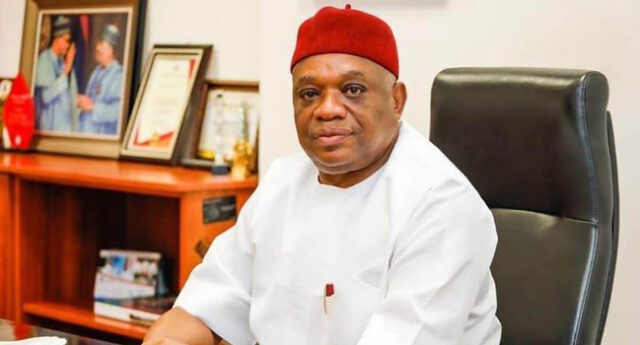
Senator Orji Uzor Kalu has rejected threats by a youth group in Abia State declaring him unwelcome in Ohafia, describing the claims as false and politically motivated as early alignments ahead of the 2027 general election begin to unfold.

In a statement issued by his Media and Public Affairs Team, the former Abia State governor maintained that he continues to enjoy strong grassroots backing across the five local government areas of Abia North Senatorial District, including Ohafia.

He accused unnamed political interests of sponsoring misinformation aimed at weakening his influence in the area.

The statement characterised the allegations as misleading and insisted that his years of representation, constituency engagement and advocacy at the national level have earned him enduring support among constituents.

According to the statement, Kalu’s leadership has remained visible across Arochukwu, Ohafia, Bende, Isuikwuato and Umunneochi, where constituents have continued to express confidence in his performance.

The senator’s reaction followed renewed agitation by the Ohafia Youth Association, which reaffirmed its earlier declaration that he remains persona non grata in the community over events linked to the 2023 general election.

Led by its chairman, Obasi Kalu Obasi, and secretary, Onyekachi Uduma, the group alleged that the senator labelled Ohafia an Indigenous People of Biafra stronghold during the last polls, a development they claimed led to heavy security presence, voter intimidation and disenfranchisement.

Speaking at the Zone 9 Police Headquarters in Umuahia after being invited over a petition reportedly filed by the senator alleging cyberbullying, the association’s spokesperson, Chika Nnate, said youths from several communities attended in solidarity.

He alleged that the classification of Ohafia as an IPOB zone discouraged many eligible voters from participating in the election and claimed thousands were unable to cast their ballots.

The group also accused the senator of neglecting development in Ohafia, citing the absence of visible constituency projects, road construction and youth empowerment programmes.

During their protest, members displayed placards demanding accountability and questioning the senator’s renewed engagement with the community as the 2027 elections draw closer.

However, Kalu’s camp insisted that the protest reflected the position of a small group rather than the broader sentiment of the district, stressing that his legislative record and constituency outreach remain widely acknowledged.

Google search engine

NECO Releases 2025 SSCE Results

The National Examinations Council has announced the release of the 2025 November/December Senior School Certificate Examination results for private candidates, with a majority of participants recording strong performance.

NECO Registrar, Prof. Dantani Wushishi, disclosed the development in Minna, Niger State, noting that 96,979 candidates registered for the examination.

Of this number, 95,160 candidates eventually sat for the papers conducted between November 26 and December 13, 2025.

The results were released 52 days after the final paper.

According to the council, 71.6 per cent of candidates obtained at least five credits, including English Language and Mathematics, while 86.2 per cent secured five credits and above irrespective of the two core subjects.

Performance in key subjects was also encouraging.

About 78 per cent of candidates earned credit passes in English Language, while more than 91 per cent achieved similar results in Mathematics.

NECO, however, raised concern over examination malpractice, revealing that 9,016 candidates were implicated in various forms of cheating, a rise from the 6,160 cases recorded in 2024.

The council added that five supervisors may face sanctions, including possible blacklisting, for allegedly aiding malpractice, while four examination centres have been recommended for cancellation over serious infractions.

NECO reaffirmed its commitment to strengthening monitoring mechanisms and enforcing strict measures to curb examination malpractice and safeguard the credibility of its examinations.

Google search engine

Court Mandates Three Independent DNA Tests In Mohbad Paternity Dispute

An Ikorodu High Court has directed that three separate DNA tests be conducted to determine the paternity of Liam, the son of late singer Ilerioluwa Aloba, popularly known as Mohbad, in a move aimed at resolving the prolonged family controversy surrounding the child.

The ruling followed complications that trailed an earlier attempt at conducting a DNA test, which reportedly stalled due to concerns over the suitability of the testing facility and its ability to carry out tissue-based analysis.

Mohbad’s father, Joseph Aloba, appeared in court alongside his counsel, Oladayo Ogungbe, who explained that the welfare officer initially proposed a facility within Nigeria that was not equipped for the required tissue-based examination.

The issue was subsequently reported to the court.

To ensure credibility and transparency, the court approved a new arrangement under which three different facilities abroad will conduct the tests.

Each party in the case will nominate one laboratory, while the court will select a third independent centre.

Ogungbe said the tests would be tissue-based and designed to produce consistent outcomes, adding that any discrepancy would immediately signal possible interference.

He emphasised that all parties would be present during the collection of samples to guarantee openness and fairness.

Joseph Aloba expressed satisfaction with the new directive, noting that it would help clear lingering doubts and bring closure to the dispute.

Mohbad died on September 12, 2023, and his body was exhumed days later as part of investigations into the circumstances surrounding his death.

Since then, disagreements over paternity, burial arrangements, and the singer’s estate have dominated public discourse.

His widow, Wunmi, has consistently maintained that Liam is Mohbad’s biological child and has criticised delays linked to repeated calls for DNA testing, stressing her focus on securing justice for her late husband and safeguarding their son’s welfare.

The latest court order is expected to deliver a conclusive outcome, with legal representatives stating that the goal is to establish the truth beyond dispute and prevent further controversy.

Google search engine

Gov Mbah Pushes South-East Common Market As Shettima Unveils 25-Year Development Plan

Vice President Kashim Shettima has unveiled a 25-year development blueprint aimed at accelerating economic growth and infrastructure expansion in the South-East, while Enugu State Governor Peter Mbah called for the creation of a unified regional market to unlock the zone’s full potential.

The initiative was presented during the South-East Vision 2050 Regional Stakeholders’ Forum held at the International Conference Centre, Enugu, where political leaders, policymakers and development stakeholders gathered to chart a long-term strategy for the region.

Shettima said the South-East remains a key pillar in President Bola Tinubu’s economic vision, noting that the establishment of the South-East Development Commission is part of efforts to address infrastructural gaps, create jobs and stimulate investment.

He also announced the approval of the South-East Investment Company Limited, a financing vehicle designed to attract funding from the diaspora, capital markets and development partners to support regional projects.

According to the Vice President, the forum marked a shift away from short-term governance priorities toward a structured, multi-decade plan for sustainable development.

Governors from across the region attended the forum, including Peter Mbah of Enugu, Alex Otti of Abia, Charles Soludo of Anambra and Francis Nwifuru of Ebonyi, while Imo State Governor Hope Uzodimma was represented by the Speaker of the State House of Assembly, Chike Olemgbe.

Speaking at the event, Mbah stressed that the South-East must move beyond operating as separate entities and embrace economic integration through the creation of a common market and regional economic bloc.

He argued that the region’s future prosperity lies in unifying its commercial strength, talent base and industrial capacity into a single economic ecosystem capable of competing globally.

Mbah said the proposed South-East Common Market would harmonise trade, encourage collaboration among the five states and position the region as a major economic hub.

He described the Vision 2050 agenda as a strategic framework to tackle challenges that transcend state boundaries, emphasising that sustained growth would depend on the region’s ability to coordinate policies, integrate markets and build large-scale systems for development.

Google search engine

MOST COMMENTED

- Advertisement -
Google search engine