Home Blog Page 946

ICPC Arraigns Ekiti Teaching Hospital Staff Members For Forgery, Deceit
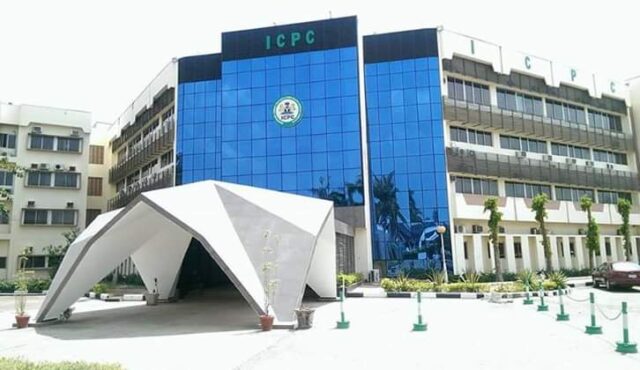
The Independent Corrupt Practices and Other Related Offences Commission (ICPC) has arraigned three staff members of the Ekiti State Teaching Hospital on charges of forgery and deceit.

The accused, Fatuki Paul, Babalola Adebayo, and Afolayan Ayodele, appeared before Justice Lekan Ogunmoye at the Ekiti State High Court on Wednesday.

Advertorial

According to a statement released on Thursday by ICPC spokesperson Demola Bakare, the defendants were charged with forging documents and knowingly providing false information with the intent to deceive their principal.

These offences are in violation of Section 467 of the Criminal Code Act Cap C28 LFN 2004 and Section 17(1)(c) of the Corrupt Practices and Other Related Offences Act, 2000.

Advertorial

All three defendants pleaded not guilty to the charges. Defense counsels Mr. Rotimi Adabembe and Mr. Busayo Sule requested bail for their clients on liberal terms, given their not guilty pleas.

ICPC counsel Kehinde Adetoye did not oppose the bail applications.

Justice Ogunmoye granted the defendants bail, setting it at two million naira each with two sureties in like sum.

One of the sureties must hold a directorial position within the Ekiti State Government, and their residence within the jurisdiction must be verified.

The case has been adjourned until October 15, 2024, for further hearing.

Google search engine

VIDEO: Politician Handcuffed, Beaten For Criticizing Kaduna Governor, Uba Sani

Dan Bilki Commander, a prominent member of the All Progressives Congress (APC) in Kano, has reportedly been subjected to a brutal public assault.

A viral video shows the politician, handcuffed and being flogged by unidentified individuals.

The Video

In the video, the assailants are seen questioning Commander about his criticism of Kaduna State Governor Uba Sani, despite not being a Kaduna State native. Known for his outspoken nature, Commander frequently criticizes politicians on Kano radio stations.

Throughout the assault, Commander can be heard pleading, “I have a heart problem.”

Advertorial

Commander later accused Governor Uba Sani of orchestrating the attack.

“They were sent by Governor Uba Sani to beat me. I can recognize some of them and where they got the handcuffs from. Look at the bumps and scalds on my hands and back. Some police officers did it. Uba Sani directed them. They said they would kill me and throw me into the water. They recorded the beating and humiliation,” he stated.

The Kaduna State Government has responded with a statement, announcing an investigation into the incident.

Signed by Chief Press Secretary Muhammad Lawal Shehu, the statement read, “The Kaduna State Government strongly disassociates itself from this heinous act. We stand for the rule of law and due process. Our administration is based on justice, equity, fairness, inclusivity, and respect for human dignity.”

Advertorial

The statement emphasized Governor Uba Sani’s commitment to civil rights, rule of law, and due process, asserting that he would never authorize such brutality.

“Governor Uba Sani has ordered a full investigation into the incident to ensure that those responsible are held accountable,” it added.

The video has sparked widespread outrage and calls for justice.

Google search engine

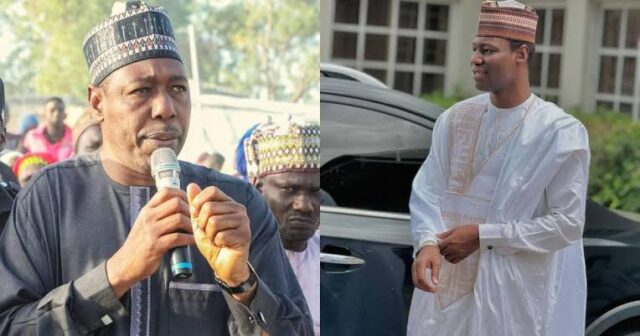
VIDEO: Borno Governor’s Son, Umar Umara, Denies Involvement In Deadly Nightclub Fight In India

The video


Google search engine

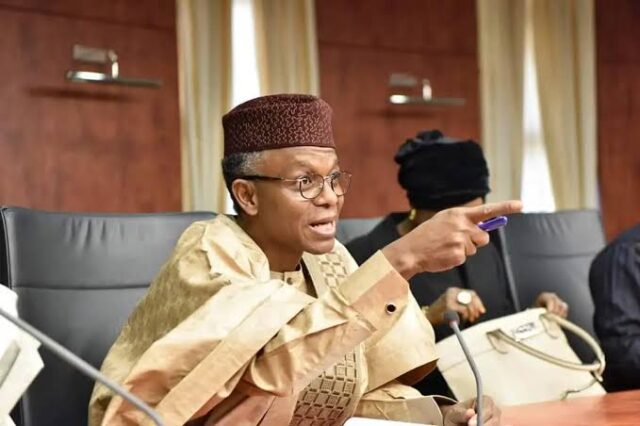
El-Rufai Petitions Chief Judge, Alleges Bias In N423 Billion Probe Case

Former Kaduna State Governor, Nasiru Ahmad El-Rufa’i, has filed a petition with the Chief Judge of the Abuja Federal High Court, alleging bias against Justice Rilwan M. Aikawa, who is presiding over his case against the Kaduna State House of Assembly.

El-Rufa’i’s counsel, Abdulhakeem Mustapha (SAN), submitted the petition at the Federal High Court in Abuja, citing bias, injustice, and denial of a fair hearing.

El-Rufa’i’s petition requests the transfer of his case to another judge to ensure justice.

The document outlines several grievances with Justice Aikawa’s handling of the case, which El-Rufa’i filed to enforce his fundamental human rights to a fair hearing.

The case concerns accusations by the Kaduna State House of Assembly that El-Rufa’i and other officials misappropriated ₦423 billion.

Advertorial

The petition details events that transpired during the hearings.

On July 8, 2024, El-Rufa’i’s representative, S.S. Umoru, and the respondents’ counsels appeared in court.

The case was adjourned to July 17, 2024, by mutual agreement. However, on July 17, the court did not sit, and El-Rufa’i’s principal counsel, A.U. Mustapha, SAN, had to return to Lagos.

Advertorial

Unexpectedly, the court rescheduled the hearing for July 18, 2024. El-Rufa’i’s legal team was informed of this new date late on July 17, prompting them to request an adjournment due to the short notice.

Despite this, the court proceeded with the hearing on July 18 without El-Rufa’i’s representation, during which the respondents adopted their processes and further argued their case.

Advertorial

El-Rufa’i’s petition argues that the lack of notice for the July 18 hearing denied him a fair chance to respond to the respondents’ counter affidavit and written address.

The petition highlights that the respondents filed their processes late and applied for an extension of time, which was granted on July 18.

According to Order 11 Rule 7 of the Fundamental Human Rights (Enforcement Procedure) Rules 2009, El-Rufa’i should have been allowed five days to respond.

El-Rufa’i initially filed the case in June 2024, challenging the Assembly’s report on the grounds of unfair hearing.

He requested the court to declare the report null and void.

El-Rufa’i’s petition underscores his belief that the court’s actions display extreme bias and injustice, thereby undermining his right to a fair hearing.

Google search engine

Why We Agreed To N70,000 Minimum Wage – NLC, TUC

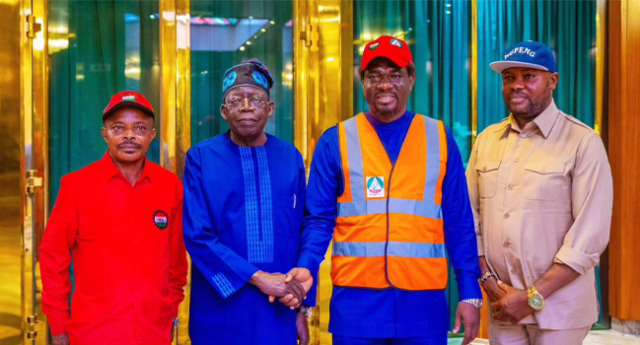
The Nigeria Labour Congress (NLC) President, Joe Ajaero, and the Trade Union Congress (TUC) President, Festus Osifo, have explained their decision to accept ₦70,000 as the new minimum wage for Nigerian workers.

They cited a significant change in the frequency of wage reviews from every five years to every three years as the primary reason for their agreement.

Speaking after a meeting with President Bola Tinubu at the State House in Abuja, Ajaero emphasized the importance of the new review timeline.

“The ₦70,000 figure reflects our current agreement, but the key aspect is that we no longer have to wait five years for a wage review. We can now negotiate at least twice within that period, with the next review scheduled in three years,” he said.

Advertorial

Ajaero also mentioned other issues brought up during the meeting, such as concerns from the Senior Staff Association of Nigerian Universities (SSANU) and the Non-Academic Staff Union (NASU).

President Tinubu directed relevant agencies to address these issues, particularly the payment of university workers.

Osifo noted, “President Tinubu’s announcement of the ₦70,000 minimum wage will soon be finalized and sent to the National Assembly.

Advertorial

“This decision aligns with our push for more frequent wage reviews, as economic conditions can change rapidly. The agreement to review wages every three years is a significant achievement.”

This development follows extensive discussions between labour leaders and the President, succeeding months of stalled negotiations involving a tripartite committee formed in January.

The committee, which included representatives from state and federal governments and the Organized Private Sector, had proposed ₦62,000, while labour demanded ₦250,000, arguing that the current ₦30,000 minimum wage was unsustainable amid rising inflation and living costs following the removal of petrol subsidy.

Information Minister Mohammed Idris confirmed that the ₦70,000 minimum wage agreement would be communicated to the National Assembly in the coming days.

Google search engine

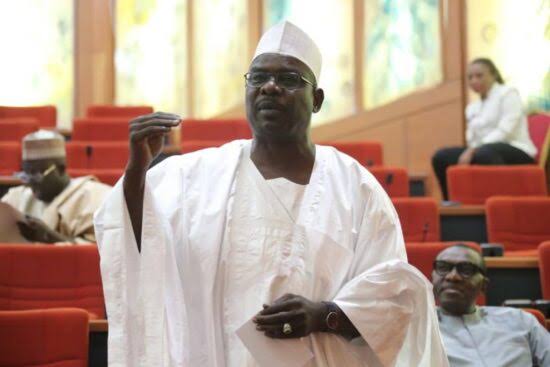
CUPP Condemns Ndume’s Sack, Warns Of Threat To Democracy

The Conference of United Political Parties (CUPP) has condemned the recent punitive actions taken against former Senate Majority Whip, Senator Ali Ndume, by the ruling All Progressives Congress (APC) and Senate leadership, labeling it a suppression of dissent and a threat to democracy.

Advertorial

Chief Peter Ameh, National Secretary of CUPP, voiced these concerns in Abuja on Thursday.

Ameh emphasized that a healthy democracy must encourage and respect dissenting voices as they are crucial for informed decision-making.

“In a democracy, the separation of powers is essential to ensure checks and balances among the legislative, executive, and judicial branches. This prevents any single branch from abusing its power and promotes the protection of individual rights,” Ameh stated.

Advertorial

He warned that the current trend in Nigeria’s 10th National Assembly, where dissent is being stifled, could lead to authoritarian rule.

Ameh further highlighted that the separation of powers supports the rule of law, ensuring equal treatment under the law, and strengthens public trust.

“Each branch must be able to make decisions independently, free from undue influence, to maintain constitutional integrity and preserve democratic foundations,” he added.

Advertorial

He criticized the weak legislative leadership of the 10th National Assembly, arguing that it poses significant risks to Nigeria’s development and democratic health.

According to Ameh, it is troubling that a Senator could be reprimanded by his party and the Senate leadership for merely expressing widely held public concerns.

Senator Ndume, Ameh noted, was simply voicing the frustrations of many Nigerians affected by poor policy choices of the current administration.

“Instead of facing censure, Ndume should be commended for attempting to bring these issues to the attention of party leaders.”

“By stifling such critical voices, the government undermines the principles of democracy and risks eroding public trust and confidence,” Ameh concluded.

Google search engine

Nigerian Agency Highlights Inferior Quality Of Dangote Refinery Products, Advocates For Import Continuation

Farouk Ahmed, the Chief Executive of the Nigerian Midstream and Downstream Petroleum Regulatory Authority (NMDPRA), has warned against over-reliance on products from the Dangote Refinery.

Advertorial

He raised concerns about the consistency and standardization of the refinery’s output, noting that its products currently fall short in quality compared to imported alternatives.

Addressing concerns about the national supply of petroleum products, Ahmed refuted claims that the NMDPRA is attempting to undermine the Dangote Refinery.

Advertorial

He clarified that the refinery is still in the pre-commissioning stage and has not yet been licensed, with completion standing at approximately 45%.

“We cannot rely heavily on one refinery to meet the nation’s demands, especially given Dangote’s request to suspend imports of AGO and DPK and direct all marketers to his refinery,” Ahmed stated.

“Such a monopoly is detrimental to energy security and market competition.”

Advertorial

Ahmed also highlighted that Dangote’s AGO does not meet West Africa’s sulfur content requirement of 50 parts per million (PPM), instead ranging between 650 and 1,200 PPM. “In terms of quality, their products are inferior to imported ones,” he concluded.

Google search engine

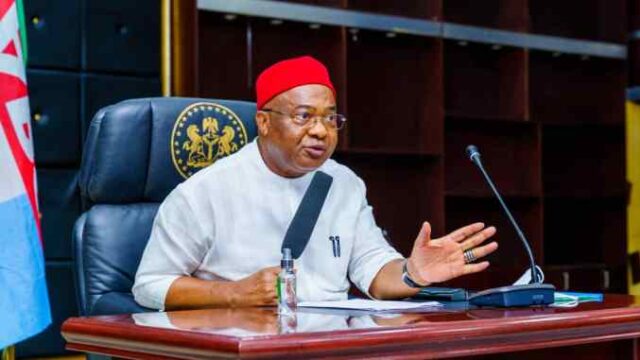
Uzodimma Urges Promotion Of Merit, Patriotism To Combat ‘Japa Syndrome’

Imo State Governor, Hope Uzodimma, has criticized the lack of a merit-driven system in Nigeria, emphasizing the need for the country to celebrate and promote merit.

Speaking on Thursday at a Yoruba Tennis Club event in Lagos State, where he delivered a lecture on patriotism and citizenship, Uzodimma highlighted the importance of creating an environment where merit is recognized and rewarded.

Advertorial

Uzodimma attributed the decline in patriotism among Nigerians to systemic failures and the numerous disappointments citizens have experienced.

He called on stakeholders to address these issues to restore the spirit of patriotism.

“The wave of ‘japa syndrome,’ where Nigerians seek better opportunities abroad, is driven by the desire for a functional system and a better life,” Uzodimma noted.

Advertorial

He stressed that purposeful leadership and accountability are essential to building trust and fostering patriotism.

He further emphasized the importance of national unity and inclusivity in promoting patriotism, urging leaders to strengthen national symbols and traditions.

“Reviving patriotism is a collective task. We must work together to rekindle the flames of patriotism in our country by promoting unity,” Uzodimma concluded.

Google search engine

Universities Set Admission Benchmarks

On Thursday, education sector stakeholders set the minimum benchmark score for university admissions at 140.

This announcement was made during the ongoing policy meeting in Abuja by the Registrar of the Joint Admissions and Matriculation Board (JAMB), Prof. Ishaq Oloyede.

Advertorial

Prof. Oloyede clarified that the benchmark score is not a universal cut-off mark for all universities.

Instead, it serves as the lowest acceptable score for admission consideration.

Various institutions had submitted their minimum benchmark scores to JAMB.

Advertorial

Notably, universities such as Pan-Atlantic University in Lagos, Covenant University in Ogun state, Obafemi Awolowo University in Osun state, and the University of Lagos were among the few that set their benchmark scores at 200 and above.

“JAMB does not set cut-off marks. What we establish is a minimum benchmark score that universities cannot go below. Each university has its own specific benchmark score,” Oloyede explained.

Google search engine

JAMB Exempts Persons With Disabilities, Overseas Applicants From Post-UTME

The Joint Admissions and Matriculation Board (JAMB) has announced specific categories of candidates who will be excluded from the Post-UTME screening process.

This decision was disclosed by JAMB Registrar, Prof. Ishaq Oloyede, during a recent announcement.

According to Prof. Oloyede, candidates who fall under certain criteria will not be required to undergo the Post-UTME screening.

These include candidates from outside Nigeria who applied through UTME/DE modes, who will instead be screened after admission.

Additionally, candidates with disabilities are exempt from the Post-UTME screening.

Advertorial

This category encompasses individuals who are blind, deaf, mute, autistic, amputees, lame, paralyzed, have Down syndrome, Dyslexia, Attention Deficit Hyperactivity Disorder, albinism, cerebral palsy, and those with other disfigurements.

Prof. Oloyede emphasized that all institutions must clearly state this exemption in their advertisements for the Post-UTME screening tests and strictly adhere to the policy.

Advertorial

Earlier discussions among stakeholders had also established minimum benchmark scores for university admissions at 140, while polytechnics and colleges of education set theirs at 100 respectively.

Google search engine

MOST COMMENTED

- Advertisement -
Google search engine