Home Blog Page 985

APC Confident Of Victory In Upcoming Anambra LG Elections, Says Obidike

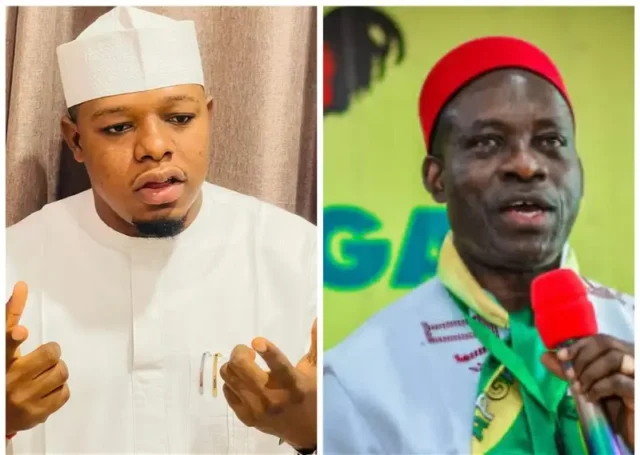
As Anambra State prepares for its local government elections, Hon. Obidike Chukwuebuka, a prominent member of the All Progressives Congress (APC), has expressed confidence that his party will achieve a sweeping victory.

Speaking after a meeting with APC Youth leaders in Awka, the state capital, Obidike highlighted the growing support for the APC in the region.

Advertorial

“Our party, the APC, has been gaining significant traction in Anambra State, marked by a notable increase in membership and public support,” Obidike stated.

He attributed this surge to the party’s grassroots engagement and community outreach programs, which he said resonate with voters who are eager for change.

Obidike emphasized that the APC’s lineup for the elections includes a vibrant mix of young candidates and experienced politicians.

“This diverse and robust slate is well-positioned to connect with voters and address their concerns,” he noted.

He further pointed out the APC’s proven track record of effective governance in other states, arguing that this reputation will appeal to Anambra voters looking for improved governance.

“Our party has demonstrated its ability to deliver on campaign promises and improve the lives of citizens in other regions,” Obidike said.

Criticizing the current ruling party, APGA, Obidike claimed that it has faced increasing criticism for perceived ineffectiveness and lack of accountability.

“Voters are growing disillusioned with the status quo and are seeking a change, which the APC is well-positioned to provide,” he asserted.

While acknowledging the inherent unpredictability of elections, Obidike maintained that the signs point to an APC victory in the Anambra local government elections.

“With its strong organization, popular candidates, and effective campaign strategy, the APC has built formidable momentum,” he concluded, expressing optimism about the party’s chances in the upcoming polls.

Google search engine

Minimum Wage Negotiations Resume Today As Labour, FG, Reconvene

The Tripartite Committee on the new minimum wage will resume negotiations today, with the Federal Government extending an invitation to the Organised Labour.

The invitation was confirmed in a letter signed by the committee’s Secretary, Ekpo Nta, addressed to the Presidents of the Trade Union Congress (TUC) and the Nigeria Labour Congress (NLC).

Advertorial

This upcoming session marks the seventh meeting of the committee, which has been grappling with reaching a consensus on the new minimum wage.

The previous meeting ended in a deadlock, as Organised Labour rejected the Federal Government’s proposal of ₦60,000.

Initially, the labour unions had demanded a minimum wage of ₦615,000, which they later reduced to ₦494,000. This adjustment still significantly exceeds the Federal Government’s offer.

Advertorial

The Organised Private Sector had earlier proposed ₦48,000 and ₦54,000, both of which were also rejected by the labour unions.

During Tuesday’s meeting, TUC leader Festus Osifo emphasized that the Federal Government’s offer of ₦60,000 did not align with the prevailing economic conditions.

With Nigeria’s inflation rate at 33.69% as of April 2024, based on data from the National Bureau of Statistics (NBS), Osifo declared the offer unacceptable.

“We completely reject it. The government needs to provide a realistic breakdown of how a family can subsist on a ₦60,000 minimum wage,” he asserted.

Labour unions have maintained an ultimatum until May 31st to resolve the matter.

The NLC President, Joe Ajaero, criticized the government’s proposals as inadequate.

“The current ₦30,000 minimum wage does not meet the needs of the average Nigerian worker, and many governors are not even paying this amount,” Ajaero noted, highlighting that the existing wage agreement expired in April 2024.

Since taking office, President Bola Tinubu has implemented several reforms, including the removal of fuel subsidies and the floating of the naira.

However, Osifo has accused the administration of inconsistent policies and lacking thorough consideration.

“We rate them 2.5 out of 10, which is 25%,” the TUC leader remarked.

The labour unions argue that the current economic environment has severely impacted workers, creating a disparity between the economy of the elite and that of the workers.

Ajaero emphasized the need to harmonize these economic realities to achieve a fair meeting point.

As the negotiations continue, the Tripartite Committee will seek to bridge the gap between the demands of the labour unions and the proposals from the Federal Government and the private sector, aiming to establish a sustainable minimum wage for Nigerian workers.

Google search engine

Prof. Abonyi Appointed Associate Dean of ESUT’s School of Postgraduate Studie

Enugu State University of Science and Technology (ESUT) has appointed Associate Professor Dorathy Obianuju Abonyi as the new Associate Dean of the School of Postgraduate Studies.

This announcement was confirmed by the University’s Vice-Chancellor, Prof. Aloysius-Michaels Okolie, following a recommendation from the Dean of Postgraduate Studies, Professor Charles C. Chime.

Advertorial

Professor Chime highlighted Abonyi’s dedication and resourcefulness as key factors in her selection.

“She is an Electronic Engineer from the Department of Electrical and Electronic Engineering and served as the immediate past Head of Department. Her commitment and contributions made her an obvious choice for the role,” Chime explained.

Associate Professor Abonyi’s academic journey began at ESUT, where she graduated with Second Class Honours Upper Division in Electrical and Electronic Engineering in 1999.
She earned her Master of Engineering (M.Eng) from the same university in 2003.

Advertorial

She joined ESUT as an Assistant Lecturer in 2007, after working at the Federal Radio Corporation of Nigeria (FRCN), where she advanced to Principal Engineer at the FRCN Training School.

As a Tetfund Scholar, Abonyi furthered her education at the University of Sheffield in the United Kingdom, obtaining a Master of Science in Engineering with a focus on Data Communication Engineering, followed by a Ph.D.

During her tenure as Head of the Department of Electrical and Electronic Engineering, Abonyi demonstrated outstanding leadership.

Advertorial

She secured a two million naira grant from the Central Bank of Nigeria to establish the innovative ESUT Brainstorming Garden, a natural space designed for collaborative research.

She also obtained additional funding to implement digital signage in departmental buildings, significantly enhancing their infrastructure.

Abonyi’s leadership ensured that all graduating students in her department completed their programs on schedule.

Currently, Associate Professor Abonyi boasts over 40 publications in esteemed local and international journals and has presented her research at conferences in the USA, UK, India, China, Italy, Morocco, and Nigeria.

Her expertise spans Communication Systems Engineering, including Antennas, Radio Wave Propagation, Localization Systems, and Wireless Data Communication.

She also contributes to Engineering Management and serves as a part-time lecturer at ESUT Business School.

Abonyi is a member of several professional organizations, including the Nigerian Society of Engineers (NSE), Association of Professional Women Engineers of Nigeria (APWEN), Institute of Engineering and Technology (IET), Institute of Electrical and Electronic Engineers (IEEE), and the International Association of Engineers (IAENG).

As the new Associate Dean for the 2023/2024 and 2024/2025 academic sessions, Associate Professor Abonyi is expected to leverage her extensive experience to advance the School of Postgraduate Studies at ESUT.

Google search engine

Kano Emirship: What Gov. Yusuf Discussed With Ribadu

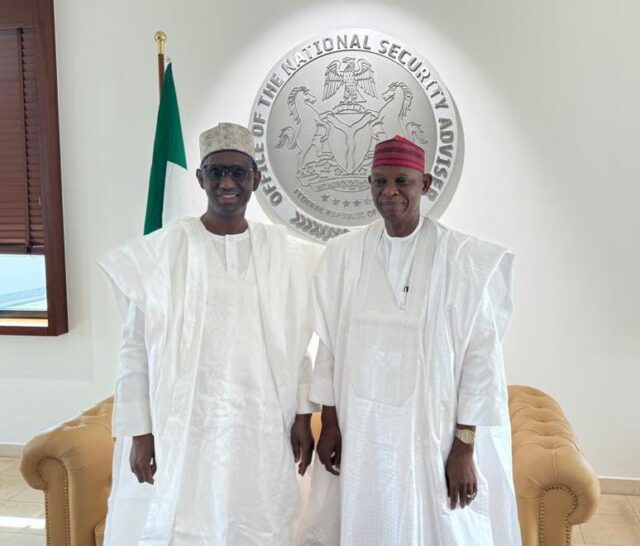
Kano State Governor Abba Kabir Yusuf met with National Security Adviser Nuhu Ribadu in Abuja, apologizing for recent allegations involving the Kano emirship crisis.

The apology was prompted by accusations that Ribadu interfered in the conflict, a claim he vehemently denied.

Advertorial

The controversy began when Governor Yusuf dethroned Emir Alhaji Aminu Ado Bayero and reinstated Alhaji Muhammadu Sanusi II following the enactment of the Kano State Emirates Council Law 2024.

After Bayero returned to Kano and took residence in the Nassarawa palace, tensions escalated, leading to his arrest and the deployment of troops to the palace.

This move was interpreted as federal support for the governor’s actions.

Advertorial

Deputy Governor, Aminu Abdulsalam Gwarzo had publicly accused Ribadu of supporting Bayero’s return, a statement Ribadu denied, threatening legal action unless Gwarzo apologized.

Gwarzo later retracted his statement, blaming erroneous intelligence.

During the private meeting in Ribadu’s office, Governor Yusuf personally apologized to the NSA.

Sources revealed that the discussion, conducted in Hausa, was sincere and aimed at resolving the misunderstandings.

Yusuf felt that a public apology alone was insufficient, hence the need for a direct, personal meeting.

Sanusi Bature Dawakin Tofa, the governor’s spokesman, confirmed the governor’s retraction and apology in a statement, highlighting the respect for Ribadu’s professional integrity and the importance of clearing the air.

The meeting, lasting over an hour, focused on the state’s situation following the reinstatement of Sanusi and the dissolution of five new emirates.

Meanwhile, in Kano, Sanusi continued to consolidate his position, with numerous district heads and members of the Tijjaniyya Shura Council pledging their allegiance.

Despite heightened security around the emir’s palace and Bayero’s guest house, daily life in Kano remained largely undisturbed.

Google search engine

BREAKING: Trump Convicted Of Falsifying Business Records

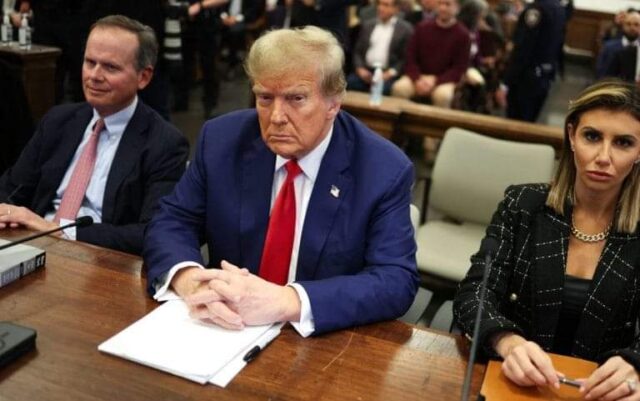
A New York jury has found Donald Trump guilty on all charges in his hush-money case, marking a historic and seismic development just five months before the election in which he aims to return to the White House.

This verdict makes Trump the first former US president to be criminally convicted. However, it does not bar him from running for another term in office.

Google search engine

Enugu: One Year After, A Govt In Need Of A Human Face – Frank Nweke

Full Text Of Frank Nweke II – May 29, 2024

As we mark the first anniversary of the current administration in Enugu State, an appraisal of our social and economic realities is important in our efforts to keep the government accountable for its responsibilities.

Whilst we note some improvement in the provision of infrastructure in the state, it is difficult to disregard the habitual destruction of properties and livelihoods and the ‘disruptive’ creation of unprecedented poverty and emotional distress on account of reckless disregard for the rights of citizens.

Advertorial

Our economy has become worse in the past year, the cost of commodities has tripled and quadrupled in some cases, yet income has remained stagnant or reduced. Dozens of people have been killed in several parts of the state, and scores have been kidnapped, with some still in captivity. I commiserate with families who have lost loved ones or properties due to insecurity and the poor personal economy.

The continued decline in economic fortunes may be a reflection of the nation’s macroeconomic conditions, however, the State government must take full responsibility to ameliorate the effects in every way possible. A time like this requires the government to be more thoughtful about policy interventions in both the monetary and fiscal spaces with an emphasis on programs and initiatives that will bring relief and succour to the cost of living crisis faced by citizens.

Advertorial

A few days ago, the ENSG hosted a media parley to report its activities of the past year. Glowing as the remarks were, the reality pales in comparison. It was also curious to see the administration’s preference for national media instead of local practitioners who can properly contextualize the issues in the State and share honest feedback with the government.

Communication and Stakeholder Engagement

The media in Enugu seem to have been relegated to disseminating information from the government, instead of working as partners in development for engaging and receiving feedback from citizens. The seeming disregard for proper stakeholder engagement at the local level has been evident throughout the year, and its negative effect can be seen in the reaction of residents to policies implemented without their consent or awareness, in some cases. From the protests that erupted as a consequence of the handling of the sit-at-home ban to the new lawsuit lodged by the traders of the demolished Ogige market, adequate engagement would have diffused the tensions and opposition to the policies.

Our people say: “Ewopu nkita akpirhi ma egosighi ya, o’ chee na itulu ya mbo.” (When you remove a tick from a dog’s body, you show the dog the tick, or else it may assume that you pinched it.)

Policy communication and stakeholder engagement have to take priority over political rhetoric and media posturing. It is only respectful that leaders and government work in partnership with citizens.

Noteworthy activities

There have no doubt been marked improvements in the areas of waste management, although densely populated areas such as Emene and Abakpa, as well as the satellite towns of Nsukka and Awgu, still require urgent attention. As I shared in the past, working with neighbourhood and market associations across the state will go a long way in sustaining the desired hygiene within communities.

There are also noticeable efforts at repairing some pothole-infested roads in the Enugu metropolis. While there is a need for improvement in the repair turnaround time, this approach to maintenance should be intensified and replicated across the state. Most importantly, attention must be paid to the quality and durability of these roads.

The payments of pension and salaries have also been reported to be regular, albeit, inadequate to cover basic expenses in the current economy.

However, the policy direction and areas of focus of the administration remain disturbing.

Demolitions, Displacements, and the Obsession with Land Acquisition

The spate of demolitions in the state is extremely distressing. Within the past month, several properties including a Motherless Babies Home belonging to the Nigerian Red Cross Society, in Enugu; Our Saviour Institute of Science and Technology (OSISATECH), belonging to Rev. Fr. Emmanuel Ede; sections of the Ogige Market, Nsukka, Ogbete main Market along Holy Ghost Park in Enugu City; and a motor park in Gariki, Awkunanaw, Enugu have been reduced to ruins. Traders who barely eke out a living from the markets have suddenly lost their means of livelihood with unfulfilled promises of compensation. The alternative location provided for the orphanage home is reportedly not conducive to the purpose. The vulnerable continually bear the brunt of the government’s whims.

Earlier in the year, there were controversies surrounding demolitions and ownership tussles in Centenary City and the sale of portions of Hotel Presidential. I will always respect the government’s responsibility and prerogative to implement urban planning and the maintenance of law and order. However, the government must curtail its obsession with the acquisition of lands, staying within the ambit of the law and morality. Governance must be done with consideration, empathy, and adequate communication of intent with the citizens whose interests they represent.

The 72-hour notice to the traders and residents is inadequate for individuals who have made a living at that location for decades. There needs to be longer engagement and sufficient plans for compensation. Simply directing them to a new location under the control of thugs is not a viable method of leadership. The disrespect for human rights and dignity must be curbed now to avoid incurring more debilitating consequences.

Social Implications of the demolitions

We cannot dismiss the social and economic implications of these demolitions and displacements. There were reports of looting and sadly, rape and even the loss of lives due to the demolition exercises. Increased criminality is bound to be a consequence of increasing unemployment as a result of traders losing their businesses. Recently, a relative of mine was a victim of a robbery, losing his phone and other valuables while on a bus in Enugu City.

We can expect the creation of new slum areas in and outside the city, throwing more people into less than humane living conditions. The implications for public health and safety will also be dire.

Increased Taxation

The disruption of businesses of local traders across the state has also been accompanied by reports of increased taxation. Payment of taxation is a civic duty that citizens must be encouraged to fulfil voluntarily through improved service delivery, and not through straining businesses and means of livelihood by closing up shops and issuing threats.

Our people are largely itinerant traders who depend on their day-to-day sales for survival. Given the hardship in the country, it will be pragmatic for the government to wear a decidedly human face as it discharges its responsibility of catering to the welfare and well-being of society.

This is not the time for excessive and multiple taxations. This is not the time to extort, bully or humiliate citizens, especially the youth, who are already down and out in large numbers. This is not the time to confiscate the wares of poor men and women, several of them are aged, and struggling to make ends meet. This is not the time to destroy capital, however small, belonging to the poor, mostly acquired through credit, thereby plunging them into debt and compounding their already precarious plight.

Governments must uphold and enforce the law, but this must be done by following due process in a compassionate and non-discriminatory manner, the focus being to correct and protect not to humiliate or oppress.

Water in Enugu State

The frantic attempts to make good on the promise of providing pipe-borne water into the homes of Enugu citizens have also not gone unnoticed. While ameliorative measures were deployed in the form of public taps and tanks, water galleries are in no way the hallmark of modern society. The water crisis in the state is far from over and providing potable water requires a more robust and innovative approach that involves critical systemic changes as I have shared in the past.

It is also interesting to note that my home in Enugu recently received a bill from the Water Corporation when in reality, we have not seen a drop of water from the mains in the past 9 years. Before that, we had potable water during the previous administration under Sullivan Chime. History also shows us that this water scarcity has not always persisted.

It is therefore pertinent that the ENSG reevaluates its overall strategy, focusing on sustainable solutions as against short-term efforts to score political points with the media.

Restoring Security

From many indications, there is a change in the approach to security from the previous administration under Ifeanyi Ugwanyi and this administration. an improvement in the security architecture within the city. However, the activities of petty criminals arising from economic hardships must also be curbed. On the other hand, the reports from the hinterlands remain distressing. News of kidnappings in several parts of the state and attacks in farming communities continue to claim lives and reduce the production capacity of the state. The recent engagement of the affected communities in Uzo Uwani and Isi-Uzo is commendable. But they must be followed by resolute actions. The ENSG must pursue a robust partnership on security with the federal government, which has statutory oversight for security across the country. They must support the security agencies within the state and provide resources to aid their activities. The governor must work closely with the local government and other local authorities, such as the town council, faith-based institutions, and traditional rulers. This is critical for intelligence gathering and building trust with the people. The local government leadership must also be held accountable for deploying agreed security measures in partnership with the statutory agencies.

There can be no meaningful development without security, and the harmful effects of constant trepidation on the psyche of our people are unquantifiable. Farms have been abandoned and the current food insecurity is a direct consequence of the lag in farming activities. The government must deploy every resource required to ensure a quick and sustainable solution to insecurity in these affected communities.

It is also critical that the government explore the opportunities that technology provides for improving the security architecture of the state.

The Public Ranch Bill

Of great concern to me is the reported passing of the ‘Public Ranch Bill’ by the Enugu State House of Assembly. On its merit, the regulation of ranching activities is reasonable for both economic and social reasons. However, the context within which this law will be implemented must be considered. Sensitivities such as fear and mistrust within the communities of interest must be taken into consideration. Restoring the sense of security and trust in the government’s ability to protect lives and properties must take precedence over the creation of ranches to accommodate the same people who have been accused of grievous crimes. I hope that the government will take great care to engage the communities extensively and prioritise their security and well-being.

In conclusion, I hope that this administration can retrace its steps where necessary and keep the people at the centre of its policy formulation and implementation, prioritising pro-poor policies, holistic solutions, and empathetic governance.

To reiterate my key points:

Governance must be delivered with empathy, compassion, and pragmatism.
Governance decisions must be made to accommodate both the urgency of the existing concerns and the longevity of the solutions.
Communication and stakeholder engagement in public governance are critical tools for the success of any administration and society.
The government has made some progress with waste management and road rehabilitation in the city. This must be maintained and expanded into densely populated cities and towns, ensuring quality and attention to detail.
Restoring security and earning the trust of the people must be a priority for the government even as they implement policies for economic progress.
The success of Enugu State is for the good of all. I also encourage continuous engagement by the citizens. I have often said, “Leadership and followership are a shared responsibility.” We must all participate in the governance of our state with the abiding interest of ensuring the welfare and well-being of all citizens.

In the past year, I have issued several advisories on the issues of insecurity, the economy, and the approach to demolitions of properties across the state. I have also begun the Enugu Budget Watch Series in an attempt to help citizens analyse the budget and understand its viability given the state’s revenue and debt profiles.

We must cultivate political literacy amongst our citizens and demand good governance and excellent service from our public servants. As citizens, we must consistently remain curious about the management of our affairs in the state, ask questions, and be active partners in the development of Enugu State.

Frank Nweke II.
May 29, 2024.

Google search engine

Gov Mbah Inaugurates Urban Road Projects, Flags Off New Ones

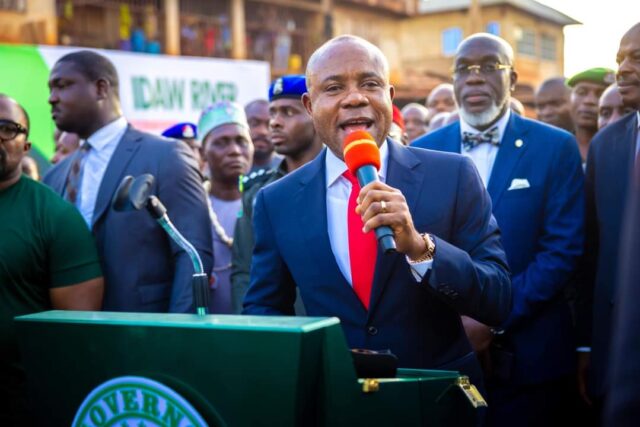
Marking his first year in office, Enugu State Governor Dr. Peter Mbah commenced the commissioning of 71 urban road projects on Wednesday, representing the initial phase of an extensive infrastructure initiative aimed at enhancing road networks within the state capital.

Governor Mbah also revealed plans for a second phase, encompassing the construction of 80 additional roads. He emphasized the administration’s commitment to rural development, pledging to build a minimum of 10 kilometers of road in each electoral ward to ensure rural areas are not neglected.

“We have a policy to pave all Trunk A and Trunk B roads in both urban and rural areas,” stated Mbah.

At a symbolic ceremony at Mount Street/Umuchu Road junction in Idaw River, the governor officially opened several road projects in the Idaw River, Uwani, and Coal Camp Zones. This marked the first road intervention in the Idaw River area in 52 years, bringing much-needed infrastructure improvements to the community.

Advertorial

The newly commissioned roads include Broderick Street, Silver Smith Street, Asata Mine Road, Ogbete – Jamboree – Ajogwu Road in Coal Camp, and Emeka Ebila, Idaw River Secondary School Road, among others in Idaw River. In Uwani Zone, roads such as Bishop Anyogu Street, College Road, and Edeozie Street were inaugurated. The Gariki Zone saw the opening of St. Peter’s Road, Odudukoko Street, and the Garki flyover along with its ramps.

Amid celebrations from grateful residents, Governor Mbah expressed his dedication to the community’s welfare. “In the last 52 years, there has been no intervention here. Our primary purpose in government is to ensure your security and welfare. This is what drives us every day,” he said.

Mbah reaffirmed his commitment to providing essential services such as paved roads, water, and electricity, which he described as basic amenities that should be taken for granted.

“Last year, we started constructing 71 urban roads. Today, we are commissioning those roads. But this is just the beginning. We are about to embark on another 80 roads construction. Additionally, we plan to develop 10 kilometers of road per ward across the 260 wards to ensure rural development,” he announced.

At St. Peter’s Road, Gariki, Awkunanaw, Mbah assured residents that the government was working tirelessly to complete water reticulation projects to provide them with running water. He also promised the installation of streetlights and access to Smart Schools for all children in Enugu State.

Commissioner for Works and Infrastructure, Engr. Gerald Otiji, highlighted the quality and supervision of the road projects, noting the use of French drains to manage water in swampy areas.

Chief Cosmas Agu, Managing Director of Comag Steel and Construction Ltd., urged residents to avoid actions that could damage the roads, such as dumping refuse in the drainage systems.

Evangelist Hilary Ayichi, a leader of the Idaw River community, praised Governor Mbah for addressing long-standing infrastructural needs. “Governor Peter Ndubuisi Mbah has brought hope, joy, and fulfillment to us. He is truly the people’s governor,” Ayichi said.

Google search engine

Presidential Poll: South Africa Begins Vote Counting

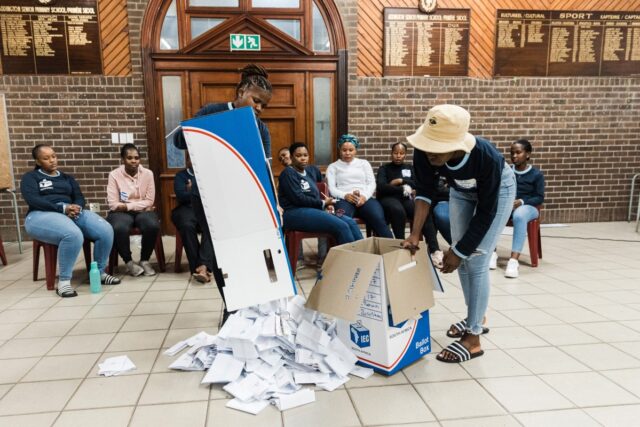
Ballot counting commenced on Thursday as South Africans queued late into the night to cast their votes in a landmark election, with early results indicating that the African National Congress (ANC) may lose its three-decade-long majority.

Counting began at each polling station shortly after polls closed, which in some cities extended well beyond the scheduled 9:00 pm (1900 GMT) Wednesday cutoff, due to the long lines of voters.

Advertorial

With just over 10 percent of votes counted, the ANC was leading with 42 percent – a significant drop from the 57 percent it secured in 2019 – according to the electoral commission.

The liberal Democratic Alliance (DA) followed with 26 percent, while the leftist Economic Freedom Fighters (EFF) garnered eight percent. Former president Jacob Zuma’s uMkhonto weSizwe (MK) trailed with seven percent.

Final results are anticipated by the weekend.

Advertorial

If President Cyril Ramaphosa’s ANC fails to maintain over 50 percent of the vote for the first time since 1994, he would need to form a coalition to establish a new government.

This potential shift marks a significant moment in South Africa’s democratic history, underscored by Thursday’s newspaper headlines.

“The people have spoken,” proclaimed The Citizen, likening the long queues to those that heralded Nelson Mandela’s historic rise to power three decades ago.

The Independent Electoral Commission (IEC) attributed the late voting finish to a last-minute rush in urban areas and high voter turnout, predicting the final participation rate would surpass the 66 percent recorded in 2019.

However, numerous voters at polling stations found the three-ballot system overly complex.

IEC general manager of electoral operations, Granville Abrahams, acknowledged that improvements were needed.

“Under the circumstances, we could have done better,” he told Newzroom Afrika. “But given the challenges, we quickly adapted with minor adjustments.”

Google search engine

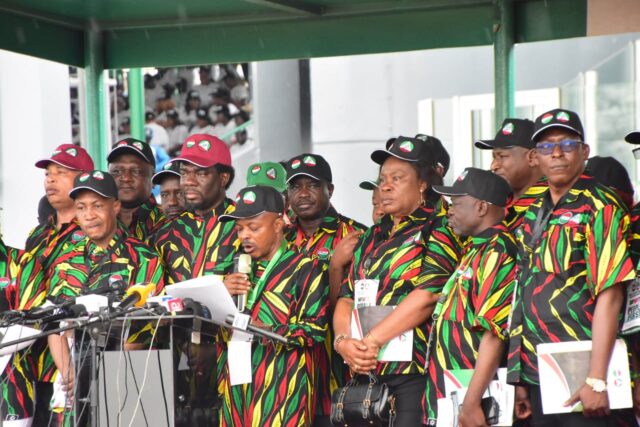
Labour Party Establishes ‘Obidient’ Directorate To Integrate Nigerian Youths

The Labour Party has appointed a team of eight individuals to oversee the newly established ‘Obidient’ Directorate.

This move is part of the party’s strategy to incorporate millions of Nigerian youths, especially those aligned with the ‘Obidient’ movement, into the broader Labour Party framework.

Advertorial

The appointees are Mr. Marcel Ngogbehei as Director; Amb. AJU Elumelu as Deputy Director (Diaspora); Mrs. Mariam Ismaila as Deputy Director; Mr. Chukwuemeka Gerald Okafor as Deputy Director; Mrs. Angel Innocent as Deputy Director; Mr. Tony Ashekomeh Jnr as Deputy Director; Mr. Emeka Ezechi as Deputy Director; and Mr. Josiah Omenuwoma as Deputy Director.

In a statement on Thursday, the Labour Party National Publicity Secretary, Obiora Ifoh, outlined the directorate’s responsibilities.

These include registering members of the ‘Obidient’ community and integrating them into the party structure, facilitating diaspora participation, handling complaints, and ensuring all members are financially contributing to the party.

Additionally, the directorate will work with national leaders to create programs that fully assimilate ‘Obidient’ members into the party.

The directorate’s inauguration is scheduled for June 6, 2024, at the NEC Hall, National Secretariat, Utako, Abuja.

Obi, the former governor of Anambra State, was the Labour Party’s candidate in the 2023 presidential election.

Google search engine

Biafra Day: Total Lockdown In Enugu As Residents Observe Sit-At-Home

Enugu State saw its streets deserted on Thursday as residents complied with the sit-at-home order issued by the Indigenous People of Biafra (IPOB) to honor Igbos who died during the Biafra Civil War from 1967 to 1970.

The order led to the closure of schools and businesses, with only students taking their West African Senior Secondary Certificate Examination, along with their supervisors and invigilators, attending school.

Although there was an attack reported at Nkwo Ibagwa Market in Igbo-Eze South Local Government Area on Wednesday, Thursday remained peaceful with no incidents of violence related to the Biafra Heroes Day observance.

IPOB had called for a sit-at-home across the South-East to mark Biafra Day, a remembrance for those who lost their lives during the civil war.Advertorial

Contrary to IPOB’s directive, the Enugu State government opposed the sit-at-home order.

In a circular issued by Head of Service Mr. Ken Ugwu on Wednesday, the government clarified that May 30 was not a public holiday and warned that civil servants and political appointees failing to report to work would face severe sanctions, including summary dismissal as per Public Service Rules.

Advertorial

But despite the instructions, the residents of Enugu State fully adhered to the IPOB order.

Daily Gazette observed that workers who attempted to go to work found it difficult to secure transportation, leading many to return home after waiting for hours at bus stops.

Shops, markets, and both public and private offices were closed in observance of Biafra Heroes Day, reflecting the widespread compliance with the sit-at-home directive.

Google search engine

MOST COMMENTED

- Advertisement -
Google search engine