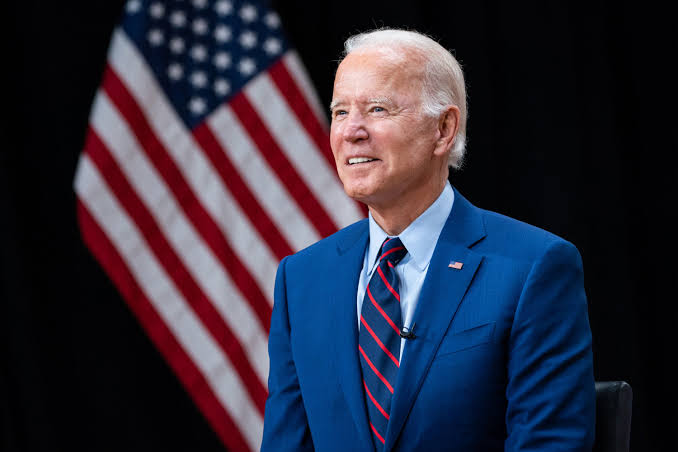

Former U.S President, Joe Biden, 82, has been diagnosed with an aggressive form of prostate cancer that has spread to his bones, his office confirmed on Sunday.
The diagnosis came after Biden sought medical attention last week for worsening urinary symptoms.
Doctors identified a high-grade prostate cancer, classified by a Gleason score of 9 out of 10, indicating an aggressive and fast-spreading form of the disease.
However, his team noted the cancer is hormone-sensitive, suggesting it could be managed with appropriate treatment.
“Last week, President Joe Biden was seen for a new finding of a prostate nodule after experiencing increasing urinary symptoms,” his office said in a statement.
“On Friday, he was diagnosed with prostate cancer, characterised by a Gleason score of 9 (Grade Group 5) with metastasis to the bone.
While this represents a more aggressive form of the disease, the cancer appears to be hormone-sensitive which allows for effective management.”
Biden, who exited office in January following his withdrawal from the 2024 presidential race, is currently exploring treatment options with his family and medical team.
News of Biden’s diagnosis prompted widespread expressions of support from across the political spectrum.
Former President Donald Trump wrote on Truth Social:
“We extend our warmest and best wishes to Jill and the family. We wish Joe a fast and successful recovery.”
Vice-President Kamala Harris, who stepped in as the Democratic nominee for 2024 after Biden’s departure from the race, also shared a heartfelt message on X (formerly Twitter):
“Joe is a fighter – and I know he will face this challenge with the same strength, resilience, and optimism that have always defined his life and leadership.”
Former President Barack Obama, who served alongside Biden from 2009 to 2017, wrote:
“Nobody has done more to find breakthrough treatments for cancer in all its forms than Joe, and I am certain he will fight this challenge with his trademark resolve and grace. We pray for a fast and full recovery.”
UK Prime Minister Keir Starmer added his voice to the chorus of well-wishers, saying:
“I am very sorry to hear President Biden has prostate cancer. All the very best to Joe, his wife Jill and their family, and wishing the president swift and successful treatment.”
Biden’s diagnosis comes nearly a decade after he lost his eldest son, Beau Biden, to brain cancer in 2015.
The personal loss has fueled his deep commitment to cancer research. As vice president, he spearheaded the Obama administration’s “cancer moonshot” initiative, which was later relaunched during his presidency in 2022, with a goal to prevent over four million cancer deaths by 2047.
Since stepping away from the presidency, Biden has largely stayed out of the public spotlight.
In April, he delivered a keynote address at a disability rights conference in Chicago, and in May, he granted his first post-White House interview to the BBC, where he reflected on his decision to leave the 2024 race.
“It was a difficult decision,” he admitted.
He also appeared on The View, denying speculation about cognitive decline during his final year in office.
“There is nothing to sustain that,” Biden said.
Dr. William Dahut, Chief Scientific Officer at the American Cancer Society, described the diagnosis as serious but not hopeless.
“In general, if cancer has spread to the bones, we don’t think it is considered a curable cancer,” he explained.
However, he emphasized that many patients respond well to initial treatment and can live for many years.
Hormonal therapy, he noted, would likely be the first step in treatment to reduce symptoms and slow the disease’s progression.
Prostate cancer remains the second most common cancer among men in the U.S., following skin cancer.
According to the CDC, 13 in 100 men will be diagnosed with it during their lifetime, with age being the most significant risk factor.