
The Senate has moved forward with a legislative proposal aimed at formalizing the employment of domestic workers, apprentices, interns, and other informal sector employees in Nigeria.
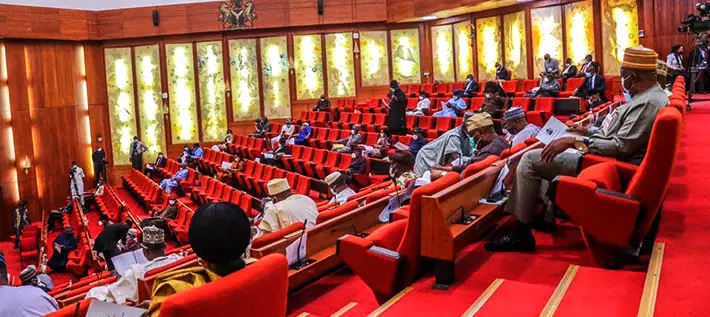
The bill successfully passed second reading during plenary on Tuesday.
Sponsored by Senator Sani Musa (APC, Niger East), the bill, titled “A Bill for an Act to Regulate and Formalize the Employment of Domestic Workers, Apprenticeships, Interns and Other Informal Sector Employees and to Empower the National Directorate of Employment to Issue Licenses and Monitor Privately Owned Employment Agencies in Nigeria, and for Other Related Matters, 2025 (SB. 629),” seeks to introduce structured oversight in the informal employment landscape.
The legislation proposes empowering the National Directorate of Employment (NDE) to license and regulate privately run employment agencies.
These agencies would be required to register workers in a centralized database, ensure adherence to agreed terms and conditions, and guarantee social security coverage.
While leading the debate, Senator Musa emphasized the urgent need to address long-standing gaps in Nigeria’s informal labour market, which remains largely unregulated and often neglects workers’ welfare.
“The informal sector is often a residual labour market where income is not largely wage-dependent, working time is discretionary, and some jobs go unpaid,” Senator Musa said.
He stressed that the bill is aligned with global labour standards and seeks to improve working conditions across the informal sector.
“This bill is designed to correct the decent work deficit by promoting fair treatment, decent remuneration, and protection of workers’ rights in line with International Labour Organization (ILO) conventions to which Nigeria is a signatory.”
The bill also outlines clear criteria for employment agencies to qualify for licensing. These include full legal registration, transparent financial operations, and a clean compliance record.
Agencies must keep accurate records of staff and business operations, while designated NDE officers will be responsible for enforcement and compliance monitoring within their jurisdictions.
Senator Musa noted the bill’s potential to eliminate exploitative practices and provide a safety net for informal workers, who represent a significant portion of Nigeria’s workforce.
“This bill is a significant step toward formalizing the informal labour market and ensuring decent work conditions for millions of Nigerians. It also aims to improve data collection, workforce planning, and social security coverage for informal workers,” he added.
Senate President Godswill Akpabio subsequently referred the bill to the Senate Committee on Employment, Labour and Productivity for further legislative scrutiny. The committee is expected to return with its recommendations within six weeks.
If enacted, the bill is expected to introduce fairer employment practices, elevate job quality, and extend legal protections to workers across Nigeria’s vast informal sector.