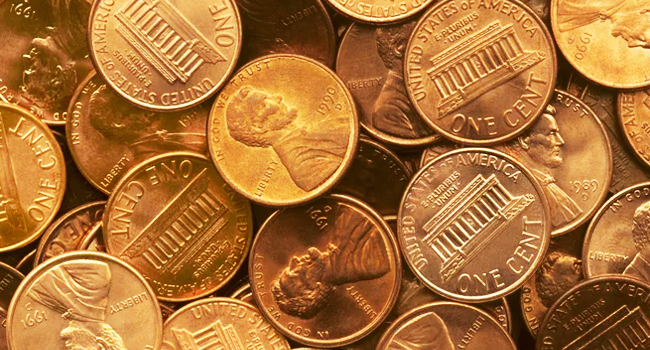

The United States Treasury Department has announced it will cease the production of one, cent coins, commonly known as pennies, starting in 2026, bringing an end to more than 230 years of the coin’s circulation.
The penny, which first entered use in 1793, was one of the earliest coins minted by the US Mint.
However, the department cited rising costs as the primary reason for discontinuing the coin.
According to a report by the BBC, President Donald Trump had directed Treasury Secretary Scott Bessent in February to halt penny production, calling the coin “wasteful.”
Debate over the value and practicality of the penny has persisted for years, with many arguing that it costs more to produce than it’s worth.
In January, Elon Musk’s informal advisory group, the Department of Government Efficiency (Doge), highlighted the issue in a post on X, drawing attention to the financial inefficiencies involved in minting the coin.
Data from the Treasury show that the cost of producing a penny has increased from 1.3 cents to 3.69 cents over the past decade.
The US Mint estimates that ending production will save $56 million annually in material expenses alone.
“Confirming the WSJ story, the Treasury has made its final order of penny blanks this month and the United States Mint will continue to manufacture pennies while an inventory of penny blanks exists,” a Treasury spokesperson was quoted by the BBC as saying.
Critics argue that the penny wastes both money and resources, especially given its minimal purchasing power.
Supporters, however, claim the coin helps to keep retail prices lower and supports charitable initiatives through penny drives.
The Wall Street Journal, which first broke the story, noted that the phasing out of the penny will lead businesses to round prices up or down at checkout.
Internationally, the US is not alone in retiring its lowest-denomination coin.
Canada ended production of its one-cent coin in 2012, citing similar concerns about production costs and diminished value.
In the United Kingdom, the shift away from cash has also impacted coin production.
No new coins were minted in 2024, although the UK Treasury confirmed that £1 and £2 coins are still in use.
Sporadic production of the £2 coin in recent years reflects changing consumer behavior as digital transactions become more dominant.