
African leaders and citizens reacted with alarm on Thursday following U.S President Donald Trump’s decision to impose a sweeping travel ban on citizens from 12 countries, seven of which are in Africa.
Under the new executive order signed Wednesday, nationals from Chad, the Republic of Congo, Equatorial Guinea, Eritrea, Libya, Somalia, and Sudan are now barred from entering the United States.
The Trump administration cited national security and terrorism concerns as the primary justification.
In a swift response, the African Union (AU) criticized the move, warning that it would damage long-standing partnerships between the continent and the U.S.
The AU said in a statement the decision would harm “people-to-people ties, educational exchange, commercial engagement, and broader diplomatic relations” built over decades.
The organization urged Washington to take a different path: “It appealed to Washington to adopt a ‘consultative approach and to engage in constructive dialogue with the countries concerned’.”
Beyond Africa, Afghanistan, Myanmar, Haiti, Iran, and Yemen were also added to the full ban list.
Chad’s Foreign Minister Abdoulaye Sabre Fadoul expressed disbelief, telling AFP the country was “surprised by this announcement and even more by the terrorism-related reason (which) completely disregards Chad’s commitment and results in this area.”
In Mogadishu, the Somali government remained officially silent, but residents voiced frustration and heartbreak.
“I totally disagree with the president of the United States’ decision,” said Salad Abdullahi Mohamed.
“Somali immigrants reached there after a long, hazardous trip to get a better life,” he added.
Fellow resident Ali Abdullahi Ali agreed, saying migrants were just hoping “to make a better living and help their parents.”
He continued: “I would call on the president to make this decision null and void and also give the necessary documents to stay and continue living and working there.”
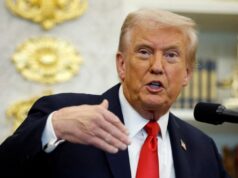
President Trump, who signed the order from the Oval Office, said the decision was made in response to a recent flamethrower attack at a pro-Israel protest in Boulder, Colorado, allegedly carried out by a man residing in the U.S. illegally.
In a video message posted on X (formerly Twitter), Trump declared: “The recent terror attack in Boulder, Colorado, has underscored the extreme dangers posed to our country by the entry of foreign nationals who are not properly vetted.”
“We don’t want them,” he added.
The suspect, Mohammed Sabry Soliman, an Egyptian national, is accused of launching firebombs at protestors and spraying them with gasoline.
Homeland Security officials said he had overstayed a tourist visa and had applied for asylum in 2022.
White House Deputy Press Secretary Abigail Jackson echoed the administration’s position: “President Trump is fulfilling his promise to protect Americans from dangerous foreign actors that want to come to our country and cause us harm.”
In addition to the 12 countries on the full ban list, the administration announced partial restrictions on seven others: Burundi, Cuba, Laos, Sierra Leone, Togo, Turkmenistan, and Venezuela. Citizens of these countries may still receive temporary work visas.
Athletes from banned nations will be allowed to participate in international events hosted by the U.S, including the 2026 FIFA World Cup and the 2028 Los Angeles Olympics, according to the order.
Trump also declared a halt on issuing visas for foreign students newly admitted to Harvard University, a move viewed as part of his wider crackdown on what he perceives as elite liberal institutions.
Rights groups condemned the policy. Amnesty International USA labeled the order “discriminatory, racist, and downright cruel.”
In Myanmar, a student who had just received her U.S. visa two days before the announcement told AFP: “We don’t really have life here, and people want to escape to a country where we can breathe, we can walk, we can study.”
“I think it’s very shocking,” she said.
Critics argue the ban revives the most controversial elements of Trump’s earlier travel policies and may face legal hurdles, as similar executive orders did during his first term.
The official proclamation noted that countries such as Afghanistan, Libya, Sudan, Somalia, and Yemen lack “competent” authorities to manage passport and identity verification processes. Iran was designated due to its status as a “state sponsor of terrorism.”
Jamal Abdi, president of the National Iranian American Council, said: “The impact of the ban will once again be felt by Americans who were denied the ability to see their loved ones at weddings, funerals, or the birth of a child.”
For most countries on the list, the administration cited a high probability that visitors would overstay their visas.