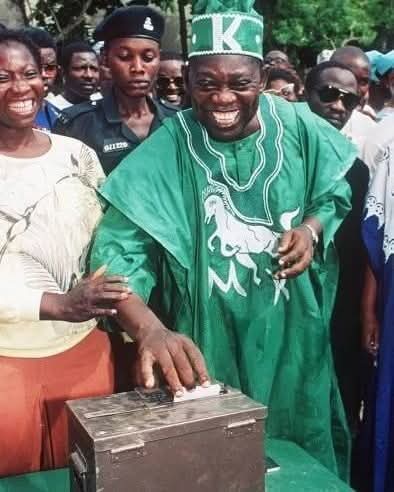

June 12, 1993, stands as a defining moment in Nigeria’s political history, the day millions of citizens cast their ballots in what is still widely seen as the country’s most credible and peaceful presidential election.
M.K.O. Abiola, the charismatic candidate of the Social Democratic Party (SDP), was poised for victory over his rival, Bashir Tofa of the National Republican Convention (NRC).
Nigerians, across ethnic and religious lines, voted in hope for progress, unity, and change.
But that hope was soon dashed. The military government, led by General Ibrahim Babangida, annulled the election results, plunging the nation into uncertainty and outrage.
The move triggered widespread protests and catalyzed the rise of a broad pro-democracy movement, forever altering Nigeria’s political direction.
Though Abiola never assumed office, and tragically died in detention five years later, his name and the events of that day continue to echo through the corridors of Nigeria’s democratic struggle.
Over 30 years later, June 12 has become more than a date; it is a national symbol of resilience, of a people’s desire to choose their leaders freely, and a reminder of a democracy long delayed — but never forgotten.