
Tensions in the Middle East escalated dramatically on Friday as Iran launched a barrage of ballistic missiles at Israel in retaliation for a massive Israeli airstrike campaign targeting Iran’s nuclear facilities and top military leaders.
The counterattack came after Israel confirmed that its earlier strikes had killed several high-ranking members of Iran’s Islamic Revolutionary Guard Corps (IRGC), including most of the senior leadership of its aerospace force.
Reports also indicated that key nuclear facilities, including the uranium enrichment site at Natanz, were hit in the air raids.
In response, air raid sirens blared across Israeli cities as explosions rocked parts of the country.
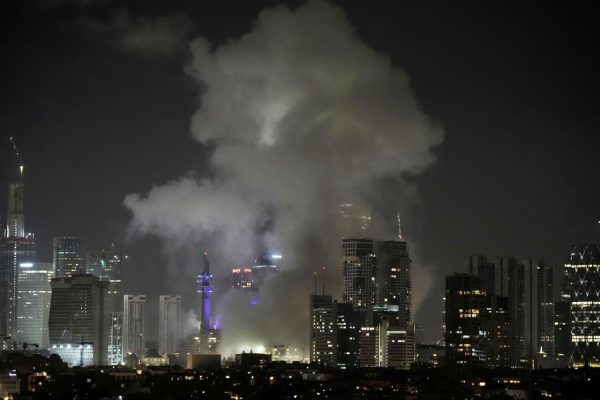
Smoke was seen rising above Tel Aviv, and emergency services reported that several people were trapped inside a high-rise building damaged during the missile onslaught.
Iran’s Revolutionary Guard confirmed it had struck dozens of targets within Israel.
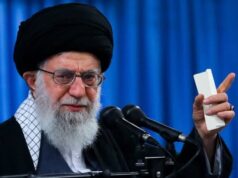
Supreme Leader Ayatollah Ali Khamenei, in a televised address, vowed a harsh response.
“The armed forces of the Islamic Republic will inflict heavy blows upon this malevolent enemy,” he declared.
As the exchange of attacks intensified, Israeli Prime Minister Benjamin Netanyahu addressed the nation, warning of “several waves of Iranian attacks” and promising continued operations targeting Iran’s nuclear infrastructure.
He said the Israeli military had struck “at the heart of Iran’s nuclear enrichment programme”, targeting both facilities and scientists.
“The strikes will continue as many days as it takes,” Netanyahu added, citing intelligence suggesting Iran was nearing a “point of no return” in its nuclear programme.
Among the casualties, Iran’s state media confirmed the deaths of IRGC Chief of Staff Mohammad Bagheri and Revolutionary Guards commander Hossein Salami.
A senior adviser to Khamenei was reportedly injured, and the country’s nuclear agency confirmed that six nuclear scientists were also killed.
According to the Israeli military, the Revolutionary Guards’ aerospace command had convened in an underground command centre in Tehran to plan an attack on Israel.
“The senior chain of command…had assembled in an underground command centre to prepare for an attack…Our strikes eliminated most of them,” an Israeli military statement said.
Images published by AFP showed significant damage to buildings in Tehran, including a large hole in a residential structure that was reportedly targeted during the Israeli strikes.
Iranian media reported further attacks throughout Friday evening, including in the northwest, where at least 18 people were killed.
In the midst of the violence, global attention turned to the United Nations.
Iran requested an emergency Security Council meeting, which was scheduled for 1900 GMT. Russia and China voiced support for the meeting, raising the prospect of a diplomatic standoff.
While the U.S confirmed it was not involved in Israel’s offensive, it warned Iran not to target American assets or personnel.
Tehran, however, held Washington partly accountable.
Iran’s Foreign Minister Abbas Araghchi dismissed international calls for restraint, stating:
“Calls for Iran to show restraint in the face of Israeli aggression” were unacceptable.
U.S President Donald Trump, speaking Friday, urged Iran to “make a deal” on its nuclear programme and warned of “even more brutal” attacks if the conflict escalated.
Trump also revealed plans to draw down U.S. staff in the Middle East amid threats from Iran to retaliate against American bases if war breaks out.
Earlier in the week, Trump had expressed cautious optimism about reaching a nuclear deal with Iran, but warned that Israel’s actions might jeopardize ongoing negotiations.