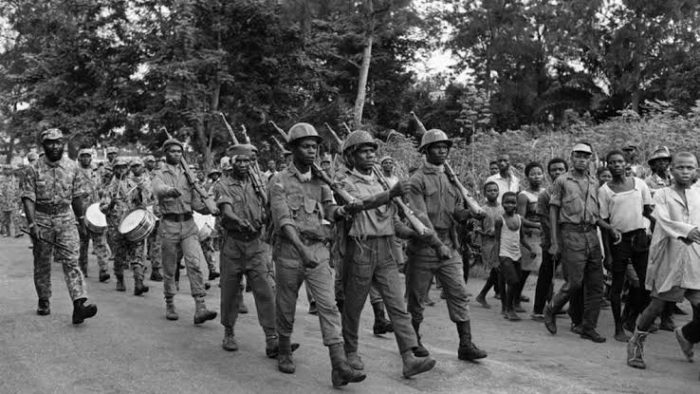

More than half a century after the Nigeria-Biafra civil war ended, residents of Foriku-Boridele, a small community in Ondo State near Ore, say they are still trapped in the aftermath of the conflict, with no basic infrastructure, lingering danger, and no government aid.
The Nigeria-Biafra war, which began on July 6, 1967, and ended on January 15, 1970, left deep scars across the country.
Foriku, once a battleground between federal troops and Biafran forces, has yet to recover.
According to a report by BBC Pidgin, old military hardware is still scattered across the farmland, while locals say the soil remains unsafe for farming due to war-era contamination.
Some residents say unexploded devices and dangerous chemicals still appear when they dig.
Odukoya Akinmeje, who now leads the Foriku community, recalled his experience as a child when the war reached their village.
“They said it was over, so we came back, but within a week, the soldiers had returned,” he said, remembering the renewed violence as troops marched through the roads near their homes.
Johnson Danjuma, a resident whose family settled in the area before the war, shared that the land, once thought to be rich and productive, has instead become difficult and dangerous.
He described how families fled into the bush to survive.
“Even pregnant women were forced to deliver without shelter,” he said.
The lack of clean water and sanitation continues to haunt the community. Gbenga Adeyemi, a local youth leader, told BBC Pidgin that after the war, some young people died after consuming water contaminated by chemicals left behind.
“The land remains damaged and there’s been little to no support from government authorities,” he lamented.
Foriku’s struggles extend beyond environmental concerns.
The community lacks basic infrastructure, there are no schools, no medical facilities, and no reliable sources of drinking water.
Elizabeth Iwam, who was raised in Foriku, told BBC Pidgin how she used to walk long distances to attend school, a challenge that eventually forced her to drop out.
“Children now face the same challenges we did, coupled with the fear that memories of war still instil,” she said.
Residents say they feel forgotten by the very nation they remained loyal to during the war.
Many believe the federal and state governments have abandoned them, even as they continue to deal with the emotional and physical damage inflicted more than five decades ago.
Despite the passage of time, Foriku remains a stark reminder of a war that ended on paper but never truly ended in their lives.