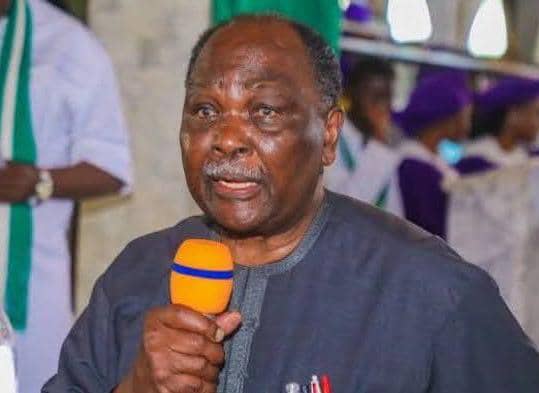

The apex Igbo socio-cultural body, Ohanaeze Ndigbo, has publicly urged former Nigerian military head of state, General Yakubu Gowon, to confront his conscience, confess his role in the Nigeria-Biafra civil war, and offer a heartfelt apology to the Igbo people.
This call came in response to Gowon’s recent claim that the war was not targeted at the Igbo ethnic group, but was instead aimed at curbing secessionist threats following the political crisis of 1966.
Ohanaeze rejected this position outright, labelling it a “gross misrepresentation of historical facts” and an “affront to the collective memory and dignity of the Igbo nation.”
According to Ohanaeze, Gowon failed to act decisively during the 1966 Northern riots, which saw widespread killings of Igbo people.
They accused him of failing to protect the lives of Nigerians, particularly the Igbo populace, during those violent episodes, which they described as “unimaginable atrocities.”
The group stated:
“We are compelled to address and clarify the deeply entrenched biases and distorted narratives perpetuated by General Gowon.”
In a scathing critique, Ohanaeze Ndigbo argued that Gowon, now 91 years old, remains “a pawn in the hands of colonial powers and the Fulani oligarchy, both of whom orchestrated his actions during what became an unjust war against the Igbo.”
They challenged the former leader to drop the long-held narrative of Nigerian unity which, they say, is rooted in falsehoods and manipulation.
“He must abandon the military mentality and the rehearsed narratives advocating for a united Nigeria, narratives built upon deceit and instead testify honestly, without fear, to both the Nigerian public and the world,” the organisation insisted.
Furthermore, Ohanaeze called on Gowon to speak the truth about the Aburi Accord, a peace initiative they believe could have averted the full-scale war.
The group claims that colonial interests led to the abandonment of this critical agreement.
“His military aggression against the Igbo was not a reaction to secessionist ambitions; rather, it was a calculated initiative aimed at safeguarding British economic interests in the oil-rich Eastern region of Biafra and retaliating against perceived threats post-1966 coup,” they stated.
In their closing remarks, Ohanaeze offered a moral and spiritual perspective, suggesting that Gowon’s advanced age is a divine opportunity for reflection and atonement.
“God has kept him alive for two reasons: to surrender to his conscience and seek divine forgiveness, and to take the lead in healing historical wounds by promoting efforts in reconciliation, rehabilitation, and reconstruction of the Igbo people.”