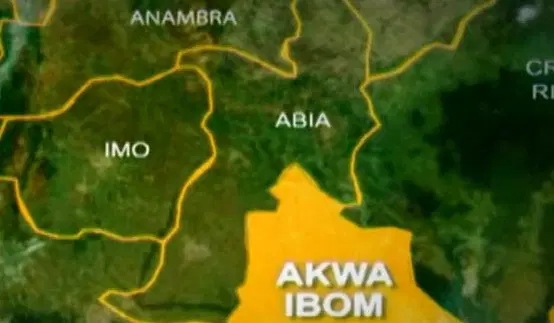

A sharp disagreement has emerged in Akwa Ibom State as the Ibibio ethnic group has firmly opposed the proposal to create an Obolo State from parts of Akwa Ibom, stating that they will not surrender any of their ancestral lands currently occupied by the Obolo people.
This firm stance was articulated by Ifim Ibom Ibibio, the apex traditional leadership body of the Ibibios, during the South-South public hearing on the 1999 constitutional amendment, held in Ikot Ekpene.
The session was officially opened by Senate President Godswill Akpabio.
Dr. Samuel Udonsak, President-General of the Ekid People’s Union, delivered the memorandum on behalf of the Ifim Ibom Ibibio.
He noted that although the Ibibio people support the creation of new states in Nigeria, they are strongly opposed to any move that would involve taking parts of their land to form the proposed Obolo State.
He said: “In the current constitutional amendment process/exercise, Ifim Ibom Ibibio notes that Nigerian people have made requests to the National Assembly for the creation of 31 additional (new) States across the six geopolitical zones of the country.
“As shown in the public hearing invitation document recently published by the Senate Committee on the Review of the Constitution, we know and note in particular that there is a request for the creation of Obolo State from the present Akwa Ibom State and Rivers State of South-South Nigeria.”
Dr. Udonsak clarified that the Obolo people, who reside in Eastern Obolo Local Government Area, have every right to seek a state of their own, but that right does not extend to appropriating land from the Ibibios.
“Ifim Ibom Ibibio recognizes and respects the right of the Obolo people currently living in Eastern Obolo LGA of Akwa Ibom State, to seek a geopolitical entity (a State) of their own.
Ifim Ibom Ibibio, however, firmly holds the position that no part, no inch of Ibibio land, in any of the 16 Ibibio LGAs shall be excised or carved out to create Obolo State, or any other State for that matter, which is not formally, legitimately and collectively demanded by Ibibio people, the owners of the ancestral lands they occupy.”
He listed the 16 Local Government Areas identified as Ibibio territories in the First Schedule of the 1999 Constitution, including Eket, Esit Eket, Etinan, Ibiono Ibom, Ini, and Uyo, among others.
He emphasized that the April 27, 2023 gazetted map of Akwa Ibom clearly demarcates these boundaries.
“The ancestral/authentic boundaries of these LGAs are clearly demarcated and delineated in the APPROVED, OFFICIAL, AND GAZETTED (APRIL 27, 2023) MAP OF AKWA IBOM STATE.”
Summarizing the Ibibio position, Udonsak said:
“In sum, the position of Ifim Ibom Ibibio and all Ibibio people at large, home and in the diaspora, is that no village, no section, no part, no inch of any of these Ibibio LGAs shall be made part of the proposed Obolo State, or any other State.”
Citing historical claims, he argued:
“As evident from established historical facts, all the parcels of land currently occupied by the Obolo people in the Eastern Obolo LGA of Akwa Ibom State were leased to their forebears by the Ibibio people on a royalty-paying basis.”
While maintaining that the Ibibios seek peaceful coexistence, he stressed their opposition to any forced land concession:
“Ifim Ibom Ibibio and Ibibio people at large, have no problem with the request of their Obolo brothers and sisters for the creation of Obolo State for their separate identity.
However, the Ibibio are totally opposed to the annexture of any part, any inch of Ibibio land to the proposed Obolo State. This is our firm conclusion and position on the matter.”
Meanwhile, the Obolo people, during their presentation at the hearing, maintained their demand for a state of their own, citing marginalization within Akwa Ibom as justification.