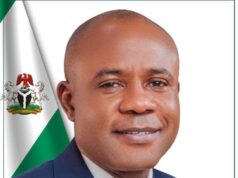
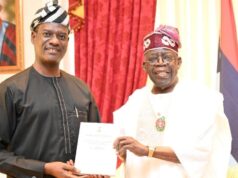
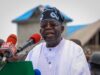
The Presidency has criticized former Secretary to the Government of the Federation (SGF), Boss Mustapha, over his comments regarding President Bola Ahmed Tinubu’s contribution to former President Muhammadu Buhari’s landmark 2015 election victory.
The Presidency described Mustapha’s claims as “a disservice to recent political history.”
Mr. Tope Ajayi, Senior Special Assistant to the President on Media and Publicity, took to X to firmly state that President Tinubu’s influence was crucial not only to Buhari’s emergence as the APC’s presidential candidate but ultimately to his election as president.
This response followed Mustapha’s remarks during the public launch of the memoir According to Mr. President: Lessons from a Presidential Spokesman’s Experience by Mallam Garba Shehu, where Mustapha argued that the merger which created the All Progressives Congress (APC) only contributed about 3 million votes to Buhari’s total of 15.4 million votes in 2015.
Ajayi dismissed this as “an unfortunate and revisionist take on one of the most significant political shifts in Nigeria’s Fourth Republic.”
He added, “Former SGF Boss Mustapha did a disservice to our recent history with that unnecessary glib at the book launch today.”
Ajayi stressed that regardless of the outcome of the 2015 general election, Buhari would not have stood as the APC’s presidential candidate without the backing and influence of then-national party leader, Bola Tinubu.
“There is no way he [Buhari] would have won the election to be president without first becoming the presidential candidate of his party APC,” Ajayi wrote.
“General Buhari would not have won the APC primary election at the Teslim Balogun Stadium, Lagos, in 2014 without President Tinubu, who mobilised the APC governors and the South West delegates to move Buhari’s way.”
Ajayi’s statement highlights the widespread view that Tinubu played a pivotal role in uniting the various factions that formed the APC and in securing Buhari’s support across the South-West, a region that had previously been difficult for Buhari to win over.
He further noted that although Buhari had a strong base in the North, where he regularly garnered 12 million votes, he lost presidential elections in 2003, 2007, and 2011 before the 2015 coalition expanded his national appeal.
“Every effort and support that made it possible for President Buhari to win should never be diminished,” Ajayi emphasized, adding that Tinubu’s role in that achievement “must be recognized for what it truly was decisive.”
The 2015 election was historic, marking the first time an incumbent president was defeated at the polls in Nigeria.
The APC’s success was largely credited to the strategic merger of major opposition parties, including Tinubu’s Action Congress of Nigeria (ACN), Buhari’s Congress for Progressive Change (CPC), the All Nigeria Peoples Party (ANPP), and factions of the All Progressives Grand Alliance (APGA) and the Peoples Democratic Party (PDP).