
A South Korean investigation into the December 2024 crash of Jeju Air Flight 2216 has concluded that the pilots mistakenly shut down the aircraft’s functioning engine after a bird strike, an error that directly led to the country’s deadliest aviation disaster.
According to sources cited by Reuters, the Boeing 737-800 suffered a bird strike during its final approach, damaging both engines.
However, investigators found that the pilots mistakenly shut off the left engine, which was less damaged, instead of the more compromised right engine.
The misstep confirmed through flight data, cockpit voice recordings, and the aircraft’s engine control switch proved fatal.
“The investigation team has clear evidence and backup data, so its finding will not change,” a source close to the inquiry told Reuters.
The tragic crash, which resulted in 179 fatalities out of 181 people on board, has triggered a major reckoning within South Korea’s aviation sector.
Government officials are now undertaking a comprehensive overhaul of emergency response systems, pilot training programs, and aircraft maintenance standards.
Jeju Air’s CEO, Kim E-bae, was barred from leaving the country as early as January, signaling an intent to hold corporate leadership accountable.
Authorities have since raided Jeju Air’s headquarters, Muan International Airport, and offices of a regional aviation agency as part of the widening investigation into possible regulatory and management failures.
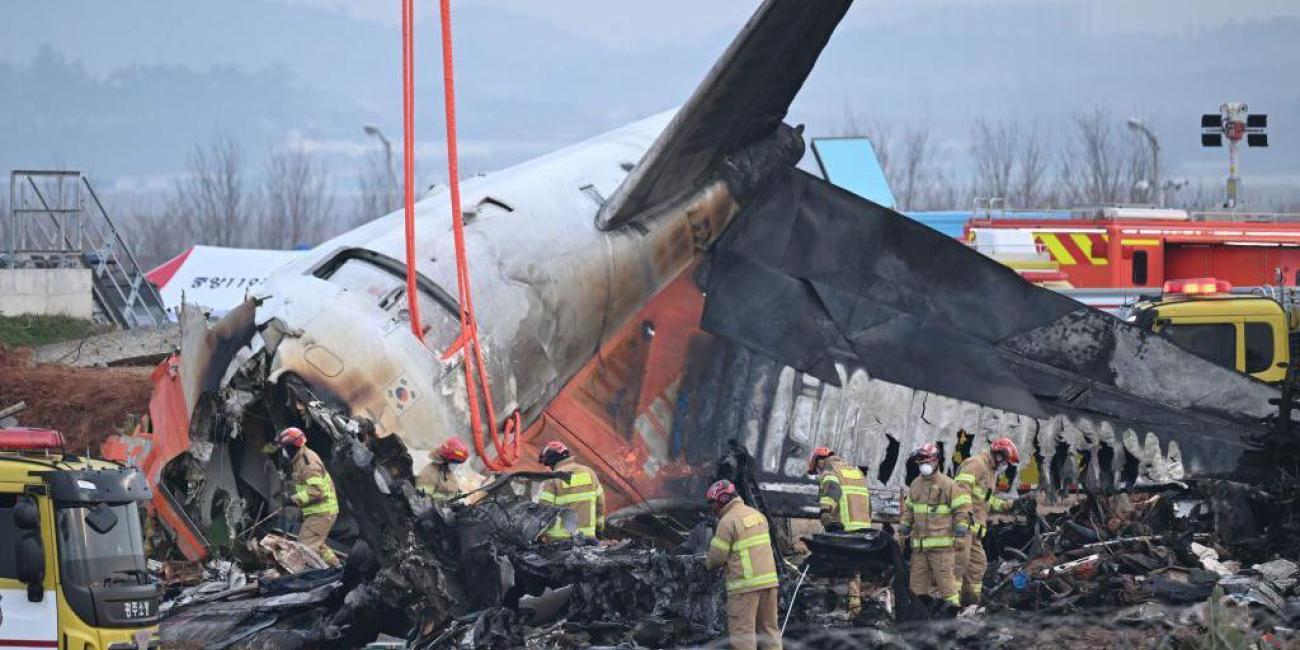
Flight 2216 crash-landed without deploying its landing gear, skidding into a hardened concrete embankment just 300 meters from the runway’s end.
The aircraft burst into flames upon impact, leaving only two survivors.
Though the initial cause was linked to a bird strike, aviation experts now argue that the fatal error was the pilots’ decision to shut down the wrong engine underscoring critical weaknesses in crisis training and decision-making under pressure.
Critics are also questioning airport infrastructure, pointing to the embankment’s proximity to the runway as a potential contributor to the crash’s severity.
In response to the disaster, Acting President Choi Sang-mok ordered immediate inspections of all Boeing 737-800 aircraft in South Korea.
One of the plane’s damaged black boxes has been sent to the United States for further analysis, while investigators continue to examine data from the second device.
This crash is now South Korea’s worst air disaster since the 1997 Korean Air Boeing 747 crash in Guam, which killed 228 people.
As the public outcry intensifies, families of victims and aviation watchdogs are urging the government to enact permanent reforms that address the systemic gaps exposed by the tragedy.
“This isn’t only about one mistake in the cockpit,” said a Seoul-based aviation safety consultant. “It’s about a system that allowed it to happen.”