
Senator Godswill Akpabio,
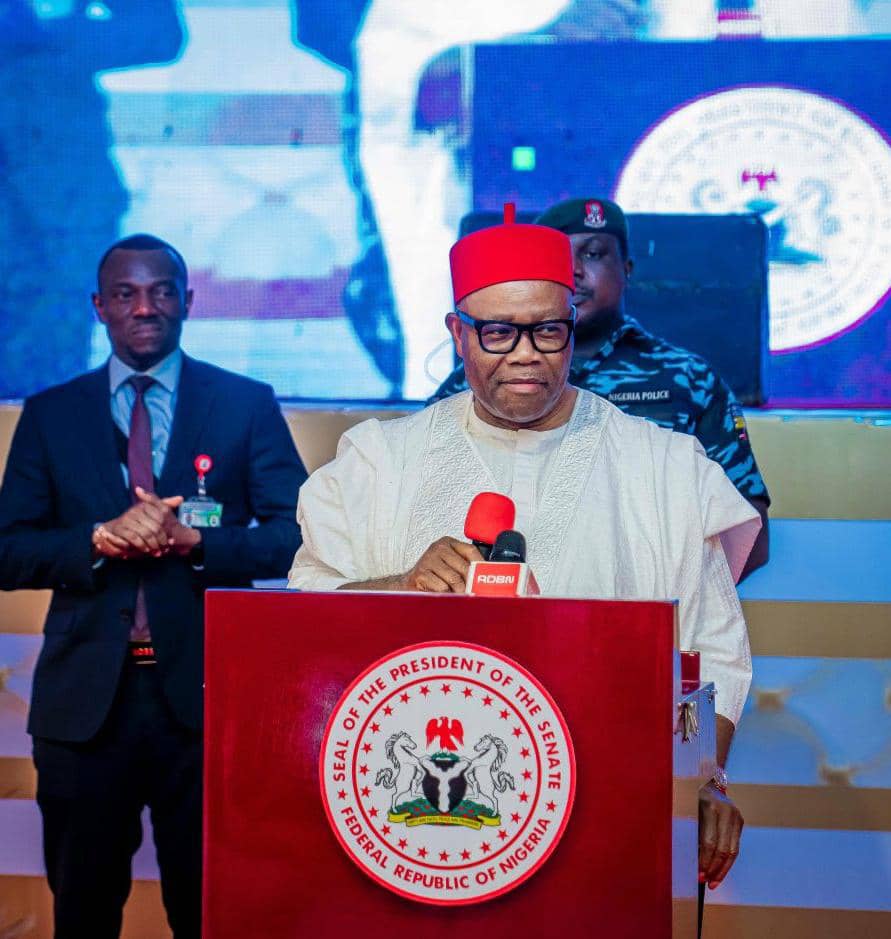
As part of its nationwide constitution review process, the National Assembly held a public hearing in the South-East region on Wednesday, bringing proposed reforms directly to stakeholders in Owerri, the Imo State capital.
The hearing featured key lawmakers and public figures, including Speaker of the House of Representatives, Tajudeen Abbas, who was represented by the House Leader, Prof. Julius Ihonvbere.
In his remarks, Abbas outlined several reform areas currently under consideration, such as youth and women empowerment, constitutional roles for traditional rulers, state policing, and strengthening local government governance.
“We’ve had focused discussions around critical themes like security, political inclusion, appropriation, and equitable gender representation,” Abbas said.
“We are committed to aligning our legislative actions with the evolving aspirations of Nigerians.”
He revealed that the House was working on defining the role of traditional rulers within the governance framework, giving them clear constitutional responsibilities while maintaining democratic principles.
“This initiative aims to acknowledge the unique cultural values of Nigeria’s diverse communities while reinforcing local governance structures,” he noted.
Speaker Abbas emphasized the National Assembly’s commitment to strengthening grassroots governance, stressing collaboration with state legislatures and local councils to devolve power and resources more effectively.
“We want communities to feel the real impact of government in their daily lives,” he said.
“Stronger local institutions will lead to better service delivery, more civic participation, and a democracy that truly reflects the people’s will.”
Addressing the concerns of young Nigerians, Abbas described them as the “strength and future” of the country.
He said the House was implementing programs like legislative mentorship, skills development, and leadership training to prepare youths for nation-building roles.
“We aim to broaden avenues for civic engagement and ensure young Nigerians are active contributors to national development,” he said.
On gender inclusion, Abbas expressed strong support for the Special Reserved Seats for Women Bill, describing it as a vital step toward inclusive governance.
“With only four women in the Senate and 15 in the House out of a total of 469 lawmakers, Nigeria is far behind other African countries in gender representation,” he lamented.
“We must take deliberate action to empower women and give them a stronger voice in leadership.”
He called on state governors, traditional rulers, religious leaders, and civil society to support the bill and help bring it to reality, citing countries like Rwanda, Kenya and South Africa as examples of gender-forward legislatures.
Wednesday’s hearing marked the final phase of the three-stage public consultation, following earlier sessions in Abuja (June 11) and Zaria (June 27), covering the 36 states and 19 Northern states respectively.
Abbas concluded by reiterating the National Assembly’s resolve to directly engage citizens, listen to their concerns, and reflect their voices in the amended constitution.
“Our goal is not just to change the Constitution, but to build a more inclusive, accountable, and responsive governance structure for all Nigerians.”