
Three major petroleum industry associations; the Natural Oil and Gas Suppliers Association of Nigeria (NOGASA), Petroleum Products Retail Outlet Owners Association of Nigeria (PETROAN), and the Nigerian Association of Road Transport Owners (NARTO) have declared plans to join the strike action initiated by the Petroleum Tanker Drivers (PTD) branch of NUPENG.
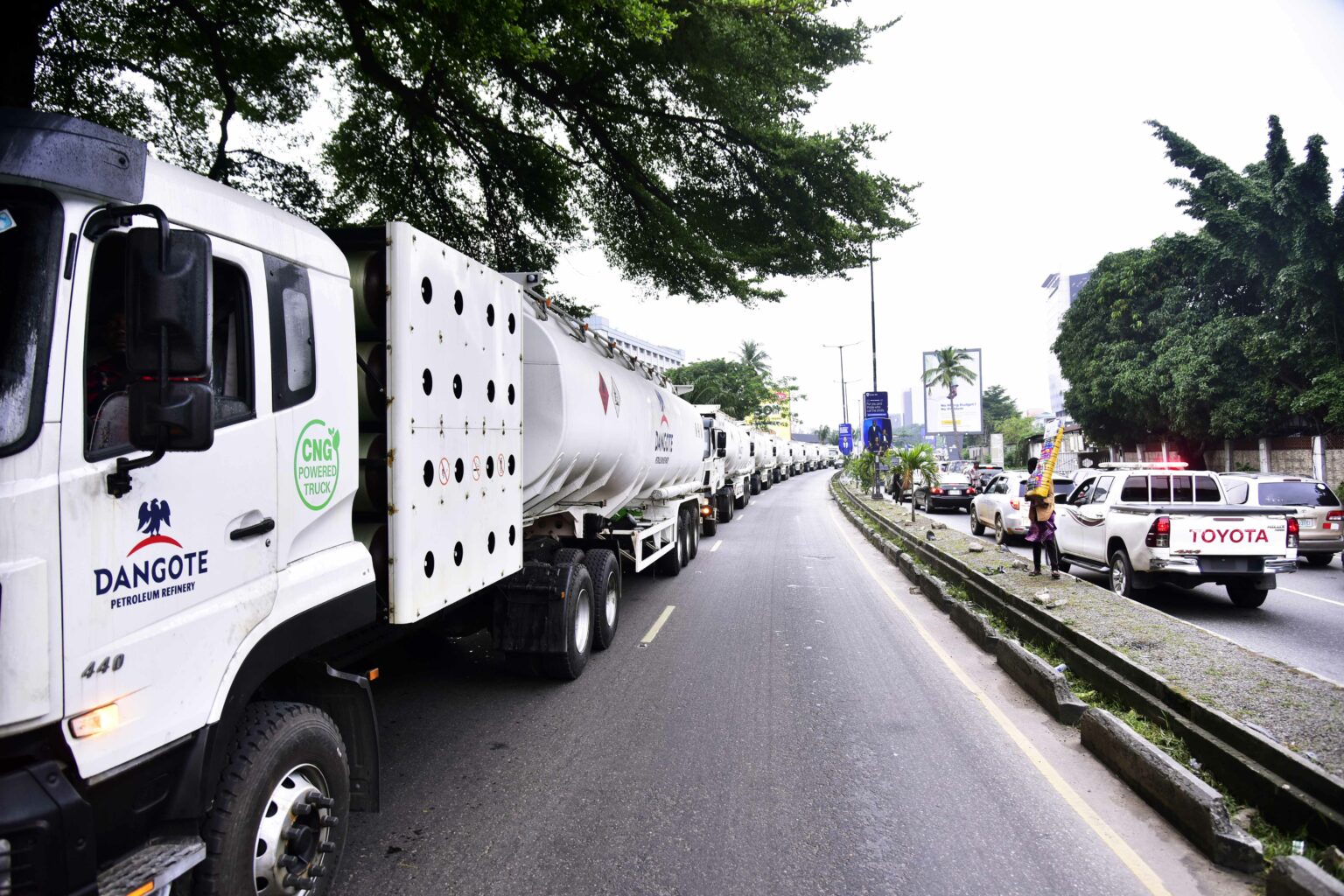
The planned industrial action is in protest against the Dangote Refinery’s decision to deploy 4,000 compressed natural gas (CNG)-powered trucks for direct fuel distribution across the country.
During a joint press briefing on Monday, NOGASA President Bennett Korie ordered all members supplying petroleum products to telecom companies, hotels, construction sites, and other end-users to halt operations by 9 am on Tuesday, September 9, if talks with the federal government fail to produce results.
Korie expressed concern that Dangote’s move could lead to massive job losses and the collapse of the traditional petroleum supply chain.
“We are proud of the refinery’s role in transforming the oil sector, but its current approach threatens the livelihood of thousands across the distribution value chain,” he warned.
He called on President Bola Ahmed Tinubu to urgently intervene and convene a meeting between Dangote Refinery and stakeholders in the downstream sector to avert a national supply crisis.
PETROAN President Dr. Billy Gillis-Harry echoed similar concerns, describing Dangote’s planned use of 4,000 trucks as a short-term solution that could destabilize the sector.
He questioned whether this model, which mirrors Dangote’s cement distribution system, had resulted in price relief for consumers.
“Energy security is at stake,” Gillis-Harry said. “We must protect the sector. Any NUPENG member at our retail outlets who joins the strike will not face disciplinary action. We fully support this resistance until a meaningful resolution is reached.”
Also speaking, NARTO President Yusuf Lawal Othman rejected the idea of direct or “free” distribution of petroleum products, saying it would destroy the business of independent transporters who operate over 30,000 trucks nationwide.
He warned that the proposed distribution model could result in massive unemployment, with ripple effects on drivers, mechanics, loaders, and service providers whose livelihoods depend on the existing supply structure.
“Our members have invested heavily, with backing from local and international financial institutions. Any move to sideline them is a direct assault on their survival,” Othman stated.
The unions are demanding immediate dialogue and cautioning that failure to act could trigger a full-scale disruption of fuel distribution across Nigeria.