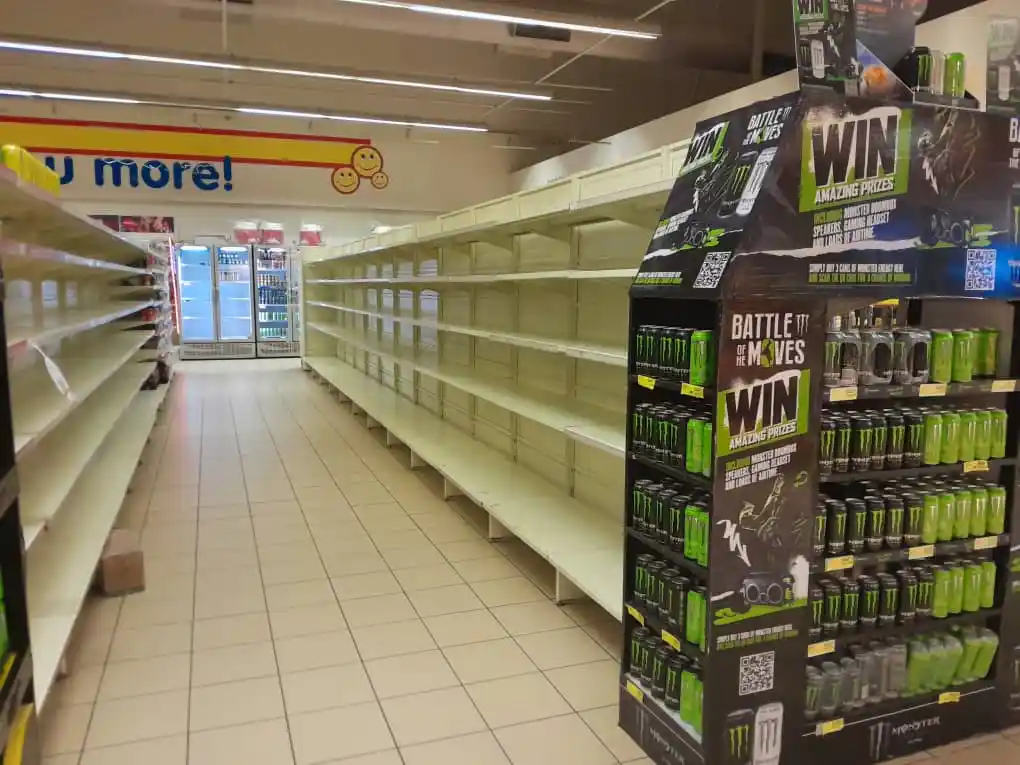

Shoprite Nigeria is facing severe operational challenges.
Outlets in Ibadan and Ilorin have been shut down, while many of its remaining stores in Lagos, Abuja and other cities show empty or near‑empty aisles.
Supply chain disruptions, inflation, foreign exchange volatility and high operating costs are key pressures pushing the retailer toward decline.
Officials say Shoprite moved from being wholly owned by a South African company to a franchise/management model under local investors several years ago.
At the Ikeja City Mall branch in Lagos, a staff administrator, Oluwatosin, explained:
“Actually, there is a new management, so they are trying to have a kind of meeting with all the stakeholders, the suppliers and vendors so that they can renegotiate their prices. Hopefully when that is completed, then they will start stocking the store again.”
On fears about expired goods during the supply shortages, she said:
“We would rather not sell at all than leave expired products on the shelves.”
Employees, speaking on condition of anonymity, expressed frustration and uncertainty:
“We don’t know what they are planning. Our chest is beating because we can’t afford to lose our jobs,” one said.
Some have said the issues have been dragging on for “two months” without sufficient resolution.
Management confirmed they’re auditing financials and aiming to restock by the end of September.
Shoprite entered Nigeria in 2005, soon expanding to multiple states and employing thousands of people.
Earlier store closures include the Kano branch in 2024. Ilorin and Ibadan are now closed, while Lagos and Abuja outlets are dealing with low stock.