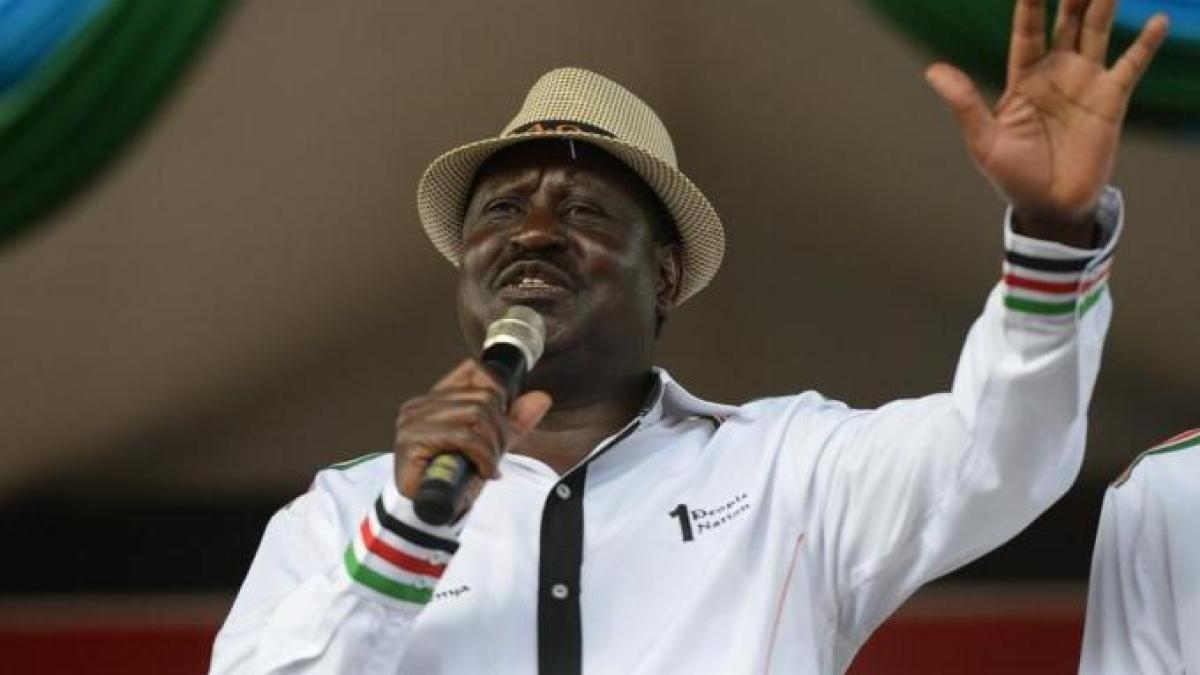

Kenyan opposition leader and political titan Raila Odinga has died at the age of 80 while on a health-related visit to India, in a development that has stunned the East African political landscape.
Indian authorities confirmed that Odinga collapsed suddenly on Wednesday while walking with his sister, daughter, and personal doctor in Kerala.
According to police reports, both Indian and Kenyan security personnel were present when the incident occurred.
“He was rushed to a nearby private hospital, but despite medical intervention, he was declared dead,” a senior Indian police officer told AFP.
A representative from the Sreedhareeyam Ayurvedic Eye Hospital and Research Centre, where Odinga had been receiving treatment, also confirmed his death.
According to the spokesperson, the former Kenyan prime minister experienced breathing difficulties and collapsed.
He was administered CPR and briefly showed signs of response before his condition worsened and ultimately proved fatal.
Though his passing has been verified by a member of his political team, an official statement from his party is still awaited.
Born on January 7, 1945, Raila Odinga was a towering figure in Kenyan politics for over four decades.
Despite never clinching the presidency, he ran for office five times, in 1997, 2007, 2013, 2017, and 2022, and remained the leading voice of Kenya’s opposition.
A member of the Luo ethnic group, Odinga was the son of Jaramogi Oginga Odinga, Kenya’s first vice president.
He entered parliament in 1992 and was imprisoned multiple times during the autocratic rule of President Daniel arap Moi, earning a reputation as a defender of democracy and civil liberties.
Odinga built a broad support base across Kenya, particularly in the western region, and was known for his ability to galvanize mass movements.
Even in the face of electoral defeat, he maintained his political relevance, becoming a symbol of resistance and reform.
Reactions to Odinga’s death were swift and heartfelt. Kenyan presidential hopeful and former Chief Justice David Maraga expressed deep sorrow, calling Odinga:
“A patriot, a pan-Africanist, and a leader who made significant contributions to democracy in Kenya and in Africa.”
He added,
“Kenya has lost one of its most formidable leaders. Africa has lost a leading voice for peace and development. The world has lost a statesman.”
Ethiopian Prime Minister Abiy Ahmed also extended condolences on social media:
“On behalf of the Government of Ethiopia, I extend my sincere condolences on the passing of former Kenyan Prime Minister Raila Odinga. May he rest in peace.”
Odinga’s passing leaves a massive leadership gap within Kenya’s opposition at a critical moment.
With general elections looming in 2027, analysts say it is unclear who can step into his shoes and command the same level of influence and mobilisation across the political spectrum.
His ability to unite divided factions and challenge entrenched power structures made him a rare figure in African politics, a lifelong opposition leader who remained a national force without ever holding the country’s top office.