
The price of Premium Motor Spirit (PMS), commonly known as petrol, has surged to ₦1,000 and above per litre in parts of Nigeria, as long queues reappeared at filling stations across the country.
Daily Trust reports that this is the highest price since April, when fuel last crossed the ₦1,000 mark. Prices had remained below ₦900 in most areas until the latest hike.
In Jos, Plateau State, most stations were shut on Wednesday. Those that operated sold fuel at ₦950/litre, prompting fears that the price would hit ₦1,000 imminently.
Motorists expressed frustration over the rising costs. “Before May 2023, I could fill my tank for ₦7,000. Now, it’s more than triple that,” said Ibrahim Suleiman, who now limits his travel due to cost.
In Gombe, prices jumped from ₦910 to nearly ₦1,000. Some drivers accused fuel dealers of hoarding products to create artificial scarcity.
“This is sabotage,” said commercial driver Abdullahi Adamu. “Stations are closed just to hike the price.”
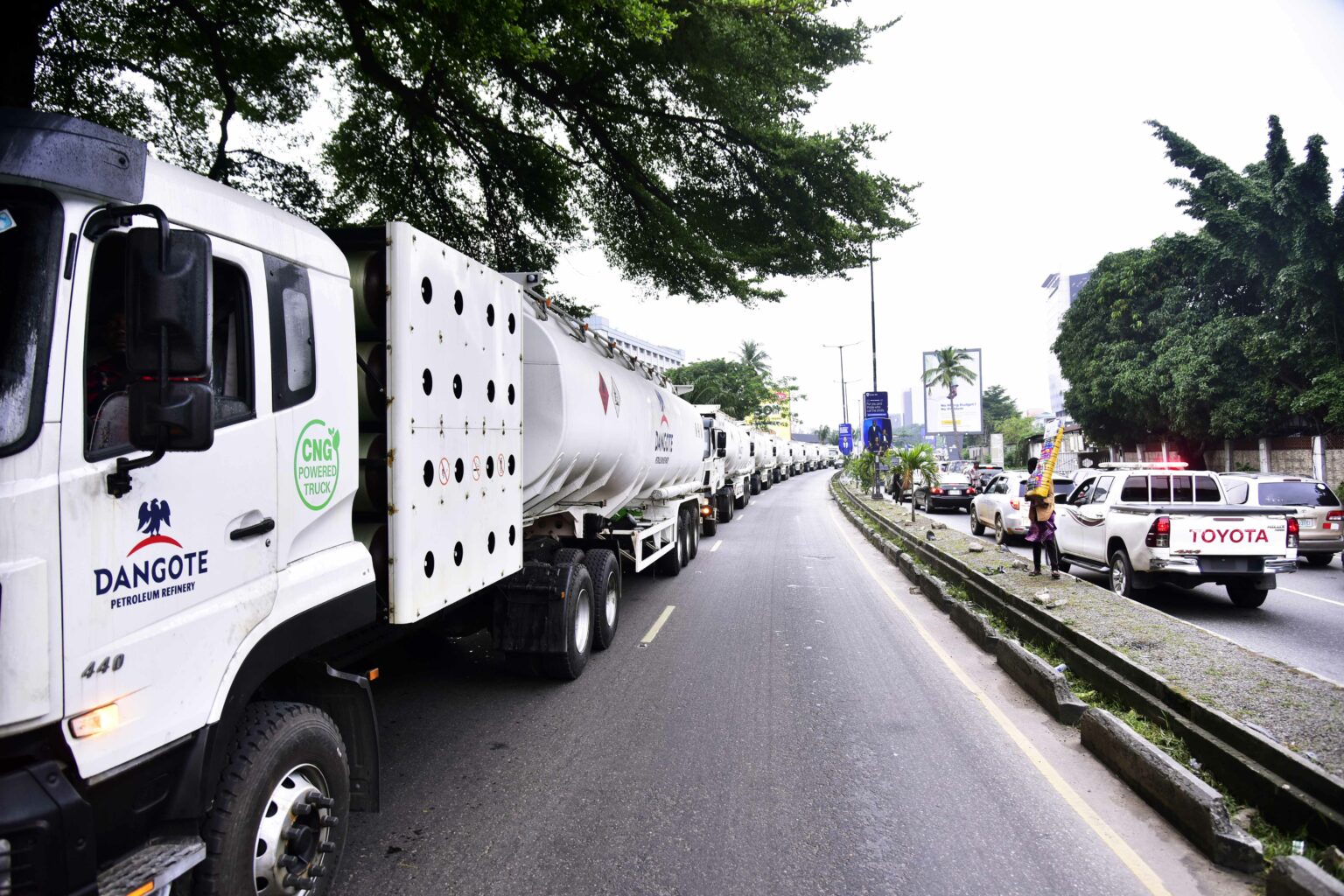
In Makurdi, dealers blamed the hike on supply disruptions linked to the dispute between Dangote Refinery and the Petroleum and Natural Gas Senior Staff Association of Nigeria (PENGASSAN).
A station manager, Mustapha Mohammed, confirmed slow supplies, adding, “This is beyond the control of most marketers.”
In Maiduguri, prices climbed to between ₦1,000 and ₦1,100 per litre, forcing many tricycle and bus drivers off the roads.
In Ilorin, prices rose from ₦830 on Tuesday to above ₦900 by Wednesday. A dealer at an AP station said fuel now sells for ₦920 to ₦930, up from ₦865, while Bovas outlets adjusted to ₦918.
Surprisingly, in Kano, some stations lowered prices slightly from ₦960 to ₦950/litre. AY Maikifi, AA Rano, and AYM Shafa stations were dispensing fuel with minimal queues. However, NNPC stations recently adjusted their prices to ₦968, up from ₦905.
The current surge comes at a time when global crude oil prices are falling. Brent crude fell to around $62.45, down from $74 at the beginning of the year.
WTI dropped to $58.27 amid global economic concerns and trade tensions involving China, the U.S., and South Korea.
Motorists and analysts are puzzled that fuel prices in Nigeria are rising despite the global dip in oil prices and the stabilization of the naira.
A national officer of the Independent Petroleum Marketers Association of Nigeria (IPMAN), Alhaji Olanrewaju Okanlawon, expressed concern over the instability.
“This is not a scarcity issue, the problem is depot pricing. We can’t understand why prices are rising while crude prices are falling,” he said.
Okanlawon confirmed that Dangote Refinery has paused supply due to a turnaround maintenance, leaving many marketers dependent on more expensive imports.
He added, “It’s hard to plan with this level of instability. We’re likely to see fuel cross ₦1,000 in most parts of the country, especially the North.”
Responding to the situation, NNPC’s Chief Corporate Communications Officer, Andy Odey, said the queues were a result of panic buying, not scarcity.
“Some retailers ran out of stock, prompting panic among consumers. But we have enough supply and are actively restocking. The queues should ease soon,” he assured.