Indigenous residents of Abuja have renewed calls for the Federal Capital Territory (FCT) to be granted state-like status, urging President Bola Ahmed Tinubu to implement a recent Court of Appeal ruling affirming this.
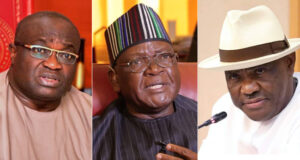
They are also demanding that the FCT have a democratically elected governor by 2027, proposing that the current FCT Minister, Nyesom Wike, be designated as Sole Administrator until such an election takes place.
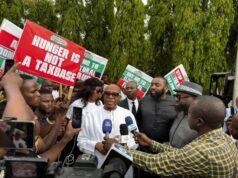
The demand was made by a coalition of indigenous groups and long-term residents, organized under the FCT Senior Citizens Forum, during a press briefing in Abuja titled “Fulfilling the Democratic Status of Abuja.”
Elder Danjuma Tanko Dara, the forum’s coordinator, emphasized that the Court of Appeal ruling is legally binding and should guarantee residents the right to elect their own governor and members of a State House of Assembly.
“For too long, citizens of Abuja have been treated as second-class voters, participating in presidential elections but denied the right to elect their own chief executive and legislature.
This democratic deficit must end now,” Elder Dara said.
The group also urged Professor Joash Amupitan, the newly appointed INEC Chairman, to begin preparations for the FCT governorship election, while maintaining stability through Wike’s temporary role as Sole Administrator.
This, they argued, would allow ongoing projects to continue and give INEC sufficient time to organize a fair election.
Dr. Zikirullahi Ibrahim, Executive Director of CHRICED, also supported the push for statehood, stressing that the FCT is large enough to accommodate a state where indigenous residents can manage their own affairs.
Speaking at a journalists’ training in Abuja, he highlighted the historical neglect of Abuja Original Inhabitants (AOIs), who remain largely landless and stateless nearly five decades after the federal government acquired their lands.
“Whenever development occurs, bulldozers and military personnel demolish homes and erase communities, treating the land as if it was uninhabited. The AOIs have yet to receive promised compensation or legal recognition,” Dr. Ibrahim explained.
Since its creation, the FCT has been administered by a minister appointed by the president, unlike Nigeria’s 36 states with elected governors.
Advocates argue that this system denies the territory’s residents full democratic representation and perpetuates their marginalization.