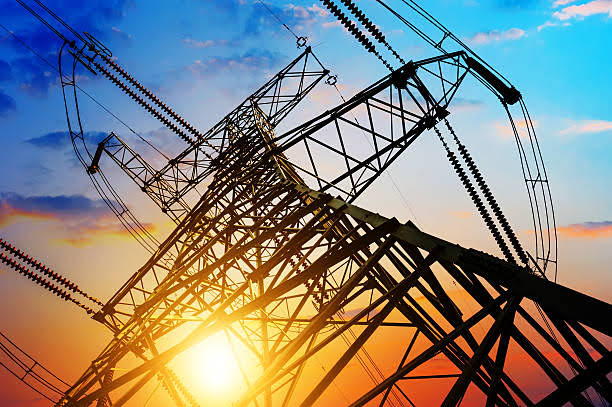

International electricity customers, including the Republics of Benin, Togo, and Niger, owe Nigeria nearly $20 million for power supplied to them between January and June 2025, according to the Nigerian Electricity Regulatory Commission (NERC).
The countries, through their respective national utilities, Société Béninoise d’Énergie Électrique (SBEE), Compagnie Energie Electrique du Togo (CEET), and Société Nigérienne d’Électricité (NIGELEC) collectively paid $14.81 million of the $34.78 million invoice issued to them by the market operator during the first and second quarters of the year.
A breakdown of payments revealed that Paras-SBEE made no remittance against invoices of $2.42 million and $2.77 million in Q1 and Q2, respectively.
Similarly, Paras-CEET settled only $0.63 million of its $1.92 million bill in Q1 and failed to make any payment against its $2.02 million invoice in Q2.
NERC, in its latest quarterly report, expressed concern over the “persistent pattern of non-payment” by these international customers and called for Federal Government intervention to ensure compliance and debt recovery.
Meanwhile, within Nigeria, electricity consumers accumulated a combined debt of ₦368.26 billion between January and June 2025. The nation’s eleven Distribution Companies (DisCos) collected ₦1.11 trillion out of ₦1.48 trillion billed during the same period.
In a related development, Genesis Energy, a pan-African clean energy infrastructure firm, has announced a strategic partnership with the Nigerian National Petroleum Company Limited (NNPCL) to channel excess power generated from the Port Harcourt Refining Company (PHRC) into the national grid.
The announcement was made during the Minister of Power, Adebayo Adelabu’s official visit to Genesis Energy’s operational site in Eleme, Rivers State.
The 84-megawatt (MW) independent power plant, the largest licensed private off-grid clean power facility in Nigeria, currently supplies energy to PHRC, improving refinery output, enhancing local energy security, and reducing diesel dependence.
Adelabu commended the company’s efficiency and reaffirmed the Federal Government’s commitment to attracting and protecting private investment in the power sector.
“We are determined to create a conducive business environment where investors can operate confidently, recover their investments, and contribute to national growth,” he said.
“This collaboration demonstrates how private sector innovation can strengthen our grid. Once the pilot phase concludes successfully, it could lead to an additional 120MW expansion.”
He added that the government is fast-tracking transmission infrastructure and commercial frameworks to ensure smooth integration of the power generated into the national grid.
The partnership, aligned with Nigeria’s Energy Transition and Power Sector Reform Agenda, aims to maximise domestic generation capacity, stabilise the grid, and expand access to electricity nationwide.