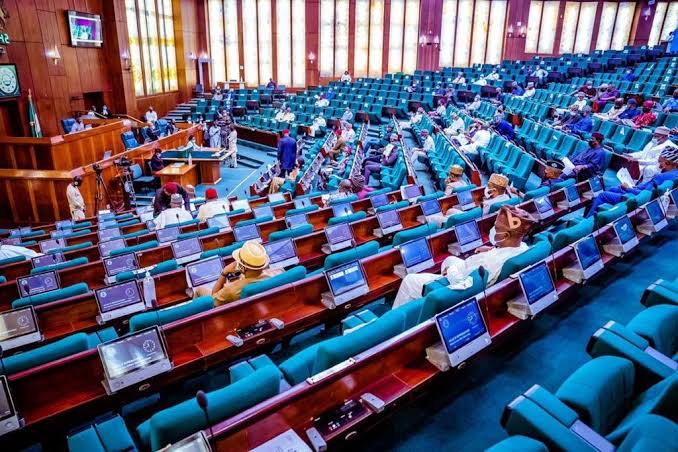

The House of Representatives on Thursday passed a bill for second reading to establish a specialised medical college for the Nigerian Armed Forces.
Sponsored by Babajimi Benson, Chairman of the House Committee on Defence (APC, Lagos), the bill seeks to create a military-run medical institution to train doctors, specialist physicians, and allied health professionals specifically for the Armed Forces and other uniformed services.
Benson highlighted several reasons for the proposal, including the ongoing exodus of Nigerian doctors abroad, frequent strikes disrupting civilian medical education, and the need for military-specific training in areas such as trauma care, tropical medicine, chemical, biological, radiological and nuclear (CBRN) response, and austere-environment medicine.
“Reliable medical support is crucial for the Army’s operational readiness, casualty management, preventive medicine, and the welfare of troops and their families,” Benson said.
He noted that despite the efforts of the Nigerian Army Medical Corps (NAMC), the national healthcare sector faces shortages of doctors, uneven specialist distribution, and a continued outflow of medical professionals.
Between 2016 and 2018, over 9,000 doctors reportedly left Nigeria for opportunities abroad, with estimates suggesting about 16,000 doctors emigrated over five years, leaving roughly 55,000 practicing in the country.
Benson added that the situation is even more severe within the Armed Forces, with only 21 doctors commissioned into the Army between 2019 and 2025 due to low interest from civilian medical professionals.
Currently, the Army has 189 doctors, nearly 40% of whom are pursuing specialist training in civilian institutions.
The proposed Nigerian Military Medical College (NMMC) aims to create a stable pipeline of physicians trained for military service, insulated from strikes and academic disruptions common in civilian medical institutions.
International models, such as the Armed Forces Medical College in India and the Uniformed Services University of the Health Sciences in the U.S, demonstrate the benefits of military-controlled medical education, combining clinical competence with leadership and operational readiness.
Benson explained that the college would operate under the Ministry of Defence, in collaboration with the National Universities Commission (NUC) and the Medical and Dental Council of Nigeria (MDCN).
Governance would include a Board of Governors chaired by the Chief of Defence Staff, an academic council with NUC and MDCN representatives, and a Medical Education Unit responsible for curriculum and quality assurance.
While acknowledging the high initial costs, Benson emphasized long-term benefits, including reduced reliance on emergency medical recruitment, lower medical evacuation expenses, improved troop health, and enhanced operational capacity.