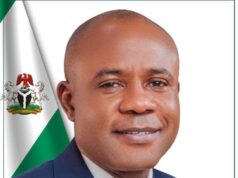

The Chairman of the Independent National Electoral Commission (INEC), Prof. Joash Amupitan, has identified weak telecommunications connectivity as a major obstacle to uploading election results in real time across Nigeria.
Speaking at the Nigeria Civil Society Situation Room’s Stakeholders’ Forum on Elections in Abuja on Thursday, Amupitan said that despite technological tools like the Bimodal Voter Accreditation System (BVAS) and the INEC Result Viewing Portal (IReV), network limitations, especially in remote areas, continue to hinder full transparency.
“The deployment of BVAS has fundamentally redefined the process, ensuring only accredited voters cast ballots and reducing over-voting and manual manipulation.”
“IReV has opened up the electoral process to public scrutiny, but technology alone cannot overcome network deficiencies,” he said.
Amupitan explained that with over 176,000 polling units nationwide, many located in areas with poor connectivity, achieving real-time uploads remains one of INEC’s toughest operational challenges.
He added that the commission is collaborating with the Nigerian Communications Commission (NCC) and network providers to explore alternative transmission solutions and improve reliability.
Highlighting other election-related issues, Amupitan expressed concern about persistent voter apathy, noting that only about 27 per cent of eligible voters participated in the 2023 general elections.
He cited successes such as a significant increase in PVC collection in Anambra State, attributing it to targeted mobilisation efforts.
On the ongoing Continuous Voter Registration (CVR) exercise, Amupitan revealed that 2,685,725 registrations have been completed nationwide, with Osun State leading at 208,357, followed by Kano (159,669), Sokoto (152,650), and Imo (145,561).
Borno (123,835) and Lagos (123,484) were also highlighted for strong voter engagement.
Preparations for the February 21, 2026, Area Council elections in the FCT have already begun, with relevant information published on the INEC website.
Amupitan stressed that technological improvements must be accompanied by political accountability to curb vote-buying and electoral inducement.
“We are deploying security personnel and intelligence operations at election centres to protect voters. Civil society organisations, like the Situation Room, are crucial in ensuring compliance, promoting civic education, and holding all stakeholders accountable,” he added.
Amupitan concluded that collaboration between institutions, communities, and civil society remains key to strengthening Nigeria’s electoral system and enhancing trust in election outcomes.