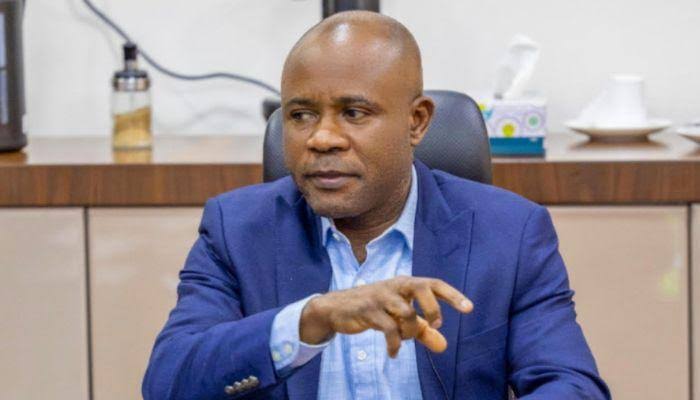

Opinion of Dr. Jeff Ejiofor,
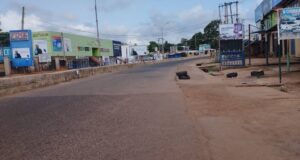
Cities grow, people move, and with progress comes new challenges. Enugu, a city with a warm heartbeat, vibrant markets, and daily human hustle, has, in recent years, struggled under the weight of increasingly chaotic traffic.
Anyone who drives through Ogbete Market, New Haven, Artisan, or the Presidential Road axis understands how congested and stressful movement within the city can become.
It is against this backdrop that Gov. Peter Mbah’s decision to sanitise Enugu’s traffic by restricting tricycles (keke) and mini-buses from major roads should be supported.
The governor’s move is not merely an attempt to ban vehicles, but it is part of a wider effort to restore order, safety, and efficiency to the city’s transport system.
For many years, Enugu’s major roads have served as free-for-all spaces where every kind of vehicle, private cars, heavy-duty trucks, mini-buses, and kekes compete aggressively for limited road space.
The result has been predictable: gridlock, delayed work hours, avoidable accidents, and a general sense of disorganisation that affects the city’s image.
One of the strongest benefits of the governor’s initiative is improved traffic flow.
Tricycles and mini-buses, though extremely useful in short distance transportation, often make abrupt stops, overload passengers, or engage in lane indiscipline.
Their removal from major expressways could significantly ease movement, especially at peak hours. Anyone who has ever sat behind a slow-moving keke during rush hour knows how frustrating it can be.
There is also the argument for road safety. Statistics from traffic officers and hospital emergency units often show that smaller, lighter vehicles suffer the most casualties in collisions.
By diverting tricycles and mini-buses to inner streets and feeder roads where their use is more appropriate, the government aims to reduce traffic accidents on high-speed corridors.
Beyond safety and sanity, the policy hints at a larger vision: modernising the city’s transportation system.
Many global cities have gradually phased out low-capacity, high-frequency vehicles from major routes, replacing them with organised alternatives such as BRT buses, regulated taxis, ride-sharing services, or rail systems.
For Enugu to evolve into a clean, efficient, investor-friendly city, it must adopt similar strategies.
Orderly transportation is often one of the first things visitors notice about a place, and a cleaner transport landscape will strengthen Enugu’s reputation as a rising modern metropolis.
Still, no policy, no matter how well-intentioned, comes without pain. Tricycle operators, mini-bus drivers, and low-income commuters face genuine concerns about livelihood and mobility.
That is why transparent communication, proper alternative routes, support programmes, and gradual implementation remain critical. Urban reform is always a negotiation between aspiration and reality.
Yet, experience shows that cities that successfully modernise do so through shared commitment. When residents understand the long-term benefits of a difficult reform, they often become partners rather than adversaries.
Traffic sanity does not happen by decree alone. It grows through daily cooperation, motorists obeying lanes, pedestrians using designated crossings, and transport unions supporting the transition.
Gov. Mbah’s policy may be challenging for some, but it is rooted in a vision of a more organised, safer, and future-ready Enugu.
As history has shown in many developing cities, meaningful progress usually begins with difficult decisions.
Tomorrow is Here !