
By Dr. Malachy Chuma Ochie,
In an age marked by global food insecurity, climate volatility, and economic uncertainty, the question of food availability has moved from the margins of policy discourse to the very heart of governance.
For sub-national governments in developing economies, the challenge is no longer whether to act, but how deliberately and intelligently to do so.
In Enugu State, the administration of Governor Peter Ndubuisi Mbah offers a compelling example of how transformative governance can rethink food availability through structured policy, institutional discipline, and strategic investment in agribusiness, particularly livestock development.
At the centre of this recalibration is the Livestock Productivity and Resilience Support Project (L-PRES), a World Bank-supported initiative adopted by the Enugu State Government as a critical vehicle for economic diversification and food system resilience.
Speaking recently at an interactive meeting with the L-PRES Steering and Technical Committees, stakeholders, and the media, the Commissioner for Agriculture and Agro-Businesses, Dr. Patrick Nwabueze Uburu, reaffirmed the administration’s resolve to reposition agriculture from subsistence practice to productive enterprise.
Governor Mbah’s interest in livestock development, as articulated in the policy document, goes beyond narrow sectoral gains.
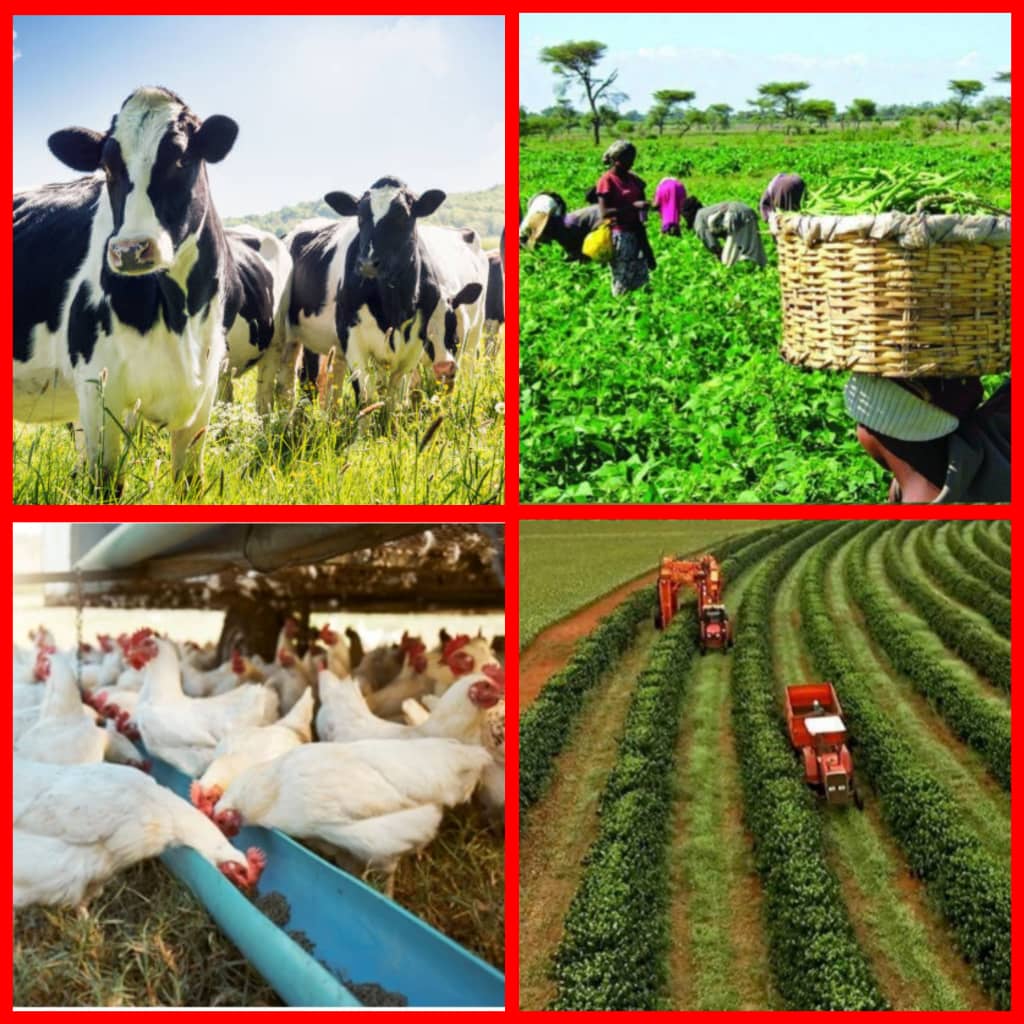
It is a strategic intervention aimed at expanding the state’s Gross Domestic Product, ensuring adequate food production for local consumption, and positioning Enugu as a supplier of livestock products to other states.
In a country where protein deficiency remains a silent public health challenge, this approach reflects a governance mindset that connects agriculture, nutrition, and economic growth as a single continuum.
What distinguishes the Enugu example is not merely the ambition of its agricultural policy, but the governance architecture designed to deliver it.
The L-PRES Steering Committee is mandated to serve as the “eyes of government,” providing oversight, policy alignment, and strategic direction.
Its responsibilities include the review and approval of annual work plans, assessment of technical and financial reports, and ensuring synergy between L-PRES and other development programmes.
In a political environment often plagued by project abandonment and institutional drift, such clarity of roles signals a deliberate effort to entrench accountability.
Equally critical is the Technical Committee, tasked with monitoring implementation and developing operational frameworks to guide project execution.
By institutionalising regular oversight, the Mbah administration underscores a core principle of transformative governance: development outcomes are products of disciplined processes, not rhetorical commitments.
This governance philosophy is already finding expression on the ground.
According to the State Project Coordinator of L-PRES, Dr. Ifeyinwa Nnajieze, the project has recorded significant progress, particularly at the Integrated Farm Project in Ubahu–Amankanu, flagged off by the Governor.
Three construction firms that met stringent standards have been awarded contracts to handle distinct components of the project, reflecting both technical planning and respect for due process.
Waste Management and Environmental Solutions Ltd is responsible for a 15-hectare waste management structure, alongside the proposed Artificial Insemination and Breed Multiplication Centre; an investment that speaks to genetic improvement and sustainable breeding practices.
American West African Agro Ltd is handling climate-smart irrigation and pasture planting, addressing the twin challenges of climate change and feed scarcity.
WM Agro Ltd, on its part, is constructing the milking parlour and modern dairy processing plant, a crucial link in moving from raw production to value addition.
That L-PRES is a World Bank project, with strict rules and procedures, further reinforces the administration’s commitment to transparency and global best practices.
The government’s insistence on adherence to these standards is significant.
It reflects an understanding that credibility, sustainability, and donor confidence are essential to long-term agricultural transformation.
With all contractors mobilised and a contract duration of 16 months, the expectation of visible progress within four months exemplifies the “no delays, no excuses” ethos repeatedly associated with Governor Mbah’s leadership.
The broader implication of this approach is profound. By investing in integrated livestock infrastructure, the Enugu State Government is effectively reimagining food availability as a system, not a sector.
The planned commissioning of the Integrated Farm Project, following the model of the already completed Model Veterinary Hospital in Akwuke, suggests a deliberate strategy of replication and scale.
The Special Adviser to the Governor on Agriculture, Dr. Mike Ogbuekwe, captured this collaborative spirit by assuring the committees of government’s support and requesting detailed information on project implementation and supervisory roles.
In essence, the Peter Mbah example demonstrates that rethinking food availability requires more than policy declarations.
It demands visionary leadership, institutional coherence, strict adherence to standards, and an unrelenting focus on delivery.
At a time when food security debates are often dominated by federal-level narratives, Enugu State’s livestock-driven agribusiness strategy offers a persuasive sub-national model: one where governance is measured not by promises made, but by systems built and projects delivered.
As the L-PRES initiative unfolds, it may well stand as evidence that with the right mix of vision, discipline, and accountability, transformative governance can indeed reshape food availability; and, by extension, the economic future of a people.