
Nigeria on Friday indicated that additional strikes against jihadist groups could be expected following US-led bombardments on Christmas Day targeting militants in the country’s north.
The Nigerian government emphasised that the operation was carried out jointly with its military.
The West African nation continues to grapple with complex security challenges.
In the northeast, jihadist groups have waged an insurgency since 2009, while armed “bandit” gangs in the northwest regularly raid villages and carry out kidnappings.
The US airstrikes followed a diplomatic dispute after Washington framed the violence as the mass killing of Christians amid Nigeria’s broader armed conflicts.
Nigeria rejected this characterisation but has stepped up security cooperation with the US.
According to Nigeria’s military, its forces worked alongside the United States to “conduct precision strike operations against identified foreign ISIS-linked elements” in Sokoto State.
Speaking to Channels TV, Foreign Minister Yusuf Tuggar said Nigeria provided the intelligence for the operation and coordinated directly with US Secretary of State Marco Rubio prior to the strikes.
Asked whether more strikes could follow, Tuggar said: “It is an ongoing thing, and we are working with the US. We are working with other countries as well.” He stressed that the operation was not aimed at any religion”.
“It must be made clear that it is a joint operation, and it is not targeting any religion nor simply in the name of one religion or the other.”
The US Africa Command reported that “multiple ISIS terrorists” were killed in Sokoto.
Video footage released by US defence officials appeared to show a missile being launched from a vessel flying the US flag.
Residents in Sokoto villages near the Niger border expressed shock at the blasts.
Haruna Kallah, a local resident, said: “We heard a loud explosion which shook the whole town and everyone was scared. We initially thought it was an attack by Lakurawa, but later learnt it was a US drone strike.”
“This area has never experienced such attacks in the last two years.”
Which specific armed groups were targeted remains unclear.
While jihadist networks are largely concentrated in the northeast, some have extended into the northwest.
Researchers have linked fighters from the group known as Lakurawa, active in Sokoto State, to the Islamic State Sahel Province (ISSP) operating in Niger and Mali.
Others dispute these links, noting the term Lakurawa has been broadly applied to various armed groups.
Some of these fighters reportedly have ties to al-Qaeda affiliated groups such as JNIM, a rival to ISSP.
Abuja has publicly welcomed the strikes, though analysts note the diplomatic context.
Malik Samuel, a researcher for Good Governance Africa, observed that Nigerian authorities were keen to be seen as cooperating with the US, even though both attackers and victims in the northwest are predominantly Muslim.
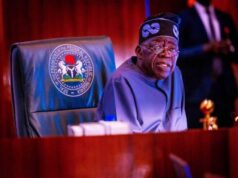
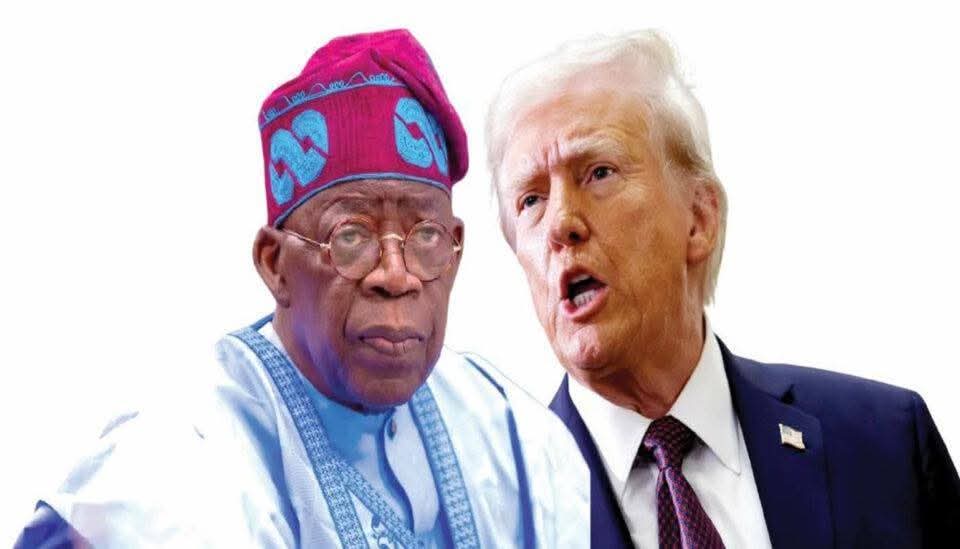
Tuggar reiterated that President Bola Tinubu “gave the go-ahead” for the strikes, underlining the joint nature of the operation and Nigeria’s sovereign control over the decisions.